

Welcome to Radio Quotidia, episode 9. This month’s theme is Last Things, 13 minutes or so of music and musings. Quentin Bega here at the mic. I’m broadcasting from our studio in the depths of Quotidia inside a digital onion. My aim to keep you entertained for a while.
You are more likely today to find a sorcerer’s apprentice than one for actual trades! In Australia, those men, who enter apprenticeships to become plumbers, electricians, carpenters, mechanics, and a host of other trades that construct the protective carapaces in which we exist are designated “tradies” and they have an honoured place in the pantheon of occupations in this land that was dismissively labelled a bricklayer’s paradise in the 1960s. Post pandemic and the shortage of these tradespeople persists.
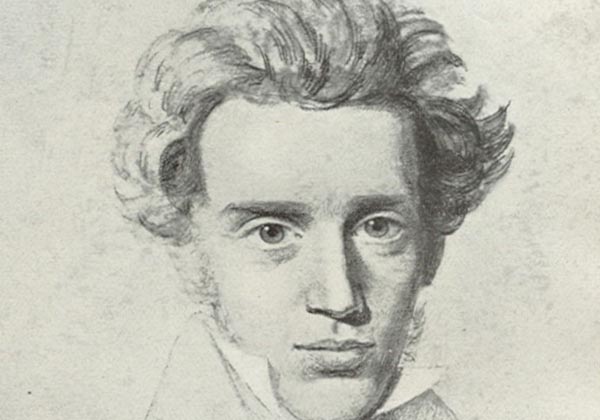
We can’t comfortably categorise tradies as petit bourgeois. Soren Kierkegaard wrote, “the petty bourgeois is spiritless…devoid of imagination… he lives within a certain orbit of trivial experiences as to how things come about, what is possible, what usually happens. This scornful depiction owes more to the prejudices of the philosophical Dane’s affluent middle-class upbringing than any thoroughgoing analysis.
It seems to me that human progress has been accomplished by men and women looking at how things come about, what is possible and what usually happens. From pre-historic times, the work and innovation of stonemasons, carpenters, toolmakers, and metalworkers have added to the utility and aesthetics of human existence. From classical times, the ingenuity of plumbers, shipbuilders, aqueduct engineers and road makers has ensured the spread of civilisation.
Modern times owes much of its definition to electricity on demand and now, the sparkie joins the ranks tradespeople who keep our lives on its comfortable track. Think of the last time your toilet was blocked, or there was a power outage, or the ceiling leaked or if this happened at once- as it might in the aftermath of a storm. Then, you, too, would be anxiously calling those who would fix the problems.
I heard about the protagonist of the song when the members of the folk band I was playing in were talking about big drinkers we had encountered during our working lives. Paddy is based on a sheet-metal worker from inner Sydney during the boom times of the mid-70s who grafted alongside my brother-in-law Jim, the mandolin player in the group, Banter. [insert song]
I wrote the next song after driving past the steelworks at Port Kembla during the change of shift late at night in 1977. The context: I had been at a group practice in Windang at the mouth of Lake Illawarra and, having had a few drinks, deemed it preferable to wait until later that night before returning home near the university in Wollongong.
Of course, I forgot all about the nightshift change at the Port Kembla steelworks, which at that time employed almost 30,000 workers. And it seemed to me that every man jack of them were converging on the entrances to the starkly-lit steelworks with the gantries, conveyors, latticework of pipes and stacks whose skeletal outlines were brightly floodlit as I slowed to a crawl hoping to avoid a collision with the crush of cars entering and leaving the plant under a wash of sodium lights that rendered the rained-on-road a smear that I squinted to make out.
When I got home, shaken, I sat with my guitar and thought about the men who worked in that place and the kids I taught at Warrawong High School who were the children, for most part, of the immigrant workers who came to Australia seeking a better life. So, I wrote the song I called The Furnaceman. [insert song]
I dedicate the song to those workers and their kids who were a large part of my life in the years 1973-1978. Next week, I’ll bring the theme of Last Things to a close with two contrasting songs: a spray about environmental vandalism and an elegiac ballad.
Credits: All written text, song lyrics and music (including background music) written and composed by Quentin Bega unless otherwise specified in the credits section after individual posts. Illustrative excerpts from other texts identified clearly within each podcast. I donate to and use Wikipedia frequently as one of the saner sources of information on the web.
Technical Stuff: Microphone- Shure SM58; (for the podcast spoken content) Audio Technica AT 2020 front-facing with pop filter); Apogee 76K also used for songs and spoken text. For recording and mixing down: 64-bit N-Track Studio 9 Extended used; Rubix 22 also used for mixing of microphone(s) and instruments. I use the Band in a Box/RealBand 2023 combo for music composition.
Discover more from Quentin Bega's Blog
Subscribe to get the latest posts sent to your email.
