
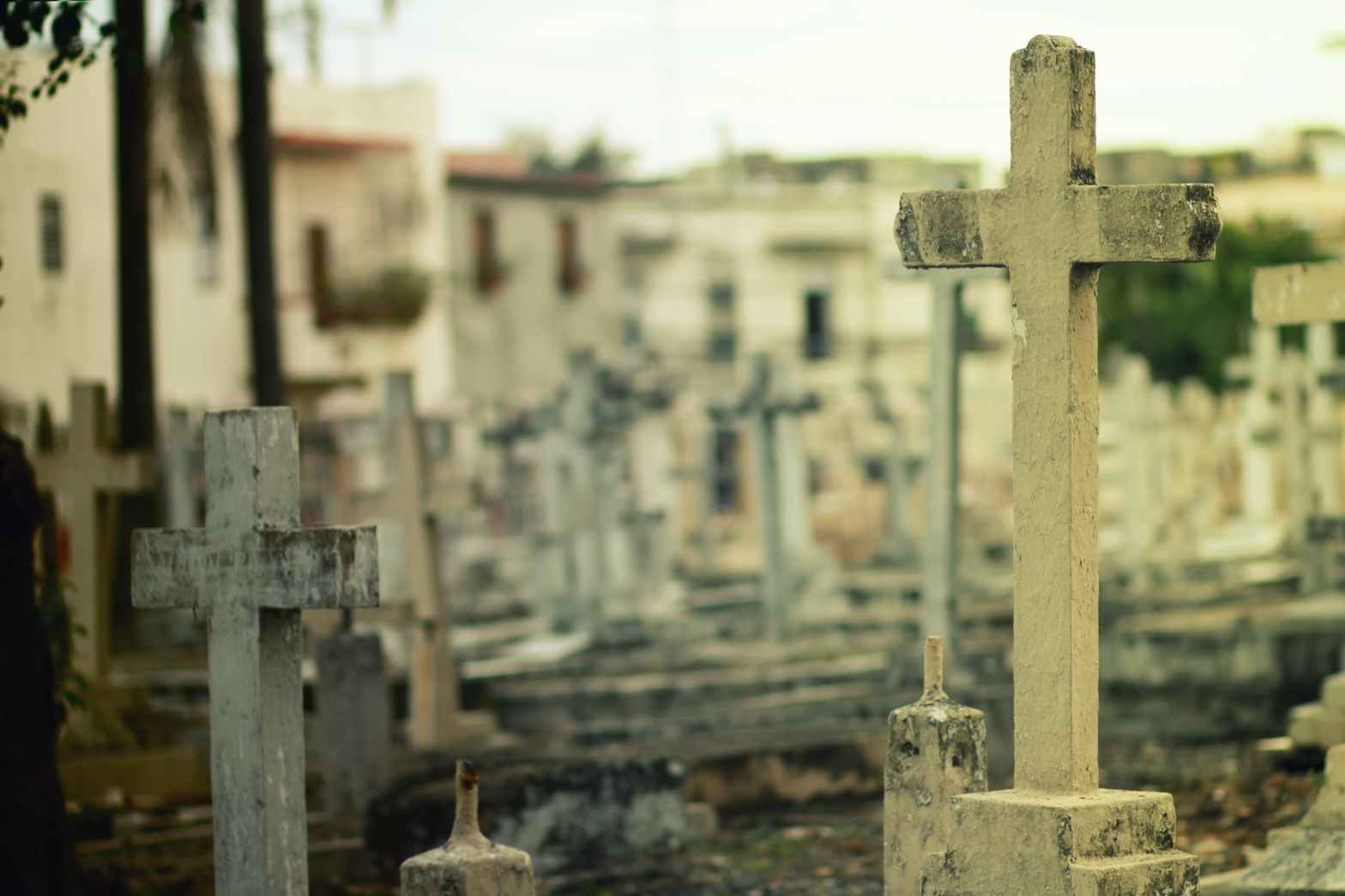
Letters From Quotidia Episode 197 Meanwhile, My Youngest Son Came Home Today

Quentin Bega
OLYMPUS DIGITAL CAMERA
Letters From Quotidia Episode 197 Meanwhile, My Youngest Song Came Home Today

Welcome to Letters From Quotidia, episode 197– a podcast by Quentin Bega for lovers of music, poetry, and the Crack- that most Irish of nouns which may encompass, news, gossip, fun, entertainment, and enjoyable conversation. Quotidia is that space, that place, where ordinary people lead ordinary lives. But where, from time to time, they encounter the extraordinary.

Adverbs are tricky. They are tricky because they qualify the verb or adjective and can change the meaning of a sentence dramatically. Take, I love you. What a wonderful sentence, what a wonderful sentiment. One I hope you have heard- and often if you are lucky. But suppose we add a qualifier: I love you, occasionally. As opposed to: I love you, forever. Now, you may prefer the former formulation as being truer to your particular way of looking at life or, indeed, your circumstances rather than the aspirational- and, frankly, unverifiable- latter gush-I love you, forever.

The same caveat applies to adverbial phrases, as well. Which formulation fills you with more confidence: I will pay you what I owe OR I will pay you what I owe, in the fulness of time. Why, you may ask, am I wittering on about pedantic issues of grammar and usage- when the whole world is poised upon the precipice of doom? I do not think I am alone in thinking the present crisis in Ukraine truly existential. It reminds me of the climactic scenes in Peter Jackson’s film trilogy The Lord of the Rings, where Frodo looks as though he will fail in his quest to save Middle Earth from an apocalyptic future.

I note that the Russian side have also visited the Tolkien masterpiece. Having been widely lambasted  for trying, unsuccessfully, to stick the label of Nazi on the Jewish President Zelensky, whose grandfather fought the Nazis in World War II, they are now trying to de-humanise a whole country by drawing a parallel between the creature Gollum and Ukrainians- and to capture the attention of the pious, they label as satanic the regime that has so successfully resisted their brutal invasion. And cheering this unholy alliance of trolls, propagandists and sycophantic self-servers who seek to demonise Ukraine and its people is the Russian Orthodox leader, Patriarch Kirill- shame on him!  

So, on Easter Saturday, I was alone in my room, staring at my computer where the cursor was blinking on the blank page in front of me. Were I prone to the excesses of personification, I might say that blinking cursor was mocking me! Nevertheless-which is another adverb, nevertheless- alone in the house, the rest of the family occupied with their own agendas, I was free, for a few hours to mope about the fact that I was unable to write an original song and had been in this desiccated state for the past five weeks. Writer’s block is a phenomenon not unknown to me- as I have related in previous Letters.

But surely, I addressed my recalcitrant muses, surely, the dire situation we are all facing ought to spark something? And my plea- or was it a prayer?- was answered. Meanwhile. That was it. Just that word. Meanwhile. And, do you know, it was enough. Around that adverb, I was able to pull together words to a chord sequence I had written for Letters From Quotidia 192– but which I had failed to deliver on that date. Better later than never, then? Oh, come on! Cliches are OK if they are true, aren’t they? In the meantime, shall we unpack meanwhile? According to my internet dictionary, its meanings are, in the intervening period of time, OR, at the same time, OR, on the other hand.

My failure to write an original song wasn’t the only thing bugging me, though. I also reflected on the fact that we (and I do include myself here) are fickle consumers of news in the West. Was Ukraine the only instance of horror operating in the world? Of course not. Horror manifests its depredations elsewhere today, from Myanmar to Yemen to sub-Saharan Africa to Latin America, to the Middle East. And horror does not neglect the quotidian world either as it drills down into the cosy and supposedly safe domain of the domestic realm to spread misery.

After writing the song, I attended the Easter Vigil at St Joseph’s Catholic Church in Kingswood, Western Sydney. It starts in the darkness outside, then a fire is lit and the congregation process inside, where, from the Paschal candle the light spreads through the darkened church from person to person holding their own candles; then a series of seven readings and  sung responsorial psalms from the Old and New Testaments lead to a continuous peal of bells as the Gloria is sung, the purple shrouds removed from  the altar statues and  the icon  of Joseph and  the child Jesus. The church is flooded with light. The service was particularly moving this year, and I felt a real connection to those people under attack  because our parish is administered by Polish Dominican priests who have made available to us a series of  letters from Dominicans serving in Ukraine detailing the unfolding tragedy over the past few weeks.

I read and collect poems from the site Poem-a-Day. One of these, by Palestinian poet, Mosab Abu Toha, stopped me in my tracks, because the decades-long agony of his people has not yet been resolved but was driven from my mind by the foregrounding of what was happening in eastern Europe. Yet another reason I am grateful to the poets of the world, past and present. Mosab Abu Toha is the founder of the Edward Said Library, Gaza’s only English-language library, and is a former visiting poet at Harvard’s department of comparative literature. Here is his poem, Mouth Still Open, Someone’s mouth is still open. He hadn’t finished yawning when shrapnel pierced through his chest, stung his heart. No wind could stop the flying pieces of shrapnel. Even the sparrow on the lemon tree nearby wondered how they could move with no wings. I encourage you to visit the site to see the poet’s arrangement of words on the page, which adds significantly to their meaning. But the song I have written for this Letter is focused on what is happening, in front of our eyes, from the TV coverage of events in Ukraine. Here is Meanwhile, [insert song]

This post now returns to the format established previously; that is, an original song and one from the folk tradition. I will close this Letter with a song written by Eric Bogle, one of Australians finest songwriters. Its title, My Youngest Son Came Home Today. From his 1982 album, Scraps of Paper, the song captures the anguish of a parent burying  their young son, killed in the Northern Irish conflict which tore apart Belfast from 1969 to 1998 when the Good Friday agreement was signed, establishing a precarious peace. The song does not specify from which tradition the dead man comes. Over the years it has been co-opted by the Republican side and the lyrics do seem to support this. Wikipedia observes, When Billy Bragg covered the song, he changed the line dreams of freedom unfulfilled (which echoes the language of Nationalists) to dreams of glory unfulfilled. This allows both traditions, Republican and Loyalist, to share in the grief the world of the song generates- and for this reason I have incorporated Bragg’s amended solitary word in my own version.

In times past, representations of grief, such as Michelangelo’s Pieta where Mary holds the body of the dead Jesus across her lap, speaks powerfully of sorrow, compassion, and devotion. Just days ago, the anguish on President Zelensky’s face, captured by a photographer, when he was asked to comment on the video of the woman who found her slain son in a well demonstrates the power of visual imagery in the 21st Century.

Departing from my usual practice, I will not wait until Friday morning to post this letter but will do so when I finish recording this episode of Letters From Quotidia so, I will end with the observation that the Polish Dominican, Jarolsav Krawiec, the provincial vicar, who has written eloquently about the past weeks of conflict in Ukraine,  refers in his letters to the power of poetry, music, art and prayer as the members of his community work to cope with the unfolding challenges in a country changing by the hour. Now for the song My Youngest Son Came Home Today, as so many will from these latest killing fields.[insert song]

Credits: All written text, song lyrics andmusic (including background music) written and composed by Quentin Bega unless otherwise specified in the credits section after individual posts. Illustrative excerpts from other texts identified clearly within each podcast. I donate to and use Wikipedia frequently as one of the saner sources of information on the web.

Technical Stuff: Microphone- Shure SM58; (for the podcast spoken content) Audio Technica AT 2020 front-facing with pop filter); Apogee 76K also used for songs and spoken text.

For recording and mixing down: 64-bit N-Track Studio 9 Extended used; Rubix 22 also used for mixing of microphone(s) and instruments. I use the Band in a Box/RealBand 2022 combo for music composition.

Letters from Quotidia Episode 196 The Wind That Shakes The Barley

Quentin Bega
OLYMPUS DIGITAL CAMERA
Title of series

Welcome to Letters From Quotidia, episode 196– a podcast by Quentin Bega for lovers of music, poetry, and the Crack- that most Irish of nouns which may encompass, news, gossip, fun, entertainment, and enjoyable conversation. Quotidia is that space, that place, where ordinary people lead ordinary lives. But where, from time to time, they encounter the extraordinary.

There are lots of countdowns going on everywhere on earth and beyond. Let me start with an inconsequential one: some time ago I decided to halt the publication of these letters at number 200 to allow me to reflect and, perhaps, re-cast the letters in a different format. And I find that plan is becoming more and more difficult as countdowns elsewhere exert tidal forces on the Letters, threatening to tear them apart, as, for instance, a black hole might cannibalise a passing star, at its leisure.

Those forces have been at work since February 24, the date of the latest Russian invasion of Ukraine. I’ve read and viewed so much distressing material on that crisis over the weeks that I have decided to devote this letter to one poet from Ukraine. I ordered from Amazon last week, Words for War: New Poems from Ukraine published by Academic Press and Harvard, which features, among others, Borys Humenyuk. He was born in Ostriv, Ternopil oblast, in 1965. He is a poet, writer, and journalist. He took an active part in Ukraine’s Revolution of Dignity of 2013 and since 2014, he has been involved in the anti-terrorist operation in the Ukrainian Donbas; that is, resisting Russia’s proxies in this region. He now serves in a self-organised military unit composed mainly of volunteers. He and his comrades now face enhanced threats as Russia re-organises its forces to focus on eastern Ukraine having been driven back from their northern assault on the capital, Kyiv.

Followers of this podcast know how highly I value poetry and music and I hope I can demonstrate this, now. While I wait for the book of poetry to be delivered from the US, I have read a few of his poems online and I will try to do justice to this brave poet’s verse- and by the way, I have no way of knowing if he still lives, as the poems in translation I have access to, are four years old. But I hope and pray he survives. The first is set in a seaport we all have learned the name of over recent times-Mariupol.

It is called, An old mulberry tree near Mariupol. . . The first verse sets the scene, An old mulberry tree near Mariupol/Has never seen so many boys in her life/Boys picking her fruit, boys dancing in the branches, And the smallest boy climbing/To the very top.// This is followed by lines that punctuate the poem throughout, RPGs, a machine gun, sniper rifles, helmets, bullet-proof vests/All laid carefully down.// But war comes to interrupt their idyll and, The boys abandoned the old mulberry tree/Left it whirling in a solitary dance/Changed into grown men./They sped off to assume their positions/Beyond the horizon, where the earth cried out to the sky/And the sky shook.//The old mulberry tree/Is waiting for her boys by the road/But nobody comes to pick her fruit./It falls to the ground like bloody tears.// In a powerful ellipsis the poem ends, first with the lines that punctuate the poem, The grass that was pressed beneath/The RPGs, a machine gun, sniper rifles, helmets, bullet-proof vests/All straightened out.//And when the moon rises in the sky/The old mulberry tree/Gets on her tiptoes, like a girl/Tries to peek over the horizon/Where are you, boys?//

There is an echo here of Morning Dew from the last letter- Where have all the people gone? Next, are lines from his poem, Our Platoon Commander is a Strange Man. Our platoon commander is a strange man/ When the sun rises over the battlefield/He says that it’s someone burning/a/tire/at/a/far-off/checkpoint/The moon to him is a barrel of a cannon/And the sea is melted lead/Why is it salty?/Because it’s made of our tears sweat piss blood/It flows through us.// He has no time for the falsity which is part of the whole media circus, Here at the front we’ve learned/There are two kinds of people: people, and TV people/We dislike TV people/They seem fake, they’re poor actors/ We in the West only gave our precious attention to the Ukraine crisis when it appeared as headline news whereas Borys and his comrades have been living a different reality for years, as the ending of his poem explains, On the first day of no war/We lost our machine gun loader/Sashko from Boyarka/And grenadier Max from Luhansk/The bullets came from the other side of war/Like angry hornets/Stung Sashko in the neck/And Max in/the/heart/Maybe the other side doesn’t have a strange platoon commander/Bringing/weird/news/Maybe/they/watch/a/different/TV/channel/Maybe/their/TV/set/is/broken.//

Now, I will present here an entire  poem from Borys Humenyuk. The poem’s title is A Testament. When I saw the title and read the poem, I became aware of the power of the word, testament, or, in its verb form, to testify. To return to my peaceful, quotidian world for a moment, my wife has been reminding me for a while, now, that we need to re-visit our wills and tidy up our affairs as we are, in the words of a song that I featured in Letter 192, too old to die young: unlike so many in countries torn by conflict, alas.

Here is Borys Humenyuk’s moving poem, A Testament: Today we are digging the earth again/This hateful Donetsk earth/This stale, petrified earth/We press ourselves into it/We hide in it/Still alive//We hide behind it/Sit silently in it/Like little children behind their mother’s back/We hear its heart beating/Its weary breath/We/are/warm/and/comfortable/Still/alive//Tomorrow/we/will/die /Maybe some of us/Maybe all of us//Don’t take us from the earth/Don’t tear us away from our mother/Don’t gather our remains from the field/Don’t try to put us back together again/And — we beg you — don’t erect crosses/Monuments or memorial slabs/We don’t need them/Because it isn’t for us —/You erect these monuments for yourselves.//Don’t engrave our names/,Simply remember: On this field/In this earth/Ukrainian soldiers lie/And — that is all.//Don’t return us to our parents/We don’t want them to see us like this/Let our parents remember us children/Naughty little boys/With slingshots and bruised knees/With failing marks on their report cards/With shirts crammed with apples from the neighbour’s orchard/Let our parents believe that we’ll return one day/That we are somewhere//Don’t return us to our wives/Let them remember us handsome/As men well-liked by women/Who belonged to their wives alone/Let them remember our warm kisses/Our loving embraces/Don’t let them touch our cold foreheads/Our cold lips//Don’t return us to our children/Let our children remember our kind eyes/Our kind smiles/Our kind hands/Don’t let our children’s lips/Touch/our/cold/hands//In/these/trenchesToday/our/temporary/homes/Tomorrow our graves/Bury us//We don’t need eulogies/In the silence that follows battle./They always seem odd —/Like punching a dead soldier/Then ordering him to his feet//We don’t need funerals/We know where our place is/Simply cover us with earth/And move on//It would be nice if there was a field/Where rye is swaying/A lark flies overhead/And — the sky/The endless sky —/Can you imagine/the/grain/a/field/Where warriors are lying will yield?//To remember us, eat the grain from the field/Where we laid down our lives//It would be good if there were meadows there/And many flowers/And a bee under each flower/And lovers who come in the evening/To weave wreaths/To make love till dawn/And during the day, let new parents/Bring their young children/Don’t keep children from coming to us//But this will be tomorrow/Today we are still digging the earth//This cherished Ukrainian earth/This sweet, gentle earth/And with a soldier’s spade we write as one/On its body/The last Ukrainian poem of the last poets/Left/alive//

I’ll finish with an Irish folk song that echoes the poet’s desire to be buried under a field of swaying rye; written by Robert Dwyer Joyce (1836–1883), a Limerick-born poet and professor of English literature, The Wind That Shakes the Barley quickly became a trope for the Irish quest for independence from Britain. Wikipedia has this to say, The song is written from the perspective of a doomed young Wexford rebel who is about to sacrifice his relationship with his loved one and plunge into the cauldron of violence associated with the 1798 rebellion in Ireland. The references to barley in the song derive from the fact that the rebels often carried barley or oats in their pockets as provisions for when on the march. This gave rise to the post-rebellion phenomenon of barley growing and marking the “croppy-holes,” mass unmarked graves into which slain rebels were thrown, symbolizing the regenerative nature of Irish resistance to British rule. As the barley will grow every year in the spring this is said to symbolize Irish resistance…and that Ireland will never yield and will always oppose foreign rule.

Irish poet and Nobel Laureate, Seamus Heaney, in his 1962 poem Requiem For the Croppies references the phenomenon of barley growing out of the unmarked graves of the Irish rebels, who were known as croppies because of their very short hair. The poem ends with these lines, Until…on Vinegar Hill, the final conclave/Terraced thousands died, shaking scythes at cannon/The hillside blushed, soaked in our broken wave./They buried us without shroud or coffin/ And in August…the barley grew up out of our grave.//

This poem, like The Wind That Shakes the Barley, refers to the 1798 rebellion by the United Irishmen, who had a famous victory at Oulart Hill which is mentioned in the song as Oulart Hollow, where the rebels vanquished a force of militia sent from Wexford to stamp out the uprising. But it was ultimately put down by superior British forces with the loss of 30,000 rebels. The parallels between the Irish and Ukrainian experience are obvious. Here is my version of The Wind That Shakes the Barley [insert song]

And that concludes, Letter 196 I hope that the doomed 1798 resistance of the valiant United Irishmen against the overwhelming forces of an adjacent imperial power are not paralleled in Ukraine but I note, with increasing dread, the build-up of huge forces poised, as I write this, to strike at the southeast and coastal regions of the beleaguered state. I also note the sickening reports of yet more atrocities against the civilian population, to say nothing of the reports of chemical munitions having been used in Mariupol. This letter is published here in Australia, on Good Friday, and- a naïve hope it may be- but I pray that the message of Easter, which is all about renewal and peace, comes to pass in Ukraine. So, until next week, take care and thanks for listening to LFQ.

Credits: All written text, song lyrics andmusic (including background music) written and composed by Quentin Bega unless otherwise specified in the credits section after individual posts. Illustrative excerpts from other texts identified clearly within each podcast. I donate to and use Wikipedia frequently as one of the saner sources of information on the web.

Technical Stuff: Microphone- Shure SM58; (for the podcast spoken content) Audio Technica AT 2020 front-facing with pop filter); Apogee 76K also used for songs and spoken text.

For recording and mixing down: 64-bit N-Track Studio 9 Extended used; Rubix 22 also used for mixing of microphone(s) and instruments. I use the Band in a Box/RealBand 2022 combo for music composition.

Letters From Quotidia Episode 195 Space Oddity, Morning Dew

Letters From Quotidia Episode 195 Space Oddity, Morning Dew

Welcome to Letters From Quotidia, episode 195– a podcast by Quentin Bega for lovers of music, poetry, and the Crack- that most Irish of nouns which may encompass, news, gossip, fun, entertainment, and enjoyable conversation. Quotidia is that space, that place, where ordinary people lead ordinary lives. But where, from time to time, they encounter the extraordinary.

I have a foot in both camps-  that of the Arts, especially literature and music, and that of the Sciences, particularly cosmology and biology. A couple of items from my news feeds caught my attention today as I was pondering how to begin this letter. The first was a Sky News Australia piece on the International Space Station:

A highly anticipated change of command ceremony between the United States and Russia has taken place on the International Space Station at the end of March this year. Despite mounting tensions between the two countries, NASA has repeatedly reaffirmed that it continues to work closely with Russian space agency Roscosmos. Eyes have been on the ISS since war broke out in Ukraine but tensions on the earth did not reach into space. Russian cosmonaut Anton Shkaplerov in his handover address affirmed those on the space station were “one crew”.

The second item was from Science Alert with the dread-inducing, eye-popping headline, How a Zombifying Virus Can Manipulate Caterpillars Into Killing Themselves. It sounds like something out of a horror movie. What happens is a group of insect-infecting viruses known as nucleopolyhedroviruses (NPVs) get into a host organism, for example, cotton bollworm caterpillars. NPVs are known to drive their caterpillar hosts to the top of plants before dying, whereas the more natural behavior is for the caterpillars to sink to the earth before pupating. If caterpillars are dying up at the top of plants, it presumably gives the host virus more opportunity to spread further, whether that’s being carried on the wind or chewed up by a predator.

OK so my question is: what sort of virus has infected the brains of humans that propel us to climb the ladder of increasing risk and conflict seeking out a mushroom-cloud-shaped apotheosis? Or is a compulsion towards violence hard-wired into our DNA? In further science news I learn that the puzzle pieces are all assembled now. The human genome has now been completely mapped according to the Australian Broadcasting Corporation, but after reading through the material and listening to interviews with a couple of scientists I realised that there is still a lot more work to do and that we will not be able to excise the errant genes that may cause this propensity to violence any time soon. It’s akin to the mapping of an alien planet but not really being able to determine what is actually on the ground. Sorry to get your hopes up- no rescue from the worst elements of ourselves just yet.

But it’s time for a song.  And we’re returning to the International Space Station for this one. Written and recorded by David Bowie, it was first released on 11 July 1969, nine days before Neil Armstrong became the first person to set foot on the lunar surface. And it only took 44 years for Canadian astronaut Chris Hadfield to give us all a treat by filming himself singing Space Oddity while floating on the International Space Station in 2013. [insert song]

Here are three stanzas about our companion satellite by the wonderful American poet Emily Dickinson, The Moon was but a Chin of Gold/A Night or two ago—/And now she turns Her perfect FaceUpon the World below—/Her Forehead is of Amplest Blonde—/Her Cheek—a Beryl hewn—/Her Eye unto the Summer Dew/The likest I have known—//Her Lips of Amber never part—/But what must be the smile/Upon Her Friend she could confer/Were such Her Silver Will—//

On TV tonight I watched a BBC newscast about the Red Cross trying yet again to bring in desperately needed food to Mariupol and ferry out some of the 100,000+ citizens still trapped in a place that resembles not so much an enclave of God’s green earth but a blasted and apocalyptic movie set on the cratered, airless, dusty surface of the moon. And there are military planners who would like to reduce the other port cities of Ukraine, notably Odesa, to a similar state.

On the same BBC newscast, I watched people in the centre of Odesa listening to warning sirens-perhaps more cruise missiles coming in from ships lurking over the Black Sea horizon-they were listening without flinching or moving, so inured have they become to the sound. But the camera caught a young boy, traumatised by his experience of sirens, explosions and horror in other places he and his family had to flee from, being led away from the open square to, presumably, shelter out of the camera’s view.

And in the midst of this sombre scene, the redemptive power of song, as members of the Odesa musical community filled the square with sound that uplifted hearts rather than cast them down. The Ukrainian president, Vlodymyr Zelenskyy, in a surprise address to the 2022 Grammy Awards on 3 April, said to all of us, Our musicians wear body armour instead of tuxedos. They sing to the wounded. In hospitals. Even to those who can’t hear them but the music will break through anyway…we defend our freedom to live, to love, to sound. On our land, we are fighting Russia which brings horrible silence with its bombs. The dead silence… fill the silence with your music. Fill it today, to tell our story. Support us in any way you can. Any, but not silence. 

Music has played this role throughout history. Just think of the rich gift of American music to the world, particularly that brought by the slaves to the New World has blossomed into jazz and the blues and rock music. Another native of Putin’s city of birth was the Russian composer, Dmitri Shostakovich. He wrote a symphony to memorialise the siege of Leningrad by the Nazis between 1941-44 when, over 872 days, a million people starved to death: he wrote, My idea of victory isn’t something brutal; it’s better explained as the victory of light over darkness, of humanity over barbarism, of reason over reaction. Plea to V.P. Read again your own history before allowing the brutal siege of Mariupol to continue! It mimics that of the Nazis of your own birthplace.

Canadian folk-singer Bonnie Dobson wrote the song which concludes this Letter after seeing the 1959 black-and-white film On the Beach The film depicts the aftermath of a nuclear war. The final scene shows, and thanks, Wikipedia, for this dramatic sentence: The empty windblown streets of Melbourne are punctuated by the rise of dramatic, strident music over a single powerful image of a previously seen Salvation Army street banner: “There is still time .. Brother”.

Bonnie wrote the song, Morning Dew, the first of her career-and what a first!- after friends she was staying with in L.A. went to bed. It has endured down the years, being covered by a wide range of artists. It was first released in 1961, As recently as autumn 2021 she was touring at the age of 81- what a woman, eh? The song has universal themes- which I will not insult you by explicating here- the 21 year-old Bobbie Dobson set it out as clear as the morning dew [insert song]

And now I look to C.S. Lewis’s sane advice when confronted in the mid-20th Century with fears of Armageddon,: when it comes [let it] find us doing sensible and human things—praying, working, teaching, reading, listening to music, bathing the children, playing tennis, chatting to our friends over a pint and a game of darts. They may break our bodies (a microbe can do that) but they need not dominate our minds. Or Robert Frost, who asks us to reflect with an equanimity bordering on Stoicism, on the beauty, fragility and transience of life in this short  poem, Nature’s first green is gold,/Her hardest hue to hold./Her early leaf’s a flower;/ But only so an hour./Then leaf subsides to leaf./So Eden sank to grief,/ So dawn goes down to day./Nothing gold can stay.// To conclude, may I rescue that Salvation Army banner from the empty, end-of-the-world-streets of Melbourne and wave it above my head without irony but with a lot of desperate hope- there is still time…brother. ‘til next time!

Credits: All written text, song lyrics andmusic (including background music) written and composed by Quentin Bega unless otherwise specified in the credits section after individual posts. Illustrative excerpts from other texts identified clearly within each podcast. I donate to and use Wikipedia frequently as one of the saner sources of information on the web.

Technical Stuff: Microphone- Shure SM58; (for the podcast spoken content) Audio Technica AT 2020 front-facing with pop filter); Apogee 76K also used for songs and spoken text.

For recording and mixing down: 64-bit N-Track Studio 9 Extended used; Rubix 22 also used for mixing of microphone(s) and instruments. I use the Band in a Box/RealBand 2022 combo for music composition.

Letters From Quotidia Episode 194 A Pair of Brown Eyes, Forever Young

Letters From Quotidia Episode 194 A Pair of Brown Eyes, Forever Young

Welcome to Letters From Quotidia, episode 194– a podcast by Quentin Bega for lovers of music, poetry, and the Crack- that most Irish of nouns which may encompass, news, gossip, fun, entertainment, and enjoyable conversation. Quotidia is that space, that place, where ordinary people lead ordinary lives. But where, from time to time, they encounter the extraordinary.

Have you felt the ground shifting beneath you? In a time of earthquakes, volcanic eruptions, storms, fires, floods, hurricanes, and pestilence you might think that human beings would hang together and support one another. Some, of course, do and it is heartening to see such compassion and love at work in the world. Others, unfortunately, have decided that war, division, exclusion, and hate-filled rhetoric  is more the go for themselves, and everyone else they can reach. I know I do not need to give geographical or personal identifiers for you to understand just what and to whom I am referring.

The day after the publication of Letter 193, I was casting about for an idea that would provide a unifying thread through the weave of the follow-up post-to no avail. I gave up trying to force the process and decided to sleep on it, knowing that this is a well-tested stratagem for solving a variety of conundrums: for example- Kekule’s dream of a snake eating its own tale thereby unlocking the mystery of the benzine ring and kick-starting the petroleum industry or example two- Coleridge’s dream that gifted the world with that marvellous poetic fragment, Kubla Khan,

You know the one I mean, In Xanadu did Kubla Khan\A stately pleasure-dome decree:\Where Alph, the sacred river, ran\Through caverns measureless to man\ Down to a sunless sea.\So, I hit the pillows with the highest of hopes…only to find myself the next morning entangled in sweat-stained sheets- the sole product of my nocturnal labour! With no clear way forward, I determined to find a folksong that would provide a commentary on the situation that is vexing so many of us today.  I went through my store of songs that day and the next to see if one might stimulate some way forward for this letter which was stuck in a rut as deep as those left by tank-treads in the churned-up mud of the Ukrainian steppes and I happened upon a song released 37 years ago: A Pair of Brown Eyes written by Shane McGowan of The Pogues.

This anti-war song is out of left field, really. It is set in a London pub where a drunken youth listens to an old  war vet’s account of his battlefield experiences while a juke box plays in the background. Juxtaposed against the urban drabness and the horrors of conflict are the folk tropes of birds whistling, the wind gently laughing, and a man roving the countryside thinking of the beauty of his lost lover’s eyes. But before we hear my take on this song, let’s hear another fragment of a fragment, Five miles meandering with a mazy motion/Through wood and dale the sacred river ran,/Then reached the caverns measureless to man,/And sank in tumult to a lifeless ocean;/And ’mid this tumult Kubla heard from far/Ancestral voices prophesying war! [insert song]

The lifestyle gurus like to spout how important it is for all of us to get out of our comfort zones to reach our full potential, to actualise our dreams, to…ahh, you can fill in all the other guff they come up with! But I’ll bet the citizens of the pulverised port city of Mariupol wouldn’t mind swapping their situation for any one of our enervating, oh-so-unfulfilling, comfort zones- what do you think? But, here in my comfort zone of a small, detached  bungalow situated in an outer suburb of Western Sydney, I’m halfway to my next deadline and still lost for a second song and a narrative link for the rest of  Letter 194.

Looks like I’ll have to sleep on it once more. Nighty-night. Blink, blink, wakey wakey and once again, nothing doing. However, I am reminded of what Lawrence Ferlinghetti, poet, and activist, said about snoozing muses in times of crisis: When guns are roaring the Muses/have no right to be silent. This is in contradistinction to the Russian proverb, When guns speak, the Muses keep silent. Very Russian indeed! So, a big thank you to the American poet for breaking the logjam: I can see a way home.

Ferlinghetti, who died at age 101 on February 22, 2021, at his home in San Francisco, was a force in American letters from the 1950s onwards. His Loud Poem is a parody of The Lord’s Prayer which featured in Scorsese’s documentary, The Last Waltz. I watched this stunning concert doco back in 1981 and remember the juxtaposition between this and Bob Dylan’s, Forever Young. The darkly hip and cynical Ferlinghetti with his cool put down of a prayer that is at the centre of Christian practice was followed by the soaring, uplifting hymn to life peppered with Biblical allusions sung by a folk icon in a whiter than white hat! Later, much later, I realised that this was an artefact of the editing process; that the poem was recited before the concert had begun but cunningly inserted before the song, for effect.

So, in recognition Ferlinghetti’s lasting influence and talent, I will recite lines from his poem, Christ Climbed Down. This is from his 1958 poetry collection, A Coney Island of the Mind which is an enduringly popular book still in print today. Goodreads reviewer, Bill Kerwin, had this to say, No other book so perfectly captured the zeitgeist of the ‘60’s counterculture, the optimism of the young radicals who would take this book into their hearts. Sure, there were other poems, some by arguably better poets—the lyric (and ironic) Byronisms of Corso, the Shelleyan ecstasies of McClure, the prophetic lamentations of Ginsberg, the zen eclogues of Snyder—but none of the others embodied so perfectly their vision of their world: sceptical of all institutions, yet open to the experience of joy and suffering—with a painter’s eye, a mystic’s soul, and a lover’s heart.

Christ Climbed Down is a 68-line free verse poem arranged in six stanzas of irregular length. Each begins with the lines, Christ climbed down/from His bare Tree this year/ He flees the crass commercialism that undermines the meaning of the season which is as evident in 1950s America as it is everywhere now. Here are some lines, but I urge you to seek out the whole poem, CHRIST climbed down/ from His bare Tree this year/and ran away to where /there were no rootless Christmas trees/ hung with candycanes and breakable stars/… Christ climbed down/ from His bare Tree this year/and ran away to where/ no fat handshaking stranger/ in a red flannel suit/ and a fake white beard/ went around passing himself off/ as some sort of North Pole saint/… Christ climbed down/ from His bare Tree this year/and ran away to where/ no Bing Crosby carollers/ groaned of a tight Christmas/ In the final stanza, He climbs down and steals away to await an unimaginable and impossibly/ Immaculate Reconception/ the very craziest/ of Second Comings//.

Now there is no way that the Catholic Church would ever award the poem its Imprimatur declaring it to be without doctrinal error- Nihil Obstat! But I can’t imagine the present Pope leading an enraged crowd carrying flaming torches and pitchforks against a reading of Ferlinghetti’s poem. Not the man who wrote, Lord Jesus, born under the bombs of Kyiv, have mercy on us! Lord Jesus who died in the arms of his mother in a bunker in Kharkov, have mercy on us! Forgive us Lord, if we continue to kill our brother…if we continue to justify cruelty with our tiredness, if with our pain we legitimise the brutality of our actions [insert song]

Dylan wrote this song shortly after the birth of his son. I’ll finish with lines from Langston Hughes’ poem, Mother to Son, Well, son, I’ll tell you:/Life for me ain’t been no crystal stair./It’s had tacks in it,/And splinters,/And boards torn up,/And places with no carpet on the floor-/Bare./But all the time/I’se been a-climbin’ on,/And reachin’ landin’s,/And turnin’ corners,/And sometimes goin’ in the dark/Where there ain’t been no light./So boy, don’t you turn back./… Don’t you fall now-/ For I’se still goin’, honey,/I’se still climbin’,/And life for me ain’t been no crystal stair// Nothing for it, folks, guess we’ve just got to keep on climbing.

Credits: All written text, song lyrics andmusic (including background music) written and composed by Quentin Bega unless otherwise specified in the credits section after individual posts. Illustrative excerpts from other texts identified clearly within each podcast. I donate to and use Wikipedia frequently as one of the saner sources of information on the web.

Technical Stuff: Microphone- Shure SM58; (for the podcast spoken content) Audio Technica AT 2020 front-facing with pop filter); Apogee 76K also used for songs and spoken text.

For recording and mixing down: 64-bit N-Track Studio 9 Extended used; Rubix 22 also used for mixing of microphone(s) and instruments. I use the Band in a Box/RealBand 2022 combo for music composition.

Letters From Quotidia Episode 193 Come By the Hills, Revenge For Skibbereen

Letters From Quotidia Episode 193 Come By the Hills, Revenge For Skibbereen

Welcome to Letters From Quotidia, episode 193– a podcast by Quentin Bega for lovers of music, poetry, and the Crack- that most Irish of nouns which may encompass, news, gossip, fun, entertainment, and enjoyable conversation. Quotidia is that space, that place, where ordinary people lead ordinary lives. But where, from time to time, they encounter the extraordinary.

Back in 1975 I was rifling through the folk records in a Belfast store when I came upon a striking image and I bought the LP on the basis of its back cover alone- it featured two smiling Irish boyos named Finbar and Eddie standing in front of red curtains- Finbar looks straight out at me like a bouncer who would enjoy ejecting me from a licensed premises while long-haired Eddie stands beside him, hands jammed in his jean-pockets with his fly half-agape grinning in anticipation at the indignity about to be visited imminently upon my person!

Of course, I was channelling experience from times in the late sixties when I would pre-load as I think they call it now before taking my girlfriend out to attempt entry to one of the Belfast dancehalls or nightclubs. As often as not I was refused entry: she was not impressed but still, somehow, ended up marrying me. The front cover shows the same boyos seated in a room surrounded by a variety of folk instruments: whistles, bodhran, bongos, fiddles, guitars, mandolin with Finbar resting his pipes across his knee next to sheet music open on a stand. Serious musos, obviously!

I hadn’t heard of them before that time but the music on the record The Dawning of the Day, by Finbar and Eddie Furey, blew me away from the virtuosic opener, Drops of Brandy, where the uillean pipe playing made the hairs on the nape of my neck stand on end through a series of quality sung and instrumental items, some of which have featured as part of my repertoire down the years- decades, really. These boyos later went on to gain international fame and recognition as The Fureys. I also bought a handful of other folk records including a compilation LP that featured, Anne Byrne, I think it might have been, performing the first song for this post- Come By the Hills.

Tommy Makem does a great version of this song on YouTube where he recites W B Yeats’ The Lake Isle of Innisfree before the repeat of the first verse. The tune is an Irish air Buachaill o’n Éirne Mé  which means Boy from the Erne River. Scottish writer and champion of the arts, W Gordon Smith, wrote words to the air which are well known today- so, honours are shared between these Celtic brother nations! Although there will be those who wish to dispute which is predominant- it has ever been thus.

The Irish lyrics to the original air feature a young lad courting a lovely maiden, in an extravagant braggadocio where he claims to own all of Cork city, Co Mayo and bits of Co Tyrone to boot but then ruefully goes on to admit that he will go into the woods to make ale and sleep among the leaves and twigs, exhorting the lovely lady not to marry that old grey man but spend time with one such as himself, accustomed to play and party on the misty mountain. Such luminaries as Clannad sing this version in the original Irish, but lacking the ability to speak my ancestral tongue, I’ll use Smith’s lyrics instead. If the Scotsman’s words were good enough for Tommy Makem, they’re certainly good enough for me! [insert song]

From Cottagecore to Goblin mode. It’s a thing, apparently. When the pandemic started at the beginning of 2020, the aesthetic labelled Cottagecore, which was around during the decade before, really took off: there was a movement of people aspiring to  re-make a better version of themselves. Remember all that baking of sourdough bread during lockdowns? Wikipedia comments: Cottagecore emphasizes simplicity and the soft peacefulness of the pastoral life as an escape from the dangers of the modern world. It became highly popular on social media during the COVID-19 pandemic.

As if it would last! Inevitably, it would kickstart its polar opposite: Goblin-mode, which, according to Dave McNamee, is about a complete lack of aesthetic. Because why would a goblin care what they look like? Why would a goblin care about presentation? The Guardian writes:  as the pandemic wears on endlessly, and the chaos of current events worsens, people feel cheated by the system and have rejected such goals. Peter Hayes, a Bay Area tech worker who says he and his friends have jokingly called themselves goblins, said the term has taken off as the pandemic eliminated the need to keep up appearances. “At home there’s no social pressure to follow norms, so you sort of lose the habit,” He goes on to say, in a reference to the state of the world now, that since we are all doomed, why bother?

Ah, yeah, and here we have to consider the radioactive elephant in the room, which I had thought dissipated at the end of the Cold War. It’s not so much an elephant as a Russian bear which is having to make room for a Chinese dragon which is also on the prowl. The last time the global audience felt true existential dread was during the Cuban missile crisis which was managed skilfully by the creation of a crisis hotline between the American and Soviet leaders and their top advisers. The doctrine of Mutually Assured Destruction (represented by the appropriate acronym MAD) was hedged about by a series of treaties over the years governing the testing, manufacture, stockpiling and use of nuclear arms.

Use of these weapons was unthinkable in previous decades but now it is being insouciantly bandied about on a variety of crass talk shows and in serious fora alike, not least because the Russian dictator has threatened their possible use on the battlefield of Ukraine which he invaded a month ago- during which time we have all been looking on with mounting dread and alarm as the images of carnage proliferate across media platforms here in the West. Secular forces seek to bolster one side or another with material aid. The West is funnelling armaments, especially anti-tank, and anti-aircraft missile systems to stiffen Ukrainian resistance to the Russian behemoth and China is trying to bolster Russia without attracting sanctions, all the while probably not too perturbed at the prospect of a future Russia weakened by war and financial and economic collapse.

Religious forces seek to intercede by spiritual means: for example, the Catholic Church intends to consecrate both Russia and Ukraine to the Immaculate Heart of Mary on Friday March 25th– the date of publication of this podcast. Understanding such huge forces are too much for my puny brain, I’m afraid, but I do know that patriotic fervour can stand- and ultimately prevail- against overwhelming odds because the patriot is willing to lose his or her life and the stories of that resistance will pass down the generations fuelling new insurgencies while any progeny of those who have made the ultimate sacrifice survive.

This is why I have chosen Revenge For Skibbereen as my second song because it powerfully underscores that dynamic. It is an Irish folk song, in the form of a dialogue where a father tells his son about being evicted from their home during the famine because they could not pay the rent, how his wife -the boy’s mother- died and they needed to flee because the father was involved in the Young Irelander Rebellion of 1848. In the final verse, the boy vows to return and carry on the struggle against the oppressor. Listeners to Letters From Quotidia will know that since Letter 120, I have adopted the practice of offering a song from the folk tradition as well as an original composition. But not in this post. Again, I’m resting my muse while I feel compelled to respond to events unfolding in the wider world. But, oh, how I look forward to a time- when the pressure of geopolitical events ease and I am once more able to resume my preferred practice. [insert song]

No poetry today, other than that contained in the songs. But I will reprise an invocation from Letter 83, Hiroshima, published 2nd June 2021, where I sing Ave Maria, Gloria: Save us from ourselves, Domina.  One must hope against hope. Who, I wonder, will save us from ourselves?  

Credits: All written text, song lyrics andmusic (including background music) written and composed by Quentin Bega unless otherwise specified in the credits section after individual posts. Illustrative excerpts from other texts identified clearly within each podcast. I donate to and use Wikipedia frequently as one of the saner sources of information on the web.

Technical Stuff: Microphone- Shure SM58; (for the podcast spoken content) Audio Technica AT 2020 front-facing with pop filter); Apogee 76K also used for songs and spoken text.

For recording and mixing down: 64-bit N-Track Studio 9 Extended used; Rubix 22 also used for mixing of microphone(s) and instruments. I use the Band in a Box/RealBand 2022 combo for music composition.

Letters From Quotidia Episode 192 Too Old To Die Young, So Many Roads

Quentin Bega
OLYMPUS DIGITAL CAMERA
Letters From Quotidia Episode 192 Too Old To Die Young, So Many Roads

Welcome to Letters From Quotidia, episode 192 – a podcast by Quentin Bega for lovers of music, poetry, and the Crack- that most Irish of nouns which may encompass, news, gossip, fun, entertainment, and enjoyable conversation. Quotidia is that space, that place, where ordinary people lead ordinary lives. But where, from time to time, they encounter the extraordinary.

Metaphors abound in this Letter: primarily the wind and the road but also clocks and calendars. First though, an apology wrapped up in a cliche. First the cliché: better late than never.  Since the beginning of the year past until now ( a time metaphor may be looming large, listeners!) I have been the soul of punctuality. First, on a daily basis, then weekly, I have delivered a podcast on time, every time. But not this time.

Might I blame it on the floods- which have been of Biblical proportions here in New South Wales? Or perhaps a delayed reaction to the raging bush fires of 2019/20? Maybe the pestilence which is presently working its way through the Greek alphabet?  No! My truly, deeply, dithery, procrastinatory nature sluggishly surfaced and soporifically sprawled across my good intentions of reaching 200-letters-published without a stutter. To fall at hurdle 192 out of 200, though, ain’t bad-wouldn’t you agree?

So let me say sorry to my good intentions as they transmogrify into those paving stones leading downwards to Hades. And sorry also to the odd listener to these Letters who may be jonesing for their weekly quotidian fix. After that windy preface, let me unpack the metaphor that informs the first part of this post.

If Life is like a candle bright/Then death must be the wind, are the lines which open the country song, Too Old To Die Young, written by Moe Bandy in the 1980s and referenced in an earlier Letter From Quotidia. I first heard this song at a music festival in Katoomba  almost 20 years ago, sung by Kevin Welch. My first poetic memory of the power of wind was when I was in 6th form in 1968. Our English teacher read us Wind: by Ted Hughes, where wind wielded/ Blade-light, luminous black and emerald,/ Flexing like the lens of a mad eye. And, as the inhabitants of the West Yorkshire cottage sheltered indoors from the ferocity of the winter’s gale, we grip/ Our hearts and cannot entertain book, thought,/ Or each other.

But it wasn’t until I moved to Ayr in North Queensland to take up the position as head of English, that I fully understood the tremendous force that moving air can impart when the town was stomped on by Cyclone Aivu on 4th April 1989. A friend from Northern Ireland, Mark Dougherty, who was building a career as a music producer, arrived in town on that day and we huddled safely inside a concrete bungalow and provided shelter for the family next door whose more flimsy wooden structure was coming apart- they raced across when the eye of the storm passed overhead, and we all rode out the event without further incident.

The wind is associated, too, with Pentecost where tongues of fire descend upon the apostles to the sound of a rushing wind. And, by the way, the Catholic Church celebrates this event as its official birthday! But wind and fire are not always so beatific- during the most recent bushfires in South-eastern Australia they combined to form huge pyrocumulonimbus storms which generate their own weather systems that can deliver pollutants into the stratosphere while creating lightning strikes spawning spot fires many kilometres distant from their source.

The final verse of the song, Too Old To Die Young goes-If I could have one wish today/And I know it would be done/I’d say everyone could stay/’Til they’re too old to die young  Alas, this wish- which I fervently endorse- will not obtain for increasing numbers of innocent civilian casualties in the ongoing brutal attack upon Ukraine by the Russian dictator. Here is my version of the song: [insert song]

Time now to unpack the road metaphor which informs the rest of this podcast. But before I do so, another admission- I haven’t been able to deliver a fully formed original song for this post. My muse, as distinct from my nature, was not so much soporific in the past week as frenetic, churning out three instrumental versions of songs with snippets of melody and text streaming from each. But unless accompanied by coherent lyrics and a complete melody, they are just a bunch of chord progressions of limited interest to anyone- yours truly included.

But back to the road: no need to painstakingly uncover the musculature beneath the skin of this metaphor- everyone and their aunt are well acquainted with the ubiquitous nature of this whiskery old part of speech. Walt Whitman: What do you say? Afoot and light-hearted I take to the open road,/Healthy, free, the world before me,/The long brown path before me leading wherever I choose. The open road has been a clarion call to generations of seekers after whatever will o’ the wisp they choose to call their goal.

Cormac McCarthy’s 2006 novel, The Road, which seems more a prophecy nowadays than a dystopian fantasy, depicts a post-apocalyptic world covered in ash and populated by survivors desperate for some respite among the detritus of civilisation. It is too close to the bone for detailed contemplation, and I choose to travel a different road in the remainder of this post. No, it won’t be The Road Not Taken though if you want to tread one or other of the bifurcated lanes of the poem, be my guest, but I’d rather journey with G. K. Chesterton on a jollier thoroughfare: Before the Roman came to Rye or out to Severn strode,/The rolling English drunkard made the rolling English road./A reeling road, a rolling road, that rambles round the shire,/And after him the parson ran, the sexton and the squire;/A merry road, a mazy road, and such as we did tread/The night we went to Birmingham by way of Beachy Head …/

Now, I’ve never been to Birmingham by way of Beachy Head, but I have been on many roads as puzzlingly circuitous in my boozy time. Another road can be found in J. R. R. Tolkien’s great Lord of the Rings trilogy which I first read and was enthralled by in my late-teens, The Road goes ever on and on/Out from the door where it began./Now far ahead the Road has gone./Let others follow, if they can!/Let them a journey new begin./But I at last with weary feet/Will turn towards the lighted inn,/My evening-rest and sleep to meet.

In Australia, The Open Road, is the journal of the NRMA, the motoring organisation of New South Wales. It supplies maps and apps and many helpful booklets to those embarking on a road trip- a concept that came into its own here and in America after the Second World War. Jack Kerouac’s On the Road became a secular bible for the Beatniks who were superseded by their successors, the Deadheads, and their heavenly band of muses, The Grateful Dead who toured coast to coast, border to border from 1968 until 1995 and the untimely death of Gerry Garcia, singer and lead guitarist.

His last gig was at Soldier Field in Chicago on 9th July. One of the songs he sang was, So Many Roads, written with Robert Hunter, his long-time collaborator. It’s Hunter writing from my point of view, you know what I mean? Garcia said of So Many Roads in a 1992 interview. Only a long-term and intimate relationship with a guy as brilliant as Hunter coughs up that kind of result. The video of the concert shows a man who looks decades older than his 53 years. The toll he had to pay for all the roads he travelled along for all those storied years were etched in his face and reflected in his voice.

It was a magnificent final rendition of the song and I listened to it with awe and aching  earlier today as I put together my version of So Many Roads, which I hope all Deadheads and all listeners to my Letters, enjoy. Have a listen to  Letters From Quotidia, Episode  79 entitled Deadhead for more detail on my lasting regard for this group. [insert song]

So, many hours past my previously self-imposed deadline, I bid au revoir, and hope to re-connect with my listeners, on time, next week. No promises: therefore- no regrets. To conclude these road metaphors- remember Gandhi’s admonition: there is no path to peace: peace is the path.

Credits: All written text, song lyrics andmusic (including background music) written and composed by Quentin Bega unless otherwise specified in the credits section after individual posts. Illustrative excerpts from other texts identified clearly within each podcast. I donate to and use Wikipedia frequently as one of the saner sources of information on the web.

Technical Stuff: Microphone- Shure SM58; (for the podcast spoken content) Audio Technica AT 2020 front-facing with pop filter); Apogee 76K also used for songs and spoken text.

For recording and mixing down: 64-bit N-Track Studio 9 Extended used; Rubix 22 also used for mixing of microphone(s) and instruments. I use the Band in a Box/RealBand 2022 combo for music composition.

Letters From Quotidia Episode 191 The Late Great Planet Earth, The Unquiet Grave

Quentin Bega
OLYMPUS DIGITAL CAMERA
Letters From Quotidia Episode 191 The Late Great Planet Earth, The Unquiet Grave

Welcome to Letters From Quotidia, episode 191 – a podcast by Quentin Bega for lovers of music, poetry, and the Crack- that most Irish of nouns which may encompass, news, gossip, fun, entertainment, and enjoyable conversation. Quotidia is that space, that place, where ordinary people lead ordinary lives. But where, from time to time, they encounter the extraordinary.

Conspiracy theories have been around forever- or if not quite that long- we find evidence of these pernicious mental burrs as far back as the garden of Eden where a certain serpent whispered in Eve’s ear that the big bloke in charge set a sanction concerning the fruit of the tree of knowledge of good and evil just so He could corner the juiciest stuff for Himself: And we all know how that turned out. Now, which one of the many theories abounding amuses you most?

(I’m assuming that, as a listener to this podcast, you have a more questioning cast of mind than most people and tend not to fall down too many rabbit-holes.) You will, undoubtedly, have heard that the moon landing was faked. Or what about the fact that Paul McCartney died in 1966 and was replaced by a look-and-sound-alike? Everybody knows, of course, that most of the leaders of this world are lizard people who are secretly in league with extra-terrestrials to take over the earth and who feed on human souls to hide their reptilian form from our oh-so-easily-fooled eyes. But, please, don’t club me in with those superior scoffers who patronisingly scorn any person whose beliefs are different to the inalterable dogmas of their own particular tribe.

I know that I’ve been fooled a number of times, and, unlike that Pete Townsend song, I am likely to get fooled again because we are easily fooled-  our more skilful professional magicians depend on it to make a comfortable living for themselves. Fraudsters and scammers the world over depend on our predilection for bamboozlement to rake in their disreputable billions.

Like so many people on this planet, I have found myself transfixed and despairing over what has been unfolding in Europe over the past two weeks. As I was making notes for this podcast and starting to put together music for my original composition the phrase, the late great planet earth, surfaced in my consciousness. I knew it was too good to be original, and-sure enough- a few googling strokes delivered the information that it is the title of a book published 52 years ago by a Christian evangelical biblical literalist, Hal Lindsey who, at the time of this writing, is still living and probably still prophesying at age 92.

I was vaguely aware of the book back in the 1970s but never read it. And having seen the blurb on Wikipedia about it, I’m not likely to start now. Basically, he believes we live in the end-times foretold in Biblical texts that he has decoded: they’re being realised before our very eyes. The book has sold tens of millions of copies since its publication and a film starring no less a personage than Orson Welles made a pile of dough for its producers. I’ll let that bastion of fake news, a.k.a The New York Times, according to number 45,  supply a comment that pretty much summarises what this sort of stuff is all about,  the most memorable sequence shows a computer conducting a numerological analysis of various politicians’ names, to figure out if Jimmy Carter, Ronald Reagan or Ted Kennedy is the Antichrist. And Hal Lindsey, who co-wrote the book upon which the film is based and who appears with Mr. Welles as a co-narrator, speaks coolly, almost enthusiastically, about the prospect of worldwide destruction.

And he isn’t Robinson Crusoe in that enthusiastic longing: quite a number of American politicians from the fundamentalist part of the spectrum are cheering on Putin in the hopes of precipitating the end of the world and the ensuing Rapture where they will be transported to glory along with a few fortunate fellow believers. Whatever criticisms I may have about this book, I will concede that it has a very good title, indeed, so I have purloined it as the title for my song. American poet Archibald MacLeish provides, in sonnet form, an account of the end of the world that will serve as well as any other: the metaphor of the circus is great:

Quite unexpectedly as Vasserot/The armless ambidextrian was lighting/A match between his great and second toe/And Ralph the Lion was engaged in biting/The neck of Madame Sossman while the drum/Pointed, and Teeny was about to cough/In waltz-time swinging Jocko by the thumb —/Quite unexpectedly the top blew off.//And there, there overhead, there, there, hung over/Those thousands of white faces, those dazed eyes,/There in the starless dark, the poise, the hover,/There with vast wings across the cancelled skies,/There in the sudden blackness, the black pall/Of nothing, nothing, nothing — nothing at all. Here is my song to greet these grim times, The Late Great Planet Earth: [insert song]

And now, from a grand planetary apocalypse to the death of an individual. The grief radiating from a young man who had just lost his wife to a Russian shell in a scene from the non-stop coverage of the carnage in Ukraine or the agony of a young mother’s wailing response to the loss of her 18-month old child to shrapnel will haunt me, for years to come: this raw, human emotion is multiplying across the ravaged landscapes and cityscapes as desperate and heroic people try to defend the place of their birth- and so it may prove for way too many- death.

It brought to my mind a strange and striking poem written by an Irish wife about her soldier-husband, slain on May 4th, 1773. Eileen O’Connell was from an important Irish family- she was the aunt of the great liberator, Daniel O’Connell. She fell in love with a dashing young soldier, Captain Art O’Leary, home on leave from serving with the Hungarian Hussars. When Eileen first laid eyes on Art he was on leave and visiting his hometown of Macroom, Co Cork. He was wearing his sword in public, something that Catholics were forbidden to do. Enter the villain of the piece, Abraham Morris, the High Sheriff of Macroom.

To put Art in his place, Morris invoked the Penal Law against a Catholic owning a horse worth more than five pounds and demanded that Art sell him the valuable mare for a fiver. Art refused and was declared ‘notoriously infamous’ by Morris. After a time on the run, Art, weary of living as a fugitive, determined to kill Morris but was betrayed and killed while resting under a tree. His horse galloped seven miles home to Eileen who mounted the mare which took her to where her husband lay bleeding by the side of the road. She cupped her hand in his blood and began to intone the first part of her keen or death poem. Her poem has been called the greatest poem written in these islands in the whole of the 18th Century by Peter Levi, Professor of Poetry at Oxford in 1984.

There is a powerful version of this poem on YouTube, dated 15/4/2017 by SH Bean- Photographer: it goes for just over 14 minutes. Being male, I am not able to do justice to that lament, which in any case is much too long for this post. Instead, I offer one of the oldest folk songs in the English-speaking tradition, The Unquiet Grave. Dating from the 1400s, it captures the grief of a young man mourning for his dead love twelve months and a day, when she asks who it is disturbing her rest. I first heard this sung by Luke Kelly off The Dubliners Now LP of 1975. Here is my version: [insert song]

Again, no trailer for next week as I am flat out just responding to what is going on around me- huge floods here in New South Wales and a prolonged clearing up, just for one example! I will end with another short poem, this time by Alfred, Lord Tennyson. A lot of people  think this is about a break up in a relationship- after a spat, perhaps, but it is, in fact, a poem of mourning: I hold it true, whate’er befall;/I feel it, when I sorrow most;/’Tis better to have loved and lost/Than never to have loved at all/ So, to all lovers of peace, those who are grieving and suffering loss, keep faith in the power of light over the pall of darkness hanging over our world that good will ultimately prevail in all of our lives. So, until next week when we meet again in the sanctuary of Quotidia- stay safe !

Credits: All written text, song lyrics andmusic (including background music) written and composed by Quentin Bega unless otherwise specified in the credits section after individual posts. Illustrative excerpts from other texts identified clearly within each podcast. I donate to and use Wikipedia frequently as one of the saner sources of information on the web. The various conspiracy theories are from this site as well as material about Art O’Leary and Hal Lindsey.

Technical Stuff: Microphone- Shure SM58; (for the podcast spoken content) Audio Technica AT 2020 front-facing with pop filter); Apogee 76K also used for songs and spoken text.

For recording and mixing down: 64-bit N-Track Studio 9 Extended used; Rubix 22 also used for mixing of microphone(s) and instruments. I use the Band in a Box/RealBand 2022 combo for music composition.
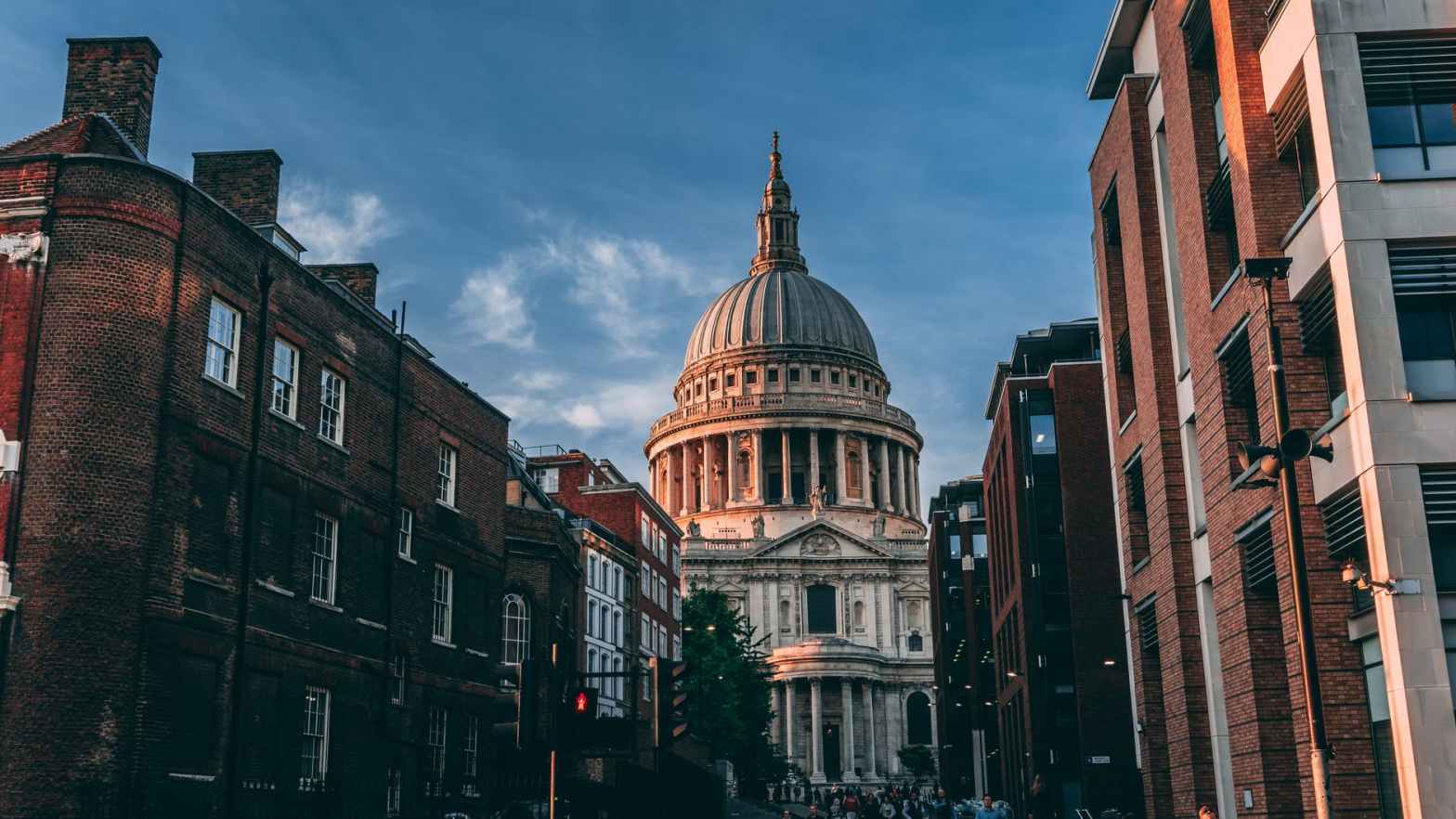
Letters From Quotidia Episode 190 Peace is the Path, From Clare to Here

Quentin Bega
OLYMPUS DIGITAL CAMERA
Letters From Quotidia Episode 190 Peace is the Path, From Clare to Here

Welcome to Letters From Quotidia, episode 190 – a podcast by Quentin Bega for lovers of music, poetry, and the Crack- that most Irish of nouns which may encompass, news, gossip, fun, entertainment, and enjoyable conversation. Quotidia is that space, that place, where ordinary people lead ordinary lives. But where, from time to time, they encounter the extraordinary.

Ash is the theme of this post. I am recording and scheduling it with some urgency on the evening of Ash Wednesday here in Australia. Harold Wilson, British Prime Minister in the mid-1960s famously said, A week is a long time in politics. Well, it’s true also for geopolitics. Only a couple of days ago, I was preparing a Ralph McTell song for the current podcast with its accompanying text, but things have changed dramatically in that short space of time.

Now, we have a guy who seems to like being  photographed sitting at a very, very long table somewhere in Moscow, who has threatened the West three times (so far) with nuclear war. The last time this unthinkable catastrophe was massively in the global mind was during the Cuban Missile Crisis 60 years ago. Sanity prevailed then, thanks to level heads on both sides. JFK was one of the protagonists. He said something that is particularly fitting for where we are now: It is from numberless diverse acts of courage and belief that human history is shaped. Each time a man stands up for an ideal…or strikes out against injustice, he sends forth a tiny ripple of hope and crossing each other from a million different centres of energy and daring, those ripples build a current that can sweep down the mightiest walls of oppression and resistance.

This seems to describe what is happening as ordinary people in Ukraine and throughout the world- including Russia, it must be said- declare that it is not all right to invade a sovereign state. As country after country lines up to funnel, belatedly, military aid to Ukraine I am conscious of the words of the youngest recipient of the Nobel Peace prize, Malala Yousafzai, If you want to end the war then Instead of sending guns, send books. Instead of sending tanks, send pens. Instead of sending soldiers, send teachers. Malala was the victim of misogyny and hatred as Taliban gunmen shot her in the head in 2012, leaving her for dead. Her crime in the eyes of those who ordered and carried out her shooting: taking the bus to school. That she survived is a triumph for the forces of good in the world.

Seventy years before Malala, another talented teenage girl, faced the evil of her circumstances with the following words: I see the world being slowly transformed into a wilderness – I hear the approaching thunder that, one day, will destroy us too. I feel the suffering of millions. And yet, when I look up at the sky, I somehow feel that everything will change for the better, that this cruelty too shall end, that peace and tranquillity will return once more. And much as we may wish that the outcome for her had been otherwise, history records that Anne Frank perished in the death camp of Bergen-Belsen in February 1945, at age 15.

The world seems to me… topsy-turvy. This compound word is both an adjective and a noun meaning, upside down and a state of utter confusion, respectively.  I’m going to put the original song first- not because it is better than the cover but because it is more urgent. Its title, Peace is the Path, is from a saying of Mahatma Gandhi which in full goes: There is no path to peace. Peace is the path. The verses comprise the Beatitudes of Jesus and two voices arguing about(what else?)  peace. I use a Celtic air setting- without drums- enough drums beating in the world as it is, eh? [insert song]

What you leave behind is not what is engraved in stone monuments, but what is woven into the lives of others. This quotation is from Pericles, the  fifth century BC Athenian statesman- he too endured the horrors of war and knew what was of value. How often have you heard these words, It was a different world back then, usually spoken by someone of my vintage, pointing out the superiority of their era while, with no awareness of contradiction, pointing out how much tougher it was back in the day and how the mollycoddled mooks of today wouldn’t survive for a minute in the testing times of the past.

Of course, it was the same old world- just with a lot fewer people. I thought about this during the past week as Putin calculated that the West was not as united or coherent as it once was. But I remain hopeful that the 20% of the world’s population living in the freedoms guaranteed by the rule of law within liberal democracies will ultimately prevail against the malevolence of the autocratic players who are presently taking centre stage in the dramatic events preoccupying the world today.

For some reason, The International Geophysical Year, popped into my head: it was an international scientific project that lasted from 1 July 1957 to 31 December 1958. It marked the end of a long period during the Cold War when scientific interchange between East and West had been seriously interrupted. Sixty-seven countries participated in IGY projects, although one notable exception was the mainland People’s Republic of China, which was protesting against the participation of Taiwan. 

I told you it was the same old world- even back then. And back then, I was an 8-year-old voracious reader at Lago Elementary School in Aruba captivated by, as I remember, National Geographic Magazine’s account of this global event. Both the Soviet Union and the U.S. launched artificial satellites for this event; the Soviet Union’s Sputnik 1, launched on October 4, 1957, was the first successful artificial satellite. This epochal event spurred the establishment of NASA.  Other significant achievements of the IGY included the discovery of the Van Allen radiation belts by Explorer 1 and the defining of mid-ocean submarine ridges, an important confirmation of plate-tectonic theory. The establishment of the Antarctic Treaty was another triumph of this event.

Sixty-five years later, here I am listening to Donald Fagen’s coolly cynical 1982 hit, I.G.Y. (What a Beautiful World). Fagen’s lyrics sarcastically discuss the widespread optimistic vision of the future at that time, including futuristic concepts such as solar-powered cities, a transatlantic tunnel, permanent space stations and spandex jackets. The song criticises this vision and offers a humorous critique on the naïveté of post-war optimism in America and the Western world. Me? I’m still that optimistic 8-year-old child- eyes wide in wonder at the possibilities of scientific cooperation and progress.

Now to the second song of the post, From Clare to Here. This song demonstrates that, in some ways, the late fifties and early sixties were a different world. Folk singer-songwriter Ralph McTell worked on building sites in London with Irish labourers who befriended him. Then, the distance from the  rural west coast of Ireland to the English metropolis was alienating in more than one way. The once pious and amenable young men with a faithful sweetheart waiting at home, now fuelled by booze, fighting and the crack at the pub which siphons most of their money will never go back.

Today the young men may still be leaving the rural west coast of Clare- but they aren’t pious, and they are taking their girlfriends with them equipped with qualifications which open up more than menial labouring tasks as they set course for their future lives. In the last post I suggested that this song was a possibility for the indeterminate future. Of course, the future arrived more quickly than I anticipated because the only way I could get the song out of my head was to record it. The hook line of the chorus of From Clare to Here was supplied by one of Ralph’s Irish work mates who, when reflecting on the change from his home said, Yes, it’s a long way from Clare to here. [insert song] No trailer, again, but a poem about peace by Emily Dickinson: I many times thought Peace had come/When Peace was far away—/As Wrecked Men—deem they sight the Land—/At Centre of the Sea—/And struggle slacker—but to prove/As hopelessly as I—/ How many the fictitious Shores—/Before the Harbor be—

Credits: All written text, song lyrics andmusic (including background music) written and composed by Quentin Bega unless otherwise specified in the credits section after individual posts. Illustrative excerpts from other texts identified clearly within each podcast. I donate to and use Wikipedia frequently as one of the saner sources of information on the web. The IGY stuff is from this site.

Technical Stuff: Microphone- Shure SM58; (for the podcast spoken content) Audio Technica AT 2020 front-facing with pop filter); Apogee 76K also used for songs and spoken text.

For recording and mixing down: 64-bit N-Track Studio 9 Extended used; Rubix 22 also used for mixing of microphone(s) and instruments. I use the Band in a Box/RealBand 2022 combo for music composition.

Letters From Quotidia Episode 189 The Streets of London (expanded version), Only You

Letters From Quotidia Episode 189 The Streets of London (expanded version) Only You

Welcome to Letters From Quotidia, episode 189 – a podcast by Quentin Bega for lovers of music, poetry, and the Crack- that most Irish of nouns which may encompass, news, gossip, fun, entertainment, and enjoyable conversation. Quotidia is that space, that place, where ordinary people lead ordinary lives. But where, from time to time, they encounter the extraordinary.

Fergal Keane, a foreign correspondent with the BBC persuaded his west London neighbour, the folk legend Ralph McTell, to do what no one else had been able to do in the fifty-plus years since his greatest hit, The Streets of London was first recorded: namely, to write a new verse in response to a contemporary event.  In 2020 as a new pandemic began to circle the globe, McTell wrote a new verse as a response to COVID-19 and its effect on homeless people. As he told Fergal Keane: “This is of biblical proportions, this catastrophe, and each day that goes by there is the realisation that this is no dress rehearsal, this is actually going on right now and there is nothing we can do about it, except try and follow the basic rules.”

I have incorporated this new verse into the first song of this post. I first heard the song from one of the folk aficionados at Trench house in late 1969: the aficionado in question had purchased McTell’s 1969 album, Spiral Staircase, and all the folkies immediately loved the song: it went, ah, viral. Remember, this was well before the internet so it’s hard to credit that within days of its release in Britain, it was being sung in Australia! But it must be true because McTell tells us so on his website. As for me- I was knocked out by the lyrics, the melody and, particularly, the chord progression of the song. At last count, there have been well over 200 commercial covers of the song- not to mention the many thousands of times it is being sung in clubs and around campfires worldwide every single year.

Banter, our wee folk group, which has been in prolonged hiatus because of the virus, has also presented this gem- with Sam the Man as the singer. But, here now, as I prepare to sing this great song, I reflect that only five years, chronologically, separate me from one of my folk heroes. He took his stage surname from the blues singer, Blind Willie McTell, whose music he admired. He was born in 1944 and raised by his mum in Croydon, a suburb of London. He has been part of the music scene since the 1960s and when I heard him sing the added verse to Streets of London courtesy of Fergal Keane of the BBC, and the internet in mid-February 2022, knew I had the song I would cover for the 189th Letter from Quotidia. Here it is: [insert song]

Fergal Keane, who is a nephew of John B Keane, a renowned Irish man of letters, asked McTell, after he had recorded the added verse, why he had done so. McTell told him that, as a singer-songwriter with an audience, he could, perhaps do something to make a difference saying, “Kindness is a word that seems to have dropped from a meaningful vocabulary. As human beings, it’s all we can do, it’s this thing we have in common.” He went on to say that he had heard just that day that Prince Charles had been affected by the virus; that it was indiscriminate, and that the infection would strike the highest to the lowest.

Remember, in March 2020, which was at the beginning of the pandemic, there were no vaccines or anti-viral drugs to ameliorate the effects of this novel pathogen emanating, apparently, from China. People witnessed fellow citizens being buried in mass graves and wondered what the future held. But the words that struck a chord with me were: “Kindness is all that we can offer to each other.” Now ain’t that the truth! Oh, yeah, one of the heroes of my young manhood remains a hero of my old age- and who knows? Perhaps I will have the chance to cover another of his songs in a future post- I do like From Clare to Here.

Regular visitors to Quotidia may be aware that I have a soft spot for the dithyramb. Wikipedia tells us that a dithyramb is an ancient Greek hymn sung and danced in honour of Dionysus, the god of wine and fertility; the term was also used as an epithet of the god. Plato, in The Laws, while discussing various kinds of music mentions “the birth of Dionysos, called, I think, the dithyramb.” Plato also remarks in The Republic that dithyrambs are the clearest example of poetry in which the poet is the only speaker. What’s not to like! The dithyrambic context summons up three of the more enduring preoccupations of my life: wine, women and song And, of course, the Greeks have a word for it: Hendiatris (from the Ancient Greek meaning ‘one through three’)  it is a figure of speech used for emphasis, in which three words are used to express one idea. The dithyramb also summons up awareness of the divine, the beatific.

Now, I ended the original  Quotidia sequence with just such a composition- you can find it at Letters From Quotidia Episode 120 podcast on 5th August 2021 . You know, it takes time to write stuff that means anything much at all. This is particularly the case with song which has both music and lyrics as components. And I was going to bolster this latest of my original compositions with disparaging comparisons to, say, tissue paper- which- let’s face it- has utility. I know that as I have grown older, that I resort to these disposable items more and more to address the increasing flow of mucus, especially while I am eating! (Oh, yuck, yeah, I know) I also, initially, sought to extend the disparagement by positing the concept of, “the will o’ the wisp” as the polar opposite of what I was doing.

Oh dear,  and as I started to chase this reference through the wilds of Wikipedia, I began to sympathise with those well-meaning people- and, let me be clear, I would never refer to them as deplorables– those well-meaning people, who have descended into the bewildering rabbit-holes of QAnon and who have found themselves bogged down in the assorted quagmires churned up by the troll farmers of Russia, China and all the other state and non-state malevolent entities who seek to undermine the values of  the beleaguered liberal democracies of the West. Yeah, I know, I’m old-fashioned, perhaps deluded, in that I still believe in the power of ordinary people. Anyway, I found myself surrounded by multitudinous references to ghost-tale traditions from all over this wonderful earth as well as concepts such as bioluminescence or chemiluminescence caused by the oxidation of phosphine,  diphosphane  and methane produced by organic decay. Oh! What?! The only way out of- if there is such an escape– this quagmirish rabbit-hole is (drum roll): poetry! Which I will apply to our fevered senses after this second dithyramb of the series. It’s title? Only You. [insert song]

No trailer again for next week as I am struggling to meet my deadline for this post. But I did promise a poem and I will preface it by three quotes about kindness: first, surprisingly perhaps, Roald Dahl, who published a collection of short stories with the title, Cruelty! But anyway, this is what he has to say about kindness: I think probably kindness is my number one attribute in a human being. I’ll put it before any of the things like courage, or bravery, or generosity, or anything else… Kindness—that simple word. To be kind—it covers everything, to my mind. If you’re kind that’s it. Next, Abraham Lincoln, perhaps the greatest of American presidents: Kindness is the only service that will stand the storm of life and not wash out. It will wear well and will be remembered long after the prism of politeness or the complexion of courtesy has faded away. Finally, back to the ancient Greeks and Aesop- he of the fables- No act of kindness, no matter how small, is ever wasted.

The poem is supplied by that enigma of 19th Century American poetry- Emily Dickinson: If I can stop one heart from breaking,/I shall not live in vain;/If I can ease one life the aching,/Or cool one pain,/Or help one fainting robin/Unto his nest again,/I shall not live in vain. It’s sad to reflect that so many lives are, ostensibly, lived in vain, according to this prescription. But, maybe, somewhere under the carapace of cruelty and lack of empathy, there beats the possibility of a kind heart- until next week, then.

Credits: All written text, song lyrics andmusic (including background music) written and composed by Quentin Bega unless otherwise specified in the credits section after individual posts. Illustrative excerpts from other texts identified clearly within each podcast. I donate to and use Wikipedia frequently as one of the saner sources of information on the web.

Technical Stuff: Microphone- Shure SM58; (for the podcast spoken content) Audio Technica AT 2020 front-facing with pop filter); Apogee 76K also used for songs and spoken text.

For recording and mixing down: 64-bit N-Track Studio 9 Extended used; Rubix 22 also used for mixing of microphone(s) and instruments. I use the Band in a Box/RealBand 2022 combo for music composition.

Letters From Quotidia Episode 188 Come Out Ye Black and Tans, Maximise My Clicks

Letters From Quotidia Episode 188 Come Out Ye Black and Tans, Maximise My Clicks

Welcome to Letters From Quotidia, episode 188 – a podcast by Quentin Bega for lovers of music, poetry, and the Crack- that most Irish of nouns which may encompass, news, gossip, fun, entertainment, and enjoyable conversation. Quotidia is that space, that place, where ordinary people lead ordinary lives. But where, from time to time, they encounter the extraordinary.

Last week I aped the typical politician and abandoned a promise made to give details of what is coming up, in the previous post. However, unlike the typical politician, I felt a twinge of regret about the omission! But on now to the first offering for this week.  Come Out, Ye Black and Tans: I first learned and sang this song in the early 1970s and I have admired its energy and defiance from that time. It is often misrepresented as a sectarian rant and I have encountered opposition to it on these grounds which, I hope, the following account which I have abridged from the entry in Wikipedia clears up:

The song was written by Dominic Behan as a tribute to his IRA father Stephen, who had fought in the War of Independence, and is concerned with political divisions in working-class Dublin of the 1920s. The song uses the term “Black and Tans” in the pejorative sense against people living in Dublin, both Catholic and Protestant, who were pro-British. The term, Black and Tans, refers to “special reserve constables” (mainly former World War I army soldiers), recruited in Great Britain and sent to Ireland from 1920, to reinforce the Royal Irish Constabulary (RIC) during the Irish War of Independence.   The setting of the song is the Dublin into which Dominic Behan was born in the late 1920s, and the main character in the song is Behan’s father, Stephen Behan, who was a prominent Irish republican, who had fought in the Irish War of Independence and the Irish Civil War. 

The melody of the song was adapted by Behan from an old air, Battle-cry of Munster by 18th Century Irish writer, Pierce FitzGerald which, in one of those ironies of Irish history, is also used by the loyalist song The Boyne Water. The song tells the story of a regular dispute between republican and unionist neighbours in inner-city Dublin in the mid-1920s. During this era, Dublin continued to elect unionist pro-British politicians and voluntary service in the British Army was a popular career choice amongst working-class Dubliners, for both Catholics and Protestants. Supporting this tradition was the existence of a relatively large, and now generally forgotten and, indeed, disappeared, Dublin Protestant working class. It is this pro-British working class, of both religions, that the composer lambasts in the song. He asks them to come out and “fight me like a man”, stating that the “IRA had made the Black and Tans “run like hell away” from locations in rural Ireland such as the “green and lovely lanes of Killashandra” (which is in County Cavan, and where, in 1922, ex-RIC and Black and Tan soldiers were forced to flee the town after being given a few days warning to leave by the local IRA).

The lyrics make references to the history of Irish nationalism, and the conflicts of the British Army against opponents with inferior weaponry: “Come tell us how you slew them poor Arabs two by two / Like the Zulus, they had spears and bows and arrows” The lyrics reference the disdain by his neighbours (those “sneers and jeers that you loudly let us hear”), to the execution of the leaders of the 1916 Easter Rising, and to the fall of the Irish nationalist political leader, Charles Stuart Parnell. In January 2020, The Wolfe Tones’ version of “Come Out Ye Black and Tans” reached number 1 on the Ireland and UK iTunes charts, as part of “widespread criticism” of the (Irish) Government’s planned commemoration of the RIC, as part of its “Decade of Commemoration” (commemorating the events of 1912–1922 in Ireland)

Ah, the fools, the fools!  Did they really think that a mere century was enough time to quell the fires of dissension in Irish hearts? Of course, musicians are, more often than not, fairly tolerant of music from a tradition adversarial to their own. Case in point: in the first half of the 1990s when we lived in North Queensland, we were friends with a couple from Northern Ireland. Tom played the bass and had a group based in Townsville. They would give a spirited rendition this song with Tom bellowing out the chorus with gusto- even though he was a fairly staunch Protestant.[insert song]

From one controversial writer to another. Just as Dominic Behan has had his detractors who claim he used, unacknowledged sources for some of his songs (including the one you have just heard) so, too, Johann Hari, the British journalist I have favourably referenced in a previous post about the disastrous war on drugs: Letter 85 A Packet of White Powder published on 23rd June 2021. His detractors accuse him of playing fast and loose with the truth and incorporating the observations of others within his own work! You know, maybe he should have been a writer of folksongs, eh?

But listen, in January 2022 he published a book entitled Stolen Focus where he persuasively advances the thesis that humankind is suffering from a debilitating attention deficit disorder brought on by how our mental processes are being adversely manipulated by the social media behemoths such as Facebook- I can’t yet bring myself to call it, what, Meta! But do spare a thought- and a dime perhaps?- for Mark Zuckerberg whose personal worth dropped by US$34 billion recently. I dare say he still has some walking-around money left, mmm? And, of course, Google, which dropped its Don’t Be Evil slogan a while back, perhaps in response to the ironic laughter echoing through the universe. Its parent company Alphabet declared a quarterly profit of 76 billion on 1 February 2022.

So, how have you all been faring in this, the third year of the global pandemic? A media guru here in Australia, the broadcaster Phillip Adams, is the host of a long-running show on public radio, Late Night Live, of which I have been a regular listener since he took over the helm of the show in 1991. Although most listeners and contributors are Australian, he has a world-wide audience and often has important voices from the US, British Isles, Europe- and elsewhere- canvassing a range of diverse and interesting topics. His podcast on the book Stolen Focus where he interviews Johann Hari may be of interest to listeners to the Letters From Quotidia. I know this small but select band do have attention spans greater than that of, say, goldfish, or viewers of the dancing denizens of Tik Tok.

The original song for this podcast is focused on a quintessential citizen of the digital domain. I listened to a bunch of songs from the site but couldn’t really put my heart into a parody of what I had auditioned. After all, a parody has to retain some affection for the form being mocked. So, I ended up with what you are about to hear. The title? Maximise My Clicks which seems to me to sum up what this stuff is all about. I shake my head in wonder and admiration at  independent bands who keep on playing but whose members only end up with a fistful of dollars each for, say, one hundred thousand downloads on any of the streaming platforms. [insert song]

Far too many of us  live in the splintered world depicted in the song. If you, too, are fractured into pieces under the relentless hammer-blows delivered by the devices we all seem to need- well, I have nothing to recommend but poetry to change the dynamic. Instead of trailing the songs for the next podcast, I will leave you with, The Crystal Gazer, by that wonderful American poet, Sara Teasdale: I shall gather myself into myself again,/I shall take my scattered selves and make them one,/Fusing them into a polished crystal ball/Where I can see the moon and the flashing sun.//I shall sit like a sybil, hour after hour intent,/ Watching the future come and the present go,/And the little shifting pictures of people rushing/In restless self-importance to and fro// Amazing, isn’t it, this insight from a poet who died in 1933, before TV, before the internet, before the enslaving devices we peer into anxiously for most of our waking hours.

Credits: All written text, song lyrics andmusic (including background music) written and composed by Quentin Bega unless otherwise specified in the credits section after individual posts. Illustrative excerpts from other texts identified clearly within each podcast. I donate to and use Wikipedia frequently as one of the saner sources of information on the web.

Technical Stuff: Microphone- Shure SM58; (for the podcast spoken content) Audio Technica AT 2020 front-facing with pop filter); Apogee 76K also used for songs and spoken text.

For recording and mixing down: 64-bit N-Track Studio 9 Extended used; Rubix 22 also used for mixing of microphone(s) and instruments. I use the Band in a Box/RealBand 2022 combo for music composition.