
Letters From Quotidia Episode 111 Sidekick

Letters From Quotidia Episode 111 Sidekick

Welcome to Letters From Quotidia – a podcast by Quentin Bega for lovers of music, poetry, and the Crack- that most Irish of nouns which may encompass, news, gossip, fun, entertainment, and enjoyable conversation. Quotidia is that space, that place, where ordinary people lead ordinary lives. But where, from time to time, they encounter the extraordinary.

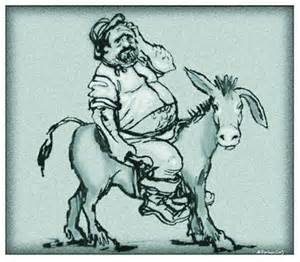
What do Porky Pig, Tonto and Dr Watson have in common? The entry title gives it away, I guess. They’re all the sidekick to the protagonist they support: Daffy Duck, The Lone Ranger and Sherlock Holmes, respectively. Defined by Wikipedia as a close companion or colleague (not necessarily in fiction) who is actually, or generally regarded as, subordinate to the one he accompanies, the sidekick has a special place in our hearts.  By asking questions of the hero, or giving the hero someone to talk to, the sidekick provides an opportunity for the author to provide exposition, thereby filling the same role as a Greek chorus. Sidekicks frequently serve as an emotional connection, especially when the hero is depicted as detached and distant, traits which might make it difficult to like the hero.

Of course, every hero needs the opposition of a villainous antagonist. The villain often mirrors the hero by also having a secondary accomplice. But these are not dignified by the label, sidekick. A villain’s supporters are normally called henchmen, minions, or lackeys, not sidekicks. While this is partially a convention in terminology, it also reflects that few villains are capable of bonds of friendship and loyalty, which are normal in the relationship between a hero and sidekick. This may also be due to the different roles in fiction of the protagonist and the antagonist: whereas a sidekick is a relatively important character due to his or her proximity to the protagonist, and so will likely be a developed character, the role of a henchman is to act as cannon-fodder for the hero and his sidekick. As a result, henchmen tend to be anonymous, disposable characters, existing for the sole purpose of illustrating the protagonists’ prowess as they defeat them.

This truth can be amply demonstrated by viewing Peter Jackson’s Rings trilogy and even more so, The Hobbit films: how many orcs, goblins and assorted ghoulish monsters perish under the axes, swords, and spells of Tolkien’s heroes.Far too many to adequately sustain suspension of disbelief, in my experience. I remember not playing Cowboys and Indians as a kid in Aruba because no one wanted to be one of the Indians, fated to lose every encounter; so, we were each our own hero, pe-yoo, pe-yooing mouth salvos as we invariably avoided the fatal bullet, conceding only wounds to the left shoulder, leaving our deadly right-hand fully functioning into the descending dusk or until some other diversion attracted our attention.

Embrouded was he, as it were a meede,/Al ful of fresshe floures, whyte and reede;/ Syngynge he was, or floytynge, al the day,/ He was as fressh as is the monthe of May. This is The Squire, from the General Prologue of The Canterbury Tales, and he is my ideal for the youthful sidekick. Nameless, he shines from the fourteenth century as a template of the type, Wel koude he sitte on hors, and faire ryde./ He koude songes make, and wel endite,/ Juste, and eek daunce, and weel purtreye and write./ So hoote he lovede, that by nyghtertale/ He slepte namoore than dooth a nyghtyngale./ Not only was he passionate and accomplished in all the knightly arts, but humility and loyalty were also part of his repertoire, Curteis he was, lowely, and servysable,/ And carf biforn his fader at the table.

Now past the age of 70, it is futile to aspire to this template and so I must look to a more mature example of the species. Perhaps Sancho Panza, the sidekick of Don Quixote may serve. Panza means paunch in Spanish, so this bit fits. The online Britannica notes that his gross appetite, common sense, and vulgar wit serve as a foil to the mad idealism of his master. This, too, induces sparks of recognition but in the end fails to start a fire. Ultimately, perhaps, there is no single template that will do because so many of us are, in fact, only sidekicks within our own narrative, where we are daily confronted with the realisation that we lack a hero who would transform the challenges we meet.

To aspire to be a named sidekick outside of our own story is too lofty an ambition for most: who would be so big-headed as to compare themselves to Sam Gamgee? Robin, The Boy Wonder? Or even, Donkey from Shrek?Some may find an image of themselves in the poem Sidekicks, by American poet, Ronald Koertge: They were never handsome and often came/with a hormone imbalance manifested by corpulence,/a yodel of a voice or ears big as kidneys. Of course, as we all know, the most important attributes are not those of physicality but those of character, as the poem makes clear, But each was brave. More than once a sidekick/has thrown himself in front of our hero in order/to receive the bullet or blow meant for that/perfect face and body.

In this song, stanza one looks at the  mundane, even, cliched, home life of the sidekick and stanza two takes the longer view, especially his yearning for an actual name-  I have subjected him to the indignity of not possessing this attribute that any self-respecting sidekick requires!  In the  final, one line-coda, there is an emphasis on the essential, existential equality of the hero and sidekick. But in expiation for this peccadillo, I have, rather nobly, I think, burdened myself with the task of using a rare rhyme scheme that I have only used one before in the songs for this project- in The Morrigan. The rhyme scheme is: abcddcba, not terribly effective as it is hard to spot-apart from rhymes 4 and 5 which stitch stanzas one and two together, and, at a stretch, possibly discernible are rhymes 3 and 6- but for the rest, not likely.  [insert song]

Letter 112 finds the narrator in a revelatory mood where he explains the genesis of the source material for the Quotidia letters. Revealed, also, is his collaboration with a music professional in the composition of a jazz suite: his part was to come up with a concept&craft a set of lyrics to go with the music.

Credits: All written text, song lyrics and music (including background music) written and composed by Quentin Bega unless otherwise specified in the credits section after individual posts. Illustrative excerpts from other texts identified clearly within each podcast. I donate to and use Wikipedia frequently as one of the saner sources of information on the web.

Technical Stuff: Microphone- (for the podcast spoken content) Audio Technica AT 2020 front-facing with pop filter)

Microphone (for many of the songs) Shure SM58

For recording and mixing down 64-bit N-Track Studio 9 Extended used

Music accompaniment and composition software– Band-in-a-Box and RealBand 2020 as well as- for some 20 of the songs of year 2000 vintage- I used a Blue Mountains, NSW, studioApproximately 48 Banter folk songs and instrumentals recorded live (“in the round”) with a ThinkPad laptop using the inbuilt mic.
Letters From Quotidia Episode 110 Now We’re 64

Letters From Quotidia Episode 110 Now We’re 64

Welcome to Letters From Quotidia – a podcast by Quentin Bega for lovers of music, poetry, and the Crack- that most Irish of nouns which may encompass, news, gossip, fun, entertainment, and enjoyable conversation. Quotidia is that space, that place, where ordinary people lead ordinary lives. But where, from time to time, they encounter the extraordinary.

It’s strange how the gravitational pull of the stellar personalities in our youth, no matter how fast and far we thought we had travelled in the years since, draw us into an orbit of obeisance, or, at least, sincere acknowledgement of influence.  Just over 10 years ago, as I lurched through the barrier of sixty calendar years on the planet, I began to think of eschatological matters with a little more attention: I mean, even with the most optimistic and deluded of outlooks, one would have to agree that the past was more packed with incident and longevity than the years ahead will prove to be.

So, I wrote a song which touched upon matters encompassing the fifty plus years I have known my wife. Now, as a personal aside, as I write this, we have just celebrated our 50th  Wedding Anniversary, in lockdown rather than in a swish apartment overlooking the Sydney Harbour Bridge and Opera House-thank you COVID!  And, as Hendrix wrote in lyrics to the song on the B side of his monster hit Purple Haze which I bought way back in March of 1967, For fifty years they’ve been married and they can’t wait for the fifty first to roll around…  Anyway, back to the song at the end of this post.

As my inspiration, I took a song from the Beatles’ St. Pepper’s album, Paul McCartney’s, When I’m 64. Although the theme is “ageing”, Wikipedia informs me, it was one of the first songs McCartney wrote, when he was 16.It was on the Beatles playlist in their early days as a song to perform when their amplifiers broke down or the electricity went off. Lennon said, in his 1980 interview for Playboy, “I would never even dream of writing a song like that.” But, I did, at age 63. And I’m not Robinson Crusoe, in this regard either. Lots of other people, riffing off the McCartney song, have registered in song or verse or prose, reflections on reaching age 64.

And almost fifty years before the Beatles set the song in vinyl, T.S. Eliot, in one of his finest poems, explored age in a poem, the title of which, means old manGerontion. …Vacant shuttles/ Weave the wind.  I have no ghosts,/ An old man in a draughty house/ Under a windy knob.// After such knowledge, what forgiveness? Think now/History has many cunning passages, contrived corridors/ And issues, deceives with whispering ambitions,/ Guides us by vanities./ I was neither at the hot gates/ Nor fought in the warm rain/ Nor knee deep in the salt marsh, heaving a cutlass… I have lost my sight, smell, hearing, taste and touch:… These with a thousand small deliberations… multiply variety in a wilderness of mirrors…

McCartney was only 16 when he wrote his song; Eliot was twice his age- 32- when he wrote his poem. But neither, by any stretch, could be considered old. Are our senior poets, then, so immured in their senescence, that we can learn nothing from them? Not so! Carol Ann Duffy, that redoubtable poet (and laureate) wrote, introducing a selection of poems from senior British poets in The Guardian back in 2010, I invited the poets here to write, in any way they chose, about ageing. Our society, I believe, is turning gradually away from its obsession with “yoof” and “slebs”. We are beginning to realise that we face, at the very least, an uncertain future, one in which wisdom and experience – and respect – will need to be accorded a more important role. Nice thought, Carol Ann, if only it were true. Looked at any Tik-Toks recently?

All the old gods have become enfeebled,/mere playthings for poets. Few, doze or daft,/frolic on Parnassian clover, wrote Dannie Abse, a notable poet, who died at age 91, in 2014. For Ruth Fainlight, aged 85, and close friend of Sylvia Plath in the years before that poet’s suicide, ageing, means no more roller-skating./That used to be my favourite/ sport, after school, every day:… When I saw that young girl on her blades,/wind in her hair, sun on her face,… racing/her boyfriend along the pavement:/– then I understood ageing. Interesting, and amusing, is Roger McGough’s re-working of his famous 1967 poem, Let Me Die A Youngman’s Death, where he spurns the decorous, fading-away-like-the-smoke-of-a-blown-candle sort of death for one that is full of incident, violence, lasciviousness and noise- although not before the age of 73 at the earliest! Now, at age 78, he admits, My nights are rarely unruly. My days/of allnight parties are over, well and truly./No mistresses no red sports cars/no shady deals no gangland bars/no drugs no fags no rock’n’roll/Time alone has taken its toll.

I guess, that for Roger and me and so many others in- what do you call them- our golden years, a dose of Lily the Pink’s medicinal compound would be just what the doctor ordered! I’ll finish by reference to a poem by erudite British-based Australian poet, Peter Porter who died in 2010, aged 81, shortly after submitting, Random Ageist Verses, for inclusion in the Guardian article. In this short poem of ten quatrains rhyming abab, he ranges wittily across age-related themes, citing Churchill, Auden, Hardy and Hyden, with insights such as, Immersed in time, we question time/And ask for commentators’ rights/The amoeba has a taste for slime/ Among its range of appetites concluding with these lines that surely only the wisdom of age can craft, The greyness of the sky is streaked/Along its width with shades of red;/The pity of the world has leaked/ But who are these whose hands have bled? [insert song]

As a bit of light relief from heavyweight poets and the like, the next Letter poses  the sort of question that fans of pop culture lap up like Sylvester lipping his saucerful of milk: What do Porky Pig, Tonto and Dr Watson have in common? Intelligensia among you, however, need not despair: there are ample examples from poetry and literature to satisfy those whose brows range from middling to high. So, come one, come all, the sweet land of Quotidia awaits your call.

Credits: All written text, song lyrics and music (including background music) written and composed by Quentin Bega unless otherwise specified in the credits section after individual posts. Illustrative excerpts from other texts identified clearly within each podcast. I donate to and use Wikipedia frequently as one of the saner sources of information on the web.

Technical Stuff: Microphone- (for the podcast spoken content) Audio Technica AT 2020 front-facing with pop filter)

Microphone (for many of the songs) Shure SM58

For recording and mixing down 64-bit N-Track Studio 9 Extended used

Music accompaniment and composition software- Band-in-a-Box and RealBand 2020 as well as- for some 20 of the songs of year 2000 vintage- I used a Blue Mountains, NSW, studioApproximately 48 Banter folk songs and instrumentals recorded live (“in the round”) with a ThinkPad laptop using the inbuilt mic.

Letters From Quotidia Episode 109 I Rest My Case

Letters From Quotidia Episode 109 I Rest My Case

Welcome to Letters From Quotidia – a podcast by Quentin Bega for lovers of music, poetry, and the Crack- that most Irish of nouns which may encompass, news, gossip, fun, entertainment, and enjoyable conversation. Quotidia is that space, that place, where ordinary people lead ordinary lives. But where, from time to time, they encounter the extraordinary.

We have such a lot to put up with in the state of Affluenza: I’m suffering from compassion fatigue: there’s always someone after my charity dollar…Paying off the mortgage is taking all my time and energy; so much so that I can’t enjoy my harbour view…I feel so guilty: I know! I’ll dress in black, like Johnny Cash did, until there is equality and harmony and world peace… Keeping up with the Joneses is such tiring business because just when you get up to where they are, lo and behold, another set of Joneses pops up to spoil your feeling of having arrived.

The phrase has been with us for over one hundred years and is becoming increasingly archaic; predicated, as it was, on a much lesser gap in wealth between socio-economic groups. Now, the gap between wealth and the rest is staggering. And even within the top 1%- that cliché for true wealth, there is a divide between the millionaires who are becoming a dime a dozen, so to speak, and the rarefied planet of the jet-setting billionaires. In the state of Affluenza, you don’t want to be alone, in a position of vulnerability, and subject to illness, accident or attack, because- chances are- you will become just another statistic in the case-files of the bystander effect.

Wikipedia defines this as a social psychological phenomenon that refers to cases in which individuals do not offer any means of help to a victim when other people are present. The probability of help is inversely related to the number of bystanders. In other words, the greater the number of bystanders, the less likely it is that any one of them will help. Now, this phenomenon pre-dates Affluenza as the parable of The Good Samaritan attests but it is clearly amplified in affluent, urban societies. Here are a few: Kitty Genovese, a young woman stabbed, raped and killed brutally over a period of half an hour outside her apartment building in Queens, NYC in 1964, within the hearing of a dozen people, not one of whom lifted a hand to help or even a phone for police assistance, which would have saved her life. In 2011 two-year old Wang Yue was run over twice, by drivers, in the Chinese city of Foshan, neither of whom stopped. At least 18 bystanders walked past without aiding the stricken infant. Only an elderly rubbish scavenger, Chen Xianmei, stopped to help the dying child. How many of the plutocracy are worth as much, in essence, as this fine woman.

But what does inaction do to those who witness human distress without active compassion? And how many of us can say we have always acted honourably when confronted with similar situations? There is a photograph that I often used in the last twenty years of my teaching career to illustrate the importance of context and framing in the making of meaning. It is a photograph taken in 1993 by photo-journalist Kevin Carter of an African scene. I would show, at first, a cropped shot of a vulture on the arid plain gazing intently at something just out of frame and ask for a response- which was usually fairly tepid. Then, I would reveal the uncropped shot where we see in the foreground a severely emaciated child crawling on the ground. Now, it is clear why the vulture is gazing so intently. The response is always one of shock. As I was shocked today, when I learned a fuller version of the story:

Carter waited, in vain, for 20 minutes for the vulture to spread its wings- which he thought would make the better shot. All the while the child was whimpering and panting in distress. Carter took the shot, shoo-ed the vulture away and then walked off, leaving the child, claiming he didn’t want to get involved. He won the Pulitzer Prize the following year and he took his own life by carbon monoxide poisoning. I feel desperately sorry for his loved ones, for him, too, and I don’t presume to know if there was a causal link between the circumstances of the photograph and his final act, but I would not be surprised to learn that it was a factor.

Here in Australia, refugees have self-immolated and self-harmed in protest over the conditions at their off-shore detention centres. Both of the major parties here in Australia are welded to policies that guarantee cruelty to these people will persist as I, and twenty-five million fellow citizens look on. The Prime Minister, like so many of his colleagues, claim to be active Christians, so I wonder how foreign aid will fare in the next budget-especially COVID vaccines for the third world?  In a thought- experiment, I have the cabinet study, in detail, Matthew 25: 31-45.

You know, the one where humanity is compared to the shepherd separating the sheep from the goats on the day of judgement: I was hungry and you gave Me food; I was thirsty and you gave Me drink; I was a stranger and you took Me in; I was naked and you clothed Me; I was sick and you visited Me; I was in prison and you came to Me.’ Those on the right side, pass this test and go to heaven. As for the others…hmm. And I would have those Cabinet Christians all recite The Confiteor, that old penitential prayer which includes these words,

I confess to almighty God, and to you, my brothers and sisters, that I have greatly sinned, in my thoughts and in my words, in what I have done and what I have failed to do, through my fault, through my fault, through my most grievous fault. Mea culpa, mea maxima culpa. Now, of course, even in a thought-experiment, I would allow atheists to affirm their willingness to do what is right, and non-Christians to recite penitential prayers from  their own traditions.[insert song]

Our next letter finds the narrator paying homage to Paul McCartney, T. S. Eliot, Carol Ann Duffy, Dannie Abse , Ruth Fainlight, Roger McGough and Peter Porter. At age 16 I played the Sgt Pepper’s album over and over  until I knew by heart the words of all the songs including the one I used as the inspiration for the next song, composed 47 years after the purchase of that seminal record.

Credits: All written text, song lyrics and music (including background music) written and composed by Quentin Bega unless otherwise specified in the credits section after individual posts. Illustrative excerpts from other texts identified clearly within each podcast. I donate to and use Wikipedia frequently as one of the saner sources of information on the web.

Technical Stuff: Microphone- (for the podcast spoken content) Audio Technica AT 2020 front-facing with pop filter)

Microphone (for many of the songs) Shure SM58

For recording and mixing down 64-bit N-Track Studio 9 Extended used

Music accompaniment and composition software– Band-in-a-Box and RealBand 2020 as well as- for some 20 of the songs of year 2000 vintage- I used a Blue Mountains, NSW, studioApproximately 48 Banter folk songs and instrumentals recorded live (“in the round”) with a ThinkPad laptop using the inbuilt mic.
Letters From Quotidia Postcards Edition 27

Letters From Quotidia Postcards Edition 27a

Welcome to Letters From Quotidia, the Postcards edition, number 27, a podcast by Quentin Bega where you will hear songs from the repertoire of Banter, a traditional Irish folk group from Sydney’s outer west. The four songs are drawn from the traditions of the English-speaking world. I will cover the songs because of COVID restrictions. And, as always, Quotidia is that space, that place, where ordinary people lead ordinary lives- but from time to time they encounter the extraordinary.

Whiskey in the Jar, one of the best known traditional Irish vocal ballads, probably originated in the mid-17th century, according to folklorist Alan Lomax, and it has been found in dozens of forms on both sides of the Atlantic. The song is, as one might guess from the title, a favourite drinking and pub song among fans of Irish music all over the world. I learned the song early in 1972 from one of the booklets from the series, Irish Folk Songs. With Seannachie in Wollongong, Tony Fitzgerald sang it and later, with Banter in Sydney in the 1990s, Sam the Man sang it. However, down the years, when I was singing on my own in pubs or clubs or as a duo with my wife, I would regularly ride out upon the old warhorse. The virus allows this virtual version, so, I’ll Ride On![ insert song]  

I wrote about Spancil Hill in an earlier version of Postcards featuring  our singer, Sam. Now, I’ll put a bit more info around this composition. Spancil Hill is in County Clare…its fair is one of the oldest horse fairs in Ireland, held annually on 23 June. Spancil refers to the practice of “spancilling,” which was to use a short rope to tie an animal’s left fore-leg to its right hind leg, thereby hobbling the animal and stopping it from wandering too far. Michael Considine emigrated to the United States of America around 1870. He left intending to make enough money to send for his sweetheart so they could be married. Considine worked in Boston for two years or so before moving to California. In failing health, he wrote the poem in memory of the hometown he would not live to see again. Michael Considine died in California in 1873 at the age of twenty-three. I first learned the song from a Johnny McEvoy record in 1972 and I sang it around Wollongong when we moved there. At present, Sam the Man sings it with our group Banter (now in suspended animation thanks to the virus). This is my lockdown version. [insert song] 

The basis of One of the Has-Beens is Polly Perkins…a famous English song, composed by the London music hall and broadside songwriter Harry Clifton (1832-1872), and first published in 1864. A.L. Lloyd sang One of the Has-Beens in 1958 on his Wattle album, Across the Western Plains. He commented in the album’s sleeve notes: I first heard this one New Year’s Day, in the late 1920’s, in hospital in Cowra, N.S.W. I now learn from [Douglas] Stewart and [Nancy] Keesing’s Old Bush Songs [Sydney: Angus and Robertson, 1957] that One of the Has-Beens is the work of a former horse-breaker, shearer and gold-digger named Robert Stewart, born 1833 in N.S.W. I reckon that the Australian lyrics that you hear on this post perfectly capture the loss of vitality, strength and skill that even the gun shearers would suffer should they live long enough to experience the inevitable effects of ageing. I first heard this song in Wollongong in the 1970s, sung a capella by the late Kevin Baker, a noted Illawarra poet and songwriter with whom I had a long association.[insert song]  

The Old Bog Road: Teresa Brayton, who wrote the lyrics to this song, knew most of the leaders of the 1916 rising and around her neck she wore a chain, a piece of the flagstaff which flew the flag of the Irish Republic from the G.P.O. in Dublin on Easter Monday 1916. The chain was given to her by Countess Markievicz. Many Irish people, of a certain age, know of an old bog road from their own youth or that of their parents. Just a few yards up the road from where I lived in Cushendall was the start of The Old Road which led from the Barrack Brae across the foot of Lurigethan onto the Ballyeamon Road which connected the village to Ballymena. It was unpaved and passable only on foot or by tractor and I quite often used it as a short-cut to my cousin John’s farm. It made for an idyllic wandering in Spring or Summer. The song is much excoriated by woke folk- but where do I stand in this minor skirmish on one of the battlefronts of the culture wars that engulf our hapless planet in the 21st Century? Somewhere in between, initially. But, then, a few years ago, my wife suggested the song to me for our band, Banter, as it was the favourite song of her father’s and one he used to sing many years ago. The song grew on me as I started to research its origins and as I worked on the music. So, I guess I’m now on the side of the song’s protagonists. At the time of recording this, we are still in lockdown and I present my Band-in-a-Box version. It features the twin fingerpicking guitar wizardry of Brent Mason and Jason Rolling. With Nashville drums, acoustic bass, and piano, it provides a suitable accompaniment, IMHO, for this emigrant song of longing. [insert song]

Postcard 28 features lockdown versions  of The Irish Rover and A Bunch of Thyme– songs covered in earlier postcards by Jim. It also features Will Ye Go Lassie Go and The Shores of Botany Bay which are from the repertoire of Sam the Man.

Credits: All written text, song lyrics and music (including background music) written and composed by Quentin Bega unless otherwise specified in the credits section after individual posts. Illustrative excerpts from other texts identified clearly within each podcast. I donate to and use Wikipedia frequently as one of the saner sources of information on the web.

Technical Stuff: Microphone- (for the podcast spoken content) Audio Technica AT 2020 front-facing with pop filter)

Microphone (for many of the songs) Shure SM58

For recording and mixing down 64-bit N-Track Studio 9 Extended used

Music accompaniment and composition software– Band-in-a-Box and RealBand 2020 as well as- for some 20 of the songs of year 2000 vintage- I used a Blue Mountains, NSW, studioApproximately 48 Banter folk songs and instrumentals recorded live (“in the round”) with a ThinkPad laptop using the inbuilt mic.
Letters From Quotidia Episode 108 An Impervious Wall

Letters From Quotidia An Impervious Wall

Welcome to Letters From Quotidia – a podcast by Quentin Bega for lovers of music, poetry, and the Crack- that most Irish of nouns which may encompass, news, gossip, fun, entertainment, and enjoyable conversation. Quotidia is that space, that place, where ordinary people lead ordinary lives. But where, from time to time, they encounter the extraordinary.

Before I built a wall, I’d ask to know/What I was walling in or walling out,/And to whom I was like to give offence./Something there is that does not love a wall, that wants it down. Truly spoken, Robert Frost. Another poet, W. H. Auden wrote about Hadrian’s Wall in Roman Wall Blues, where he captures the loneliness and misery of sentinels the world over throughout history as they stand vigil on their particular wall and peer into the mist for signs of the enemy, The rain comes pattering out of the sky,/I’m a Wall soldier, I don’t know why. There is something about walls that engender complacency- in Edwin Muir’s poem, The Castle, the besieged look unconcernedly from the turret walls surrounding the fortress at the foe half a mile distant confident in the knowledge of their ample provisions, brave defenders, stout fortifications and allies drawing near.

But… There was a little private gate,/A little wicked wicket gate./The wizened warder let them through. And why? Our only enemy was gold,/And we had no arms to fight it with. So-called Chinese walls in financial, commercial and legal institutions are supposed to guarantee probity in matters where conflicts of interest may occur but this does not stop regular breaches of the walls and laws in all of these sectors. The actual Great Wall of China is stupendous to look at but failed miserably in its purpose of keeping out determined invaders, who simply rode around it or had its gates opened by traitors.

The Berlin Wall failed and one may surmise (indeed, hope) that similar walls still in place around the world, will ultimately fail, too. Something there is that does not love a wall. Are you listening, Donald Trump, as you plot a return to the White House? Walls made of unobtainium remain the ideal of oppressors throughout time and place. Such a wall would be impervious to any agency, method or technology. Impenetrable, resisting any level of energy or density of matter, this wall would serve the wildest fantasies of even the most certifiable of megalomaniacs. But it’s out of reach in our material world. The only place such walls can be forged are in the furnaces of the dogmatic mind. Is there anything in this universe more adamantine than the certitude of the religious bigot or political ideologue?

The wailing wall has been a place of pilgrimage for centuries and the practice of leaving prayers on scraps of paper stuffed into cracks is one that fulfils a deep human need to connect in a tangible way with sacred places. In the city of Leiden, the Netherlands, there is a modern version of the wailing wall, it seems to me. Two artists, Ben Walenkamp and Jan-Willem Bruins, with the assistance of various civic and philanthropic bodies arranged that on various walls throughout the city you will be able read 101 poems by a range of poets, starting in 1992 with a poem in Russian by Marina Tsvetaeva, concluding in 2005 with the Federico Garcia Lorca poem, De Profundis,

Those hundred lovers/are asleep forever/beneath the dry earth./Andalusia has/long, red-coloured roads./Córdoba, green olive trees/for placing a hundred crosses/to remember them./Those hundred lovers/are asleep forever. Assassinated, himself, in shadowy circumstances in 1936, his friend Pablo Neruda, explained that the poet had a premonition of his impending death, relating to him that, waking just before dawn Lorca walked to the ruins of a feudal estate on the outskirts of a village in Castile, Suddenly Federico felt oppressed as if by something about to come out of the dawn, something about to happen. He sat down on the broken-off capital of a pillar lying toppled there. A tiny lamb came out to browse in the weeds among the ruins, appearing like an angel of mist, out of nowhere, to turn solitude into something human, dropping like a gentle petal on the solitude of the place. The poet no longer felt alone. Suddenly a herd of swine also came into the area. There were four or five dark animals, half-wild pigs with a savage hunger and hoofs like rocks. Then Federico witnessed a blood-curdling scene: the swine fell on the lamb and, to the great horror of the poet, tore it to pieces and devoured it.

So, was this sublime poet, musician and playwright, taken to some pock-marked wall and slaughtered; his body later disposed of in a manner shrouded, to this day, in mystery? Yet another young life cut short. I used to yearn, like the Roman wall soldier in Auden’s poem for the days, When I’m a veteran with only one eye/I shall do nothing but look at the sky. Having passed the 70-year mark, I think, I’ve reached that point. And I recall the words of Moe Bandy’s fine country song, Til I’m Too Old To Die Young, I will climb the highest hill/And watch the rising sun/And pray that I won’t feel the chill/’Til I’m too old to die young. But why, I wonder, is that too much to ask for far too many? [insert song]

Most of the listeners to this letter, I suspect, live in that transnational state called Affluenza, where the products of consumerism burst the confines of closets, rooms and garages and where landfill sites are rapidly becoming gorged with discarded stuff while our waterways and oceans are clogged by plastic, pollution and the putrescent bodies of bloated fish. In Affluenza it’s not much of a boast to say you’re a millionaire: here in Sydney, because of the inflated property market, the median house is worth well over one million dollars. In this century, you want to be a billionaire to set yourself apart from the common masses. As of March 2021, there are only 2755 members of this exclusive club in the world- most from the US, China and India. So, winning multiple millions on lotto won’t come close to letting you through that door. I’m certain, though, that most Quotidians, like you and me, dear listener, would be quite content with a million or two to keep the wolf from our door.

Credits: All written text, song lyrics and music (including background music) written and composed by Quentin Bega unless otherwise specified in the credits section after individual posts. Illustrative excerpts from other texts identified clearly within each podcast. I donate to and use Wikipedia frequently as one of the saner sources of information on the web.

Technical Stuff: Microphone- (for the podcast spoken content) Audio Technica AT 2020 front-facing with pop filter)

Microphone (for many of the songs) Shure SM58

For recording and mixing down 64-bit N-Track Studio 9 Extended used

Music accompaniment and composition software– Band-in-a-Box and RealBand 2020 as well as- for some 20 of the songs of year 2000 vintage- I used a Blue Mountains, NSW, studioApproximately 48 Banter folk songs and instrumentals recorded live (“in the round”) with a ThinkPad laptop using the inbuilt mic.
Letters From Quotidia Episode 107 Progress

Letters Frtom Quotidia Progress

Welcome to Letters From Quotidia – a podcast by Quentin Bega for lovers of music, poetry, and the Crack- that most Irish of nouns which may encompass, news, gossip, fun, entertainment, and enjoyable conversation. Quotidia is that space, that place, where ordinary people lead ordinary lives. But where, from time to time, they encounter the extraordinary.

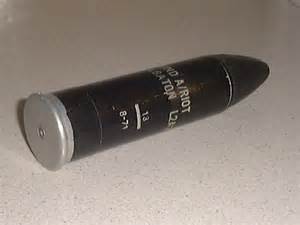
At entry 73, I referred to a cartoon from the sixties by Ron Cobb, entitled Progress, the upper panel shows two cavemen brandishing bones at one another. Then, dividing the upper panel from the lower, is the word Progress. The lower panel shows two men in suits; one has a pistol with which he has just shot his rival dead. This song inserts a few more panels outlining the history of war. Originally entitled Pentagon Progress, I thought, afterwards, this was unfairly restrictive and just adopted the Cobb label (even though the US accounts for 75% of the world’s total expenditure on the military but only 0.04% of the total population of the planet).

In 1972 Cobb composed a cartoon showing road-kill in the Australian outback; lying at the side of the road, among the litter and detritus of road-users, was an aboriginal tribesman and a kangaroo as a road-train sped off, oblivious into the distance.  Almost 50 years later, it still packs a punch. Worth a look, too, is a three-panel depiction of uranium mining in Australia by Fiona Katauskas: panel one- a hole in the ground with the caption, Mine; the second panel an even larger hole in the ground with the caption, Mine; finally, a facility filled with barrels of radioactive waste with the caption, Ours.

Of course, the picture is not one of total gloom: if you haven’t yet checked out Hans Rosling on TED talks, you’re denying yourself a wake-up call about the real state of the world.15 years ago, Rosling demonstrated that medical students in Sweden performed worse than chimpanzees at predicting mortality rates and other indicators of progress. Many, if not most westerners still have mid-twentieth century notions of us and them about the developed world and the third world: this despite the increasing evidence of Asian tourists at our iconic sites.

Half a billion Chinese are middle-class with disposable income that would turn many westerners green with envy. India is close on the heels of its large neighbour, so it is probable that we will have a new, affluent, middle class of one billion plus before too long. Elsewhere in the world, even in sub-Saharan Africa, there is increasing wealth and better health. By the middle of this century, many of the people who just assumed that the largesse was theirs, only, may look longingly off-shore at the greener grass in foreign fields.

While bad news fills our screens, behind the mayhem, there is quiet progress in many areas of social development worldwide. Loathsome regimes (you know who you are!) are no longer able to conceal their barbarities from the ubiquitous smartphones- affordable by even the poor.  Micro-finance schemes liberating women from servitude, pro-active prosecution of predators who have felt safe indulging their pedophilic appetites in poorer countries, and the slow awakening in developed nations among the blue-collar workers that they have been played for saps by their political elites, are all signs of the times that provide a counterweight for the doom and gloom scenarios to which we pay too much attention, perhaps. Or so I hope. I am a hopeless romantic, I guess.

Even as the COVID pandemic rages, I have a belief that we will be able to work through the challenges posed by this virus and all the other challenges of new  pathogens, climate change and global conflict that may follow in the years ahead.  I have, at my desk, a reproduction of the icon at my local church as I write this- which is a tempera and gold leaf on gessoed board measuring 100cm by 70 cm. It depicts St Joseph and his stepson. It stands ignored, for most part, for most of the year, squashed between my printer and my 20.5 inch display monitor.

There is something in the pictorial relationship that catches me, though. How this old guy, depending on a dream, travelled over hard ground to register a birth, and then fled into the land of original slavery to preserve a promise for the ages. Whether you believe it or not, it is a potent archetype of selflessness that cannot be gainsaid. Men, males, of most species, kill the progeny of other males to establish their dominance. Joseph took His mother and Him in- a big deal then- and taught Him an honourable trade. Of course, today, digital disruption would consign Joseph’s humble woodworking skills to the bin and spit him out like so many others. Crucifixion, as a method of mass killing, would be swamped in the plethora of more efficient means of slaughter history has delivered over the past couple of millennia.

So, where is all the good news? Here it is. All around us: In every land, from the circumpolar wastes, to the savannahs, to the rain-forests, to the cities, to the vast plains, to the islands and archipelagos, to the deep-ocean submersibles and to the International Space Station, let us affirm that there is a point to all of our endeavours; that there is an end to the dark travails so many of us endure; that there is a reason for all us to cheer: as Oscar Wilde so wisely wrote, Our ambition should be to rule ourselves, the true kingdom for each one of us; and true progress is to know more, and be more, and to do more… Progress of this sort I find much more appealing than the indicators posited by planners and politicians and econocrats. [insert song]

The former President of the US was a big fan of walls, which is the theme of our next letter. We hear what poets Robert Frost, W H Auden and Edwin Muir have to say about walls, too. We hear of the Berlin Wall, the Wailing Wall in Jerusalem and the Great Wall of China (but I will not mention, here, the Great Firewall of China!) And the material that might actually make a wall impregnable- that, too, will be revealed. So, bring along your  colourful spray-cans and let’s visit the walls of Quotidia and spray uplifting slogans, and Banksy-like affirmations which render ordinary people going about their ordinary, but very valuable, unique lives.

Credits: All written text, song lyrics and music (including background music) written and composed by Quentin Bega unless otherwise specified in the credits section after individual posts. Illustrative excerpts from other texts identified clearly within each podcast. I donate to and use Wikipedia frequently as one of the saner sources of information on the web.

Technical Stuff: Microphone- (for the podcast spoken content) Audio Technica AT 2020 front-facing with pop filter)

Microphone (for many of the songs) Shure SM58

For recording and mixing down 64-bit N-Track Studio 9 Extended used

Music accompaniment and composition software– Band-in-a-Box and RealBand 2020 as well as- for some 20 of the songs of year 2000 vintage- I used a Blue Mountains, NSW, studioApproximately 48 Banter folk songs and instrumentals recorded live (“in the round”) with a ThinkPad laptop using the inbuilt mic.

Letters From Quotidia Episode 106 I Wonder How It Got So Far?

Letters From Quotidia I Wonder How It Got So Far?

Welcome to Letters From Quotidia – a podcast by Quentin Bega for lovers of music, poetry, and the Crack- that most Irish of nouns which may encompass, news, gossip, fun, entertainment, and enjoyable conversation. Quotidia is that space, that place, where ordinary people lead ordinary lives. But where, from time to time, they encounter the extraordinary.

The years 1971 and 1972 loom large in my recollection: I got married; travelled overseas on my first independent holiday (our honeymoon in Yugoslavia as it was at that time and Venice); moved into our first home; fathered my first child; got my first degree (I never bothered completing another); and moved to Australia to start my first job. A lot of firsts. In these years, too, I first started to write songs about what was going on around me rather than anodyne love ditties. Some of these early songs have been lost forever in the chaos of living. Others, such as this one, survived long enough to be transferred to cassette tape and, later, to zeros and ones in the digital domain.

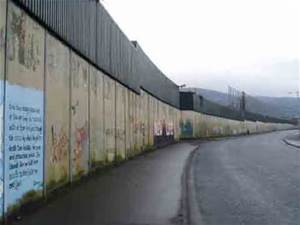
The transience and randomness of life and death swirled around us: I missed, by moments, being blown up in a pub near the city centre, an acquaintance was shot and killed by gunmen unknown. After the honeymoon we found part of a house for rent in West Belfast off the Whiterock Road in Beechview Park which looked across a cinder pitch to the walls of the city cemetery on which was sprayed, in white paint, the graffito, Is there a life before death? We lived there from late July 1971 until late August 1972. On the 9th of August, 1971, gunfire erupted in the area as British Army Saracens whined through the streets lifting republican suspects for internment. I watched later from our bedroom window as two men placed barrels of petrol on the Whiterock Road, detonating them as a patrol passed shortly afterwards.

My pregnant wife, clambering over barricades to get to work at the Belfast Corporation Electricity Department and then back trying to get up the Falls Road, was in the grocery store at the corner of the lane leading to our street when she was unceremoniously pushed to the floor by a woman next to her: before she could remonstrate a couple of rubber bullets came through the door and ricocheted around the shop, smashing displays and causing panic and anger. Over 55,000 of these were fired by British forces before they were phased out with the introduction of plastic bullets in 1975. One of the rubber bullets from the shop was given to my wife as a souvenir and was displayed for a time in our various homes over the years, but it disappeared, too, along with a lot of other stuff, in the chaos of living.

I, protective husband that I was-remonstrated with the local women that night, that I would not let her go out on bin-lid duty- this was the early warning technology of the savvy citizens to warn the local IRA brigade of British Army patrols, and she, returning to the corner shop the next day, met with a wall of silence as she was motioned silently to the counter to buy her bread and milk and sugar. Clearly, pregnancy was not a sufficient excuse in that area at that time. The conflict deepened as bombings and shootings took their toll- in lives and quality of life.

The dirty war kicked into gear in earnest as Brigadier Frank Kitson’s counter-insurgency tactics honed against the Mau Mau in Kenya was introduced to streets of the United Kingdom (although not on the island of Britain, itself). Fifteen civilians, including four women, were killed in McGurk’s Pub in North Queen Street by loyalist bombers whose path before and after was facilitated by members of the shadowy Military Reaction Force of the British Army. Eight weeks later, British Paratroopers shot dead 13 civilians in Derry on Bloody Sunday prompting a rush on IRA recruiters. Republicans hit back by burning the British embassy in Dublin three days later, bombing Aldershot Barracks in Britain which killed seven and exploding a bomb in Lower Donegall Street, Belfast, killing seven, also.

As violence spiralled out of control, Edward Heath, British Prime Minister, and widely rumoured in republican Belfast to have interrupted sailing on his yacht, Morning Cloud, pulled the pin, prorogued the parliament at Stormont and introduced direct rule, ending all hope of any semblance of democracy in Northern Ireland for over a generation. There were false dawns with truces and secret talks but the killing went on, regardless.  One day, while I was returning records to the Belfast Central Library, 22 bombs went off in the space of an hour and a quarter killing nine outright and seriously injuring 130 more. That summer the UDA in ranked and hooded thousands marched along Royal Avenue through the centre of Belfast as I watched in trepidation.

I rang my father in Cushendall and arranged to spend a few days in Cushendall before leaving for Heathrow airport for a flight to Sydney. He came and collected my wife, my three-month old daughter and me from Beechview Park on Saturday, August 26, as gunfire rang out in the distance. I can see the headlines now, I thought sardonically, young family tragically killed a week before they were to start their new life in Australia. Don’t even joke about! I immediately admonished myself. As Yeats so truly put it, Out of Ireland have we come./Great hatred, little room,/Maimed us at the start.

I wrote the song featured here at the time of the events outlined. Like the song from the previous post, it is much longer than the three-to-four-minute items that I usually write but I have resisted the urge to edit it in the years since arguing to myself that it is an artefact from those times, like that rubber bullet that ricocheted around the shop my wife was in. And, in the decades since, confronted by the reality of innocents routinely brutalised in the name of one ideology or another, I can only echo the tag line of the song:I wonder how they got so far at all…[insert song]

The next letter is about progress. We meet again Ron Cobb, cartoonist, then Hans Rosling demonstrates that chinpanzees out-perform Swedish students in current affairs. We learn that the glass is half-full and, finally, Oscar Wilde offers wise words about the nature of progress.

Credits: All written text, song lyrics and music (including background music) written and composed by Quentin Bega unless otherwise specified in the credits section after individual posts. Illustrative excerpts from other texts identified clearly within each podcast. I donate to and use Wikipedia frequently as one of the saner sources of information on the web.

Technical Stuff: Microphone- (for the podcast spoken content) Audio Technica AT 2020 front-facing with pop filter)

Microphone (for many of the songs) Shure SM58

For recording and mixing down 64-bit N-Track Studio 9 Extended used

Music accompaniment and composition software– Band-in-a-Box and RealBand 2020 as well as- for some 20 of the songs of year 2000 vintage- I used a Blue Mountains, NSW, studioApproximately 48 Banter folk songs and instrumentals recorded live (“in the round”) with a ThinkPad laptop using the inbuilt mic.
Letters From Quotidia Episode 105 The Morrigan

Letters From Quotidia Episode 105 The Morrigan

Welcome to Letters From Quotidia – a podcast by Quentin Bega for lovers of music, poetry, and the Crack- that most Irish of nouns which may encompass, news, gossip, fun, entertainment, and enjoyable conversation. Quotidia is that space, that place, where ordinary people lead ordinary lives. But where, from time to time, they encounter the extraordinary.

Mordor, in J R R Tolkein’s great Lord of the Rings trilogy, is the place of horror. Tolkein, as a philologist, knew that Mor probably derives from an Indo-European root connoting terror and monstrousness. The Morrigan is the phantom queen of Irish mythology- a war goddess who takes on the appearance of a crow over battlefields. Wikipedia notes that, in one version of Cúchulainn’s death-tale, as Cúchulainn rides to meet his enemies, he encounters the Morrígan as a hag washing his bloody armour in a ford, an omen of his death. Later in the story, mortally wounded, Cúchulainn ties himself to a standing stone with his own entrails so he can die upright, and it is only when a crow lands on his shoulder that his enemies believe he is dead.

Communal strife had been building throughout 1969 in Northern Ireland and in August of that year, it became the burning wasteland beloved of war gods and goddesses as riots swept Belfast and Derry and houses went up in flames displacing those whose misfortune it was to live on sectarian interfaces. Among the more problematical things I have done in my lifetime was agreeing to drive, in late August of 1969, a car full of people I did not know but who were termed as refugees from North Queen Street, Belfast, to County Donegal, where there was an Irish Army camp at a place called Finner.

I had been approached by a person who supplied snack machines for the students’ union and he seemed a regular guy; besides, he told me he would be making the humanitarian journey as well. I drove over country backroads, scared out of my wits that I would be stopped by the B-Specials, a Protestant militia still in force. After getting lost a couple of times, I left off a woman and two children at the army camp but, to my surprise, not all the passengers agreed to accept the hospitality of the Irish Army. There were two twenty-something year-old men who decided they were not going to stay in Donegal but would return with me to Belfast.

On the way back, the rust-heap, which was the car I had driven for so long, broke down on the M2 on the way back into Belfast.  The naïve student, a.k.a.me, ran to the nearest phone-box and asked for help. Now, I didn’t know that the motorway phones were linked to police stations, did I? When I heard a voice declaring, Moira police, how can I help? I dropped the phone and started to gulp like a fish out of water- oh, I was, I was!  While I was floundering on the shoulder of the motorway who should turn up, but the vending machine salesman who told me I was a stupid, useless so and so. In no time he had tied a rope to our stricken vehicle and towed it to an off-ramp and into one of the outer suburbs of Belfast where it was abandoned on a side-street. He later drove me to the city centre and told me he never wanted to see me again, driving off with the two young men who hadn’t exchanged more than a word or two with me the whole trip.

At the beginning of the academic year 1969-1970, I rented a bedsit near Carlisle Circus in Belfast and quickly settled into a diet of beer and potato crisps. My cousin, Elizabeth, who was working in the city, had a flat up a flight of stairs from me and, occasionally, would arrange to feed me something more substantial. A journalist with The Belfast Telegraph occupied the flat across the landing from me and books were piled everywhere, overflowing tables, chairs and bookcases. He drank a lot, too, and we often talked about the scuttlebutt swirling around the streets: were black taxis containing British assassination duos real or just part of the general paranoia? And, just before I left for a visit home at Christmas that year, were the IRA really going to split in two, with a more militant faction gearing up to escalate the conflict? 

The city that I had been visiting for several years as a teen because it was vibrant, music-filled and exciting became a shadowed place of menace where a once open and inclusive nightlife shrivelled into closed, claustrophobic sectarian venues controlled by paramilitary groups. Following my restricted diet, I became less and less well and my girlfriend, now wife, prevailed upon me to seek medical advice. I was admitted to the Mater Hospital on the Crumlin Road in July of 1970. My reception was frosty, to say the least. I had bulging protuberances on my neck which were assumed to be evidence of mononucleosis by the Nuns of the hospital. When they were told, that, far from being afflicted by the “kissing disease”(and serves him right! I overheard a nun opine) no, far from that, I was diagnosed, after a biopsy, as an innocent victim of sarcoidosis, and wouldn’t you know, their demeanour towards me warmed remarkably.

During that week and a bit in hospital I was visited by friends and family. Among my visitors were a couple of musos from the College, final year students, who had followed the trail laid down by the Beatles by gigging in Hamburg, too. We played a few riffs and shared a few laughs. It was in that hospital ward that I started to write the song that would later be entitled, The Morrigan. This is one of my earliest apocalyptic songs. (Yes, there have been a few.) And this reminds me of an exchange from Hamlet, Act II, scene 2: where the eponymous prince is speaking to his friends from childhood, Rosencrantz and Guildenstern, who are, in fact, plotting with the king to get rid of the prince. Hamlet: What news? Rosencrantz: None, my lord, but that the world’s grown honest. Hamlet: Then is doomsday near.[insert song]

The next letter details a bunch of firsts: first marriage (although my wife keeps reminding me that I am still on probation); first trip overseas as an independent person; first and as it turns out, last, degree, first child and first job. There was also a close encounter with a rubber bullet. We seem to remember our firsts, don’t we? 

Credits: All written text, song lyrics and music (including background music) written and composed by Quentin Bega unless otherwise specified in the credits section after individual posts. Illustrative excerpts from other texts identified clearly within each podcast. I donate to and use Wikipedia frequently as one of the saner sources of information on the web.

Technical Stuff: Microphone- (for the podcast spoken content) Audio Technica AT 2020 front-facing with pop filter)

Microphone (for many of the songs) Shure SM58

For recording and mixing down 64-bit N-Track Studio 9 Extended used

Music accompaniment and composition software– Band-in-a-Box and RealBand 2020 as well as- for some 20 of the songs of year 2000 vintage- I used a Blue Mountains, NSW, studioApproximately 48 Banter folk songs and instrumentals recorded live (“in the round”) with a ThinkPad laptop using the inbuilt mic.

Letters From Quotidia Postcards Edition 26

Letters From Quotidia Postcards Edition 26

Welcome to Letters From Quotidia, the Postcards edition, number 26, a podcast by Quentin Bega where you will hear songs from the repertoire of Banter, a traditional Irish folk group from Sydney’s outer west. The four songs are drawn from the traditions of the English-speaking world. I will cover the songs because of COVID restrictions. And, as always, Quotidia is that space, that place, where ordinary people lead ordinary lives- but from time to time they encounter the extraordinary.

The Snowy River Men: this is one of the finest songs ever written about the Great War and Australia’s involvement in it from the point of view of the soldiers actually doing the fighting. Kevin Baker, the writer of this fine song was a long-time friend of mine. Sadly, Kevin passed away in March of this year. I first met Kevin in 1973 or 1974- I at Warrawong High School. We played music together on Friday nights where Kevin played a fine mouth organ, flute or piccolo (accompanied by a goblet or three of wine…) We also played in various groups until I left Wollongong to return to Northern Ireland at the end of 1978. Kevin joined me there in 1981 and we shared a memorable week cruising on Lough Erne. When I returned to Australia in 1988, I re-established contact with Kevin in Wollongong where he told me of his song- collecting in the Snowy Mountain area and the letter written to Mrs Allen by Hal Archer. In the early 1990s he toured up the east coast of Australia to play at folk venues and I met him again in Ayr, N. Queensland when he was passing through to Townsville and Cairns. We met several more times in the late 1990s and early ‘noughties at festivals such as Gulgong, a 19th-century gold rush town in the Central Tablelands and folk clubs, such as the temperance venue in the western Sydney suburb of Toongabbie (we had a drink afterwards!) Vale Kevin. [insert song]

Marching Home From That War: Much is made of statements such as, the first casualty of war is the truth which some claim dates back to the ancient Athenian playwright Aeschylus – a proud veteran of Marathon and Salamis –in the fifth century BC, or the metaphor the fog of war which some have attributed to the 19th Century Prussian general and military theorist, Carl von Clausewitz. So, when I began to write a song about my great-uncle, John Joseph Mitchell, who was killed in action at Passchendaele on the 18th of September, 1917, I came to realise the sad truth of these aphorisms. JJ was one of more than 62,000 Australian men killed in that awful conflict- and those numbers from population of less than five million people! Is it any wonder that there are memorials in just about every Aussie city, suburb, town, and hamlet to mark the sacrifice?  I struggled to find a way to write the song. And then the idea came: why not have John Joseph Mitchell, my great uncle narrate a portion of his life, after a brief mention of his birth in Belfast, from his meeting with his wife, Hannah in 1903 in Liverpool to his death next to a captured German blockhouse near Hell Fire Corner and Polygon Wood in Belgium in 1917? [insert song]

Three Rivers Hotel was written by Stan Coster. We, the band Banter, have performed the song for twenty-five years. Stan is another one of those larger than life Aussies that this land seems to produce in prodigious numbers. His “Three Rivers Hotel”, which tells the story of building a train line into a remote nickel mine, from Townsville was based on his own life experiences and brought to popular attention through performances and recordings by Slim Dusty and other artists.[insert song]

The Old House had always brought to my mind the ruins of Irish cottages you can find scattered throughout the island, redolent of failed lives and suffused with emigrant longing. And then I started to research. What did I find? Not what I expected! I envisioned a humble schoolmaster, perhaps, setting down these lines to an old half-remembered Irish air as he dwelt on his impoverished beginnings. The truth was diametrically opposed to my former imaginings! The writer of the song was a scion of an ancient Irish family: Lieutenant-Colonel Sir William Frederick Travers O’Connor  (30 July 1870 – 14 December 1943) was an Irish diplomat and officer in the British and British Indian armies. He is remembered for his travels in Asia, cartography, study and publication of local cultures and language, his actions on the Younghusband expedition to Tibet, Royal Geographic Society council member,  member of the Royal Automobile Club and for his work negotiating and signing the Nepal–Britain Treaty of 1923. O’Connor was born in 1870, Longford, Ireland, son of land agent Matthew Weld O’Connor, and Harriet Georgina, daughter of Anthony O’Reilly, of Baltrasna, County Meath.(source,Wikipedia) O’Connor noted in his book, Things Mortal, that the famous Irish tenor, John McCormack, sang The Old House at The Royal Albert Hall in London on November 27, 1938. He was an exemplar of the British Imperial administrative elite- resourceful, multi-talented, showered with medals and widely travelled. After a long, distinguished military career, ending in 1925, he travelled to the Americas where, in 1931 he was reported as inviting five men, with deep pockets, to accompany him on a tiger hunt to India for an eye-watering sum of money! Whether this transpired or not is problematical because two days later a bankruptcy petition was filed against him. Will I sing the song, anyway? Well, yes, of course I will! I use an orchestral ¾ time Band-in-a-Box setting and, as this is such a short song, I play mandolin over a penultimate instrumental verse. The song has no chorus, just three verses, so I follow some other artists in rising a semitone in the final verse. [insert song]

Lockdown versions of Whiskey in the Jar and Spancil Hill feature as the first songs of Postcard 27. Song three is an Australian shearing song, One of the Has-beens, I first heard from the singing of Kevin Baker in the 1970s.The final song, The Old Bog Road, is usually derided as sentimental slush by woke folk but has more going for it than a superficial glance would have you believe. Listen in, and decide for yourselves, next time.

Credits: All written text, song lyrics and music (including background music) written and composed by Quentin Bega unless otherwise specified in the credits section after individual posts. Illustrative excerpts from other texts identified clearly within each podcast. I donate to and use Wikipedia frequently as one of the saner sources of information on the web.

Technical Stuff: Microphone- (for the podcast spoken content) Audio Technica AT 2020 front-facing with pop filter)

Microphone (for many of the songs) Shure SM58

For recording and mixing down 64-bit N-Track Studio 9 Extended used

Music accompaniment and composition software– Band-in-a-Box and RealBand 2020 as well as- for some 20 of the songs of year 2000 vintage- I used a Blue Mountains, NSW, studioApproximately 48 Banter folk songs and instrumentals recorded live (“in the round”) with a ThinkPad laptop using the inbuilt mic.

Letters From Quotidia Episode 104 Rosa

Letters From Quotidia Episode 104 Rosa

Welcome to Letters From Quotidia – a podcast by Quentin Bega for lovers of music, poetry, and the Crack- that most Irish of nouns which may encompass, news, gossip, fun, entertainment, and enjoyable conversation. Quotidia is that space, that place, where ordinary people lead ordinary lives. But where, from time to time, they encounter the extraordinary.

What do Reinhard Heydrich and Rudolf Hoess have in common aside from being among the most loathsome exemplars and promoters of the ‘final solution”; that Nazi euphemism for the genocidal mass murder of at least six million Jews between 1933, when Dachau concentration camp opens, and 1945, when the Allied and Soviet Forces opened the gates of Hell and liberated the survivors of the death camps scattered across the 1000-year Reich? This remains is one of the darkest events in the history of the world although in a post-truth world many assert that no such thing happened.  Heydrich was the architect of the final solution and Hoess was the commandant of Auschwitz.

Both cut their teeth, so to speak, as members of the Freikorps- a paramilitary organisation, active in the wake of the first world war, in anti-democratic and anti-socialist agitation and assassination. Much has been written about this group and their activities but I came across a rather unusual approach to the subject matter when I read a review by Paul Robinson, a professor of history at Stanford University, of a book entitled, MALE FANTASIES Volume One: Women, Floods, Bodies, History. By Klaus Theweleit published in West Germany in 1977, which had something to say about the psychopathology of men drawn to the Freikorps.

Robinson’s review, published in The New York Times, June 21, 1987, entitled, The Women They Fear states, Klaus Theweleit’s distinctive contribution is to examine the fantasies of the Freikorps soldiers, under the assumption that their intellectual and emotional predilections would explain their behavior. He does so primarily through a close reading of the autobiographies and novels of a select group of Freikorps members… In particular, he draws our attention to the ideas they entertained about women and sex… His central contention is that the Freikorps soldiers were afraid of women. Indeed, not just afraid, they were deeply hostile to them, and their ultimate goal was to murder them. Women, in their view, came in only two varieties: Red and White. The White woman was the nurse, the mother, the sister. She was distinguished above all else by her sexlessness. The Red woman, on the other hand, was a whore and a Communist. She was a kind of distillation of sexuality, threatening to engulf the male in a whirlpool of bodily and emotional ecstasy…the Republic had to be destroyed because it empowered the lascivious Red woman, while it failed to protect the White woman’s sexual purity. While not entirely convinced by Theweleit’s thesis, Robinson concludes, that in the end he asks us to believe that their hatred of women and fear of sexuality were merely an exaggerated version of what all men feel, or have felt for the past two centuries. And, furthermore, he may have captured a glimpse of our souls.  Good Lord, I hope not mine! What about yours?

And what about Rosa?Today, Rosa Luxemburg seems a quaint fictional character. But she was real; murdered in Berlin on 15 January 1919 by members of the Freikorps. With Karl Liebknecht, co-founder with her of the Spartacist League, which was the forerunner of the Communist Party of Germany, Rosa Luxemburg was captured by the Rifle Division of the Cavalry Guards of the Freikorps. Its commander and deputy questioned them under torture and then gave the order to execute them. Luxemburg was knocked down with a rifle butt by a soldier, then shot in the head. Her body was flung into Berlin’s Landwehr Canal. In the nearby Tiergarten, Liebknecht was shot and his body, without a name, brought to a morgue.

While not sharing her revolutionary political beliefs, I like Rosa for having written, Freedom is always the freedom of dissenters. The dogmatists of the GDR, though, omitted this bit of her writings when crafting their working model of that grim state. But back to the murders of Rosa and Carl: notice that the male body, although not identified by name, was brought to the morgue while the female body was thrown into the canal without further ado: there may be something in Theweleit’s thesis, after all. I am in a dark section of the letter and I pray for something made from light to help me conclude this distressing missive.

Sometimes, prayers are answered: In 1932 an American housewife and florist, Mary Elizabeth Frye, was moved by the plight of a young Jewish girl, Margaret Swartzkopf, who was warned not to return to Germany to see her dying mother because of the anti-Semitism of the time. Frye wrote these lines to console the weeping girl who, upon the death of her mother, lamented that she could not stand at the graveside and shed a tear. It was only in the late 1990s, a lifetime later, that Frye’s authorship of the following poem was established: Do not stand at my grave and weep,/I am not there; I do not sleep./I am a thousand winds that blow,/I am the diamond glints on snow,/I am the sun on ripened grain,/I am the gentle autumn rain./When you awaken in the morning’s hush/I am the swift uplifting rush/Of quiet birds in circling flight./I am the soft star-shine at night./Do not stand at my grave and cry,/I am not there; I did not die. Where would we be without our poets; without our poetry? I know my soul would shrivel up and blow away. How, I wonder, do you maintain your core, your soul or whatever term you use to define your quintessential self? [insert song]

Though not a philologist, the narrator links Tolkien’s kingdom of doom, Mordor, and the Celtic Goddess of War, the Morrigan, through an Indo-European root Mor- connoting terror and monstrousness. Letter 105 also traces his subsistence on beer, crisps and ciggies and the role played by women who had pity on him and probably saved him from the worst excesses of his hapless life as a student in a Belfast bedsit.

Credits: All written text, song lyrics and music (including background music) written and composed by Quentin Bega unless otherwise specified in the credits section after individual posts. Illustrative excerpts from other texts identified clearly within each podcast. I donate to and use Wikipedia frequently as one of the saner sources of information on the web.

Technical Stuff: Microphone- (for the podcast spoken content) Audio Technica AT 2020 front-facing with pop filter)

Microphone (for many of the songs) Shure SM58

For recording and mixing down 64-bit N-Track Studio 9 Extended used

Music accompaniment and composition software– Band-in-a-Box and RealBand 2020 as well as- for some 20 of the songs of year 2000 vintage- I used a Blue Mountains, NSW, studioApproximately 48 Banter folk songs and instrumentals recorded live (“in the round”) with a ThinkPad laptop using the inbuilt mic.