

Letters From Quotidia Episode 95 A Packet of White Powder

Letters From Quotidia Episode 95 A Packet of White Powder

Welcome to Letters From Quotidia – a podcast by Quentin Bega for lovers of music, poetry, and the Crack- that most Irish of nouns which may encompass, news, gossip, fun, entertainment, and enjoyable conversation. Quotidia is that space, that place, where ordinary people lead ordinary lives. But where, from time to time, they encounter the extraordinary.

You would really like Rat Park, if you were a rat. And- actually- it doesn’t look too bad from a human perspective. Lots of friends and things to do, plentiful food and diverting activities including the odd hit of stimulating substances such as cocaine: what’s not to like?  In Rat Park there is no war on drugs and hence no multi-billion-dollar organised criminal rodent cartels corrupting the institutions of society and spreading misery and mayhem through every level of Rat Park.

The rats are free to have a blast whenever they feel like it. But, surely then, there are hordes of addicted, drug-addled rats committing all sorts of dastardly rat-crimes all over the place? No… Back in the 1970s a perceptive psychology professor from Vancouver, Bruce K Alexander, questioned the accepted protocol of placing lone rats in a bare cage and offering them drug-laced water. The outcome of such a protocol was: heavily addicted rats who would take the drugged water repeatedly until death intervened.

He and his colleagues built Rat Park as described before and, guess what? Because the rats lived in a healthy, harmonious community, they partook of the stimulants offered- but did not become dysfunctional. I read an article (or it may be a transcript of a speech) of his from July 3 2014 which begins, Herewith, I confess to the charge of attempted murder. My intended victim was – and still is – the Official View of Addiction, sometimes known in the field by its aliases including, “the brain disease model of addiction” or “The NIDA model”. The presentation below contains irrefutable evidence of my guilt. However, it also expresses my plea to the High Court that ridding the world of the Official View of Addiction is justifiable.

His thesis is simple and compelling: addicts are not brain-damaged creatures in thrall to their substance of abuse in an otherwise well-functioning society, but rather, in modern times, most addiction arises because of the dislocation caused by fragmented societies. In fragmented societies, addiction leaves few people untouched. This dislocation thesis is eloquently elaborated by Johann Hari in his book, Chasing the Scream: the First and Last Days of the War on Drugs.

Now initially, he, like many of you, felt the glowing reports from Rat Park were, well, rat-o-centric. But, as he writes in a Huff Post article in 2015, I discovered that there was – at the same time as the Rat Park experiment – a helpful human equivalent taking place. It was called the Vietnam War. The American forces in that conflict used heroin habitually: 1 in 5 becoming addicted. There were some professionals back in the good old USA who were terrified of the prospect of hordes of addicted, drug-addled G.I.s returning home to commit all sorts of dastardly crimes all over the place. Bated breath now, as Johann Hari reports what happened next, but in fact some 95 percent of the addicted soldiers…simply stopped. Very few had rehab. They shifted from a terrifying cage back to a pleasant one, so didn’t want the drug any more.

WTF! All this was known forty years ago? How much money has been misspent, how much misery has been inflicted, and- yes- how much dislocation has been visited on societies and communities throughout our world over the decades since the war on drugs was declared by powerful forces in the US long, long ago? Sort of reminiscent of the war on terror that exercises the bulging craniums of the great and good in our contemporary world, don’t you think? 

Now, I could be privy to the secrets of deeply imbedded whistle-blowers and reveal here incontrovertible evidence that would support the professor’s thesis. But it would be in vain. The only force that can break through the immovable object which is the world’s received wisdom is…(drumroll)…Poetry! Music! Literature! Art! Who knows! That could be a crock, too!

But I sit and sip my shiraz and feel the fan swirling the humid midnight air around me and I thank God that I can still tap, tap, tap on the keyboard as I try to negotiate a way through this thicket before I have to go to bed and plug in the earplugs that will deliver to me Beethoven’s late quartets as I toss and turn in the sheets and try to imagine a sun rising sometime soon when I can re-join the world of birds and buses and busy, busy, busy people.

Our addictions are legion. And I am grateful for those artists who have negotiated the shoals and reefs of their pain in order to show us what it is like to be on the edge of agony: and here, I would like to pay homage to Anne Sexton, I’m the queen of this condition./I’m an expert on making the trip- …Then I lie on my altar/ elevated by the eight chemical kisses./What a lay me down this is/with two pink, two orange,/ two green, two white goodnights./Fee-fi-fo-fum-/Now I’m borrowed./Now I’m numb. [insert song]

Number 96, as well as being the number of the next podcast in the series, was the title of a runaway hit soap-opera in the Australia of the 1970s. It was set in an apartment block in inner Sydney and featured a variegated cast. It was well ahead of the rest of the world in its treatment of gay couples, interracial romance, nudity and risqué story-lines. It would have fit right in to Rat Park! But to the podcast, now: it features both beauty spots and warts, as most of them do.

Let’s introduce a wart- one with the name of Witter Brynner, a minor poet whose major accomplishment was fat-shaming. Enough about him. Let’s talk, instead, about real talent: first, his target- American poet, Amy Lowell. We also hear from Walter de la Mare, an English poet with an exquisite romantic imagination. What these real poets have in common is an appreciation of the power and appeal of music. And, of course, that is the podcast’s major theme.

Credits: All written text, song lyrics and music (including background music) written and composed by Quentin Bega unless otherwise specified in the credits section after individual posts. Illustrative excerpts from other texts identified clearly within each podcast. I donate to and use Wikipedia frequently as one of the saner sources of information on the web.

Technical Stuff: Microphone- (for the podcast spoken content) Audio Technica AT 2020 front-facing with pop filter)

Microphone (for many of the songs) Shure SM58

For recording and mixing down 64-bit N-Track Studio 9 Extended used

Music accompaniment and composition software– Band-in-a-Box and RealBand 2020 as well as- for some 20 of the songs of year 2000 vintage- I used a Blue Mountains, NSW, studioApproximately 48 Banter folk songs and instrumentals recorded live (“in the round”) with a ThinkPad laptop using the inbuilt mic.

Letters From Quotidia Episode 94 Central Story

Letters From Quotidia Episode 94 Central Story

Welcome to Letters From Quotidia – a podcast by Quentin Bega for lovers of music, poetry, and the Crack- that most Irish of nouns which may encompass, news, gossip, fun, entertainment, and enjoyable conversation. Quotidia is that space, that place, where ordinary people lead ordinary lives. But where, from time to time, they encounter the extraordinary.

The text of this podcast was largely composed in 2016, or should I say, 4 BC. That is, before Covid. It was also at a time when the group, Banter, was experiencing yet another hiatus in it chequered history. Tomorrow is St Patrick’s Day and I have not had a single drink for three days now in preparation for the feast. For the first time since it was inaugurated in Sydney, the St Paddy’s Day parade will not be held. The reason? Money. The organisers discovered the debt too late to do much more than pass round the begging bowl in the hopes that next year it will be reinstated.

One would have thought the fact that this year is the Centenary of the Easter Rising in Dublin, a not inconsequential event in Irish history, might have concentrated the minds of the committee. Ah, well. So Irish.  And so much for thinking ahead. When I returned from North Queensland to Sydney in 1995, I helped form a group we called Banter, and we landed the gig playing Irish jigs, reels, hornpipes and ballads on a float through the city centre. We repeated the gig in 1999 and then we called it a day. For a while.  But what a day. The song celebrates the anarchy and the craic of the gathering in the park near Central station in the mid-to-late 90s. In the years since, the celebration moved to another, enclosed, location and it has gone up-market with the tight security and ballooning expenses that goes with such a move.

Radix malorum est cupiditas, hisses the Pardoner to the congregation in Chaucer’s great tale: the love of money is the root of all evil. When we started, we were a knock-about group playing in small rooms in the back of pubs and clubs. Then we got ideas. What about getting better equipment? Mics, a PA, stands, cables? But to pay for these? Charge the venues. And slowly and inexorably things changed. A mate who was OK in the more relaxed atmosphere of an informal session, found he was not comfortable with the more disciplined requirements of the new regime. So, he left. Those paying the piper felt, increasingly, they could call the tune. Can you play for dancing? Not really, having neither a bass nor a drum-kit. But if you can stomp a hornpipe or reel or double jig- go for your life!

Now, seeing how musicians, however accomplished, have become merely part of the backdrop, little more than a blood-and-guts juke-box over which the audience discuss loudly the minutiae of their lives or consult constantly their digital devices lest they miss out on the latest ephemeral tit-bit chiming through the ether, I am glad that I don’t have to endure the ignominy that is par for the course. Some don’t seem to mind; a duo playing along to backing tracks with vocal enhancers makes more economic sense than having to divvy up the meagre spoils among five or six.

Still, radix malorum est cupiditas, hisses the Pardoner in Chaucer’s tale of three young drunken revellers who set out to murder Death, who had claimed one of their friends that very day, is a masterpiece of storytelling. Encountering an old man, they are directed, to fynde Deeth, turne up this croked wey,/ For in that grove I lafte hym, by my fey,/ Under a tree, and there he wole abyde;/ …Se ye that ook? Right ther ye shal hym fynde. And under the oak tree, instead of their quarry, they find bags of gold. They draw straws to determine who should go back to the tavern to get wine to celebrate their great fortune. The youngest draws the short straw and sets off. His fellows determine to kill him and split his share between them. However, the youngest has a similar mind and soul and so poisons their bottles of wine. He is killed upon returning and his murderers drink the poisoned wine. The drunken revellers are, indeed, successful in their search for Death.

So, I am not going to the city to the parade this weekend, but I am travelling up the Blue Mountains to Katoomba for the 21st music festival held there. I was there for the inaugural event in 1995 and returned for quite a few years but have not been there for a decade or so. On a whim, upon learning that there was no parade, I decided to book my wife and myself into accommodation. I reckon that I must have got just about the last room going in Katoomba and I reckon that I paid about five times the normal tariff. Silly me. Radix malorum est cupiditas is alive and well. The immutable law of supply and demand sounds so much more acceptable, though, doesn’t it? But I like Kurt Vonnegut’s way of putting it: thus the American dream turned belly up, turned green, bobbed to the scummy surface of cupidity unlimited, filled with gas, went bang in the noonday sun.

But it would be wrong to leave the rotten stench of cupidity as the end of this account; instead, let Goethe have the last word, One ought, every day at least, to hear a little song, read a good poem, see a fine picture, and, if it were possible, to speak a few reasonable words. So, I intend to hear a little song or two and take with me a book of poetry as well. I’ll not bother taking my guitar with me, though. After listening to the talent that will be on display in one of the tents or halls of the venue, I would be sorely tempted to take my instrument to Echo Point and, to the consternation of the many tourists there, heave the fickle instrument over the cliff edge to bounce jangle-ingly off the rocks as it plunges to destruction in the scenic bush below. But listen, now to the song written and set in the anarchic times of a quarter of a century ago in Albert Park next to Central Station in Sydney. [insert song]

Stop 95 on the Quotidian Scenic Trail takes in Rat Park, not intended for us, but a Nirvana for the rodent species for whom its architect found a parallel in the Vietnam War- which will be explained! Anne Sexton provides the relief of poetry to close out this problematic chapter. So, bring along your favourite addiction and join us on the trek through Quotidia.

 Credits: All written text, song lyrics and music (including background music) written and composed by Quentin Bega unless otherwise specified in the credits section after individual posts. Illustrative excerpts from other texts identified clearly within each podcast. I donate to and use Wikipedia frequently as one of the saner sources of information on the web.

Technical Stuff: Microphone- (for the podcast spoken content) Audio Technica AT 2020 front-facing with pop filter)

Microphone (for many of the songs) Shure SM58

For recording and mixing down 64-bit N-Track Studio 9 Extended used

Music accompaniment and composition software– Band-in-a-Box and RealBand 2020 as well as- for some 20 of the songs of year 2000 vintage- I used a Blue Mountains, NSW, studioApproximately 48 Banter folk songs and instrumentals recorded live (“in the round”) with a ThinkPad laptop using the inbuilt mic.
Letters From Quotidia Episode 93 Looking At Pictures

Letters From Quotidia Episode 93 Looking At Pictures

Welcome to Letters From Quotidia – a podcast by Quentin Bega for lovers of music, poetry, and the Crack- that most Irish of nouns which may encompass, news, gossip, fun, entertainment, and enjoyable conversation. Quotidia is that space, that place, where ordinary people lead ordinary lives. But where, from time to time, they encounter the extraordinary.

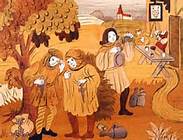
Do I have to draw you a picture? If you’ve ever been the recipient of such a remark, you’ll- rightly- assume that your perspicacity has been called into question. And yet, how unfair! Steganographers regularly conceal nefarious texts within innocent-seeming pictures. Pictures do not always tell the truth. People who delight in deceit, obfuscation, puzzles, riddles, conundrums and sleight of hand are drawn to this practice. The art of camouflaging what is true goes back a long way. (A note to Gen Y: photo-shopping is not really a new idea.) The Spartan king, Demaratus, sent a warning to the Greeks of an impending Persian attack by writing the message on the wooden board under an innocent wax covering upon which was written innocuous material. Tricky, eh? But not as tricky as Demaratus himself when he eventually switched sides and served as an advisor to Xerxes during his invasion of Greece in 480 BC.

Spies, black-hat hackers and those shadowy forces who seek to create covert elite groups for arcane purposes all think that steganography is the bee’s knees. One group, Cicada 3301, has posted puzzles on the internet from 2012. Who are they? Speculation runs from recruiters to government espionage agencies such as the NSA, to alternate reality gaming tragics, to big bank mavens messing with cryptocurrency testing. But they are probably a small group of tech-savvy anti-establishment geeks who would have been Rosicrucians in medieval times or members of the Hermetic Society of the Golden Dawn a century ago. I’m with Homer Simpson as far as trying to crack any code such groups might concoct is concerned, if at first you do not succeed, give up. And get on with your short life.

Instead of hunching over plasma screens, chasing electronic chimeras across the wilderness of mirrors that is cyberspace, get yourself out of your room and into an art gallery- there you will find puzzles enough to titillate your senses and mind. For my part, I cross the Nepean River to the Penrith Regional Art Gallery or travel by train to the Art Gallery of NSW or drive down to Canberra to the National Gallery- especially when there is a touring international show. Should my- generally prevailing- inertia prevent so much activity, (as is now the case in the COVID era)

I listen to music, say, Mussorgsky’s  Pictures at an Exhibition in Ravel’s magnificent orchestration, as played by the Chicago Symphony under Solti, and I see the people and places depicted by Hartmann which inspired the musical work: among them, Gnomus the small frightened man I identify with increasingly, Baba Yaga, the fearsome witch whom I encounter after exiting the gloomy Catacombs but, finally, I ride in triumph through the Great Gate of Kiev- the finale of which had me levitating, or so it seemed, when first I heard it as a student. Another reason that I value this piece so much is that it is a testament to friendship. Mussorgsky wrote the suite as a memorial to his friend Victor Hartmann who died at age 39 in 1873 from an aneurysm. After visiting an exhibition in his memory in 1874, he composed the suite rapidly during June of that year. However, he hit the skids and died in 1881 shortly after his 42nd birthday. Had it not been for his friend Rimsky-Korsakov, who published an, admittedly, flawed version in 1886, it, arguably, would have been lost to posterity. It makes you wonder how many masterpieces have sunk without trace because of the lack of a friend to pull it from oblivion.

Like Mussorgsky, I place value in drinking as an aid to inspiration, and during one bibulous late night alone I found myself surveying the living room: first, I gaze blearily at our wedding photograph in a silver frame, next, a family tree with photos of our parents on top, my wife and I situated below and our children below that, then my gaze slides to the corner to behold a wooden warrior with a shield covering an over-sized phallus- this is an artefact from the mountains of New Guinea. Swivelling my head (a dicey manoeuvre in the circumstances), I next register a ceramic Taoist philosopher made by my older daughter in one of her university art classes which rests on the cathode-ray TV which we still possessed back then. On it a muted re-run of Twin Peaks is showing. At this point I step on a hand-mirror reaching for another drink, cracking it. Lifting my eyes in exasperation, I looked anew at a watercolour of a scene from the Glens of Antrim by a noted local artist- a gift from my brother who had visited us here in Sydney the year before. Slumping to the floor, I notice a bell-jar containing an exotic moth mounted on a faux flower, behind which the photo of my wife cutting the wedding cake is distorted weirdly- or perhaps it was just the whiskey. Beside me, supporting my semi-recumbent form is a cane-chair holding an indoor plant with green tendrils covering the clues to a partially completed crossword puzzle. Picking up the pen lying beside the paper, I jot down a few ideas which, a day later, I work up into this song.

As Nietzsche so cogently observed, for art to exist… a certain physiological precondition is indispensable: intoxication. Now, here’s the problem: Nietzsche’s proposition is, arguably, true. However, intoxication does not necessarily- or even usually- lead to art. It usually leads to a sore head, self-inflicted, or a sore head inflicted by a person who has taken offence, perhaps, at the ludicrous excesses you inflicted on them the night before. Anyway, here is the song and you can decide whether it conforms to Nietzsche’s dictum. Or not. [insert song]

The 94th stop along our meandering journey through Quotidia features wise words from Kurt Vonnegut and Goethe. Chaucer also puts in an appearance with a cracking tale from the pilgrimage to Canterbury. St Paddy’s Day and the 1916 rising also feature.

Credits: All written text, song lyrics and music (including background music) written and composed by Quentin Bega unless otherwise specified in the credits section after individual posts. Illustrative excerpts from other texts identified clearly within each podcast. I donate to and use Wikipedia frequently as one of the saner sources of information on the web.

Technical Stuff: Microphone- (for the podcast spoken content) Audio Technica AT 2020 front-facing with pop filter)

Microphone (for many of the songs) Shure SM58

For recording and mixing down 64-bit N-Track Studio 9 Extended used

Music accompaniment and composition software– Band-in-a-Box and RealBand 2020 as well as- for some 20 of the songs of year 2000 vintage- I used a Blue Mountains, NSW, studioApproximately 48 Banter folk songs and instrumentals recorded live (“in the round”) with a ThinkPad laptop using the inbuilt mic.
Letters From Quotidia Postcards Edition 23

Letters From Quotidia Postcards edition 23

Welcome to Letters From Quotidia, the Postcards edition, number 23, a podcast by Quentin Bega where you will hear the narrator singing the songs from the repertoire of Banter, a traditional Irish folk group from Sydney’s outer west. The four songs here are drawn from the traditions of the English-speaking world. In this edition, like the previous one, I will cover the songs because of COVID restrictions. And, as always, Quotidia is that space, that place, where ordinary people lead ordinary lives. But where, from time to time, they encounter the extraordinary.

Deportee (Plane Wreck at Los Gatos)” is a protest song with lyrics by Woody Guthrie detailing the January 28, 1948 crash of a plane near Los Gatos Canyon. A decade later, Guthrie’s poem was set to music and given a haunting melody by a schoolteacher named Martin Hoffman. Shortly after, folk singer Pete Seeger, a friend of Woody Guthrie, began performing the song at concerts, and it was Seeger’s rendition that popularized the song… I hope my rendition here is a bit better than the effort on Bangor beach fifty years ago…[insert song]

The Curragh of Kildare, also known as The Winter, it is Past, is a folk song particularly associated with the Irish tradition. Elements of some versions of the song suggest that it dates from at least the mid-18th century. From the end of the sixteenth century onwards there are records of encampment there. The camp attracted thousands of spectators and camp followers; that is, prostitutes, who soon earned for themselves the sobriquet of wrens. This term was applied to the women as many of them lived all the year round in the furze bushes which are the only ground cover on the plain. The song as currently performed was popularised by The Johnstons, who are said to have received it from Christy Moore, who uncovered a version in a Dublin library in 1961. [insert song]

The Galway Races is a traditional Irish song. The song’s narrator is attending the eponymous annual event in Galway, a city in the west of Ireland. The song was made famous in the UK in 1967 by The Dubliners. It has been recorded by many artists since that time. This Irish horse-racing starts on the last Monday of July every year. Held at Ballybrit Racecourse in Galway, Ireland over seven days, it is one of the longest of all the race meets that occur in Ireland. The summer festival is the highlight of the business year for most local businesses as crowds and horses flock from all over the world to attend one of the world’s biggest race meetings.

The Galway Races are the subject of At Galway Races, a poem by W. B. Yeats: There where the racecourse is/Delight makes all of the one mind/The riders upon the swift horses/The field that closes in behind./We too had good attendance once,/Hearers, hearteners of the work,/Aye, horsemen for companions/Before the merchant and the clerk/Breathed on the world with timid breath;/But some day and at some new moon/We’ll learn that sleeping is not death/Hearing the whole earth change its tune,/Flesh being wild again, and it again/Crying aloud as the racecourse is;/And find hearteners among men/That ride upon horses. Yeats, with his aristocratic bent, loved the ideal of “the horse”

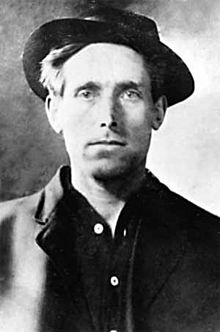
Joe Hill (October 7, 1879 – November 19,  1915),  songwriter, and member of the Industrial Workers of the World (IWW, familiarly called the “Wobblies”). Hill, an immigrant worker frequently facing unemployment and underemployment, became a popular songwriter and cartoonist for the union. His most famous songs include “The Preacher and the Slave” (in which he coined the phrase “pie in the sky”), You will eat, bye and bye/In that glorious land above the sky;/Work and pray, live on hay,/You’ll get pie in the sky when you die. In 1914, John G. Morrison, a Salt Lake City area grocer and former policeman, and his son were shot and killed by two men. Hill was convicted of the murders in a controversial trial. Joe Hill was executed by firing squad on November 19, 1915 at Utah’s Sugar House Prison.

Just prior to his execution, Hill had written to Bill Haywood, an IWW leader, saying, “Goodbye Bill. I die like a true blue rebel. Don’t waste any time in mourning. Organize … Could you arrange to have my body hauled to the state line to be buried? I don’t want to be found dead in Utah.” His last will requested a cremation and reads: My will is easy to decide/For there is nothing to divide/My kin don’t need to fuss and moan/”Moss does not cling to rolling stone”//My body? Oh, if I could choose/I would to ashes it reduce/And let the merry breezes blow/My dust to where some flowers grow//Perhaps some fading flower then/Would come to life and bloom again./This is my Last and final Will./Good Luck to All of you/Joe Hill

I first heard the song, sung by Joan Baez in 1970.  Banter, since its formation over 25 years ago, has been performing this great song. This is another song fronted by Sam the Man and which I have purloined for this post. But then  again- it’s impossible to steal a great song which belongs to the wider world.[ insert song] Postcard 24 features It’s Heaven Around Galway Bay, I’m Missing You, The Night They Drove Old Dixie Down and [O’Sullivan’s John??] Bring your outside voices.

Credits: All written text, song lyrics and music (including background music) written and composed by Quentin Bega unless otherwise specified in the credits section after individual posts. Illustrative excerpts from other texts identified clearly within each podcast. I donate to and use Wikipedia frequently as one of the saner sources of information on the web.

Technical Stuff: Microphone- (for the podcast spoken content) Audio Technica AT 2020 front-facing with pop filter)

Microphone (for many of the songs) Shure SM58

For recording and mixing down 64-bit N-Track Studio 9 Extended used

Music accompaniment and composition software– Band-in-a-Box and RealBand 2020 as well as- for some 20 of the songs of year 2000 vintage- I used a Blue Mountains, NSW, studioApproximately 48 Banter folk songs and instrumentals recorded live (“in the round”) with a ThinkPad laptop using the inbuilt mic.
Letters From Quotidia Episode 92 I’m Not a Merry Ploughboy

Letters From Quotidia Episode 92 I’m Not a Merry Ploughboy

Welcome to Letters From Quotidia – a podcast by Quentin Bega for lovers of music, poetry, and the Crack- that most Irish of nouns which may encompass, news, gossip, fun, entertainment, and enjoyable conversation. Quotidia is that space, that place, where ordinary people lead ordinary lives. But where, from time to time, they encounter the extraordinary.

I’m Not a Merry Ploughboy. What you’ve just heard is an example of an incipit– not to be confused with insipid which is an adjective meaning weak or tasteless. This sonic confusion may be the reason that many choose to pronounce it in- kip – it. An incipit is the first few words of a text that serves instead of a title and they are found on some of the earliest examples of writing. In ancient Sumeria, clay tablets containing incipits were maintained by the official scribes so that they might more easily locate tablets relating, for instance, to the number of livestock. Eight hundred years ago Pope Honorius III issued a papal bull, Religiosam Vitam -its first words in Latin translated as the religious life– establishing the Dominican Order.

In modern times incipits are still used to identify untitled poems, songs and prayers. Emily Dickinson, in particular, comes to mind.  A literary game to pass an idle afternoon involves selecting a number of first lines to create a “new” Dickinson poem, a feather from the whippoorwill/a face devoid of love or grace/a faded boy in sallow clothes/ a doubt if it be us. One doubts that such games would have been played in the literary salons of 18th Century Paris or London given their more serious aims of educating and enlightening but I like to think that the following anecdote (possibly apocryphal) concerning Samuel Johnson might have occurred as he was seeking entrée to one of the London salon evenings of that severely moral bluestocking, Lady Elizabeth Montagu.

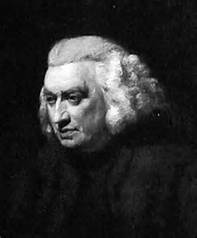
Dr Samuel Johnson, the great eighteenth-century lexicographer, once showed up at a social event hosted by an aristocratic lady with his clothes in disarray. Here’s what allegedly followed: Aristocratic lady: “Dr Johnson, your penis is sticking out!” Dr Johnson: Madame, you flatter yourself. “It’s HANGING out.” You have to admire the learned doctor’s insistence on lexical exactitude, whatever you might think of this lapse in decorum. Not that appearances ever particularly worried Sam Johnson who, upon walking to the top of a hill on one occasion decided that he wanted to roll to the bottom declaring that it had been some time since he had indulged in the pastime. Unlike the learned doctor, we are unlikely to gain admittance to a literary salon, if for no other reason than we lack a functioning time machine.

However, most of us have indulged in parlour games of one sort or another. Some, such as blind man’s buff go back millennia, others merely centuries such as charades. But I am happy to report that ingenious games continue into modern times. Jan Carnell a member of MENSA. Created one. It’s called Carnelli, and is a title association game where players must link to a previously uttered title of a book, film, play or song. For example, A Tale of Two Cities can elicit the response Great Expectations (the link being Charles Dickens, author of both novels). The response, Tea for Two, a song from the film, No No Nanette, is permissible because of the link work two. Links employing puns, the more groan-worthy the better, are allowable also. For example, the Eagles’ song Tequila Sunrise, can prompt the response To Kill a Mockingbird, provided it’s pronounced Tequila Mockingbird! Famous first lines from novels, plays, and songs are a fertile source of harmless parlour activity.

Can you identify the novel and author of the following? It is a truth universally acknowledged, that a single man in possession of a good fortune, must be in want of a wife. Or what about, It was a bright cold day in April, and the clocks were striking thirteen. The next example is a bit longer, but I’m sure you’ll nail it, It was the best of times, it was the worst of times, it was the age of wisdom, it was the age of foolishness, it was the epoch of belief, it was the epoch of incredulity, it was the season of Light, it was the season of Darkness, it was the spring of hope, it was the winter of despair, we had everything before us, we had nothing before us, we were all going direct to Heaven, we were all going direct the other way. I won’t insult your intelligence by giving you the answers but will test you now with a riddle poem by Emily Dickinson.

It’s known by its incipit, Some Things That Fly There Be, It’s also known by one of two numbers, 89, if you follow the numbering system used by Thomas H. Johnson in his variorum edition of 1955 or 68 if you prefer the number assigned by R. W. Franklin in his variorum edition of 1998. So, here’s the poem.  Some things that fly there be –/Birds — Hours — the Bumblebee –/Of these no Elegy./Some things that stay there be –/Grief — Hills — Eternity –/Nor this behooveth me./There are that resting, rise./Can I expound the skies?/How still the Riddle lies! Perhaps only time and eschatology will solve this one. [insert song]

The next letter deals in pictures, images and photographs. Steganography makes an appearance, however veiled it may be. Those ancient Greeks were renowned tricksters- just ask the Trojans about the gift of Odysseus- and we learn about another trick, played on the Persians, by the Spartan King Demartus. Listen to the narrator wax lyrical about Mussorgsky’s Pictures at an Exhibition. Fear not though, I have not left the modern era unmentioned (although the temptation to do so was severe). Digital tragics among you will already be busy trying to solve the latest puzzle from the mysterious group Cicada 3301 in the hope of being recruited by…? The NSA, The Illuminati?

In any event, the narrator outlines the circumstances which help to explain the gnomic utterances that make up the text of the song at the end of the letter. Regular listeners will not be surprised to learn that the consumption of spirituous liquors was instrumental in its composition. He excuses this by quoting from the philosopher Nietzsche, a ploy he has used before.

Credits: All written text, song lyrics and music (including background music) written and composed by Quentin Bega unless otherwise specified in the credits section after individual posts. Illustrative excerpts from other texts identified clearly within each podcast. I donate to and use Wikipedia frequently as one of the saner sources of information on the web.

Technical Stuff: Microphone- (for the podcast spoken content) Audio Technica AT 2020 front-facing with pop filter)

Microphone (for many of the songs) Shure SM58

For recording and mixing down 64-bit N-Track Studio 9 Extended used

Music accompaniment and composition software– Band-in-a-Box and RealBand 2020 as well as- for some 20 of the songs of year 2000 vintage- I used a Blue Mountains, NSW, studioApproximately 48 Banter folk songs and instrumentals recorded live (“in the round”) with a ThinkPad laptop using the inbuilt mic.

Letters From Quotidia Episode 91 Parting Words

Letters From Quotidia Episode 91 Parting Words

Welcome to Letters From Quotidia – a podcast by Quentin Bega for lovers of music, poetry, and the Crack- that most Irish of nouns which may encompass, news, gossip, fun, entertainment, and enjoyable conversation. Quotidia is that space, that place, where ordinary people lead ordinary lives. . But where, from time to time, they encounter the extraordinary.

This visit to Quotidia finds us in some interesting company. Edward Gibbon, author of the massive, and massively popular, Decline and Fall of the Roman Empire, is joined by such diverse company as Lady Astor, Humphrey Bogart, Oscar Wilde and Nat King Cole. But first, let’s accompany that famous celebrity writer, Edward Gibbon, as he approaches the Duke of Gloucester to present him with an inscribed copy of the second volume of his magnum opus. The amiable, upon being presented with the second volume of the work, exclaimed to the author, Another damned, thick, square book! Always scribble, scribble, scribble! Eh! Mr Gibbon? So, you see, the late Prince Phillip is far from being the first aristocratic dolt when it comes to matters cerebral.

I must confess, dear listener, that the punk inside can’t help but whoop with glee: How dare people be so talented! I aimed for mediocrity and fell short… Words, words, words. Rather than an exploration of words in general, this entry narrows it to first words, last words and parting words. First words need not detain us long as they do not overly whelm, do they? Mama, Dada, Goo-goo, Gaga. Last words are a bit more entertaining: Lady Astor, awakening briefly during her final illness to find her family gathered around her inquired, Am I dying or is this my birthday? Cautionary notes are sounded, too: I should never have switched from Scotch to Martinis, Humphrey Bogart warned before shuffling off this mortal coil in 1957.

For those who prefer a more tragic tone to this most tragic of outcomes will reflect upon the final words of Caesar, Et tu, Brute? Aficionados of wit will find it hard to go past Oscar Wilde’s final observation: Either that wallpaper goes, or I do. The cats among us will relate to the Italian Renaissance painter, Pietro Perugino, the teacher of Raphael, who explained why he refused to allow a priest to hear his final confession, I am curious to see what happens in the next world to one who dies unshriven. And so, to parting words. Some are spiteful, such as those of Malvolio, the pompous ass who has been made a fool of in Shakespeare’s Twelfth Night, I’ll be revenged on the whole pack of you!

If you are a romantic soul, you will nod your head slowly and sing along to Nat King Cole’s 1949 recording of the wonderful For all we know, we may never meet again/Before you go, make this moment sweet again/For all we know, this may only be a dream/We come and go like a ripple on a stream. How often have you been afflicted by staircase wit? You know, someone hits you with a zinger and you only think of the telling retort when it is too late. The phrase, staircase wit, comes from the French of philosopher, Denis Diderot who encountered such a situation at a soiree in Paris, “a sensitive man, such as myself, overwhelmed by the words levelled against him, becomes confused and can only think clearly again when he reaches the bottom of the stairs”.

Winston Churchill, for all his weaknesses, was not prone to this particular flaw. A famous exchange involving the great man and Lady Astor is well-known but worth repeating, Winston, you’re drunk!/But I shall be sober in the morning and you, madam, will still be ugly./Mr. Churchill, if you were my husband, I’d put poison in your tea./Madam, if I were your husband, I’d drink it. Another British politician, Benjamin Disraeli, was heckled by an opposition MP, Sir, you will either die on the gallows or of some unspeakable disease./That depends, sir, on whether I embrace your policies or your mistress, was Disraeli’s response.

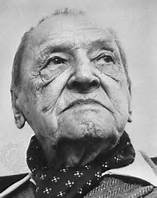
And now to the inspiration for the song: The Moon and Sixpence, published in 1919, is a short novel by Somerset Maugham, one of my favourite authors. I am tempted to introduce the thing with a profound-ish quote such as, Money is the string with which a sardonic destiny directs the motions of its puppets, but self-awareness insists upon the use of one aimed, it seems, at me, the ability to quote is a serviceable substitute for wit. Ouch! The Moon and Sixpence deals with a protagonist, Charles Strickland, who abandons wife and children, is oblivious to the sufferings of others in the pursuit of his art, and who dies of leprosy in Tahiti leaving paintings of genius but whose magnum opus was painted on the walls of his final habitation, a native hut, which was burnt to the ground on his orders after his death.

Although the title was not explained in the text of the novel, Maugham provided the following in a letter dated 1956, If you look on the ground in search of a sixpence, you don’t look up, and so miss the moon. The song was written in 1979 and I was writing and drinking furiously. This was during a period of unemployment, thankfully not too prolonged, after returning to Northern Ireland from Australia. I was re-reading the poems in North by Seamus Heaney and in the final poem of the collection, Exposure, I found something that spoke to me as I put together the words and music of Parting Words. I was feeling cut off and uncertain of direction, How did I end up like this?/ I am neither internee nor informer;/An inner emigre, grown long-haired/And thoughtful;/ Who, blowing up these sparks/For their meagre heat, have missed/The once-in-a-lifetime portent,/The comet’s pulsing rose. [insert song]

The next stage of our journey through Quotidia is not too far from parting words for we find ourselves examining examples of the first few words of a text. We encounter the renowned lexicographer, Samuel Johnson, rolling down a hill. And this is not the most shocking thing we learn about this eccentric gentleman. We will also tangle with a riddle poem by the enigmatic Emily Dickinson. Mensa members among you will rush to participate in a title association game invented by Jan Carnell. If you’re like me, you’ll be content to just observe the fun and games on show.

Credits: All written text, song lyrics and music (including background music) written and composed by Quentin Bega unless otherwise specified in the credits section after individual posts. Illustrative excerpts from other texts identified clearly within each podcast. I donate to and use Wikipedia frequently as one of the saner sources of information on the web.

Technical Stuff: Microphone- (for the podcast spoken content) Audio Technica AT 2020 front-facing with pop filter)

Microphone (for many of the songs) Shure SM58

For recording and mixing down 64-bit N-Track Studio 9 Extended used

Music accompaniment and composition software– Band-in-a-Box and RealBand 2020 as well as- for some 20 of the songs of year 2000 vintage- I used a Blue Mountains, NSW, studioApproximately 48 Banter folk songs and instrumentals recorded live (“in the round”) with a ThinkPad laptop using the inbuilt mic.
Letters From Quotidia Episode 90 Where Henry Lawson Can Be Found

Letters From Quotidia Episode 90 Where Henry Lawson Can Be Found

Welcome to Letters From Quotidia – a podcast by Quentin Bega for lovers of music, poetry, and the Crack- that most Irish of nouns which may encompass, news, gossip, fun, entertainment, and enjoyable conversation. Quotidia is that space, that place, where ordinary people lead ordinary lives. But where, from time to time, they encounter the extraordinary.

An invitation to make some music- either literally or figuratively- is a lot more pleasant than having to face it, don’t you agree? I have had the pleasure with reference to the former- both literally and figuratively- and have had to endure the pain of the latter, too. The power of music transcends death, if one is to believe the Orpheus myth. You know the one, where the uber-musician charms the Lord and Lady of the Netherworld to release his wife Eurydice from the grip of death. All is well until, anxious to check that she is following him upwards to life and light and love, he turns and breaks the injunction not to look back, thereby hurtling her back into darkness.

Was this why he turned from his patron-god Dionysus who is associated with things chthonic? Was this why he spurned all other gods but the sun-god Apollo? Was this why he forswore the company of women and transferred his affections to boys? Wherever the truth may lie, he met a sticky end: Orpheus ascended Mount Pangaion to the oracle of Dionysus to greet the dawn and pay homage to the sun-god. A band of Maenads, enraged that he had abandoned their god, Dionysus, threw sticks and stones at him to break his bones and end his life. However, so sweet was his playing, not only were animals tamed by his music-making but also the missiles deployed by the incensed women.

In a frenzy now and possessed of preternatural strength, the Maenads lay hands on him and tear him limb from limb. His head and his lyre, still singing and playing, float away into legend. His killers attempt to wash the blood off their dripping hands but the River Helicon, recoiling from the task of cleansing the murderers of their deed, sinks underground in horror. If you gaze at the stars above you will find his lyre set in the heavens; if you listen to the Infernal Galop from Offenbach’s Orpheus in the Underworld, you will hear the exuberant strains of the can-can as you envisage the high-kicking invitation of the dancers from the Moulin Rouge. And you are under the spell of Orpheus with the rest of Western civilisation from classical times onwards.

Shakespeare’s recognition of the power of music is scattered throughout his plays: Oberon, King of the Fairies, in A Midsummer Night’s Dream recalls to Puck an instance where they, sat upon a promontory And heard a mermaid on a dolphin’s back/ Uttering such dulcet and harmonious breath,/ That the rude sea grew civil at her song,/ And certain stars shot madly from their spheres/ To hear the sea-maid’s music. Lorenzo in the Merchant of Venice, tells Jessica, daughter of the music-loathing Shylock, The man that hath no music in himself,/ Nor is not moved with concord of sweet sounds,/Is fit for treasons, stratagems and spoils;/The motions of his spirit are dull as night/And his affections dark as Erebus:/Let no such man be trusted.  In what is said to be his first play, The Two Gentlemen of Verona, Shakespeare writes: Orpheus’ lute was strung with poets’ sinews,/ Whose golden touch could soften steel and stones,/Make tigers tame and huge leviathans/ Forsake unsounded deeps to dance on sands.

The Orpheus myth lives on confidently in the literature of the 21st Century with the novel Orfeo by Richard Powers. One hears expressions of love for music in phrases such as, it’s in my DNA! Well, Powers audaciously has his protagonist, a 70-year-old composer, attempt to manipulate the genome of a human pathogen (the bacterium, Serratia marcescens, which causes hospital-acquired infections) by splicing musical patterns into its living cells. Having reached his allotted span, Peter Els, the aged composer, has to flee from Homeland Security and in that fugue re-lives his encounters with significant others and music from Mozart to Messiaen. I was drawn to listen to the music described in this novel. To encounter such sonic revelations as The Quartet for the End of Time, written in a Nazi Concentration Camp or Harry Partch’s Barstow with its strange instrumentation and musical structure made the week I was reading the novel and listening to its music the richest period of my life since the half-a-decade playing with the group in pubs and clubs at the end of the 90s.

I also identified with the anguish Els felt upon learning that his diminished joy when listening to music was probably caused by micro-strokes in the area of the brain where sounds are processed. And here I was thinking that with me it was just the effect of listening to compressed formats. There is a magical fusion that, from time to time, arises between musicians and audience which makes me believe in the Orpheus myth and I can almost resurrect the joy sparked by such encounters when I remember such rare and beautiful times as that related in the song.[insert song]

Words, words, words! Sometimes it seems that there far too many examples of this phenomenon. Our next tour involves an ascension of the tower of Babel situated in a riverine province of Quotidia and will have a look at a specific class of these written and spoken utterances; namely, parting words- and indeed, a sub-species of this type: parting words uttered at the end of a relationship as opposed to, say, parting words upon a separation caused by other situations. Can we have a show of hands on how many have been on the receiving end of such a communication? How many have dealt such words themselves?

As we conduct the tour of the tower, make sure to close your ears to examples of first words which will assail your senses as we pass the nursery- goo goo, ga ga, mama, dada. But you will be engaged as we enter the auditorium to listen to examples of last words from a variety of historical figures. Some will entertain you while others may tug at your heart-strings. The parting words of the song found their inspiration from a short novel by W Somerset Maugham. Come along, then!

Credits: All written text, song lyrics and music (including background music) written and composed by Quentin Bega unless otherwise specified in the credits section after individual posts. Illustrative excerpts from other texts identified clearly within each podcast. I donate to and use Wikipedia frequently as one of the saner sources of information on the web.

Technical Stuff: Microphone- (for the podcast spoken content) Audio Technica AT 2020 front-facing with pop filter)

Microphone (for many of the songs) Shure SM58

For recording and mixing down 64-bit N-Track Studio 9 Extended used

Music accompaniment and composition software– Band-in-a-Box and RealBand 2020 as well as- for some 20 of the songs of year 2000 vintage- I used a Blue Mountains, NSW, studioApproximately 48 Banter folk songs and instrumentals recorded live (“in the round”) with a ThinkPad laptop using the inbuilt mic.
Letters From Quotidia Episode 89 Woman in Blue

Letters From Quotidia Episode 89 Woman in Blue

Welcome to Letters From Quotidia – a podcast by Quentin Bega for lovers of music, poetry, and the Crack- that most Irish of nouns which may encompass, news, gossip, fun, entertainment, and enjoyable conversation. Quotidia is that space, that place, where ordinary people lead ordinary lives. But where, from time to time, they encounter the extraordinary.

What is it with uniforms? Women are said to be partial… What red-blooded boy had not dreamt of being a dashing cuirassier, resplendent in shining breastplate, astride a warhorse decked out in regimental colours charging the enemy line? The empires of Europe with their Dragoons, Lancers and Hussars provided ample material for dreams of glory as young men yearned for their place in the Imperial sun. Theirs not to reason why,/ Theirs’s but to do and die:/ Into the valley of Death/ Rode the six hundred./ Cannon to right of them,/ Cannon to left of them,/ Cannon in front of them/ Volley’d and thunder’d;/Storm’d at with shot and shell,/ Boldly they rode and well,/ Into the jaws of Death,/ Into the mouth of Hell/ Rode the six hundred.

Tennyson has immortalised those Dragoons, Lancers and Hussars that made up the Light Brigade as they charged the Russian cannon at the Battle of Balaclava during the Crimean War on October 25, 1854. In a wax cylinder recording of 1890, you can hear trumpeter Martin Landfried, who saw action in the battle as part of the 17th Lancers, play the charge on the bugle used on the day (and which, incidentally, had also been sounded at the Battle of Waterloo in 1815). The recording was made, not for commercial release, but to aid the Light Brigade Relief Fund as, by this time, many of the heroes had fallen on hard times.

Not an unusual story. Shakespeare created these sorts of characters in the persons of Nym, Pistol and Bardolf who were friends of Henry V in his youth. Let’s listen to their noble friend rally the troops before Agincourt, He that outlives this day, and comes safe home,/Will stand a tip-toe when this day is nam’d,/And rouse him at the name of Crispian./He that shall live this day, and see old age,/Will yearly on the vigil feast his neighbours,/And say “To-morrow is Saint Crispian.”/Then will he strip his sleeve and show his scars,/And say “These wounds I had on Crispin’s day.”/Old men forget; yet all shall be forgot,/But he’ll remember, with advantages,/What feats he did that day. Then shall our names,/Familiar in his mouth as household words—/Harry the King, Bedford and Exeter,/Warwick and Talbot, Salisbury and Gloucester—/Be in their flowing cups freshly rememb’red./This story shall the good man teach his son;/And Crispin Crispian shall ne’er go by,/From this day to the ending of the world,/But we in it shall be remembered-/We few, we happy few, we band of brothers;/For he to-day that sheds his blood with me/Shall be my brother; be he ne’er so vile,/This day shall gentle his condition;/And gentlemen in England now a-bed/Shall think themselves accurs’d they were not here,/And hold their manhoods cheap whiles any speaks/That fought with us upon Saint Crispin’s day.

But they got scant reward for their service in his war- indeed, Bardolph is hanged on Henry’s order for stealing from a church, Nym also reported as executed for looting and Pistol vows to desert and return to England as a thief and pimp. I read somewhere that Rudyard Kipling missed out on Imperial honours because he referred to Queen Victoria as the widow of Windsor as a reference to all the men killed in her service. Nevertheless, his depiction of Tommy Atkins as the quintessential British squaddie who is despised in peace time but feted when the war drums begin to beat, steers a course between the romantic square-jawed young grenadier of propaganda posters and the syphilitic scoundrel who enlists to escape imprisonment or worse,  

O it’s Tommy this, an’ Tommy that, an’ “Tommy, go away”;/But it’s “Thank you, Mister Atkins”, when the band begins to play,/ The band begins to play, my boys, the band begins to play/Oh it’s “thank you, Mister Atkins,” when the band begins to play. And the band, indeed, plays different tunes for different dancers. Lord Cardigan, who led the charge of the Light Brigade in 1854, survived. He didn’t take time out, though, to succour the wounded heroes of the charge nor did he seek to rally and affirm those who had, somehow, survived unscathed. No, this is what he did: he left the field of battle, boarded his yacht- which was moored in Balaclava harbour- and had a champagne dinner. No doubt, he changed into full-dress regimental uniform as he entertained a select few amidst the clinking crystal-ware and silver service.

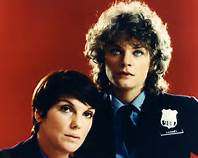
I wrote this song in the mid-1980s when Cagney and Lacey shed their uniforms to become kick-ass detectives. I remember speculating how it would be to be the significant other of a patrol-woman of action. The uniform here adorns the female rather than the male. In the decades since lots of women, on screen and off, have taken up the burden of protecting society from the ne’er do wells who lurk in the shadows.[insert song]

For Letter number 90, wouldn’t you know it, the narrator is back to the ancient Greeks with the Orpheus myth. Not content with that, he segues into Shakespeare, referencing A Midsummer Night’s Dream, The Merchant of Venice and The Two Gentlemen of Verona! He deigns to give the 21st Century a look in by glancing at Orfeo by Richard Powers which enables him to cite Messian’s The Quartet for the End of Time and Harry Partch’s Barstow. However, you are invited to bring to mind the wonderful, high kicking music of the Can Can from Moulin Rouge and thank Offenbach for creating the Infernal Galop from his composition Orpheus in the Underworld. As you might have guessed, there’s a lot of stuff about music as we high kick our way into the next Letter From Quotidia.

Credits: All written text, song lyrics and music (including background music) written and composed by Quentin Bega unless otherwise specified in the credits section after individual posts. Illustrative excerpts from other texts identified clearly within each podcast. I donate to and use Wikipedia frequently as one of the saner sources of information on the web.

Technical Stuff: Microphone- (for the podcast spoken content) Audio Technica AT 2020 front-facing with pop filter)

Microphone (for many of the songs) Shure SM58

For recording and mixing down 64-bit N-Track Studio 9 Extended used

Music accompaniment and composition software- Band-in-a-Box and RealBand 2020 as well as- for some 20 of the songs of year 2000 vintage- I used a Blue Mountains, NSW, studioApproximately 48 Banter folk songs and instrumentals recorded live (“in the round”) with a ThinkPad laptop using the inbuilt mic.
Letters From Quotidia Postcards Edition 22

Letters From Quotidia Postcards Edition 22

Welcome to Letters From Quotidia, the Postcards edition, number 22, a podcast by Quentin Bega where you will hear Banter, a traditional Irish folk group from Sydney’s outer west, present four songs drawn from the traditions of the English-speaking world. In this edition I will cover the songs because of COVID restrictions. And, as always, Quotidia is that space, that place, where ordinary people lead ordinary lives. But where, from time to time, they encounter the extraordinary.

The Augathella Station (Brisbane Ladies) “The Long Paddock” is the colloquial name given to the historical travelling stock routes of Australia. “The Augathella Drovers”, also known as “Augathella Station”, “Farewell Brisbane Ladies”, or simply “The Drover’s Song” is an Australian folk song based on a well-known English original called “Ladies of Spain. The song bids farewell to the Ladies of Brisbane on the drovers’ departure and follows their journey along the stock route to the Augathella Station (nearly 800 kilometres inland) in much the same way that the English sailors bid farewell to the ladies of Spain. (notes above by Brett Thompson/fourandtwentymusic.com). Banter has gone over the song a few times in practice; however, we haven’t yet got the vocal and instrumental parts sufficiently together for public performance. I reckon it would go well with another great droving song, The Overlander, which is a staple of the group. If and when we emerge from lockdown to something approximating  the previously normal pub/club milieu, we may well rant and roar the song out…after a few soothing ales. [insert song] 

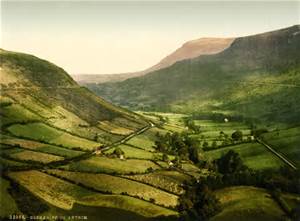
The Green Glens of Antrim  Who wrote it- I discovered this from the site Mudcat: ‘The Green Glens of Antrim’ is a song I grew up with hearing regularly, in the heart of the Glens – Cushendall… The Green Glens of Antrim was written by Archie Montgomery (under the pseudonym of Kenneth North) and published in 1950. Now, Archie Montgomery sounds Scottish. From living in the Glens from 1964 to 1972 (off and on), I can attest that the Glens were a magnet for Scottish visitors in the 20th Century, right up until the time that the latest iteration of the  “Troubles” put paid to tourism of any kind. So, a Scottish connection is possible. It matters not a whit to me whether or not the composer was a native of the Glens of Antrim, or indeed, Ireland. An abiding memory for me was when I produced a play  in the early 80s for the Glens’ Amateur Drama Society and, after the festival, we gathered in a hotel in the west of Ireland. One of the crew started the song and all the Cushendall contingent joined in and raised the rafters with an a capella version. And I’ve never heard better!   [insert song]

I Was Only Nineteen The song was released in March 1983. Recorded by Redgum, royalties for the song go to the Vietnam Veterans Association of Australia. It is a first-person account of a typical Australian soldier’s experience in the Vietnam War, from training at a military academy in Australia to first hand exposure to military operations and combat and ultimately his return home disillusioned and suffering from both PTSD and, it is implied, the harmful effects of Agent Orange. Contrary to popular belief, the subject of this song volunteered for service in the Australian Army and was not conscripted. During the Vietnam War, Australian men did not become eligible for conscription until the age of 20.In 1997, during a performance of the song, at The Henry Lawson Club in western Sydney, I noticed a guy of fifty-something, bearded and with greying long hair, watching the group intently. In passing (on the way to the bar for a beer after the song) I casually asked him how he was enjoying the set. He looked at me for a while and said, “I thought at first, you were taking the piss- but decided there was no disrespect intended.” He was a Vietnam Vet. I assured him that, far from dissing anyone, we were honouring the soldiers who served. [insert song]

Murisheen Durkin This Irish folk song  tells the story of an emigrant from Ireland who goes to mine for gold in California during the California Gold Rush, 1849. The song is about emigration, although atypically optimistic for the genre. The song reached prominence when Johnny McEvoy’s recording reached no. 1 in Ireland in 1966. It has been recorded by lots of artists since this time, including, Christy Moore, The Pogues, The Dubliners and The Wolfe Tones. Into that august company, the group Banter intends to venture (if I have anything to do with it!) A couple of years ago when Jim was off to Belfast to visit relatives, Sam, Mark and I had a couple of practices where we canvassed a few songs that were blasts from the past. We never got round to including the song in any of our sets after Jim’s return; however, it might well make an appearance, if and when the venues for music re-open here in western Sydney. [insert song]

For Postcard 23 I will be filching songs from the other two singers in the group. My excuse, again, is the virus. Its impact continues to take a toll on lives and society here in Australia and around the world. First is a song I learned as a student in Belfast in 1968, Woody Guthrie’s great Deportees. Then, The Curragh of Kildare which the Johnstons popularised back in the late 1960s and which remains one of the best versions available. The Galway Races, is penultimately placed in this postcard while the final song past the post is my version of the defiant union song, Joe Hill. Apologies to Jim and Sam for stealing their songs, yet again.

Credits: All written text, song lyrics and music (including background music) written and composed by Quentin Bega unless otherwise specified in the credits section after individual posts. Illustrative excerpts from other texts identified clearly within each podcast. I donate to and use Wikipedia frequently as one of the saner sources of information on the web.

Technical Stuff: Microphone- (for the podcast spoken content) Audio Technica AT 2020 front-facing with pop filter)

Microphone (for many of the songs) Shure SM58

For recording and mixing down 64-bit N-Track Studio 9 Extended used

Music accompaniment and composition software– Band-in-a-Box and RealBand 2020 as well as- for some 20 of the songs of year 2000 vintage- I used a Blue Mountains, NSW, studioApproximately 48 Banter folk songs and instrumentals recorded live (“in the round”) with a ThinkPad laptop using the inbuilt mic.

Letters From Quotidia Episode 88 I Was Taking a Lend of You

Letters From Quotidia Episode 88 I Was Taking a Lend of You

Welcome to Letters From Quotidia – a podcast by Quentin Bega for lovers of music, poetry, and the Crack- that most Irish of nouns which may encompass, news, gossip, fun, entertainment, and enjoyable conversation. Quotidia is that space, that place, where ordinary people lead ordinary lives. But where, from time to time, they encounter the extraordinary.

Student life is good in all sorts of ways: you get to try out different versions of who you might be- or at least it was like that at the end of the 1960s in Belfast. I got involved in student politics and for a couple of years I tried on this version of me. It was a lot of fun, going to conferences, becoming part of this or that cabal, travelling, drinking, arguing hazy, idealistic positions. But, politics in the real world ground to a halt with the proroguing of Stormont and the shift to a more tribal alignment within the student version meant that my exit from this world of bubbles was more precipitate than it otherwise would have been- but I would have bailed in any event. Politics were not for me, but I have always remained fascinated with the antics and manoeuvrings of those who seek to climb the greasy pole of political ambition. That so many aspirants remain fundamentally decent and relatively uncorrupted is one of the testaments to the democratic process although democracy seems under threat more now than ever before.

During the Cold War era from 1945-1991, when it was the democratic west opposing the communist east, the spectre of the mushroom cloud was in the back of every intelligent mind but the core of democratic values remained uncracked. Now, we wonder: in the aftermath of 9/11, the hunt for Bin Laden involving the invasion of Afghanistan had widespread popular support even if later polls have swung the other way. But the sequel, the invasion of Iraq was a bridge too far for popular opinion in Australia and the UK as well as in the US. The world shouted NO! And we know what happened. While generally sceptical of conspiracy theories and subscribing to the alternative cock-up interpretation of history, I get an uncomfortable feeling that there may well be powerful forces in the background shaping events to their hidden agendas.

That wittiest of essayists, Gore Vidal, long held that power in the US did not reside in the legislature or with the Presidents, whom he characterised as Banksmen, but with- you guessed it, the Banks. Others cite the Illuminati, the New World Order, etc. as the powers in the background and you could spend a lifetime reading all the texts exposing these deeper truths. I choose, instead, to listen to artists for the truth: All except for Cain and Abel and the Hunchback of Notre Dame, Everybody’s making love or else expecting rain, explains Bob Dylan in Desolation Row.

If the truth is Quasimodo, swinging down from the bell-tower in an, ultimately, vain attempt to save the innocence of the world personified by the beautiful Esmerelda, then, Captain Phoebus must represent the shadowy powers as he watches the execution of the hapless heroine even though he could, had he so chosen, have proved her guiltless of his supposed murder. In Victor Hugo’s novel, Quasimodo recovers the body of Esmerelda and pines away clutching his beloved. The synopsis in Wikipedia delivers the denouement, years later, an excavation group exhumes both their skeletons which have become intertwined. When it tries to separate them, Quasimodo’s bones crumble into dust.

There is another Quasimodo, however, who may shed light on the mystery that is the world. Salvatore Quasimodo was an Italian poet of some note: he won the Nobel Prize for Literature in 1959. During World War Two he was an anti-Fascist, not the most comfortable stance in the Italy of that time. He started as a hermetic poet, a movement that developed between the World Wars, and here Wikipedia takes up the story, Major features of this movement were reduction to essentials, abolishment of punctuation, and brief, synthetic compositions, at times resulting in short works of only two or three verses…Man lives in an incomprehensible world, ravaged by wars and enslaved by dictatorships, therefore the poet has a disheartened vision of life, without illusions, and repudiates the word as an act of communication in order to give it an evocative sense only…hermetic poetry is poetry of moods, of interior reflection expressed by a subdued and pensive tone, through a refined and evocative language, concealing direct intimations to experience in a play of allusions.

A lot of this stuff I found too hard or too obscure to bother with, but there is a poem that hooked me as soon as I read it: Quasimodo’s ED E’ SUBITO SERA: Ognuno sta solo sul cuor della terra/trafitto da un raggio di sole:/ed è subito sera: Everyone stands alone at the heart of the world/pierced by a ray of sunlight,/and suddenly it is evening. I wrote the song, I Was Taking a Lend of You as an acknowledgement that we are being played by those we know as well as those we know of and also those we don’t know exist. And suddenly it is evening…[insert song]

Uniforms feature straight up in the next foray into Quotidia; also, a wax cylinder on which is preserved the notes a bugle played at the Battle of Balaclava in the Crimean War and also at the  battle of Waterloo in 1815. It’s inevitable, isn’t it, that the narrator will quote from Alfred, Lord Tennyson’s poem, The Charge of the Light Brigade. So, consider yourselves warned in advance. There being a military theme of sorts in the next post, don’t be too surprised if Shakespeare’s  Henry V rouses the blood with his great speech before the Battle of Agincourt.

However, lest you become overly intoxicated with an excess of martial rhetoric, Rudyard Kipling will provide an astringent, sobering draught with a few lines from his 1890 poem, Tommy, in which he sympathises with  this member of the PBI- the poor, bloody infantry. How the general public looks down upon the rather rough and uncultured soldier, until that is, the drums of war begin to beat- then he’s lauded as a hero! And where will you be, cheering him on from the sidelines or with him in full battle-kit marching to the front lines where death or glory or both await?

Credits: All written text, song lyrics and music (including background music) written and composed by Quentin Bega unless otherwise specified in the credits section after individual posts. Illustrative excerpts from other texts identified clearly within each podcast. I donate to and use Wikipedia frequently as one of the saner sources of information on the web.

Technical Stuff: Microphone- (for the podcast spoken content) Audio Technica AT 2020 front-facing with pop filter)

Microphone (for many of the songs) Shure SM58

For recording and mixing down 64-bit N-Track Studio 9 Extended used

Music accompaniment and composition software– Band-in-a-Box and RealBand 2020 as well as- for some 20 of the songs of year 2000 vintage- I used a Blue Mountains, NSW, studioApproximately 48 Banter folk songs and instrumentals recorded live (“in the round”) with a ThinkPad laptop using the inbuilt mic.