
Letters From Quotidia Episode 46 Everything Goes/Restless Paces

Letters From Quotidia 46 Everything Goes/Restless Paces

Welcome to Letters From Quotidia – , letter number 46, a podcast by Quentin Bega for lovers of music, poetry, and the Crack- that most Irish of nouns which may encompass, news, gossip, fun, entertainment, and enjoyable conversation. Quotidia is that space, that place, where ordinary people lead ordinary lives. But where, from time to time, they encounter the extraordinary.

What is the plan, now? Have you ever heard this? In some meeting, in some relationship, in some internal conversation you have had with yourself or perhaps as part of a cognitive behaviour therapy session you are undergoing? I knew there was something wrong with me from the mid-nineties. I had banging headaches, nausea, an inability to think beyond tomorrow and a contradictory belief that I was invincible, somehow. Meeting with an old friend who was living up Sydney’s Glebe Point Road in an apartment, I celebrated my return to Sydney from North Queensland in 1995 by getting horribly drunk and raving like a lunatic.

This was not perceived as being particularly out of order because my life had been, for so many years, constructed out of just these bricks of self-destruction. Why they did not crash down upon my head? I have had reason to reflect upon it in the years since. So many times I have been, because of my affection for the demi-monde and, particularly, alcohol, in situations of considerable danger. Now, I could cite a guardian angel as the reason for my survival- but I know that is part of this whole magical thinking phenomenon. We all live till we die. Nothing will alter the fact that there is a limit to life. Do you want to live forever? Not me, but, given the choice, I don’t want to go just yet! So much to do; so much to see; so much to… you get the drift.

I know that I have dodged death so many times. A gun pointed at my head in Belfast; a confrontation with a brace of violent men on a secluded road; a miraculous save from a road accident in Warrawong- I could go on- as I am sure all of you can. Lots of times we don’t even know that we have dodged a bullet, because nothing happened. Luck, Lady Fortuna, Serendipity and Synchronicity are terms you may well be familiar with.

But what do you think about this insight into the nature of perception: In contrast to an epiphany, an apophany does not provide insight into the nature of reality or its interconnectedness but is a “process of repetitively and monotonously experiencing abnormal meanings in the entire surrounding experiential field”. Such meanings are entirely self-referential, solipsistic, and paranoid. If I knew what that meant, I would tell you. But I think you are way in front- an apophany is just absolute nonsense, the opposite of what James Joyce famously termed as an epiphany.

Yet, just about everyone I know; everyone who has spoken to me about the deep and meaningful stuff, has, at one time or another, talked about “a sudden spiritual manifestation, whether from some object, scene, event, or memorable phase of the mind–the manifestation being out of proportion to the significance or strictly logical relevance of whatever produces it.”  And here’s the thing: I hate listening to others wittering on about their meaningful objects, scenes, events, et cetera. And yet I’m going to do just that.

As the millennium was drawing to a close, my eyesight began to fade, I was feeling dreadful- beyond hangover, which I was habituated to. I felt mortality pressing down on me more than usual and the dreams of death were becoming tiresomely frequent. I knew I had extreme idiopathic hypertension in 1996 when my doctor told me not to return to work the next day (as I was in danger of dropping dead at any second) and sent me on a round of tests and dosed me with a large number of pharmaceutical products that finally got the blood pressure under control. But this was new, and yet another test revealed that my blood sugar was through the ceiling. The joys of ageing- in my case accelerated by what is referred to euphemistically as lifestyle choices.

So then, what is this apophany I’ve been talking about? Well, I have to bring up another neologism at this point- patternicity. Michael Shermer, founder of the Sceptics Society, coined this one in 2008, when he defined it as, the tendency to find meaningful patterns in meaningless noise. Now, correct me if I’m wrong, but isn’t this what happens in just about every meeting in the workplace today? Someone spouting arrant rubbish in multisyllabic torrents as nodding heads around the table give assent to the madness. So, I nodded with the panic dwarfs and waited for too many years until the mortgage was finally paid off and the government decided that it could pay me a stipend, called the age pension, for the rest of my days.

What was this apophany? Listen: I have repetitively and monotonously experienced the feeling that I count for something. And that you do, too. Insane, isn’t it? William Blake put it in these terms, To see a world in a grain of sand/And heaven in a wild flower/Hold infinity in the palm of your hand/And eternity in an hour. And once again I ask the question, where would we be without our poets?

Now to the song, which is a portmanteau composition. I started writing Everything Goes, shortly after learning that I was not bullet-proof in 1998. I was dissatisfied with it and couldn’t work out why so I left it and started to write a pean to music and love, entitled Restless Paces, which was also OK , but about which I remained less than satisfied. And then, one afternoon, I put them together with a linking musical line and-voila- in my humble opinion, it worked! [insert song]

In the next letter I put forward the modest suggestion that all writers are gods, we visit an intergalactic auction where we will bid, perhaps, on Lot 354, recite lines from Bruce Dawe’s wonderful poem about suburban man, so bring along that little paddle with your number on it, so you can make a bid.

Credits: All written text, song lyrics and music (including background music) written and composed by Quentin Bega unless otherwise specified in the credits section after individual posts. Illustrative excerpts from other texts identified clearly within each podcast. I donate to and use Wikipedia frequently as one of the saner sources of information on the web.

Technical Stuff: Microphone- (for the podcast spoken content) Audio Technica AT 2020 front-facing with pop filter)

Microphone (for many of the songs) Shure SM58

For recording and mixing down 64-bit N-Track Studio 9 Extended used

Music accompaniment and composition software- Band-in-a-Box and RealBand 2020 as well as- for some 20 of the songs of year 2000 vintage- I used a Blue Mountains, NSW, studioApproximately 48 Banter folk songs and instrumentals recorded live (“in the round”) with a ThinkPad laptop using the inbuilt mic.

Letters From Quotidia Episode 45 The Ballroom of Romance

Letters From Quotidia 45 The Ballroom of Romance

Welcome to Letters From Quotidia – a podcast by Quentin Bega for lovers of music, poetry, and the Crack- that most Irish of nouns which may encompass, news, gossip, fun, entertainment, and enjoyable conversation. Quotidia is that space, that place, where ordinary people lead ordinary lives. But where, from time to time, they encounter the extraordinary.

Our 45th pirouette is  all about dance venues, and Quotidia has its fair share of them. For some, this reminiscence will be as strange as a report about odd and abstruse cultural traditions of the ancient Aztecs. A few male listeners, though, may recognise themselves in this next account: Was it a dream or, perhaps, a nightmare? Was I there in that rural dancehall in Ireland in the late 1960s- a trio, with my brother and cousin?

Maybe it was an atavistic, male, cautionary tale, but I can remember a shiver of premonitory trepidation as I approached the first girl in the line at the opposite end of the fluorescently-lit hall. May I have this dance? I asked politely. Sorry, no. The accent was a lilting brogue that brought welts up on my soul. I could feel the eyes: from across the hall, my brother and cousin smirking and a ruck of male unknowns- as well as the sidelong glances and micro-expressions of amusement from the girls who had heard the put-down, stretching, as it seemed to me, to the crack of doom.

Fancy a dance? I asked the next girl, feigning a couldn’t-care-less slouch. She didn’t even answer but turned away and continued a conversation with her friend. I don’t have to go on, do I? In some sad corner of my imagination I am in that dance-hall to this very day, moving along a line of increasingly lovely girls who reject me in a variety of fiendishly humiliating ways.

As I recall, Larry Cunningham and the Mighty Avons,  a popular Irish showband of the time, were playing that night. Happily, this experience was not typical of my encounters in nightclubs and dance-halls during the latter half of the 1960s. Club Rado and the Jazz Club, Romano’s and the Astor in Belfast, the Marquee in Cushendall and Castlegreen further along the road to Ballycastle were among the magical places where people could meet and mingle to music that was of a surprisingly high quality. In the years and decades since those times, social interaction has moved increasingly online. The dance-halls, ballrooms and musical soirees of the past have not survived in any great number, I would guess.

How I came to write the song at the end of this letter, The Ballroom of Romance, involved a family holiday to see the sights of Enniskillen and then a couple of days in a cabin on Lough MacNean bisected by the Irish border. This was in 1985. Having driven for a couple of hours, feeling a bit tired from the trip, I sat out on a bench with my guitar and watched the water-birds among the reeds. A sequence of notes stuck in my head and I started to find the accompanying chords.

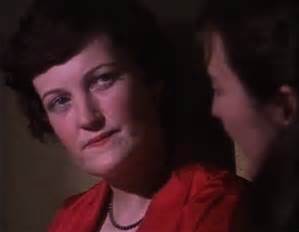
The original ballroom of romance was located across the Lough in the nearby village of Glenfarne: a famous location drawing crowds from the surrounding parishes for generations. I had viewed the short movie about this place a few years before. Starring Brenda Fricker, the evocation of the desperation faced by her 36-year-old character Bridie who has been putting on her best dress every Friday night for twenty years in order to attend the Ballroom of Romance has stayed with me for decades.  Based on a short story by Willian Trevor, it explores the themes of isolation, longing, emigration and lost love.

Set in the eponymous ballroom in 1950s rural Ireland, it is by turns, poignant, funny and excruciating as we follow Bridie from the farm she shares with her crippled father to the windswept dance venue. She hopes to form an alliance with the drummer in the trio which is providing the music for the dance. He is dependable, doesn’t drink and will be able to help her run the hardscrabble hill farm when her ailing father dies. She realises, however, during the tea-break, that his landlady has her hooks into him and, so, she retires from that romantic field of battle.

Her only other choice is one of another trio: three middle-aged boozy no-hopers who attend the dance every week after fuelling up at the nearby pub. Bowser Egan is the man- not of her dreams, for that person emigrated to England when she was still a young woman, nor is he the second choice, for the silver medal goes to the drummer in the band. No, Bowser, is a poor and distant third as the end of the film demonstrates: following her as she makes her way towards home on her bicycle, he renews his suit, promising to come and see her as soon as his mother has gone to meet her maker- a reformed man who will even make her a little flower garden.

Then, a pause, and his main reason for being there, Will you come into the field, Bridie? Afterwards, Bridie cycles home as Bowser, looking after her with a satisfied contempt, finishes off his whiskey and tosses the bottle into the field. I wonder how many men ask themselves, in relation to their partners, which of the trio they are: the golden paragon, the abstemious silver second, or the grubby bronze Bowser leering into the darkness, who will never know the pleasures of poetry such as Conrad Aiken’s, He saw her body’s slender grace,/This drooping shoulder, shadowed face;/All of her body, hidden so/In saffron satin’s flush and flow,/Its white and simple loveliness,/Came on his heart like giddiness,/ Seductive as this music came;/Until her body seemed like flame… Lines of poetry such as these set my old heart singing. [insert song]

It is with regret that I leave the ballroom of romance. When next we return to Quotidia, you will be subjected to a neologism or two, patternicity and apophany, to be precise. You will also learn of some of the narrator’s dodging of figurative bullets thanks to Lady Fortuna; and to end the encounter, we will bask in the glory of lines of poetry from William Blake. So, until we meet again, take care, and take the time to read some poetry and also  listen to the music that soothes your soul.

Credits: All written text, song lyrics and music (including background music) written and composed by Quentin Bega unless otherwise specified in the credits section after individual posts. Illustrative excerpts from other texts identified clearly within each podcast. I donate to and use Wikipedia frequently as one of the saner sources of information on the web.

Technical Stuff: Microphone- (for the podcast spoken content) Audio Technica AT 2020 front-facing with pop filter)

Microphone (for many of the songs) Shure SM58

For recording and mixing down 64-bit N-Track Studio 9 Extended used

Music accompaniment and composition software– Band-in-a-Box and RealBand 2020 as well as- for some 20 of the songs of year 2000 vintage- I used a Blue Mountains, NSW, studioApproximately 48 Banter folk songs and instrumentals recorded live (“in the round”) with a ThinkPad laptop using the inbuilt mic.
Letters From Quotidia Postcards Edition 11

PFQ 11

Welcome to Letters From Quotidia, the Postcards edition, number 11, a podcast by Quentin Bega where you will hear Banter, a traditional Irish folk group from Sydney’s outer west, present four tunes and songs drawn from the traditions of the English-speaking world. And, as always, Quotidia is that space, that place, where ordinary people lead ordinary lives. But where, from time to time, they encounter the extraordinary.

The boys from Western Sydney kick off with a spirited set of tunes called Begleys, which Mark learned when he first picked up the fiddle as a schoolboy and went along for a session with his father in the 90s. As we look back, as 2020 draws to a close here in Sydney, we all wonder if the latest outbreak of the virus will send us all ducking again into our lockdown habitations.

Strange to think that tonight as I write this, I see that the US has recorded almost 180,000 cases as opposed to the 8 new cases in NSW which has caused the other states of Australia to slam shut their borders. But, I guess, that’s why we are a lot better off than most of the other nations of this earth. We actually believe that the virus is serious and life-threatening to ourselves and those we love. All we can offer (and I hope by the time you hear this, that COVID will be a horror quickly vanishing in the rear-view mirror), all we can offer, is the life-affirming music that is part of the Irish tradition. Try to keep from tapping your foot in time to the great set of tunes that make up, Begleys [insert tune]

How’s yer foot! Jim first won a prize for singing when he was a boy. He entered a competition with a friend when he holidayed in Cushendall from his home in Belfast- this was in the mid-1960s. I first heard him as a singer in the 1970s when our paths crossed again in Australia. He is a great exponent of storytelling ballads and one of the songs that has been requested most from audiences here in Sydney, is the one he is going to sing now. As I write this intro, I am aware that we, as the group Banter, have not been playing for an audience for over ten months!

You know, there is something that happens between a singer (or group) and an audience that cannot be easily explained: even at the lowest level- there is an energising connection. And when it is at its highest- it is transcendental. Jim has often, in performance, reached this level with the audiences we have played for. Eric Bogle wrote this song in 1980, I think. Anyway, we have loved the song for decades. Writers like Eric Bogle can reach into a country’s history, tap into the psyche of the folk who live and die there and set it out in memorable words and music for us all to appreciate.

The song that Jim is going to sing is called Now I’m Easy. Also known as The Cocky Farmer, this great song of Aussie endurance and stoicism was one of our most requested songs when we were playing on a semi-regular basis in the late 1990s. Back in the mid- 1970s, we began to listen to a great new writer named Eric Bogle. In the 80s, back in Ireland, my hair stood on end when I heard, for the first time, No Man’s Land. In the early 1990s, in North Queensland, I attended a memorable concert by Bogle at the Burdekin Theatre. Long may he continue to write and sing. And people like Jim can tap into the truth of the song and set it out for us to appreciate anew. Listen now to a fine rendition of  Eric Bogle’s, Now I’m Easy. [insert song]

Time now to hear from the other main singer in Banter, Sam the man. He was neighbours to Jim in the Belfast docks area, so they have been friends from childhood. I first met Sam when we emigrated to Australia in 1972. Sam introduced the song, When the Boys Come Rolling Home, to Banter about 15 years ago. It is rather more light-hearted about homecoming than, say, Johnny, I Hardly Knew Ye. Or, indeed, that magnificent Bruce Dawe poem about the Vietnam War entitled, Homecoming. Not that the writer of the song, one Tommy Sands, is incapable of writing poignantly- I urge you to listen to There Were Roses, a moving and much covered song about the sectarian killings that blighted Northern Ireland for far too long. And there are fears that the dark times may come back again as a part of the unintended consequences that will result from  Brexit. Listen now, as Sam sings this song of longing. [insert song]

We close this session with an Aussie staple, The Lachlan Tigers. When Big Geordie Muir was singing with the band, this was one from his repertoire. Sheep shearing is probably the most iconic activity in rural Australia. At the start of the wool industry in the early 19th century, sheep were shorn with blade shears, similar to garden clippers. The first authenticated daily tally (i.e.the number of sheep shorn in a single day) was 30 sheep by Tome Merely in 1835. By 1892,  the legendary Jackie Howe managed a tally of 321 sheep at Alice Downs in Queensland-  that is, more than ten times what Merely managed. Here is my lockdown version which I present to you, without too much blushing: [insert song]

Our 12th Postcard from Quotidia features a couple of Irish Marches, a cautionary tale concerning maids and sailors, whiskey in the jar, and a song about the  leaving of Liverpool. So, until next week, when we will  sample some of  the fine drops of folk brew available in the pubs, clubs, bars, taverns, shanties and shebeens of Quotidia- Cheers! Prost!  Slainte! Or… whatever your toast is.

Credits: All written text, song lyrics and music (including background music) written and composed by Quentin Bega unless otherwise specified in the credits section after individual posts. Illustrative excerpts from other texts identified clearly within each podcast. I donate to and use Wikipedia frequently as one of the saner sources of information on the web.

Technical Stuff: Microphone- (for the podcast spoken content) Audio Technica AT 2020 front-facing with pop filter)

Microphone (for many of the songs) Shure SM58

For recording and mixing down 64-bit N-Track Studio 9 Extended used

Music accompaniment and composition software- Band-in-a-Box and RealBand 2020 as well as- for some 20 of the songs of year 2000 vintage- I used a Blue Mountains, NSW, studioApproximately 48 Banter folk songs and instrumentals recorded live (“in the round”) with a ThinkPad laptop using the inbuilt mic.
Letters From Quotidia Episode 44 Paul

Letters From Quotidia 44 Paul

Welcome to Letters From Quotidia – a podcast by Quentin Bega for lovers of music, poetry, and the Crack- that most Irish of nouns which may encompass, news, gossip, fun, entertainment, and enjoyable conversation. Quotidia is that space, that place, where ordinary people lead ordinary lives. But where, from time to time, they encounter the extraordinary.

What is it about us as a species?  We love to scare ourselves, with stories, games, rides on roller-coasters, dares about visiting that haunted house at the end of the lane at midnight. Horror movies, the howling werewolf, black-cloaked vampires with preternatural strength, swamp monsters, assorted trolls, goblins and giants from grim folk tales peopled?…no, creatured my hungry, youthful imagination fed by books and movies that seem quaint beside that series from the 90s and early noughties, Buffy- the chic- ironic, yet puerile, slayer in designer clothes wisecracking to befuddled, barely-comprehending adults as demons explode in colourful pixels against the point of her post-modern wooden stake.

And more contemporaneously, the walking dead and countless gore-fests from Netflix and other streaming services. Another generation’s hunger for information about the dark side is nourished by a flashier special- effects menu than was available to mine. And those years of feeding at the table of horrors wasn’t preparation enough to enable me to comprehend the real horrors that lurked in recent history.

I remember when Eichmann was captured by the Israelis and tried in Jerusalem. I looked in vain for the mark of the Beast on those bland features. I had read The Scourge of the Swastika by Lord Russell of Liverpool a couple of years before Eichmann was hanged, having plucked it from an attic hoard during a holiday back to Cushendall from Aruba. I stared at stark photographs of black-booted sinisters, some smoking nonchalantly, standing over pits of murdered people in sharp-cut uniforms.

Like so many others watching the man behind the transparent bullet-proof screen, I struggled to fit his image with my ideas of what monsters ought to look like. Could this bespectacled clerk be the author of so many deaths? Yes. At the behest of his Master. In concert with others of his bureaucratic kind who were in on the secret. Aided and abetted by the minor functionaries who enable the infrastructure of modern society. Made possible, finally, because so many people could look away and later deny any knowledge.

But the answer still doesn’t make sense. All our resources of language, all our intelligence, sensibilities, sensitivities, imagination fall short of the task. And even our greatest poets despair at delineating the horror that was the Holocaust- still the pattern par excellence for the bland-featured sociopaths who have a plan that doesn’t include so many on this earth and whose solution is every bit as final as that proposed at the Wanersee Conference so many years ago.

When I was 22, I read Paul Celan’s great poem about the Holocaust, The Fugue of Death in translation and from that time I have remembered the savage, splintered imagery in times of stress and trauma. Black milk of daybreak we drink it at nightfall/we drink it at noon in the morning we drink it at night/drink it and drink it/we are digging a grave in the sky it is ample to lie there/ But the English fails to capture the black angularities of the original: for that, go to YouTube and listen to the poet himself reading this work.

The world of the poem is one of shouting, digging, dark music playing, serpents, dogs, glittering stars, smoke, whistles, stabbing and two women: the golden haired Margarete and the ashen haired Shulamith. And there is also a man with eyes of blue, a man in the house your golden hair Margarete/your ashen hair Shulamith he plays with the serpents/He shouts play sweeter death’s music death comes as a master from Deutschland/he shouts stroke darker the strings and as smoke you shall climb to the sky/then you’ll have a grave in the clouds it is ample to lie there. Have you supped full of horrors yet?

I am glad that my dish has been, largely, vicarious. My mind is not filled with the scorpions tyrants have to contend with nightly. C.S. Lewis, author of those innocent, those enabling fictions, the Narnia tales, also wrote The Screwtape Letters during the dark years of the Second World War. His readers, avid for more insights into the Satanic mind, were disappointed when he called it quits. He could no longer bear the burden of dwelling imaginatively in those dark regions. He feared for his very soul.

And rightly so. Human life needs light and love and natural things and if this means a quotidian existence where one has to forgo the depths of Faustian knowledge and the heights of Elysian experience, then, so be it. Limits are, often, not so much limiting, as lifesaving, after all. And again and again poets come to the rescue. One of my favourites, Carol Ann Duffy, comes to the rescue with a poem entitled Prayer, Some days, although we cannot pray, a prayer/utters itself. So, a woman will lift/her head from the sieve of her hands and stare/at the minims sung by a tree, a sudden gift./Some nights, although we are faithless, the truth/enters our hearts, that small familiar pain;/then a man will stand stock-still, hearing his youth/in the distant Latin chanting of a train.

And another from James Arlington Wright entitled A Blessing where, with a friend, he greets two Indian ponies in their meadow, in itself a metaphor of love. One of the ponies has walked over and nuzzled his hand, the light breeze moves me to caress her long ear/That is delicate as the skin over a girl’s wrist./Suddenly I realise/That if I stepped out of my body I would break/Into blossom. A final prayer, that all those hurt and murdered blossom forever.

Listen now, to my tribute to the poetry and person of Paul Celan. Like a song earlier in the sequence inspired by the poetry of Sylvia Plath, I have used elements of Celan’s poetry to help me craft the lyric of the song, Paul. [insert song]

Our next trip to Quotidia brings us to the glitter-balled delights of Irish dance halls in the 50s and 60s of the twentieth century, so get on those dancing shoes, slap on the aftershave and let’s go and seek out the pretty girls in their glad-rags dancing round their patent leather handbags.

Credits: All written text, song lyrics and music (including background music) written and composed by Quentin Bega unless otherwise specified in the credits section after individual posts. Mark Dougherty has a co-writing credit for the song Paul. Illustrative excerpts from other texts identified clearly within each podcast. I donate to and use Wikipedia frequently as one of the saner sources of information on the web.

Technical Stuff: Microphone- (for the podcast spoken content) Audio Technica AT 2020 front-facing with pop filter)

Microphone (for many of the songs) Shure SM58

For recording and mixing down 64-bit N-Track Studio 9 Extended used

Music accompaniment and composition software– Band-in-a-Box and RealBand 2020 as well as- for some 20 of the songs of year 2000 vintage- I used a Blue Mountains, NSW, studioApproximately 48 Banter folk songs and instrumentals recorded live (“in the round”) with a ThinkPad laptop using the inbuilt mic.
Letters From Quotidia Episode 43 Pandora’s Box

Letters From Quotidia 43 Pandora’s Box

Welcome to Letters From Quotidia – a podcast by Quentin Bega for lovers of music, poetry, and the Crack- that most Irish of nouns which may encompass, news, gossip, fun, entertainment, and enjoyable conversation. Quotidia is that space, that place, where ordinary people lead ordinary lives. But where, from time to time, they encounter the extraordinary.

What’s in a word? We all know what can happen when we mistake one word for another and our scan of the pages of Letter 43 will examine just such an error. Starting from the 16th Century we plunge back to Hesiod and the Golden Age of Greek myth, then forward in time to the brilliant mind of Nietzsche in the 19th Century and onwards to a poetic encounter in the 20th Century with Howard Nemerov. So, what’s in a word?

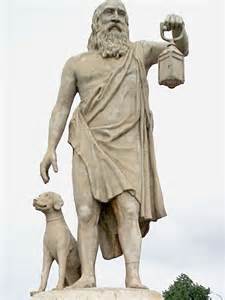
Blame Erasmus. Who, after all, can resist the urge to open the box? If instead, you were faced with a large jar, one large enough to house a body you might instead just give up especially if it were inhabited by Diogenes the Cynic who often slept in one in the marketplace of Ancient Athens. He was known for his philosophical exercises such as carrying a lamp in the daytime, claiming to be looking for an honest man. In his translation of the myth in the 16th Century, Erasmus renders the Greek word pithos which means a large jar- with pyxis which means a small box.

From that time, reinforced by painters’ treatment of the myth, box it remains. But I don’t want to leave the ancient Greeks just yet. Zeus, somewhat miffed at Prometheus for gifting Man with fire, commanded Hephaestus to fashion Pandora out of clay. Let me say now that, when I referred to humanity as Man before, it wasn’t a PC lapse, so, back off, woke warriors! You see, this refers to the Golden Age, when the poet Hesiod explains: how the end of man’s Golden Age, (an all-male society of immortals who were reverent to the gods, worked hard, and ate from abundant groves of fruit) was brought on by Prometheus, when he stole Fire from Mt. Olympus and gave it to mortal man, Zeus punished the technologically advanced society by creating woman. Thus, Pandora was created as the first woman and given the jar which releases all evils upon man. The opening of the jar serves as the beginning of the Silver Age, in which man is now subject to death, and with the introduction of woman to birth as well, giving rise to the cycle of death and rebirth.

Of course, the jar was opened! and this explains that bunion on your foot. The most puzzling part of the myth is what was left in the box. The Greeks have a word for it, elpis. This has been translated as Hope. So, if hope is left in the box, what sort of hope is being referred to?  My head hurt after reading the many contending views so I’ll just cite the astringent argument of Nietzsche and leave it for you to sort out:

One single evil had not yet slipped out of the jar. As Zeus had wished, Pandora slammed the top down and it remained inside. So now man has the lucky jar in his house forever and thinks the world of the treasure. It is at his service; he reaches for it when he fancies it. For he does not know that the jar which Pandora brought was the jar of evils, and he takes the remaining evil for the greatest worldly good—it is hope, for Zeus did not want man to throw his life away, no matter how much the other evils might torment him, but rather to go on letting himself be tormented anew. To that end, he gives man hope. In truth, it is the most evil of evils because it prolongs man’s torment.

Some mistakes you profit from- I refer here to the pithos to pyxis of Erasmus: how else could I draw the line so strongly between older TVs where the cathode ray tube nestles in a box-like housing, with the ills which stream from the contraption into the world of the 20th Century where I have lived the majority of my life? TV was also called the idiot box and blamed for all sorts of ills that poured from it- inciting teens to promiscuous sex and the like. The metaphor doesn’t work in the 21st Century though: flat-screen TVs aren’t boxlike and, in any case, the exploding world of alternative devices and ways of receiving information and entertainment means that no longer do we crouch before the electronic sage in the corner, communally absorbing its emanations.

But for a few generations, it was a way of life and Howard Nemerov, in a poem entitled A Way of Life, spoke for those now receding generations, It’s been going on a long time./For instance, these two guys, not saying much, who slog/Through sun and sand, fleeing the scene of their crime,/Till one turns, without a sound, and smacks/His buddy flat with the flat of an axe./Which cuts down on the dialogue/Some, but is viewed rather as normal than sad/By me, as I wait for the next ad./It seems to me it’s been quite a while/Since the last vision of blonde loveliness/Vanished, her shampoo and shower and general style/Replaced by this lean young lunkhead/ parading along with a gun in his back to confess/How yestereve, being drunk/And in a state of existential despair,/He beat up his grandma and pawned her invalid chair./But here at last is a pale beauty/ Smoking a filter beside a mountain stream,/Brief interlude, before the conflict of love and duty/Gets moving again, as sheriff and posse expound,/Between jail and saloon, the American Dream/Where Justice, after considerable horsing around,/Turns out to be Mercy; when the villain is knocked off,/A kindly uncle offers syrup for my cough.  [thanks to Valerie Nemerov for allowing me to quote the whole poem]

We sit, chained to the walls of our caves watching the dancing shadows projected from the fire behind. Time for the truth? Listen, now, to the answer given in the song, Pandora’s Box. [insert song] 

The trolls and goblins of fairy tales can’t hold a candle (black and rancid though it may be) to the real-life horrors who masquerade as human beings and march through history. We will meet some of these but, ultimately, the darkness of their deeds will be driven away by the light of poetry from Paul Celan, Carol Ann Duffy and James Wright. Until then, keep watching those shadows dancing across your devices and join me, next time in our ongoing quest for truth, honour and adventure in the land of Quotidia.

Credits: All written text, song lyrics and music (including background music) written and composed by Quentin Bega unless otherwise specified in the credits section after individual posts. Illustrative excerpts from other texts identified clearly within each podcast. I donate to and use Wikipedia frequently as one of the saner sources of information on the web.

Technical Stuff: Microphone- (for the podcast spoken content) Audio Technica AT 2020 front-facing with pop filter)

Microphone (for many of the songs) Shure SM58

For recording and mixing down 64-bit N-Track Studio 9 Extended used

Music accompaniment and composition software– Band-in-a-Box and RealBand 2020 as well as- for some 20 of the songs of year 2000 vintage- I used a Blue Mountains, NSW, studioApproximately 48 Banter folk songs and instrumentals recorded live (“in the round”) with a ThinkPad laptop using the inbuilt mic.
Letters From Quotidia Episode 42 Oblivion Mountain

Letters From Quotidia 42 Oblivion Mountain

Welcome to Letters From Quotidia – a podcast by Quentin Bega for lovers of music, poetry, and the Crack- that most Irish of nouns which may encompass, news, gossip, fun, entertainment, and enjoyable conversation. Quotidia is that space, that place, where ordinary people lead ordinary lives. But where, from time to time, they encounter the extraordinary.

I tell you, this is-Letter 42, and, perhaps, your mind immediately goes to the gnomic pronouncement of the super computer in Douglas Adam’s The Hitch-hiker’s Guide to the Galaxy, where Deep Thought reveals: the answer to the “Great Question” of “Life, the Universe and Everything” is “forty-two.”  Sorry to disappoint, but it’s merely an accident of the sequencing of these letters, and not some cohering catalyst distilling sense out of the swirling chaos that surrounds us.

But, you hang on to what is familiar, don’t you? Like Linus from Peanuts, have you a favourite blanket? Or an old rag doll passed down from great grandma? For me, books, first, and then music and the guitar have been sources of comfort and escape. Radio also was a refuge. Like so many people on the periphery of the great goings-on, I could stay abreast with events at the centre of the maelstrom through this medium.

Halfway through my sojourn in North Queensland in 1991, I was listening to Phillip Adams, the new presenter of Late Night Live on the ABC. I thought Europe had turned its back on the excesses of World War II but it was clear that a new barbarism had emerged as if it had never gone away at all. As Yugoslavia split apart, the various militias showed the world what atrocity really meant. The unfolding tragedy as months turned into years is still vivid: skeletal images of Bosniak civilians in Serb-run concentration camps in August 1992 recalled the horror photographs of Jews in the death camps of the Nazis in 1945; the siege of Sarajevo lasted 1,425 days which was one year longer that the siege of Leningrad during World War II.

Almost 14,000 souls perished during the siege between the fifth of April 1992 and the twenty-ninth of February 1996. But the fate of the Romeo and Juliet of Sarajevo shows the human and inhuman face simultaneously: The Wikipedia account tells us-  In 1993, the couple, Admira Ismić, a Bosniak, and Boško Brkić, a Bosnian Serb, decided to flee the city. Having friends on all sides involved in the conflict, there was a general thought that their passage through the city and its infamous Sniper Alley, under constant fire from hills occupied by the Serbs, could be a safe one. An arrangement was made for 19 May 1993 at 5:00 pm that no one would fire as the couple approached. According to Dino Kapin, who was a Commander of a Croatian unit allied at the time with Bosnian Army forces, around 5:00 pm, a man and a woman were seen approaching the Vrbjana Bridge. As soon as they were at the foot of the bridge, a shot was heard, and, according to all sides involved in their passage, the bullet hit Boško Brkić and killed him instantaneously. Another shot was heard and Admira Ismić screamed, fell down wounded, but was not killed. She crawled over to her boyfriend, cuddled him, hugged him, and died. It was observed that she was alive for at least 15 minutes after the shooting.

The appetite for such atrocities, far from sated, gathered intensity culminating in the Sebrenica massacre in July 1995 when the genocidal killing of 8,000 Bosniak men and boys preceded the forcible transfer of between 25,000 and 30,000 Bosniak women, children and the elderly which was found to be confirming evidence of the genocidal intent of members of the Bosnian Serb Army Main Staff who had orchestrated the massacre in what the UN had declared to be a safe area. Rape on a vast scale was used as a tactic by this group- and a new term entered our lexicon of horror: ethnic cleansing.

Goran Simic’s poem, The Calendar is a stark reminder of the cost on a personal level among all the statistics. I heard the fall of a leaf from a calendar./It was the leaf for the month of March. The calendar belongs to a girl I know./She spends each day checking the calendar/and watching her belly grow./Whatever is in her womb/was nailed there by drunken soldiers in some camp./It is something that feeds/on terrible images and a terrible silence./What fills the images?/Her bloodstained dress, perhaps,/fluttering from a pole like a flag?/What breaks the silence?/The fall of the month of March?/The footstep of her tormentor- his face/the child’s face, the face she will see/every day, every month, every year/for the rest of her life?/I don’t know. I don’t know./All I heard was the fall of a leaf from a calendar.

We all know, now, there are no safe areas: who would have thought a pre-Christmas coffee and cake at the Lindt Café in Sydney’s Martin place in 2014 would have turned into a horror show so soon after 28 Australians were among the 298 innocent civilians slaughtered above the Ukraine in July 2014 as a Russian missile tore apart Malaysian Airways Flight 17. Meanwhile, on the ground below that fateful explosion at 33,000 feet, civilians continue to die, to starve, cut off from the benefits of life in the prosperous world of Europe in the second decade of the 21st Century.

In October, 1995, I was in the back room of The Henry Lawson Club in Sydney’s outer west, waiting for the rest of the group to arrive for our practice session. I was early and I picked up my guitar and started to strum. On the far wall, a TV showed images of a Balkan War scene and gradually the music of Oblivion Mountain began to take shape. By the time the rest of the group arrived, I was scribbling the verses of the song onto my notepad. [insert song]

Letter 43 sees a return to Greek myth as well as philosophers Diogenes the Cynic and Nietzsche. A reading from a poem by American poet, Howard Nemerov rounds out a sprightly skedaddle through myth and philosophy and television. So, until then, I will climb back into a large Jar and close to lid upon myself and hope until the time rolls round again for me to emerge blinking into the digital light to reveal more about the problematic world of Quotidia.

Credits: All written text, song lyrics and music (including background music) written and composed by Quentin Bega unless otherwise specified in the credits section after individual posts. Illustrative excerpts from other texts identified clearly within each podcast. I donate to and use Wikipedia frequently as one of the saner sources of information on the web.

Technical Stuff: Microphone- (for the podcast spoken content) Audio Technica AT 2020 front-facing with pop filter)

Microphone (for many of the songs) Shure SM58

For recording and mixing down 64-bit N-Track Studio 9 Extended used

Music accompaniment and composition software- Band-in-a-Box and RealBand 2020 as well as- for some 20 of the songs of year 2000 vintage- I used a Blue Mountains, NSW, studioApproximately 48 Banter folk songs and instrumentals recorded live (“in the round”) with a ThinkPad laptop using the inbuilt mic.

Letters From Quotidia Episode 41 Rose

Letters From Quotidia 41 Rose

Welcome to Letters From Quotidia – a podcast by Quentin Bega for lovers of music, poetry, and the Crack- that most Irish of nouns which may encompass, news, gossip, fun, entertainment, and enjoyable conversation. Quotidia is that space, that place, where ordinary people lead ordinary lives. But where, from time to time, they encounter the extraordinary.

For our 41st letter we are going to have to meet under the rose… adopt stealth as our watchword… and become au fait with smoke and mirrors as we wrap a cloak of secrecy around us..shhhh…Family secrets: everyone knows one or more about their own family and one or more about other families, if only through the media. What one generation may hang its head in shame over the next, more likely than not, just shrugs and says, so what!

The convict stain in Australian society became a badge of honour in the space of a generation or two.  Distance in time lends enchantment to a roguish ancestor or two in the family tree. People who seek information about their forbears are more likely to advertise relationship to a pirate than an accountant. Note also, that privacy for individuals becomes an increasingly rare commodity in inverse proportion to the growing obfuscation surrounding the activities of transnational corporations and governments.

The contradictory signals make reading the signs of the times about as reliable as the practice of palmistry. I am reliably informed the Buddha once said “Three things cannot long stay hidden: the sun, the moon and the truth”. Much as I admire the ancient sage, smog covers the sun and coal-fired power station emissions deal with the moon for a lot of people a lot of the time. And the truth? The Roman procurator of Judea sometime around the end of the third decade of the first century asked what that was and the question has reverberated down the millennia since.

When someone begins a sentence with the phrase, the fact is, chances are- it isn’t. Now, as usual, I don’t go to politicians or economists for answers, but poets. Denise Levertov wrote a poem entitled The Secret back in the 60s that is as thought-provoking now as then, Two girls discover/the secret of life /in a sudden line of/poetry./I who don’t know the/secret wrote/the line. Of course, the girls don’t reveal the line to Levertov’s informant and the poet knows that, now a week later, the line has been forgotten…I love them/for finding what/I can’t find,/and for loving me/for the line I wrote,/and for forgetting it/so that/a thousand times, till death/finds them, they may/discover it again in other/lines/ …or/assuming there is/such a secret, yes,/for that/most of all.

That is the sort of secret I can relate to. Unlike the secret that excludes everyone but the chosen few. Such as the rosy cross of the Rosicrucians. Roman banquet halls had roses painted on them so that matters discussed there under the influence of wine (sub vino) would also remain sub rosa or secret. The Victorians loved floriography- the language of flowers and would exchange nosegays, charmingly known as tussie-mussies, and parade around with these small bouquets trying to decipher what, if any, meaning lay hidden in the arrangements held by friends they might encounter in their perambulations.

So, if anyone presents you with an arrangement featuring aconite, aloe and lobelia, my advice would be for you to run a mile because, if my reading of the wreath is accurate, they represent misanthropy, grief and malevolence. What’s in a name? as Shakespeare asked so memorably in Romeo and Juliet.  I wonder what was in the minds of my paternal great-grandparents when they christened their daughter Rose.

When I produced the first draft of this letter five years ago, I was listening to The Grateful Dead’s version of the Dylan classic, Visions of Johanna, sung by Jerry Garcia before a crowd at the Delta Centre in Salt Lake City, Utah in February 1995: and thought it a fitting close to the 2015 release of 30 Trips Around the Sun: The Definitive Live Story.  The crowd sing along, they know the words, they know the secret the same way the two girls knew the secret in the Denise Levertov poem which was written around the same time Dylan was writing this.

The song’s on repeat as I drink doubles of Scotch and Cola out of a Rolling Stones’ tall glass and get torn up all over again over the fate of my father’s mother. I first knew her as a photograph of an elegant Edwardian lady in an oval frame hanging in the reception room of my childhood home in Cushendall, Northern Ireland. My enquiries were deflected, brushed off with the bare bones info that this was my father’s mother but not the one who raised him.

My nephew later did a little delving into family history and rattled some skeletons in the closet. My grandmother had taken a trip to Germany on a ship captained by her husband in 1914 and had been interned because war had broken out. She was returned to Ireland without her husband and, driven out of her mind with worry, was confined to an insane asylum where she died before the end of the war. Mental illness was a shameful thing for that generation so the only thing I heard was, she was delicate, highly strung, and other euphemisms of the kind.

My nephew, a journalist, gained access to her medical records through FOI legislation and I was hurt to read about her pain, set down in clinical prose by the treating physician. In a recent post my nephew writes: she is still remembered by her kin. Rose has a simple marker in the Bay cemetery, Glenariffe, and flowers are still being placed on her grave. : [insert song]

Our next visit to Quotidia takes us to the charnel house that was Yugoslavia as it split apart in 1991 and a brilliant poem by Goran Simic called The Calendar. While not as pleasant as other letters, I think we do need to re-visit difficult times and places in order that we do not stumble into the same desolation in future- a futile hope perhaps but a hope nevertheless…

Credits: All written text, song lyrics and music (including background music) written and composed by Quentin Bega unless otherwise specified in the credits section after individual posts. Illustrative excerpts from other texts identified clearly within each podcast. I donate to and use Wikipedia frequently as one of the saner sources of information on the web.

Technical Stuff: Microphone- (for the podcast spoken content) Audio Technica AT 2020 front-facing with pop filter)

Microphone (for many of the songs) Shure SM58

For recording and mixing down 64-bit N-Track Studio 9 Extended used

Music accompaniment and composition software- Band-in-a-Box and RealBand 2020 as well as- for some 20 of the songs of year 2000 vintage- I used a Blue Mountains, NSW, studioApproximately 48 Banter folk songs and instrumentals recorded live (“in the round”) with a ThinkPad laptop using the inbuilt mic.

Letters From Quotidia Postcards Edition 10

PFQ10

Welcome to Letters From Quotidia, the Postcards edition, number 10, a podcast by Quentin Bega where you will hear Banter, a traditional Irish folk group from Sydney’s outer west, present four tunes and songs drawn from the traditions of the English-speaking world. And, as always, Quotidia is that space, that place, where ordinary people lead ordinary lives. But where, from time to time, they encounter the extraordinary.

The first selection for our tenth postcard combines  the folk song, Sam Hall and the tune, The Palmer River (which is a transplant of the British tune ten thousand miles). The song has been in my repertoire for decades and when I discovered that there were chimney sweeps in my ancestry it made sense at a deep, even DNA, level. The song is twinned with a great tune recalling the gold-rush days in Far Northern Queensland. [insert song/tune]

Rhonda Valley Girls– A rousing songs about Welsh miners. We have seen the sad decline of old industries and processes over the past few decades and know all about the fate of workers in once valued occupations who find themselves out of work or offered a paltry alternative in the casualised service sector. The election of Donald Trump is, like Brexit, a manifestation of the anger of the demoralised working class who have been waiting vainly for generations for the elites to offer them something more than promises come election time. Whoa. Getting all soap-boxy here! Sam brought this song to the group. It was written by Frank Hennessy, who was born in Cardiff of  Irish parentage. With his family he has written and recorded songs that celebrate Cardiff and the Welsh experience. He has worked in radio for decades and currently presents the program Celtic Heartbeat on BBC Radio Wales. Take it away Sam! [insert song]

William Bloat/Sash– Belfast built the Titanic and was also a centre for the flax industry in the 19th Century. The song is a humorous boast concerning a man having a spot of trouble with his wife. We twin it with a tune beloved of Orange folk. Belfast was one of the great industrial cities of the British Isles in the 19th Century and, like other manufacturing centres, there was a great pride taken in the quality of goods produced in the city. According to Ulster blogger, Mark Thompson, This famous and brutal old black comedy murder ballad is very well known, but its origin less so. It was written by Helen’s Bay man Raymond Calvert. In December, 1926,  20 year old Raymond recited it for the first time at a theatre after-party. His wife Irene later said that “it was conceived as a piece of fun with no political significance whatsoever … the ballad has passed into the folk memory of Ulster people at home and abroad”. [insert song]

I first heard Fiddlers Green from the Dubliner’s album Plain and Simple in the mid-1970s. I do believe that Barney McKenna sang it- a rarity- for he usually just confined himself to being the best tenor banjo player in the known universe. I learned from the Mainly Norfolk website that the song was, according to Danny Spooner, “written by John Conolly in 1966, this song has become so much a part of the folksong culture that it’s often referred to as a traditional song—a great compliment indeed. Fiddler’s Green was a name for areas of docklands and ports frequented by sailors ashore. But over time the sailor’s imagination turned those districts into Utopia or even Heaven. Wouldn’t it be nice?” Herman Melville describes Fiddler’s Green, in his novella Billy Budd, Sailor, as a sailors’ term for the place on land “providentially set apart for dance-houses, doxies, and tapsters”. Also, Fiddler’s Green appears in Frederick Marryat’s novel The Dog Fiend,  published in 1856, as lyrics to a sailors’ song: At Fiddler’s Green, where seamen true/When here they’ve done their duty/The bowl of grog shall still renew/And pledge to love and beauty. What I find interesting: Many places associated with the U.S. Military have been named Fiddler’s Green, including:

  • The U.S. Marine Corps operated Firebase Fiddler’s Green  in the heart of the Helmand River Valley, in Helmand Province, Afghanistan.
  • An artillery Fire Support Base in Military Region III in Vietnam  in 1972, occupied principally by elements of 2nd Squadron, 11th Armored Cavalry.
  • The base pub at the Joint Forces Training Base, Los Alamitos, CA
  • Former dining facility used by 2nd Cavalry Regiment at Fort Polk, LA
  • An artillery only pub for the 10th Marine Regiment, Camp Lejeune, NC The reason for this association is not immediately evident, but may stem from a poem The Cavalrymen’s Poem, also entitled “Fiddlers’ Green” which was published in the U.S. Army’s Cavalry Journal in 1923. Some of the lines are given below: Halfway down the trail to Hell in a shady meadow green,/are the Souls of all dead troopers camped near a good old-time canteen,/and this eternal resting place is known as Fiddlers’ Green… Marching past, straight through to Hell, the Infantry are seen,/accompanied by the Engineers, Artillery and Marine,/for none but the shades of Cavalrymen dismount at Fiddlers’ Green. ( my thanks to Wikipedia for the information given above) [insert song] That’s it! We’ll see ya next week for another dive into the sometimes murky but always fascinating world of folk music.

Credits: All written text, song lyrics and music (including background music) written and composed by Quentin Bega unless otherwise specified in the credits section after individual posts. Illustrative excerpts from other texts identified clearly within each podcast. I donate to and use Wikipedia frequently as one of the saner sources of information on the web.

Technical Stuff: Microphone- (for the podcast spoken content) Audio Technica AT 2020 front-facing with pop filter)

Microphone (for many of the songs) Shure SM58

For recording and mixing down 64-bit N-Track Studio 9 Extended used

Music accompaniment and composition software- Band-in-a-Box and RealBand 2020 as well as- for some 20 of the songs of year 2000 vintage- I used a Blue Mountains, NSW, studioApproximately 48 Banter folk songs and instrumentals recorded live (“in the round”) with a ThinkPad laptop using the inbuilt mic.

Letters From Quotidia Episode 40 Patrimony

Letters From Quotidia Episode 40 Patrimony

Welcome to Letters From Quotidia – a podcast by Quentin Bega for lovers of music, poetry, and the Crack- that most Irish of nouns which may encompass, news, gossip, fun, entertainment, and enjoyable conversation. Quotidia is that space, that place, where ordinary people lead ordinary lives. But where, from time to time, they encounter the extraordinary.

In this, our 40th letter, you will be asked to make a life or death decision regarding four children, only two of whom can be saved. You’ll be asked to listen to several lines of poetry from two poets and you will be asked to name the astronauts who have walked on the moon. Of the three tasks above, which are you dreading most? Mmm, I thought so, having to listen to a bit of poetry.

This is the 40th letter called, Patrimony. When you reach a certain age, you look back and tot up what it is you have achieved and what, if anything, you can pass on. Consider a tramp dying in a ditch with nothing except holes in his pockets before the gates of a mansion filled with the products of opulence owned by a man who has fleets of ships and warehouses filled with consumer goods. Can you judge which man has more claim as to who is the better person? Which one is worthier of salvation? Do you need more information or will you leave the decision to a higher power, say, the Twittersphere?

Patrimony is defined by Merriam-Webster as anything derived from one’s father or ancestors. It may be material and exogenous, such as that mansion or something less tangible but nevertheless real- such as an inheritable characteristic such as a predisposition to…what? Let us conduct a mind experiment where the progeny of St Francis of Assisi and Snow White are set against the issue of, say, Adolph Hitler and Cruella De Ville. The children: a boy and a girl from each union, are stranded on a sinking ship. There are only two places left on the last lifeboat. You must choose who is to be saved. Do you save the girls? The boys? The pair from the forces of Good or those of the forces of Evil? Or one from each family? Choose. Perhaps you want to leave that to the Twittersphere, too…

Now lest any think that I am opposed to the digital universe which is disrupting so much of our lives and will continue to do so, let me say that I am more than happy to give it a big thumbs up. As an example, I am listening to a track that I thought was lost and gone forever- thanks to the power of musical streaming and downloading. I am referring to Billy the Mountain, by Frank Zappa and the Mothers of Invention from an LP I bought in Wollongong in 1973 entitled Just Another Band from LA. I lost it, with a whole lot else, somewhere in the Seventies. For a fistful of digital dollars, I have recovered the lost item. Now, whether it’s a blessing or a curse remains to be seen.

But back to the questions posed earlier: have you consulted anyone? Played a lifeline, perhaps? Where, or to whom, do you turn? As for me- I trust the artists- and the poets, in particular. Countless millions of men have looked into a mirror as they shaved and conducted a silent Q&A as they started the day. Thomas Hardy must have had a similar colloquy sometime in the 19th Century. I am the family face;/ Flesh perishes, I live on,/ Projecting trait and trace/ Through time to times anon,/  And leaping from place to place/Over oblivion.

Let’s face it- our DNA is more durable than the stuff we squabble about endlessly. The years-heired feature that can/ In curve and voice and eye/ Despise the human span/ Of durance- that is I;/ The eternal thing in man,/ That heeds no call to die. I love that line- the eternal thing in man that heeds no call to die. When I think of the faults and foibles that I possess in more than abundant measure, I spread the blame down the endless years back to our ancestral mother and father, and thus, feel that I am able to go on living.

So, if I were you, I wouldn’t be so quick to discount the concept of Original Sin. Be like me and turn around the Biblical curse of the sins of the fathers visited on subsequent generations and use it as an excuse. Worth a try, anyway.  Yeah, I know, I’m not fooling anyone, am I? I can’t answer the question of who should be allowed in the lifeboat. Our whole world is a lifeboat and the few privileged individuals who have stood outside it have attested to the ineluctable conclusion that we are all inheritors of the most precious gift the universe can bestow- our blue planet.

Now I’m listening to the last track of 2015’s The Best of The Grateful Dead, Standing on the Moon, written by Robert Hunter back in the late Eighties. Only twelve people in the history of the Earth have, in fact, stood on the moon. How many can you name? After Neil Armstrong and Buzz Aldrin, I mean? Even one? Of course, this sort of taunting is meaningless today- by thumbing your device you will easily recite these names: Pete Conrad, Alan Bean, Alan Shepard, Edgar Mitchell, David Scott, James Irwin, John Young, Charles Duke, Eugene Cernan, and Harrison Schmitt. Thereby also thumbing your nose at me!

At ten years of age I thought I would be an astronaut, but guess what? So where do we turn when our dreams turn to ash? Me? I turn to poetry. Billy Collins, the American poet laureate, wrote a brilliant poem entitled On Turning Ten. The last stanza: It seems only yesterday I used to believe/there was nothing under my skin but light./If you cut me I could shine./But now when I fall upon the sidewalks of life,/I skin my knees. I bleed. Do yourself a favour: find the whole poem and read it. Patrimony is really just the good stuff we tell each other. [insert song]

Family secrets, we all have them. The Buddha talked about three things that cannot be hidden. Denise Levertov wrote a delightful poem in the ‘sixties called, The Secret. And there is a secret language of flowers. Do you know what floriography is? All this and more is uncovered in the forty-first letter from Quotidia. Bring a tussie-mussie with you, please.

Credits: All written text, song lyrics and music (including background music) written and composed by Quentin Bega unless otherwise specified in the credits section after individual posts. Illustrative excerpts from other texts identified clearly within each podcast. I donate to and use Wikipedia frequently as one of the saner sources of information on the web.

Technical Stuff: Microphone- (for the podcast spoken content) Audio Technica AT 2020 front-facing with pop filter)

Microphone (for many of the songs) Shure SM58

For recording and mixing down 64-bit N-Track Studio 9 Extended used

Music accompaniment and composition software- Band-in-a-Box and RealBand 2020 as well as- for some 20 of the songs of year 2000 vintage- I used a Blue Mountains, NSW, studioApproximately 48 Banter folk songs and instrumentals recorded live (“in the round”) with a ThinkPad laptop using the inbuilt mic.

Letters From Quotidia Episode 39 Outlaws

Letters From Quotidia Episode 39 Outlaws

Welcome to Letters From Quotidia – a podcast by Quentin Bega for lovers of music, poetry, and the Crack- that most Irish of nouns which may encompass, news, gossip, fun, entertainment, and enjoyable conversation. Quotidia is that space, that place, where ordinary people lead ordinary lives. But where, from time to time, they encounter the extraordinary. In the forum of Quotidia today you will learn about the homo sacer, that Robin Hood always beats the Sherriff in a popularity contest, what name a couple of lefty students gave the college rag they published and why, and finally how many heavily armed policemen it took to shoot dead the Australian bushranger, Ben Hall in 1865.

We need our outlaws- but only at the distance of myth and not in our day-to-day existence. The archaic Roman concept of homo sacer may be illuminating here: it refers to the accursed man, that is, a person who is outside the protection of the law and may be killed with impunity. Wanted: dead or alive and shoot on sight are aligned with this concept. But, in its ancient definition and in its etymology, it also refers to the sacred man; that is, a person who is outcast from society but cannot be used as a ritual sacrifice.

So then, the core meaning of homo sacer unites the unpunishability of his killing and the ban on his sacrifice! This curious linkage makes it fertile ground for learned debate but I will just limit myself to the reference in order to point to the ambiguity of our response, as a community, to the outlaw. The common folk have always celebrated those who stick it to the man. The common lot of the common man, woman and child is to endure the insults and imposts of authority as part of their lived experience. The legend of Robin Hood is probably as old as Chaucer and robbing the rich to give to the poor will always have massive popular support if for no other reason that there are far fewer of the former than the latter.

Billy the Kid lives on in the imagination of novelists, biographers, screenwriters and, more potently, in the games of children. Born a Catholic in Northern Ireland, I absorbed tales of heroes and rebels from Cú Chulainn to James Connolly. Cú Chulainn was quite a lad; listen to this anecdote about him, One day, Cú Chulainn overhears the seer, Cathbad, teaching his pupils. One asks him what that day is auspicious for, and Cathbad replies that any warrior who takes arms that day will have everlasting fame. Cú Chulainn, though only seven years old, goes to the king, Conchobar, and asks for arms. But when Cathbad sees this he grieves, because he had not finished his prophecy—the warrior who took arms that day would be famous, but his life would be short. Soon afterwards, he sets off on a foray and kills three warriors who had boasted they had killed more Ulstermen than there were Ulstermen still living. He returns in his battle frenzy still, and the people are afraid he will slaughter them all. Conchobar’s wife leads out the women and they bare their breasts to him. The seven-year-old averts his eyes, and the Ulstermen are able to wrestle him into a barrel of cold water, which explodes from the heat of his body. They put him in a second barrel, which boils, and a third, which warms to a pleasant temperature.

In late 1969, I was in my college room with the British-born co-editor of the magazine we had named TET after the North Vietnamese Army and Viet Cong coordinated attacks of the year before. The mag was filled with the bog-standard lefty student satire of the late 60s. We were coolly ironic and I was playing I am the very model of the modern major-general at volume. Then, the door of the room burst open and a phalanx of full-throated students started singing: A great crowd had gathered outside of Kilmainham…the opening line of one of the most popular rebel songs- James Connolly. After this rousing riposte to the quintessentially British ditty I had been playing, we all laughed good-naturedly.

But that was to change: within a couple of years, there was no more room for satire as a polity more grim and driven by the increasing violence in the province and, particularly, Belfast, replaced the SRC of which I had been a member and which had funded the production of the magazine. I guess that the barrel I had been in started out pleasantly warm but, all too soon, became too hot for me to handle. Not being Cú Chulainn, I began planning for a life away from the increasingly bloody streets of Belfast. In Australia, I found a place that was a sanctuary that was familiar but strange at the same time.

The anti-authoritarianism, sense of humour, folk music and love of the underdog were like an old coat but the ocean rips, leeches, spiders and swooping black and white birds punctured the homelike elements, somewhat. Before too long I was playing in a couple of folk ensembles, one Irish and one Australian. Most people think of Ned Kelly as the icon of Aussie outlaws and I suppose he is. Sidney Nolan certainly thought so, producing a series of paintings featuring the outlaw with his iron helmet on horseback in a variety of evocative Australian landscapes.

But the bushranger I first sang about was Ben Hall, shot dead in ambush at age 27 in 1865 by eight heavily-armed policemen. Bill Dargin he was chosen to shoot the outlaw dead,/The troopers then fired madly and they filled him full of lead,/They rolled him in his blanket and strapped him to his prad,/ And they led him through the streets of Forbes, to show the prize they had. We need our outlaws. [insert song]

In our 40th letter we will consider the curious pairing of St Francis of Assisi and Snow White against that of Adolf Hitler and Cruella De Ville, endure the pathetic gratitude the narrator feels when he is reunited with Billy the Mountain, enjoy respite in lines of poetry from Thomas Hardy and American laureate Billy Collins. We also, find ourselves standing on the moon looking out to the variegated blue and white opal of planet earth.

Credits: All written text, song lyrics and music (including background music) written and composed by Quentin Bega unless otherwise specified in the credits section after individual posts. Illustrative excerpts from other texts identified clearly within each podcast. I donate to and use Wikipedia frequently as one of the saner sources of information on the web.

Technical Stuff: Microphone- (for the podcast spoken content) Audio Technica AT 2020 front-facing with pop filter)

Microphone (for many of the songs) Shure SM58

For recording and mixing down 64-bit N-Track Studio 9 Extended used

Music accompaniment and composition software– Band-in-a-Box and RealBand 2020 as well as- for some 20 of the songs of year 2000 vintage- I used a Blue Mountains, NSW, studioApproximately 48 Banter folk songs and instrumentals recorded live (“in the round”) with a ThinkPad laptop using the inbuilt mic.