

Letters From Quotidia Episode 30 Perfect (as you can be)

Quentin Bega
OLYMPUS DIGITAL CAMERA
Letters From Quotidia Episode 30 Perfect (as you can be)

Welcome to Letters From Quotidia – a podcast by Quentin Bega for lovers of music, poetry, and the Crack- that most Irish of nouns which may encompass, news, gossip, fun, entertainment, and enjoyable conversation. Quotidia is that space, that place, where ordinary people lead ordinary lives. But where, from time to time, they encounter the extraordinary. Our thirtieth letter, entitled Perfect (as you can be), finds us somewhere in the middle of 17th Century China, after the fall of the Ming Dynasty.

A former mandarin official, Zha Shibiao, found something else to do with his life, now being surplus to requirements. He became one of the Four Masters of Anhui and one of the few capable of attaining the three perfections. This title goes back to the 8th Century when the Emperor Xuanzong, delighted by a painting given him, inscribed the words “three perfections” on it.  Since that time the three elements: painting, poetry and calligraphy have been appreciated as the ultimate expression of the visual arts.

The calligraphy, in itself of the highest aesthetic value, is further enhanced by the formal beauty of the poem, which comments of the subject-matter of the painting. The complex interplay of these elements, as mediated in the informed mind of the observer of the art-work, results in an increasingly sophisticated appreciation of the composition upon repeated viewings.

On the western fringe of Sydney, hanging on a wall of the box-room I use for writing, above the printer, is a reproduction of an exemplar of the three perfections. The original: a hanging scroll, ink on paper, measuring 97 inches tall by 28.5 inches wide. The sheer verticality of the format lends itself to the steep cliffs, distant mountains and forest trees depicted. A solitary figure, surrounded by tall trees and standing at the edge of a stream, looks out across the water and up the steep rock face. As we follow his gaze, our eyes are drawn along the gully to a temple which peeks out from behind a vertiginous bluff, one of several, which are surmounted by stands of trees.

Our eyes travel ever upwards to view the conical mountains in the distance. Zha Shibiao, signing himself, The Taoist of Plum Gully, composed the following poem for the landscape (maybe he painted the scene after writing the poem): A clear stream at the gully’s mouth,/On the stone path I enter the cold forest./It is late as I approach the front of the mountain,/The stream flows off into the distance. There is a sort of perfection found near running water under trees which are sighing in the breeze, surrounded by steep, wooded slopes flooded by summer sunlight.

There’s another sort of perfection found in numbers. Mathematicians claim that beauty, similar to that to be found in painting or literature or music, resides in the rarefied upper reaches of their discipline. Unable as I am, to ascend even the foothills of that discipline, I content myself with finding nuggets such as, six is the perfect number- Pythagoras and St Augustine agree, though for different reasons. Greek mathematicians regarded as perfect those numbers which equal the sum of their divisors that are smaller than themselves. Such a number is 6, for 1 + 2 + 3 = 6. Similarly, 28, which is 1+2+4+7+14=28.

The Bishop of Hippo cited the number of days it took God to create the world as the reason for 6’s perfection. Other claimants to be considered the perfect number among the single digits include, each and every one! Zero and one can encode the universe in binary form. Two is the smallest prime. Three is the Trinity, four, the points on the Compass, five the fingers of the hand, seven days in a week, the opening ceremony of the Olympics in Beijing started at 8 seconds and 8 minutes past 8 pm on 8 August 2008. There are nine muses in Greek mythology- don’t get me started on the whole nine yards! 

What, I wonder, would a perfect person be like? Michelangelo’s David? Perhaps one of The Stepford Wives? Or what about the perfect society? Calvin’s Geneva where, according to Steven Hicks, acts of God such as floods or earthquakes were acts of Satan, Copernicus labelled a fraud, attendance at church and sermons were compulsory where Calvin himself preached at great length three or four times a week. Or would you prefer Pol Pot’s Cambodia after year zero  where all culture and traditions within a society must be completely destroyed or discarded, and a new revolutionary culture must replace it?

Result: the genocide of the killing fields. In yearning for perfection, like so many other things in life, it is wise to remember the admonition to be careful what you wish for. In Australia, to call any achievement or attainment pretty ordinary is, in fact, a comprehensive put-down. But what about the situation so many find themselves in where to achieve the merely ordinary would be a blessing, if not a miracle? It was in the mid-70s, living in Wollongong, that I read Thomas Shapcott’s poem, Near the school for handicapped children.  It struck a chord then and that dissonant stack of notes has sounded again and again over the decades since, striking closer to home.

This compelling poem gets it right: I am hurt by my wholeness, the poet says when he spots the disabled child whose freckled face reminds him of nephews and how his limbs remind me of how straight/is my own spine and that I take my fingers/for granted. Love blazes out in the simple line, he has been dressed carefully. When the lights change to green, the child skips across the road like a skimming tambourine/brittle with music, the telling simile with which the poem ends. For that skipping child, though, and for so many, the light, signalling the ordinary, will be stuck on red forever. [ insert song]

The tablelands of Central New South Wales will feature in our next excursion where we will watch a 1970 VG Valiant churning down a dried-out riverbed. In Gulgong we will  listen to verse by Henry Lawson celebrating Cobb and Co.

Credits: All written text, song lyrics and music (including background music) written and composed by Quentin Bega unless otherwise specified in the credits section after individual posts. Illustrative excerpts from other texts identified clearly within each podcast. I donate to and use Wikipedia frequently as one of the saner sources of information on the web.

Technical Stuff: Microphone- (for the podcast spoken content) Audio Technica AT 2020 front-facing with pop filter

Microphone (for many of the songs) Shure SM58

For recording and mixing down 64-bit N-Track Studio 9 Extended used

Music accompaniment and composition software- Band-in-a-Box and RealBand 2020 as well as- for some 20 of the songs of year 2000 vintage- I used a Blue Mountains, NSW, studioApproximately 48 Banter folk songs and instrumentals recorded live (“in the round”) with a ThinkPad laptop using the inbuilt mic.


Letters From Quotidia Episode 29 Home

Quentin Bega
OLYMPUS DIGITAL CAMERA
Letters From Quotidia Episode 29 Home

Welcome to Letters From Quotidia – a podcast by Quentin Bega for lovers of music, poetry, and the Crack- that most Irish of nouns which may encompass, news, gossip, fun, entertainment, and enjoyable conversation. Quotidia is that space, that place, where ordinary people lead ordinary lives. But where, from time to time, they encounter the extraordinary.

For our 29th letter-  let’s start big. We are star-stuff. The heavy elements that make us possible started in stellar furnaces and were blasted across the universe by super-novae and here we are. Our home is the universe. But I wonder how consoling that thought is to the 100 million plus people on this planet who are categorised as homeless or the 1.6 billion who are inadequately housed according to standards established by the UN?

Some people live in the one spot, the one dwelling, their whole lives as have their parents and grandparents before them and they, in turn, expect to hand on the home to one or more of their children- but such instances must be rare today. For instance, in the first 45 years of my life, I had lived in twenty different places on three continents. However, for the past twenty-five years I have lived at the same address.

On those desk calendars with a quote-a-day you will find sentiments such as, home is where the heart is, attributed to Pliny the Elder. The Germans have a word for it- Heimat. Wikipedia says, People are bound to their heimat by their birth and their childhood, their language, their earliest experiences or acquired affinity.

Heimat as a trinity of descendance, community and tradition highly affects a person’s identity. Historically, it found strength as an instrument of self-assurance and orientation in an increasingly alienating world. It was a reaction to the onset of modernity, loss of individuality and intimate community. Heimat is also the overall title of several series of films in 32 episodes written and directed by Edgar Reitz which view life in Germany between 1919 and 2000 through the eyes of a family from the Hunsrück area of the Rhineland. Personal and domestic life is set against glimpses of wider social and political events. The combined length of the 32 films is 53 hours and 25 minutes, making it one of the longest series of feature-length films in cinema history.

A related concept, Heimweh or homesickness, has deep roots and is an ancient phenomenon, mentioned in both Homer’s The Odyssey, where we find Athena arguing with Zeus to bring Odysseus home because he is homesick. “…longing for his wife and his homecoming…” and the Old Testament (Exodus and Psalm 137) “By the rivers of Babylon, there we sat down, yea, we wept, when we remembered Zion. But if I started big, I’d like to modulate to something smaller now by taking us to a modest homestead in New England in the opening years of the 20th Century, where a woman, Mary, is waiting for her husband, Warren.

She has taken in an old man, Silas, who used to work for them but left over a dispute about money. Warren says bitterly, at one point, Home is the place where, when you have to go there,/They have to take you in. This is from a long, conversational poem by Robert Frost- a wonderful exploration of the concept of home. It touches upon several other themes including family, power, justice, mercy, age, death, friendship, redemption, guilt and belonging. Warren wants to know why Silas didn’t just walk the extra thirteen miles to his well-heeled brother’s place. Mary replies, Worthless though he is,/He won’t be made ashamed to please his brother.

As with all Robert Frost’s long conversational poems, this one is deceptively simple in its structure and language. Warren is reluctant to take his former worker back, and not just because Silas left him at an inopportune time. Mary knows her husband well and she says to him, ‘Warren,’ she said, ‘he has come home to die:/You needn’t be afraid he’ll leave you this time.’/‘Home,’ he mocked gently./‘Yes, what else but home? Mary persuades her husband to go and see Silas whom she had left resting on a chair by the stove. I’ll sit and see if that small sailing cloud/Will hit or miss the moon.’ /It hit the moon./Then there were three there, making a dim row,/The moon, the little silver cloud, and she./

Now, isn’t that breathtaking! The way in which a real poet moves from the mundane to the sublime in an instant and then back again, Warren returned—too soon, it seemed to her,/Slipped to her side, caught up her hand and waited./‘Warren,’ she questioned./‘Dead,’ was all he answered. Dear Listener, please read the complete poem where you will experience it in its proper order and complexity.

On New Year’s Eve, 1999, I was relaxing in my backyard with a beer in my hand and my guitar by my side. My family were all in residence and the sun was shining. The heat of the Australian summer was tempered by a cool breeze. I realised that, for the first time in over thirty years, I was in a place that I could call home without demur. Usually I wouldn’t have registered the thought but, that day, I wandered inside, collected a pen and notebook and, calling for another beer, I wrote this song: [insert song Home]

If you are perfect, in any way, then you will be welcome in the land of Quotidia of the  next letter, which will seek to find this quality in Chinese painting of the 17th Century, and discover the perfect number according to both Pythagoras and St Augustine. Of course, there are some downsides to the search for perfection as a contemplation of Calvin’s Geneva or Pol Pot’s Cambodia would uncover. But to achieve just everyday ordinariness is beyond the reach of far, far too many people and our sojourn in Quotidia ends with a  poem from 1975 by Thomas Shapcott entitled, near the school for handicapped children. So, when the lights next turn green and you can safely cross into Quotidia, you will be welcome.

Credits: All written text, song lyrics and music (including background music) written and composed by Quentin Bega unless otherwise specified in the credits section after individual posts. Illustrative excerpts from other texts identified clearly within each podcast. I donate to and use Wikipedia frequently as one of the saner sources of information on the web.

Technical Stuff: Microphone- (for the podcast spoken content) Audio Technica AT 2020 front-facing with pop filter

Microphone (for many of the songs) Shure SM58

For recording and mixing down 64-bit N-Track Studio 9 Extended used

Music accompaniment and composition software- Band-in-a-Box and RealBand 2020 as well as- for some 20 of the songs of year 2000 vintage- I used a Blue Mountains, NSW, studioApproximately 48 Banter folk songs and instrumentals recorded live (“in the round”) with a ThinkPad laptop using the inbuilt mic.

Letters From Quotidia Postcards Edition 7

PFQ7

Welcome to Letters From Quotidia, the Postcards edition, number 7, a podcast by Quentin Bega where you will hear Banter, a traditional Irish folk group from Sydney’s outer west, present four tunes and songs drawn from the traditions of the English-speaking world. And, as always, Quotidia is that space, that place, where ordinary people lead ordinary lives. But where, from time to time, they encounter the extraordinary.

For our first selection, I depart from the usual practice for one of the postcards because it is not just an instrumental item. Banter will often pair a song with a tune, a practice common for decades among Irish groups, and here is an example of that. In my 20s, I played with a group in Wollongong called Seannachie. Our singer, Tony Fitzgerald, was the first person I heard singing this fine song. Written by Ian Campbell, a Scottish-born folksinger and left-wing activist, it was popular among the anti-nuclear Aldermaston protesters in the 1960s. Campbell was an influential force in music in his native Britain from the early sixties right up to his death in 2012. In Banter, from the mid-1990s, I took it up and twinned it with the instrumental you hear at its end. I forget what the instrumental is called now- but it’s OK to make up your own name, if you like- something along the lines of “The Hedge-jumping Ram” perhaps. [Insert song]

Next is the song, Paddy’s Green Shamrock Shore– The songs of Irish emigration are legion. But long before the Great Famine of the mid-19th Century, the inhabitants of Ireland had a penchant for travel from Neolithic folk trading porcellanite axes across Britain to the fabled Brendan voyage and the travels of Irish monks across Europe in the Dark Ages spreading learning and the Gospels. However, the famine forced millions off the land to starve in ditches or seek refuge in America or Australia. The first memorable version of this song, for me, was sung by Paul Brady, in 1978. This emigrant ballad exerts a strange but compelling pull on the listener when sung by a good singer. I would assert that this is the case here with Jim on vocals, Mark on fiddle and me, quietly in the background, on guitar. [Insert song]

Sammy will now sing The Shoals of Herring. The late, great Ewan McColl wrote this one. I was privileged to hear him sing in the Wollongong Town Hall in the mid-1970s with his wife, Peggy Seeger. He wrote lots of fine songs about workers and the alienated. In 1971 Philip Donnellan adapted the Radio Ballad ‘Singing the Fishing’ into a TV documentary called ‘Shoals of Herring’ which was televised on BBC 2 in 1972. Donnellan wanted to to show the fishermen’s struggle and how they were being exploited, he felt the original Radio Ballad lacked political edge…something Ewan MacColl would never have taken kindly to. Whilst many Scots families owned their fishing boats Donnellan saw the English fishermen as wage slaves to the big fishing industrial groups (source, folkradio.co.uk) Perhaps the greatest exponent of this song was Luke Kelly of the Dubliners, but hey now, Sam does a pretty good job of it. This is from one of our sessions around the table. [Insert song]

We finish with The Massacre at Glencoe. At the heart of Celtic beliefs is the sacred notion of hospitality. In Shakespeare’s Scottish Play, (I am not really superstitious but why take chances!) the protagonist ponders the breach of hospitality he is considering: He’s here in double trust:/First, as I am his kinsman and his subject,/Strong both against the deed; then, as his host,/Who should against his murderer shut the door,/Not bear the knife myself.

But we now travel back in time to the circumstances of the massacre. On the 13th of February, 1692, following the Jacobite uprising an estimated thirty-eight members and associates of Clan MacDonald of Glencoe were killed by government forces billeted with them on the grounds that they had not been prompt enough in pledging allegiance to the new monarchs, William of Orange and his queen, Mary. Others are alleged to have died of exposure- estimates ranging from forty to one hundred. Many people think that this is a traditional song, including John McDermott, whose version I first heard, in the mid-1990s, on his double-platinum disc Danny Boy. It was written, however, by Jim McClean in 1963. [insert song]

Our next foray into the world of Quotidia will witness a lady throwing off fine silks to run off with gypsies; next, a fine horse galloping across the landscape; then, a working man lamenting his lot in life and we finish with a convict strapped to a triangle and receiving fifty lashes as punishment. So, farewell, until next we meet to explore the varied and wonderful world of folk music.

Credits: All written text, song lyrics and music (including background music) written and composed by Quentin Bega unless otherwise specified in the credits section after individual posts. Illustrative excerpts from other texts identified clearly within each podcast. I donate to and use Wikipedia frequently as one of the saner sources of information on the web.

Technical Stuff: Microphone- (for the podcast spoken content) Audio Technica AT 2020 front-facing with pop filter

Microphone (for many of the songs) Shure SM58

For recording and mixing down 64-bit N-Track Studio 9 Extended used

Music accompaniment and composition software- Band-in-a-Box and RealBand 2020 as well as- for some 20 of the songs of year 2000 vintage- I used a Blue Mountains, NSW, studioApproximately 48 Banter folk songs and instrumentals recorded live (“in the round”) with a ThinkPad laptop using the inbuilt mic.
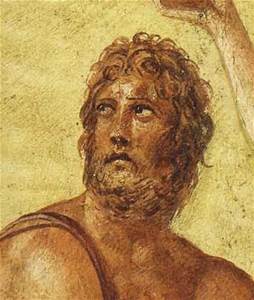
Letters From Quotidia Episode 28 Mountains and Trees

LFQ28 Mountains and Trees

Welcome to Letters From Quotidia – a podcast by Quentin Bega for lovers of music, poetry, and the Crack- that most Irish of nouns which may encompass, news, gossip, fun, entertainment, and enjoyable conversation. Quotidia is that space, that place, where ordinary people lead ordinary lives. But where, from time to time, they encounter the extraordinary. In this podcast you will hear lines from the poetry of Les Murray, A. E. Housman and the laconic Basho.

I worked a summer job in 1970 at a fish-and-chip shop in Donaghadee, County Down in Northern Ireland. I was trying to gather a few shekels together to get married the following year. There I met an acquaintance from schooldays who was in training to accompany the Queens University Mountaineering Club for an attempt on K2, second highest mountain in the world the following summer break. The Savage Mountain, as K2 is known, has the second highest fatality rate among the eight-thousanders (that is-those 14 mountains above 8,000 metres or 26,247 feet) Their summits are in the death zone which  refers to altitudes above a certain point where the amount of oxygen is deemed insufficient to sustain human life. Yet 33 people have climbed all 14 peaks without extra oxygen. Hundreds have died in the attempt, so death zone seems accurate enough.

Wikipedia has a great story concerning ace mountaineer, Reinhold Messner, renowned for making the first ascent of Mount Everest without supplemental oxygen and for being the first climber to ascend all fourteen “eight-thousanders was given the opportunity by the Chinese government to climb Mount Kailash, a mountain sacred to four religions, in the mid-1980s but he declined. In 2001 the Chinese gave permission for a Spanish team to climb the peak, but in the face of international disapproval the Chinese decided to ban all attempts to climb the mountain. Messner, referring to the Spanish plans, said, “If we conquer this mountain, then we conquer something in people’s souls … I would suggest they go and climb something a little harder. Kailash is not so high and not so hard.

Well, at almost 22,000 feet it is no mean mountain, thought by earlier mountaineers to be unclimbable, so Messner’s not so high and not so hard has to be taken with a pinch of salt. Still, it’s good to know that there is a sacred site that has not been trashed by tourists of one kind or another; unlike Uluru, also known as Ayer’s Rock, in central Australia where visitors regularly ignored requests that the sacred rock is not climbed as are requests that certain sections are not photographed.

Of course, I have climbed nothing much higher than Lurigethan, the flat-topped mountain of some eleven hundred feet which towered over my childhood home. I had always regarded it with awe as a child and I finally climbed it in the company of my to-be wife in the spring of 1968. I experienced that sense of exaltation that so many of us report when at the summit of a high place. It’s something to do with being able to see for miles and miles; looking down at the insignificance of humans and their achievements. 

You can also lose yourself, in a different sort of way, among the trees. Although limited theoretically to growing less than 130 metres or 430 feet tall, we feel dwarfed by these towering plants that can outlive us by thousands of years as well. Near Bulahdelah, northern NSW in the Myall Lakes National park is the aptly named the Grandis, a 400-year-old gum which soars 76 metres among the surrounding forest.

This area was home, as well, to Australia’s greatest poet, Les Murray, who writes in Noonday Axeman, about his forbears who came here from Scotland to work the timber…my great-great grandfather here with his first sons,/who would grow old, still speaking with his Scots accent, /never having seen those highlands that they sang of. As humans we measure ourselves against just about everything we experience but to compare ourselves to trees is more comprehensible than to set a measure against the mountains of the world, large or small.

A E Housman, does so in one of his best-known poems, Loveliest of trees, the cherry now/Is hung with bloom along the bough,/And stands about the woodland ride/Wearing white for Eastertide./Now, of my threescore years and ten,/Twenty will not come again,/And take from seventy springs a score,/It only leaves me fifty more./And since to look at things in bloom/Fifty springs are little room,/About the woodlands I will go/To see the cherry hung with snow. Compare this to Basho’s terse comment, The oak tree:/not interested/in cherry blossoms.

Well, takes all sorts, I suppose! In 1972, we set up home in Wollongong, between the heavily wooded Illawarra Range and the long white beaches washed by the surf sets of the South Pacific Ocean. In 1974 we moved just across from the city’s Botanic Gardens and we would often take the kids to the duck pond or rose garden. I would, on occasion, sit under a tree, reading poetry, strumming my guitar or learning how to play the tin-whistle. During that year, apart from annoying the ducks by over-blowing, I wrote the song, Mountains and Trees, there; comparing the scenes of my youth in Northern Ireland to the strange and compelling vistas around me. Here is the song: [Insert song]

That has been the 28th Letter From Quotidia. Just a word about the numbering of the Letters: after each group of four letters which features one song at the end, I have a postcards edition which has its own count. These postcard editions feature four songs and are slightly longer in length than the letters. You will find this admission either charmingly or annoyingly Irish or- and I hope this is the case- you’ll just shrug it off as of no consequence in the larger scheme of things.

The next letter takes us out to the interstellar reaches where star-stuff is made, then back home where memories are made. By the rivers of Babylon, we will suffer homesickness  and just before the song, we will experience a most wonderful evocation and exploration of what it means to be home, thanks to the poetry of Robert Frost. So, until we meet again, may the place you call home be a refuge and a comfort to you and yours. And, if have lost or never had a home- may you find one soon.

Credits: All written text, song lyrics and music (including background music) written and composed by Quentin Bega unless otherwise specified in the credits section after individual posts. Illustrative excerpts from other texts identified clearly within each podcast. I donate to and use Wikipedia frequently as one of the saner sources of information on the web.

Technical Stuff: Microphone- (for the podcast spoken content) Audio Technica AT 2020 front-facing with pop filter

Microphone (for many of the songs) Shure SM58

For recording and mixing down 64-bit N-Track Studio 9 Extended used

Music accompaniment and composition software– Band-in-a-Box and RealBand 2020 as well as- for some 20 of the songs of year 2000 vintage- I used a Blue Mountains, NSW, studioApproximately 48 Banter folk songs and instrumentals recorded live (“in the round”) with a ThinkPad laptop using the inbuilt mic.
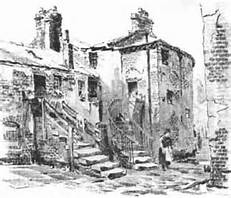
Letters From Quotidia Episode 27 Paddy Went Home Today

LFQ27 Paddy Went Home Today

Welcome to Letters From Quotidia  number 27, a podcast by Quentin Bega for lovers of music, poetry, and the Crack- that most Irish of nouns which may encompass, news, gossip, fun, entertainment, and enjoyable conversation. Quotidia is that space, that place, where ordinary people lead ordinary lives. But where, from time to time, they encounter the extraordinary.

You are more likely today to find a sorcerer’s apprentice than one for  actual trades! In Australia, those men, who enter apprenticeships to become plumbers, electricians, carpenters, mechanics and a host of other trades that construct the protective carapaces in which we exist are designated “tradies” and they have an honoured place in the pantheon of occupations in this land that was dismissively labelled a bricklayer’s paradise in the 1960s when so many found a place in the sun and started to build a new life for themselves and their families.

Even in the early 70s when I first arrived on these shores, the shortage of skilled labour ensured that anyone with a modicum of skill in any trade could walk out of one job in the morning and have another job that afternoon. Advertising reflected this by, for instance, contrasting the pasty-faced white-collar workers glumly eating a business lunch in a restaurant with young, bronzed, muscled builders happily eating a meat pie outside in the cabin of their Ute.

This image has persisted over the decades, even though their golden age has passed and the new economy has its own young guns slinging code and establishing start-ups which are worth millions within a year and teenagers perform choreographed jerks and stretches for aficionados of Tik Tok.

There are lots of paeans to those inhabiting the upper-crust of society- Kings and Queens and the like, and also to those inhabiting the base of the human pie- the peasantry and the proletariat. This entry, though, deals with those who inhabit that special place that will not see them loaded onto tumbrils on the way to the greedy guillotine or consigned to be factory-and-cannon fodder.  

But we can’t comfortably categorise them as petit bourgeois either. Soren Kierkegaard wrote, “the petty bourgeois is spiritless…devoid of imagination… he lives within a certain orbit of trivial experiences as to how things come about, what is possible, what usually happens… this is the way the petty bourgeois has lost himself and God This scornful depiction owes more to the prejudices of the philosophical Dane’s affluent middle-class upbringing than any thoroughgoing analysis.

It seems to me that human progress has been accomplished by men and women looking at how things come about, what is possible and what usually happens. From pre-historic times, the work and innovation of stone-masons, carpenters, tool-makers, and metalworkers have added to the utility and aesthetics of human existence. From classical times, the ingenuity of plumbers, ship-builders, aqueduct engineers and road-makers has ensured the spread of civilisation. Modern times owes much of its definition to electricity on demand and, now, the sparkie joins the ranks tradespeople who keep our lives on its comfortable track.

Think of the last time your toilet was blocked, or there was a power outage, or the ceiling leaked or if this happened at once- as it might in the aftermath of a storm. Then, you, too, would be singing paeans those who would fix the problems. Paean is such a strange word- it means enthusiastic praise and derives from a hymn to Apollo, who was physician to the gods.

I am reminded of a relatively obscure incident from the Cold War where this word was used in an interesting way. In 1968, the USS Pueblo, an American Naval spy ship, was captured after being fired upon by North Korean navy ships killing fireman Duane Hodges and wounding a third of the contingent. 82 officers and crew were imprisoned and tortured physically and mentally for 11 months.

As part of the conditions for release the captain and officers had to sign an admission of guilt. The captain gamed his tormentors, using the word paean to do so. Skip Schumacher, interviewed for the BBC program Witness in 2012, recalls with humour and pride their final act of resistance as the men walked to freedom across the “bridge of no return” at Panmunjom. “Blasted on the loud speakers for all to hear came the booming voice of Commander Bucher wishing to pee on the North Korean navy and most of all pee on Premier Kim ll-sung!”

The crew members, too, were defiant as demonstrated by, on one occasion a group of eight sailors were photographed by the North Koreans to show how well the crew was being treated. In the photograph every sailor held up his middle finger – a lewd gesture that was not recognised by their captors. “We told them the finger was a Hawaiian good luck sign so they thought that was wonderful,” Lt Schumacher remembers.  

The USS Pueblo is still a commissioned vessel of the US Navy and is the only one held captive by an adversary to this date. I think somehow the United States has a long memory and will not rest until the ship is once more in US waters. So, then, what follows is a song of praise- a paean, to the tradies who work long hours for little in the way of glory.

I heard about the protagonist of the song when the members of the folk band I was playing in were talking about big drinkers we had encountered during our working lives. Paddy is based on a sheet-metal worker from inner Sydney during the boom times of the mid-70s who grafted alongside my brother-in-law Jim, the mandolin player in the group, Banter [Insert song, Paddy…]

Next time you visit Quotidia you will visit big things like the Himalayan eight thousanders, that big gum tree named Grandis in Myall Lakes National Park in NSW and Lurigethan, the flat-topped hill which towered over my childhood home in Cushendall in the Glens of Antrim. Also, we’ll visit some small things such as the ducks swimming contentedly in the pond at the Botanic gardens in Wollongong.

Credits: All written text, song lyrics and music (including background music) written and composed by Quentin Bega unless otherwise specified in the credits section after individual posts. Illustrative excerpts from other texts identified clearly within each podcast. I donate to and use Wikipedia frequently as one of the saner sources of information on the web.

Technical Stuff: Microphone- (for the podcast spoken content) Audio Technica AT 2020 front-facing with pop filter

Microphone (for many of the songs) Shure SM58

For recording and mixing down 64-bit N-Track Studio 9 Extended used

Music accompaniment and composition software– Band-in-a-Box and RealBand 2020 as well as- for some 20 of the songs of year 2000 vintage- I used a Blue Mountains, NSW, studioApproximately 48 Banter folk songs and instrumentals recorded live (“in the round”) with a ThinkPad laptop using the inbuilt mic.

Letters From Quotidia Episode 26 Penelope’s Song

LFQ26 Penelope’s Song

Welcome to Letters From Quotidia – a podcast by Quentin Bega for lovers of music, poetry, and the Crack- that most Irish of nouns which may encompass, news, gossip, fun, entertainment, and enjoyable conversation. Quotidia is that space, that place, where ordinary people lead ordinary lives. But where, from time to time, they encounter the extraordinary. In this 26th letter you will hear lines of poetry about the sea by John Masefield, Margaret Atwood’s mischievous take on the Odyssean myth and  wander simultaneously through the Dublin of the early 20th Century and sunny Bondi in the 21st. Can you beat the magic of podcasts?

In the Glens of Antrim, where I was born, the sea has been a powerful shaping force throughout history and, indeed, pre-history. For 10,000 years people have walked through the glens, many having arrived by sea over the millennia and just as many having left by the same means. My father and grandfather were the latest in a long line of Glensmen who sought a livelihood across the sea stretching back to the Neolithic exporters of porcellanite axe heads found the length and breadth of the British Isles and much further afield.

John Masefield has set out in a poem, published in 1902, the allure of the sea-faring life to many a sailor; an allure as powerful as the attractions of the girls from the Belfast brothels of the previous entry.

I must down to the seas again, to the lonely sea and the sky,/And all I ask is a tall ship and a star to steer her by,/And the wheel’s kick and the wind’s song and the white sail’s shaking,/And a grey mist on the sea’s face and a grey dawn breaking.

For most part, the womenfolk stayed at home and waited and waited; expected to emulate Penelope, spouse of the Greek hero Odysseus who warded off 108 suitors for twenty years by saying she would entertain their suit when she had finished her weaving, an appropriate wifely task. At night, she would undo what she had done the previous day. This embodiment of uxorial decorum is represented in art by her modest pose of leaning her cheek on her hand, and by her protectively crossed knees, reflecting her long chastity in Odysseus’s absence.

Her name has traditionally been associated with marital faithfulness, unlike her contemporary, Helen, who represents the fatal attraction of faithless beauty: Was this the face that launch’d a thousand ships/And burnt the topless towers of Ilium? But some recent readings offer a more ambiguous interpretation of Penelope, the wifely paragon.

As Margaret Attwood has Penelope observe in The Penelopiad, when she recognises her husband’s beggarly disguise but refrains from calling him on it: it’s always an imprudence to step between a man and the reflection of his own cleverness.  Continuing the deflation of the legend, she further assets that Odysseus was a liar and drunkard who had fought a one-eyed bartender then boasted it was a giant, cannibalistic Cyclops he had bested through his guile and strength.

Other, ancient sources including Duris of Samos and Servius, the Virgilian commentator, report that Penelope slept with all 108 suitors in Odysseus’ absence, and gave birth to Pan as a result. One wonders if, in fact, the song of the Sirens that tormented Odysseus was suspicious thoughts of what his wife was up to back in Ithaca.  

In the early 7th Century, St Isidore, patron saint of the Internet, who is said to have been the last true scholar of the ancient world, asserted in his  Etymologiae that there were three Sirens…One of them sang, another played the flute, the third the lyre. They drew sailors, decoyed by song, to shipwreck… According to the truth, he asserts, they were prostitutes who led travellers down to poverty. So he is of one mind with the Reverend O’Hanlon of my previous letter.

In 1917, Franz Kafka writing about these creatures has this to say: Now the Sirens have a still more fatal weapon than their song, namely their silence. And though admittedly such a thing never happened, it is still conceivable that someone might possibly have escaped from their singing; but from their silence certainly never.

But we don’t have to put up with their silence, thankfully. In my head I hear a partial roll-call of those intrepid men who heeded the summons of the sea and helped shape modern Australia, the place where I now live and call home: Bass, Baudin, Cook, Dampier, D’Entrecasteaux, Flinders, Frecinyet, Furneaux, La Perouse, Tasman, Torres. They all undertook voyages as legendary as that of Odysseus in the Bronze Age. The age of exploration across the vastness of land and sea has passed, I guess, and we look to the stars for a new age of exploration.

I think, now, of an Irish writer who took on the immense themes found in the Odyssey of Homer and presents us with one day in the life of an unremarkable Dubliner as he wanders around his city on the 16th of June, 1904; a most propitious date that is still celebrated in cities around the world as Bloomsday where readings from the text take pride of place. In Sydney, it has been celebrated in a variety of venues including Bondi Beach where Irish backpackers congregate in large numbers in order to redden their pale Celtic backs in the sun and to redden their pale Celtic faces at the pub afterwards.

Some of them may even take part in marking the composition of Ulysses by James Joyce where we find Molly Bloom, who represents Penelope, lying in bed with her husband Leopold Bloom, who is Odysseus. The novel concludes with Molly’s remembrance of Bloom’s marriage proposal. And her reply? …yes I said yes I will Yes. [Insert song Penelope’s Song] 

In our next Letter From Quotidia, we learn that Soren Kierkegaard is, actually, a bit of a snob; cheer as we learn how the American officers and men from the USS Pueblo, captured by the North Koreans in 1968, gamed their captors with a play on words from a term derived from a hymn to Apollo; and how “tradies” in Australia, at one time, occupied an honoured place in Australian society and are once again in the ascendent as we belatedly discover that coders and tik tok dancers can’t fix a tap or replace a fuse or lay a brick on a brick or saw a plank in half to mend the back door. Who knew? So, we’ll meet again in Quotidia for letter 27, that is, if the bloody place is still standing from a lack of people able to fix the bits that break or fall off or cease to work. Fingers crossed!

Credits: All written text, song lyrics and music (including background music) written and composed by Quentin Bega unless otherwise specified in the credits section after individual posts. Illustrative excerpts from other texts identified clearly within each podcast. I donate to and use Wikipedia frequently as one of the saner sources of information on the web.

Technical Stuff: Microphone- (for the podcast spoken content) Audio Technica AT 2020 front-facing with pop filter

Microphone (for many of the songs) Shure SM58

For recording and mixing down 64-bit N-Track Studio 9 Extended used

Music accompaniment and composition software– Band-in-a-Box and RealBand 2020 as well as- for some 20 of the songs of year 2000 vintage- I used a Blue Mountains, NSW, studioApproximately 48 Banter folk songs and instrumentals recorded live (“in the round”) with a ThinkPad laptop using the inbuilt mic.

Letters From Quotidia Episode 25 Belfast Calling

LFQ25 Belfast Calling

Welcome to Letters From Quotidia – a podcast by Quentin Bega for lovers of music, poetry, and the Crack- that most Irish of nouns which may encompass, news, gossip, fun, entertainment, and enjoyable conversation. Quotidia is that space, that place, where ordinary people lead ordinary lives. But where, from time to time, they encounter the extraordinary.

There are places of wonder, splendour, adventure and transcendence, I suppose. Most Saturday mornings, I sit on the northeast corner of our veranda and flip through the travel supplement of The Sydney Morning Herald as I sip coffee and listen to the radio. In winter, the sun is low enough to stream under the roof and warm my blood as well as that of the small lizards that bask on the red-brick wall opposite.

In summer, the sun is higher and the same corner is shaded and open to the cooling breeze. Why, then, would I want to be anywhere else? I notice that the grey dollar is avidly sought as cruise operators, glamping spruikers as well as the more traditional bus touring companies display their dream destinations in extravagant, adjective-strewn purple prose promising fulfilment of various kinds…of-a-lifetime, of course. To over-promise and under-deliver seems a feature of life today. Does “awesome” retain even a sliver of its original heft?

My dyspeptic cast of thought is not solely due to the advertising copy before me (some of it masquerading as travel writing) but the thought that I must return to the small box-room that I use as a writing post. There, I’ve left an excerpt from Letter III of a Congregationalist minister writing, in 1852, an account of his meeting with some of my forbears in a small house at the entry of a cul-de-sac in the slums of Belfast. Entitled Walks Among the Poor of Belfast…, it is one of the many printed exposés of the effects of extreme poverty in the industrial cities of the UK at the time.

The Reverend W. M. O’Hanlon recounts, the first house we entered was filled with sweeps…it is seldom that even one or two of these dusky ones cross our path without exciting…pity for them…as among the semi-barbarous thralls of society…a conclave of some ten or twelve of them, all duly begrimed, and by no means ashamed to shew their colours, is not an every-day sight. My ancestors of less than two centuries ago reminded the reverend person of, a Pandemonium, only very completely shorn of its terrible sublimity and partaking largely of the burlesque. Deep ignorance is, of course, the prevailing characteristic of this class.

Hardly surprising, if the following testimony is typical, inquiring of one, about eighteen years of age, if he had ever been at school, his reply was, that he had gone to school when a child, for a few days, but, not being able to make anything of it, he had given it up and ever since he had looked upon “the larnin’ as a mighty strange thing.” George Bernard Shaw, in Pygmalion, has Eliza Doolittle’s father make the ironic distinction between the “deserving” poor and the “undeserving” poor and I wonder if the well-meaning O’Hanlon felt he had discovered one of the former in this next extract:

 In this singular group, however, we did find one lad able to read a little, and, having furnished him with the means, we set him to work, for his own benefit and that of his black brethren. What means? What work? I ask myself 163 years later, and I have a feeling there may be a script, poem, song or short story here. But I must put it on the long finger, to use an Irish expression from the time, because I would like to share with you the fact that the straitened circumstances in which the charitable Reverend found members of my clan were a des res in comparison to what was found in a nearby lane,

Sounds a bit like Kings Cross of a Saturday night, doesn’t it? O’Hanlon did not live much longer after his encounter with my black brethren and I honour his memory. But, out here on the veranda, as I gaze at the artfully cropped photographs of tourist destinations far and near, I ponder on the images and accounts that are not submitted for my weekend perusal but that would replicate in substance what the Reverend W. M. O’Hanlon discovered in the city that was my first abode when I left my parents and began my tentative steps as a new husband, a new father and teacher-in-waiting as I dreamt of a new life in Australia: [insert song] Our next letter, focuses on the sea with accounts of odysseys thousands of years apart. We’ll learn the name of the 7th Century saint of the internet and Franz Kakfa will reveal a hitherto secret power of the Sirens whose songs lured hapless sailors to their deaths. So, may you hear only those civically necessary emergency sirens until we next meet on the highways and byways of Quotidia.

Credits: All written text, song lyrics and music (including background music) written and composed by Quentin Bega unless otherwise specified in the credits section after individual posts. Illustrative excerpts from other texts identified clearly within each podcast. I donate to and use Wikipedia frequently as one of the saner sources of information on the web.

Technical Stuff: Microphone- (for the podcast spoken content) Audio Technica AT 2020 front-facing with pop filter

Microphone (for many of the songs) Shure SM58

For recording and mixing down 64-bit N-Track Studio 9 Extended used

Music accompaniment and composition software– Band-in-a-Box and RealBand 2020 as well as- for some 20 of the songs of year 2000 vintage- I used a Blue Mountains, NSW, studioApproximately 48 Banter folk songs and instrumentals recorded live (“in the round”) with a ThinkPad laptop using the inbuilt mic.

Letters From Quotidia Postcards Edition 6

Welcome to Letters From Quotidia, the Postcards edition, number 6, a podcast by Quentin Bega where you will hear Banter, a traditional Irish folk group from Sydney’s outer west, present four tunes and songs drawn from the traditions of the English-speaking world. And, as always, Quotidia is that space, that place, where ordinary people lead ordinary lives. But where, from time to time, they encounter the extraordinary.

The Monaghan Twig/Denis Murphy’s/The Rattlin’ Bog– This is an unadorned and brief essay during one of our sessions where the fiddle player and bodhran player had a bit of a go in one of the many refreshment breaks taken by the others in the group. These, although convivial in the extreme, militated against the most effective use of time for group practice. Still, who do we really have to please apart from ourselves? [insert tunes]

Down by the Glenside (The Bold Fenian Men) is an Irish rebel song written by Peadar Kearney, an Irish Republican and composer of numerous rebel songs, including “The Soldier’s Song” (“Amhrán na bhFiann“), now the Irish National Anthem and “The Tri-coloured Ribbon”. Kearney was a member of the Irish Republican Brotherhood, popularly known as the Fenians. He wrote the song about the time of the 1916 Rising. It evokes the memory of the freedom-fighters of the previous generation (strong, manly forms…eyes with hope gleaming), as recalled by an old woman down by the glenside. It is effectively a call to arms for a generation of Irishmen accustomed to political nationalism. Three verses to this song were sung by Ken Curtis and The Sons of the Pioneers in the 1950 John Ford movie Rio Grande. The song became popular again in the 1960s, when it was recorded by The Clancy Brothers. It has since been recorded by numerous artists, including The Dubliners, Cherish The Ladies, Omnia, Screaming Orphans, Jim McCann, Harry O’Donoghue, and The Wolfe Tones. The song is also sung in the first episode of the BBC series Days of Hope, written by Jim Allen and directed by Ken Loach. An Irish barmaid is forced to sing after being sexually harassed by British soldiers and impresses them with her song. [insert song] The info here above and elsewhere in the postcards is courtesy of Wikipedia which I often access and donate to.

Don’t Get Married Girls– What a great song! Written by Leon Rosselson who has been around in the folk scene from the early 1960s. He is in his mid- eighties now and still active and still an activist. He is one of the characters I see as a role-model. It would be great to be still doing the rounds and playing in sessions at that age. Most of us in this little folk group have been married for decades, now. I’m glad the song was not current when I was courting. We have been told on more than one occasion, after we have performed this satire, how lucky we are that the sentiments expressed here had not been articulated so compellingly way back then. “Why didn’t you bloody well sing this to me when we first met?  “I might look stupid, but I’m really  not!” is our invariably unvoiced riposte, expressed instead as a shrug with a grunt. [insert song]

Come Up the Stairs- A couple of years ago I attended a reunion, ninety minutes south of Sydney, in Wollongong of, Seannachie, the band I was part of in the 1970s. It was a memorable weekend starting with folk open-mic at a bowlo in North Wollongong at which I drank lots of Guinness and sang, The Streets of Forbes and Her Father Didn’t Like Me,  I stayed with Joe Brown, the guitarist with the group. The next day we gathered at the house built by Bertie McKnight, the mandolin player. There, also, was Johnny Spillane, the whistle player and Tony Fitzgerald, the main singer of the group who had learned to play the guitar in the decades intervening. We swapped songs and yarns all day and, after Joe and I  returned to his place, he found an old cassette and played this song from circa 1975 which I had learned from a Johnny McEvoy record a few years previously. Anyone remember cassette players, apart from us oldies? I had completely forgotten about it and determined to resurrect it for Banter. The song was written by Shay Healy, Irish broadcaster, songwriter, and journalist. He got the 9/8 tune from his mother who was a noted singer of old Irish traditional songs. This explains why so many people think this is an old song, but the lyrics were written by Healy sometime in the 1960s. [insert song]

That has been the sixth edition of postcards from Quotidia. In our next edition we will start, not as before with a completely  instrumental set but instead with a song/instrumental combo, this is followed by Jim’s rendition of Paddy’s Green Shamrock Shore. Hot on his heels is Sammy with a rousing version of Ewan McColl’s Shoals of Herring. The postcard closes with a moving Scottish ballad about a massacre in 1692, written by Jim McClean back in 1963. Please join us in our continuing celebration of folk music from the English-speaking tradition.

Credits: All written text, song lyrics and music (including background music) written and composed by Quentin Bega unless otherwise specified in the credits section after individual posts. Illustrative excerpts from other texts identified clearly within each podcast. I donate to and use Wikipedia frequently as one of the saner sources of information on the web.

Technical Stuff: Microphone- (for the podcast spoken content) Audio Technica AT 2020 front-facing with pop filter

Microphone (for many of the songs) Shure SM58

For recording and mixing down 64-bit N-Track Studio 9 Extended used

Music accompaniment and composition software– Band-in-a-Box and RealBand 2020 as well as- for some 20 of the songs of year 2000 vintage- I used a Blue Mountains, NSW, studioApproximately 48 Banter folk songs and instrumentals recorded live (“in the round”) with a ThinkPad laptop using the inbuilt mic.

Letters From Quotidia Episode 24 Just For You And Me

LFQ 24 Just For You and Me

Welcome to Letters From Quotidia – a podcast by Quentin Bega for lovers of music, poetry, and the Crack- that most Irish of nouns which may encompass, news, gossip, fun, entertainment, and enjoyable conversation. Quotidia is that space, that place, where ordinary people lead ordinary lives. But where, from time to time, they encounter the extraordinary. Hey, we’re back to my old mate, Aristophanes, and taking in Cockaigne, e. e. cummings and the Carmina Burana. But let’s start with that literary shape-shifter, Fiona McCloud.  

The shadowy hound of death in the poem by Fiona McCloud a.k.a. William Clark is a wonderful construct where the spectre of mortality is not a grim reaper with hapless humankind withering in helpless stands like the grass and flowers of Isaiah and 1 Peter, All flesh is like grass,/and all its glory like the flowers of the field./The grass withers and the flowers/ fall,  but, instead, we find a questing hound leading the lonely hunter, pursuing the lost-loved face, over a green hill. And what lies over that green hill?  

Perhaps Aristophanes can give part of the answer. In The Birds, we see two middle-aged men, lost in a hilly wilderness looking for a land where the strife and privation found in Athens are absent. And what do they find? Cloud-cuckoo-land. One of the themes of the play is a revolt against conventional power-structures and this thread comes down through the centuries to us today.

In the Middle-Ages we find the Goliardic tradition where the powerful institution of the Roman Church is mocked mercilessly and finds its apotheosis in The Feast of Fools where licentious behaviour scandalised the sober and pointed to the contradictions between the theory and practice of many of the clergy.  The Carmina Burana is the best known artefact from those times. In 1567, Breughel the Elder’s painting of The Land of Cockaigne shows us stock contemporary figures such as a peasant, a soldier and a clerk, semi-comatose from the effects of gluttony.

Cockaigne, Wikipedia tells me, was an imaginary place of extreme luxury and ease where physical comforts and pleasures are always immediately at hand and where the harshness of medieval peasant life does not exist…a land of contraries, where all the restrictions of society are defied (abbots beaten by their monks), sexual liberty is open (nuns flipped over to show their bottoms), and food is plentiful (skies that rain cheeses).

In the great depression of the 20th Century, the same impulse is at work in songs such as The Big Rock Candy Mountain where the promise of cigarette trees, chocolate heights and lemonade springs lures a naïve young farmer’s son to follow the burly hobo to search for the land of ease. The denouement of the original song is not the sanitised version that children sing in school performances.

At about the same time as the song was being popularised in the 1930s we find Shangri-La, a mystical valley utopia in the Kunlun Mountains, which was long believed to be a paradise of Taoism. The word, utopia, was coined by Sir Thomas Moore in 1516 from the Greek words not and place or, colloquially, nowhere. What is implied by the etymology of the word has not prevented a host of visionary dreamers, both the benign and the psychopathic, from instituting their version of a heaven on earth. Manson’s family, Jonestown and Pol Pot’s Cambodia come to mind more readily than, say, the Oneida Community that lasted from 1848 to 1881 and which left us a legacy of stylish silverware-much preferable to the mountains of dead bodies and myriad shattered lives left by the others mentioned before.

Which brings me to The Garden of Earthly Delights, a triptych by Hieronymous Bosch, painted around 1500. Depicted are three locales, first; on the left-hand panel, we are in Eden with God presenting Eve to Adam, second; in the larger middle panel we could be in a region of Cockaigne where nude men and women cavort among a selection of oversized birds and fruit; finally, in the panel on the right of the triptych, we are in a chamber of hell where the torments of damnation are vividly on show.

We pursue our utopias, wherever they lead us. E.E. Cummings wrote a brilliant poem about this in 1944 during the horrors of World War II, pity this busy monster, manunkind, not/…pity poor flesh and trees…but never this fine specimen of hypermagical/ ultraomnipotence/…listen: there’s a hell of a good universe next door; let’s go. There is learned speculation about the multiverse where every conceivable story and outcome is endlessly played out. Where, in one iteration of existence, you rule the big rock candy mountain; in another, you are a tortured soul endlessly enacting a scene from the right-hand panel of The Garden of Earthly Delights, and so on, and on.

In episode 4, Season 6, of Through the Wormhole, Morgan Freeman discusses the view of theorists from a number of scientific fields who wonder if this universe of ours is not just a vast video game and we are pre-programmed elements within it. These guys, presumably, don’t wear hats made of tinfoil but they are actively looking for glitches in the program that will prove that we are just epiphenomena inside, it may be, the latest fad of some alien teenage emo gamer. Now, wouldn’t that be something?

While we contemplate that possibility (not as far-fetched as a whole lot of other speculations that exercise the brainiacs among us) let me present to you a song that was written decades ago when I was remembering a simple time of two young people in love  who were lying beside a river flowing through the glen that underscored our family’s shared history (spoiler alert, I am in this revelation). It is entitled, Just For You and Me. [insert song]

To start the next Letter From Quotidia, we will be looking into the past- something I have tried to resist. Yeah! But retrospectivity is built into the species- where did we come from? So, to begin the next tranche of recollections, I will be delving into the less salubrious environs of Belfast, where both I and my wife arise. Hey Ho!

Credits: All written text, song lyrics and music (including background music) written and composed by Quentin Bega unless otherwise specified in the credits section after individual posts. Illustrative excerpts from other texts identified clearly within each podcast. I donate to and use Wikipedia frequently as one of the saner sources of information on the web.

Technical Stuff: Microphone- (for the podcast spoken content) Audio Technica AT 2020 front-facing with pop filter

Microphone (for many of the songs) Shure SM58

For recording and mixing down 64-bit N-Track Studio 9 Extended used

Music accompaniment and composition software– Band-in-a-Box and RealBand 2020 as well as- for some 20 of the songs of year 2000 vintage- I used a Blue Mountains, NSW, studioApproximately 48 Banter folk songs and instrumentals recorded live (“in the round”) with a ThinkPad laptop using the inbuilt mic.

Letters From Quotidia Episode 23 Still On The Move

LFQ 23 Still on the Move

Welcome to Letters From Quotidia – a podcast by Quentin Bega for lovers of music, poetry, and the Crack- that most Irish of nouns which may encompass, news, gossip, fun, entertainment, and enjoyable conversation. Quotidia is that space, that place, where ordinary people lead ordinary lives. But where, from time to time, they encounter the extraordinary. For those of middle or low brows, like me, do not despair, there will be a short, sharp, philosophical pain as certain propositions are put- but don’t worry, this will give way to the red meat of gossip in a very short time. So, let’s start with Zeno, whose arrow paradox will feature in the title of the song at the end of this podcast. Hang in there, those with brows less than high!

Zeno was a puzzling fellow: The hapless French knights in the previous entry would have been more than grateful had his arrow paradox been, in fact, true. I cannot improve on the account given in Wikipedia: In the arrow paradox (also known as the fletcher’s paradox), Zeno states that for motion to occur, an object must change the position which it occupies. He gives an example of an arrow in flight. He states that in any one (duration-less) instant of time, the arrow is neither moving to where it is, nor to where it is not.It cannot move to where it is not, because no time elapses for it to move there; it cannot move to where it is, because it is already there. In other words, at every instant of time there is no motion occurring. If everything is motionless at every instant, and time is entirely composed of instants, then motion is impossible.

Diogenes of Sinope, also known as “Diogenes the Cynic”, is said to have replied to the argument that motion is unreal by standing up and walking away. This is known as solvitur ambulando which is Latin for, It is solved by walking. Nonetheless, Bertrand Russell in the 20th Century has called the paradoxes of Zeno “immeasurably subtle and profound”. So why did he leave us such fiendish paradoxes to contemplate? Gazing at the idealised marble statues of the philosophers of antiquity may prompt us to ascribe the love of abstract thought as the motivation.

But I suspect it is in the heart rather than the head that we will find the true motive.  Plato reports that Zeno was “tall and fair to look upon” and was “in the days of his youth … to have been beloved by Parmenides”, his teacher. Crucially, according to Plato, the writings of Zeno, including the paradoxes, were “meant to protect the arguments of Parmenides“.  Where do we look, then, for the philosophers who can tell us of the paradoxes of the human heart?

Thankfully, we don’t have to search too far in time or place. Carson McCullers at the age of 23, published her first novel, The Heart is a Lonely Hunter, in 1940. This frail, illness-stricken young woman, had the constitution of a sickly bird but the heart of a classical hero. Her characters seek for meaning and connection in a hostile world within wonderfully titled works such as Reflections in a Golden Eye, The Ballad of the Sad Café and The Square Root of Wonderful.

She, herself, was like a character from her fiction. Married at age 20 to an ex-soldier, Reeves McCullers, who was also an aspiring writer, she began work on her first novel. The marriage didn’t last and in 1941 she left for New York to live with George Davis the editor of Harper’s Bazaar, becoming a member of an arts commune in Brooklyn. Her friends included W. H. Auden, Benjamin Britten, Gypsy Rose Lee, and Paul and Jane Bowles. After World War II, McCullers lived mostly in Paris where she re-married Reeves McCullers.

Her close friends during these years included Truman Capote and Tennessee Williams. In 1948 she became severely depressed and attempted suicide. In 1953, Reeves tried to convince her to commit suicide with him, but she fled and Reeves killed himself in their Paris hotel with an overdose of sleeping pills. She returned to the US and lived her final years in Nyack, a small town outside New York City where she died of a brain haemorrhage at age 50 in 1967. Had she lived another 40 years to reveal, perhaps, a prequel to her most famous novel, who knows, she might have had to endure the damning with faint praise I witnessed recently on the ABC’s premier TV book show where her near-contemporary, Harper Lee’s book, Go Set a Watchman, was reviewed.

She is buried in Oak Hill cemetery where you will also find Edward Hopper, the artist who painted one of the great scenes of 20th Century American Art in his picture Nighthawks, set in an all-night diner on a street corner in New York City. I’ll conclude by quoting from the poem where, on the advice of her editor, Carson McCullers found the title for her first novel. The poem, The Lonely Hunter, is by Scottish writer William Clarke, who, as a member of the Celtic Revival of the 1890s, wrote under the pseudonym, Fiona McCloud.

This he kept a closely held secret. Yeats, (in a literary irony or, at least, curiosity,) found the work of McCloud acceptable but not that of Clarke. He later worked out that Clarke and McCloud were, in fact, the same person.  What are all songs for me, now, who no more care to sing?/Deep in the heart of Summer, sweet is life to me still,/But my heart is a lonely hunter that hunts on a lonely hill./Green is that hill and lonely, set far in a shadowy place;/White is the hunter’s quarry, a lost-loved human face:/O hunting heart, shall you find it, with arrow of failing breath,/Led o’er a green hill lonely by the shadowy hound of Death?   

The next song is unique in this land of Quotidia and, as a genre, is heard only once in the taverns here: it’s a brief blues essay which examines, at least in the title, the arrow paradox of Zeno. Its title- Still on the Move! [insert song]

The next letter which brings up two dozen podcasts, and it brings us back to Aristophanes and forward to the amazing poet E E Cummings.  We will visit Cloud Cuckoo Land and the Feast of Fools as well as the Big Rock Candy Mountain. To keep things sufficiently weird we will entertain the proposition that we are all epiphenomena within a cosmic video game. Is Quotidia getting weirder, or what?

Credits: All written text, song lyrics and music (including background music) written and composed by Quentin Bega unless otherwise specified in the credits section after individual posts. Illustrative excerpts from other texts identified clearly within each podcast. I donate to and use Wikipedia frequently as one of the saner sources of information on the web.

Technical Stuff: Microphone- (for the podcast spoken content) Audio Technica AT 2020 front-facing with pop filter

Microphone (for many of the songs) Shure SM58

For recording and mixing down 64-bit N-Track Studio 9 Extended used

Music accompaniment and composition software– Band-in-a-Box and RealBand 2020 as well as- for some 20 of the songs of year 2000 vintage- I used a Blue Mountains, NSW, studioApproximately 48 Banter folk songs and instrumentals recorded live (“in the round”) with a ThinkPad laptop using the inbuilt mic.