

Letters From Quotidia Episode 22 Unhallowed Ground

LFQ Episode 22 Unhallowed Ground

Welcome to Letters From Quotidia – a podcast by Quentin Bega for lovers of music, poetry, and the Crack- that most Irish of nouns which may encompass, news, gossip, fun, entertainment, and enjoyable conversation. Quotidia is that space, that place, where ordinary people lead ordinary lives. But where, from time to time, they encounter the extraordinary. There are battles afoot and we are called to muster and charge into the fray. So, without more ado, podcast 22 makes the declaration: Comparisons are odious. Why? Hugh Mackay, a prominent Australian social commentator, makes the point, in a newspaper article from 2005, that to argue that only Aborigines have a genuine attachment to sacred sites as opposed to the inauthentic attachment of the Anglo-Celts to their footy grounds, war memorials and suburban plots is rubbish.

He argues that a sense of place is essential to everyone’s identity. Uluru is sacred to its custodians and to our shame, it is only recently that tourists with zero sensibility have been prevented from clambering over this sacred site. Gallipoli is, rightly, holy ground for generations of Aussies. Comparisons are odious is a saying which was in fairly common use at least five centuries ago, and not just in the English-speaking world. Cervantes, in Spain, is credited with its use at about the same time as John Donne in England. In his poem The Comparison, Donne presents us with two women: the first is the mistress of the poet, where beads of sweat are compared to pearl carcanets. (Such as the jewelled chokers found enhancing the slender necks of aristocratic and royal ladies of the time) The second is the mistress of another where, instead, Rank sweaty froth thy mistress’ brow defiles,/Like spermatic issue of ripe menstruous boils…

He continues in this vein for more than two dozen lines and concludes; Leave her, and I will leave comparing thus/She and comparisons are odious.  This is not a man you would want to cross! But to uncover the origins of the saying, comparisons are odious, we will have to go back almost two hundred years before the Elizabethan Era to John Lydgate of Bury, a contemporary of Chaucer, who wrote a little-known but fascinating exploration of animals and their place in creation; in particular, their relationship to humankind.  

The title of this obscure tome? The Debate of the Horse, Goose and Sheep. To the modern urbanised ear, this seems a slightly ridiculous title and so it did to mine until I began to explore it in more depth. I am indebted to Jeremy Withers of Iowa State University who wrote an engrossing commentary on the poem entitled The Ecology of Late Medieval Warfare in Lydgate’s The Debate of the Horse, Goose and Sheep. The subject of the debate is: which of these three animals was of most use to humans?

The Horse claims pre-eminence because it is an emblem of chivalry: who cannot but thrill to the image of a knight in shining armour mounted upon a stately steed and advancing under fluttering banners into honourable hand-to-hand combat. Reality was not so pleasant; war-horses and draft horses were killed in enormous numbers during the Hundred Years War. The Goose advanced its claim by reference to the supply of feathers to furnish the fletchings of the hundreds of thousands of arrows needed in the seemingly unending conflict. The Battle of Agincourt proved in bloody detail the effectiveness of the English and Welsh bowmen against the aristocratic, mounted French knights who thought they would have easy game that day.

The Sheep, whose position was put by a Ram because the former was so meek, counters the military utility of the others by playing the Jesus card (Lamb of God, wouldn’t you know) and claiming that peace is superior to war. The Horse vehemently asserts that wool, as a premier commodity of the time, fuelled the war efforts of various protagonists. The poet, among all the contenting arguments, reveals the very large impact of human society, and particularly, warfare on the bodies of huge numbers of animals in the late Medieval period.

In this fable, a lion and an eagle act as judges and declare each of the animals should be deemed equal. This is not an idealistic, modern-seeming concern with animal rights or welfare but rather an affirmation of the medieval concept of knowing your place and keeping to it. But, to conclude, I will shift the animal metaphor to that of a large herbivorous ape which has a fearsome reputation that is not at all in keeping with its gentle nature and which, alas, is approaching extinction and may live on only figuratively for future generations: the 800-pound gorilla in the room is, as always, Shakespeare.

Shall I compare thee to a summer’s day?/ Thou art more lovely and more temperate:/Rough winds do shake the darling buds of May,/And summer’s lease hath all too short a date: The sound and sense of Sonnet 18 has, it seems to me, quasi-magical powers. In fourteen lines we have been left one of the most affecting accounts of mortality where the preservation of beauty in the golden amber of verse is effortlessly described in the lines, But thy eternal summer shall not fade… So long as men can breathe or eyes can see,/So long lives this, and this gives life to thee. He knew, didn’t he, that his lines would be read and revered long after he and the object of his admiration were dust. Listen, now to the song, Unhallowed Ground where I attempt a meagre essay along these lines. [insert song]

Greek philosophers, Zeno, Diogenes and Plato kick off our next letter but, nil desperandum, we spend more time on the wonderful novelist Carson McCullers and examine a seemingly gender-fluid Scottish poet who fooled W. B. Yeats for a while, as to his dual identity. We also carom off American luminaries Edward Hooper and Harper Lee before we sink into the capacious pocket offered by lines of poetry to conclude a podcast that features the only blues song out of 240 items on offer. So listen in and learn a little more about the strange land that is Quotidia.

Credits: All written text, song lyrics and music (including background music) written and composed by Quentin Bega unless otherwise specified in the credits section after individual posts. Illustrative excerpts from other texts identified clearly within each podcast. I donate to and use Wikipedia frequently as one of the saner sources of information on the web.

Technical Stuff: Microphone- (for the podcast spoken content) Audio Technica AT 2020 front-facing with pop filter

Microphone (for many of the songs) Shure SM58

For recording and mixing down 64-bit N-Track Studio 9 Extended used

Music accompaniment and composition software– Band-in-a-Box and RealBand 2020 as well as- for some 20 of the songs of year 2000 vintage- I used a Blue Mountains, NSW, studioApproximately 48 Banter folk songs and instrumentals recorded live (“in the round”) with a ThinkPad laptop using the inbuilt mic.

Letters From Quotidia Episode 21 When It Isn’t Heaven

LFQ Episode 21 When It Isn’t Heaven

Welcome to Letters From Quotidia – a podcast by Quentin Bega for lovers of music, poetry, and the Crack- that most Irish of nouns which may encompass, news, gossip, fun, entertainment, and enjoyable conversation. Quotidia is that space, that place, where ordinary people lead ordinary lives. But where, from time to time, they encounter the extraordinary. In this 21st Letter there will be howling and singing, verse from poets Banjo Paterson and John Donne, references to a Miyazaki anime film and a nod to a tragic Shakespearian love story.

 Howling-adjective-producing a long, doleful cry or wailing sound. Oxford Dictionaries) Now that I no longer have to join the stream of traffic down the Great Western Highway to access the means to keep the wolf from the door and a roof over our heads, I luxuriate in reading the books, listening to the music and indulging in those sundry, random activities I didn’t have the time or energy for in the “working” phase of my existence. Leafing through a collection of Banjo Paterson’s verse the other day I came across the lines, Just now there is a howling drought/That pretty near has starved us out.

The poem dealt with the hellish conditions in the environs of the western Riverina town of Booligal in the final decades of the 19th Century. A woodcut from The Illustrated Australian News of 1889 shows a barren plain bisected diagonally by a cracked dirt track where the carcasses of animals consumed by the drought lie scattered across this stark tableau. A lone tree on the horizon is etched against the sky where dark clouds mock the arid desolation below.

Paterson treats the subject semi-humorously by having a denizen of the benighted town opine that apart from the isolation, heat, sand, dust, flies, mozzies, snakes and a plague of rabbits…the place ain’t too bad! The speaker concludes by noting that, in the unlikely event of rain, the track would become impassable and they’d be stuck in Booligal. Those listening to him are horrified, ‘We’d have to stop!’ With bated breath/We prayed that both in life and death/Our fate in other lines might fall:/‘Oh, send us to our just reward/‘In Hay or Hell, but, gracious Lord,/‘Deliver us from Booligal!’

For some reason I picture Paul Hogan as the speaker. Australians find humour in the grimmest of situations: the tragic aesthetic does not sit well in the island continent which was earmarked as the dumping ground for the worst elements of British and Irish society but which transformed in an astonishingly short time into one of the most desirable residences of the planet Earth. I put down the volume of Paterson’s verse and lifted a dictionary of quotations which opened at a page marked by a decades-old anniversary card from my wife to me. As I was lifting it out, I read the lines: Howling is the noise of hell, singing the voice of heaven, according to John Donne in his guise as a preacher rather than poet.

Singing and howling exist on a continuum of sound: one person hears music where another hears a racket. Donne was well acquainted with both concepts, heaven and hell, in his life and work. A saturnine, handsome, young Elizabethan blade with the worlds of adventure, love and preferment in front of him as well as travels as a spy and battle experience with the likes of the Earl of Essex and Sir Walter Raleigh, stares out from a portrait painted around 1595 when he was 24. Fast forward 37 years to the months after his death and we find an engraving of a sunken-cheeked, grizzled, death’s head in a shroud: something to frighten children with.

Engraved by Martin Droeshout, better known for the image of Shakespeare that adorns the First Folio, it is based on a portrait that Donne had commissioned and hung on his wall in his final years to remind him of the transience of life.  As I looked from one image to the other I was reminded of Miyazaki’s 2004 anime, Howl’s Moving Castle, where the 18-year-old protagonist, Sophie, is befriended by Howl, a strange, conflicted wizard, who lives in a magical moving castle. She is turned into an aged crone by the Witch of the Wastes. Perilous journeys, transformations and magical encounters within a surrealistic world lead in the end to Sophie and Howl at the bow of the flying castle sharing a tender kiss- oh, my God, shades of the movie, Titanic!

And yet, we are suckers for the happy ending, particularly one sealed with a loving kiss. Such a pity, isn’t it, that such endings are as rare as a blood-red diamond. Or are they? Tragic love stories attract the limelight: who would rate R+J if the Capulets and Montagues reconciled in time for the young couple to move into a new apartment in Verona and start putting up pictures while arguing over the décor of the ensuite? So, probably, there are lots of happy endings out there, under the radar, under the doona…

The idea of a prescriptive pair-bonding, though, seems quaint in the 21st Century. The ideal nuclear family of the 20th Century has morphed into a range of relational paradigms and you can take your pick of which one suits you. Me? Born in the middle of the 20th Century and married for 50 years in July of this year, I still look to the old paradigm and I find a surprisingly poignant connection with Andrew Jackson, 7th President of the United States, when he said shortly before he died: Heaven will be no heaven to me if I do not meet my wife there. And that is the cue for the song, When It Isn’t Heaven. [insert song]

Are you up for a debate among a horse a sheep and a goose? Or, what about Shakespeare’s 18th sonnet? Perhaps John Donne’s excoriating poem The Comparison is more to your liking? Maybe you just want to get on with it and cogitate on the differences between sacred and unhallowed ground in the 22nd Letter From Quotidia.

Credits: All written text, song lyrics and music (including background music) written and composed by Quentin Bega unless otherwise specified in the credits section after individual posts. Mark Dougherty, long-time friend and collaborator, has a writing credit for the song, “When It Isn’t Heaven”. Illustrative excerpts from other texts identified clearly within each podcast. I donate to and use Wikipedia frequently as one of the saner sources of information on the web.

Technical Stuff: Microphone- (for the podcast spoken content) Audio Technica AT 2020 front-facing with pop filter

Microphone (for many of the songs) Shure SM58

For recording and mixing down 64-bit N-Track Studio 9 Extended used

Music accompaniment and composition software– Band-in-a-Box and RealBand 2020 as well as- for some 20 of the songs of year 2000 vintage- I used a Blue Mountains, NSW, studioApproximately 48 Banter folk songs and instrumentals recorded live (“in the round”) with a ThinkPad laptop using the inbuilt mic.

Letters From Quotidia Postcards edition 5

Postcards edition 5

Welcome to Letters From Quotidia, the Postcards edition, number 5, a podcast by Quentin Bega where you will hear Banter, a traditional Irish folk group from Sydney’s outer west, present four tunes and songs drawn from the traditions of the English-speaking world. And, as always, Quotidia is that space, that place, where ordinary people lead ordinary lives. But where, from time to time, they encounter the extraordinary.

The Lark in the Morning– There is a song with this title which we will get around to recording at some stage, but here is an instrumental that has the sort of energy we like and which always enlivens a session when we gather to bash a few numbers out, have a few soothing ales and shoot the breeze. Our fiddle player gives it some welly and we all charge in too. There is something particularly satisfying about playing Irish music at full tilt.

The Patriot Game was written by Dominic Behan to the tune of an Irish traditional song, The Merry Month of May . Its narrator is Fergal O’Hanlon, who was a member of an IRA team who attacked the RUC barracks at Brookeborough, Co. Fermanagh on New Year’s Day, 1957. He, along with Sean South from Limerick, was killed; also killed in the attack was a young Catholic constable, John Scalley. I sang the song many years ago at a pub in western Sydney and a couple of blokes there objected to the “IRA song”. Yet, I view the song as an example of the tragic deaths fuelled by love of country, particularly of young men. Interestingly, Christy Moore notes that the song is often requested at his gigs by British soldiers. Dominic Behan once, in a phone conversation, furiously berated Bob Dylan who had used the song as a template for his composition, With God On Our Side. Dylan suggested that their lawyers should meet to discuss the situation. Behan retorted that he only had two lawyers, and they were at the end of his wrists. The version I sing retains the slighting reference to the first Irish President, Eamon de Valera, but omits the verse that justifies the killing of police officers. Yes, it is a controversial song, but, IMHO, worth singing, nevertheless.

The City of Chicago written by Christy Moore’s brother, Luka Bloom, is a firm favourite among listeners. The Irish have many bastions in the US: Chicago, Boston, and New York, to name just a few. And, as in England, the Irish were instrumental in building the infrastructure that helped propel the Industrial Age that set the United States at the top of the heap. As members, ourselves, of the Irish diaspora, songs like this have an added resonance for us.

Sweet Thames Flow Softly. I first heard the song in the early 70s from Planxty’s eponymous first album and determined to learn the song, adding an instrumental verse on Spanish guitar. Only last year, I re-visited the song with its instrumental adornment with the group, Banter. Here, though, is a Band-in-a-Box backing track with vocal. Who knows when we will be able to stand in front of a crowd (remember those times?) and do the band treatment of the ballad? Robert Herrick’s 17thC poems say:life is short, the world is beautiful, love is splendid, and we must use the short time we have to make the most of it. And he wrote that sentiment in lines we still recognise four centuries later: Gather ye rose-buds while ye may, /Old Time is still a-flying; /And this same flower that smiles today/ Tomorrow will be dying.// The glorious lamp of heaven, the sun,/ The higher he’s a-getting,/ The sooner will his race be run,/ And nearer he’s to setting. I like to speculate that Ewan McColl was thinking of these lines when he wrote this song.

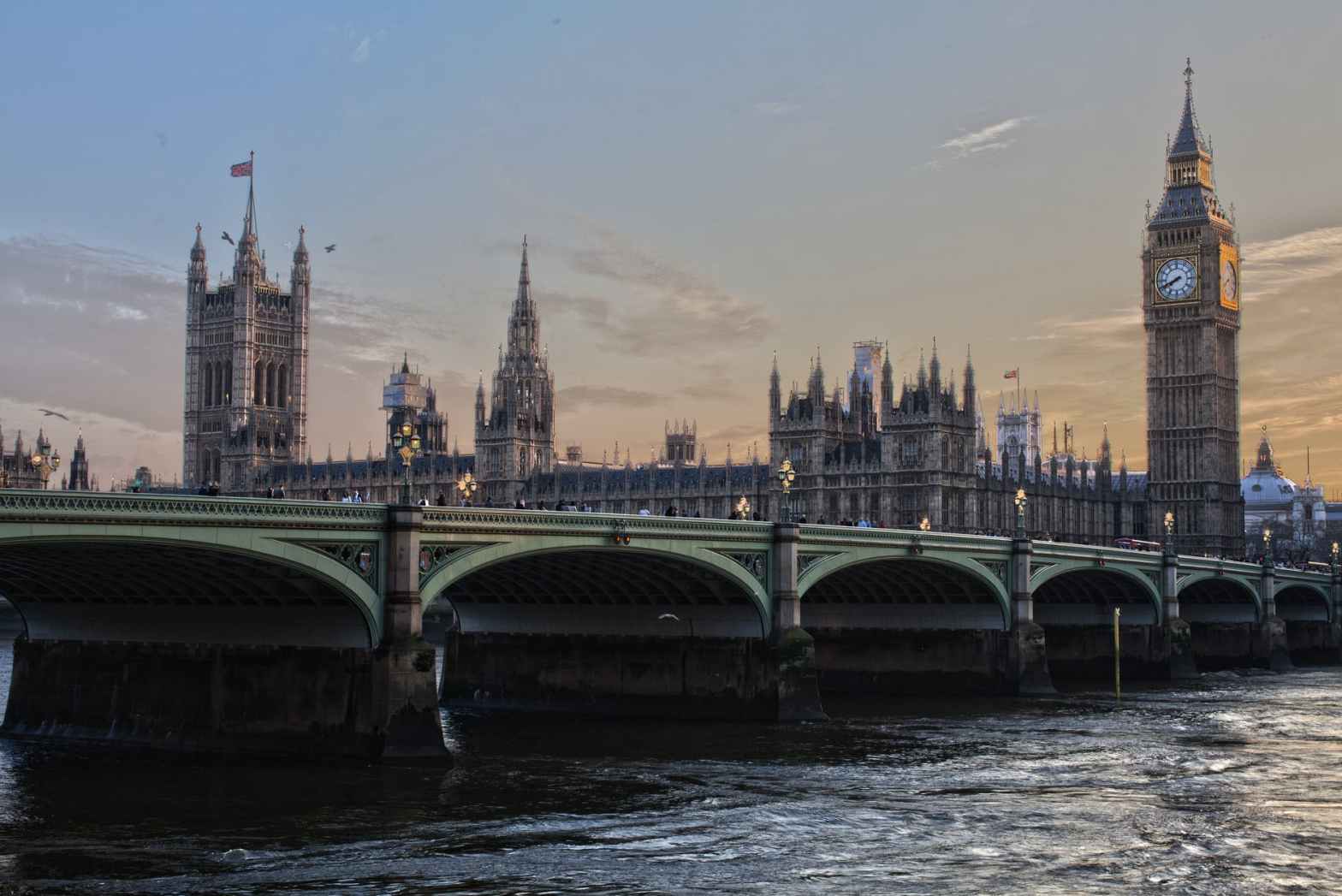
The Thames is one of the great rivers of the world, even though it is not very long in comparison the big rivers of this earth. It has history, romance, stories and poems galore, not to mention that it flows through London. Several times I have looked down on the bridges and Parliament as I have flown in to one or other of the big airports and never failed but be moved at the sight. Edmund Spenser the Elizabethan poet, in his poem, Prothalamion, ends each of the verses with the line, Sweet Thames flow softly till I end my song. T. S. Eliot, references this line in his modernist masterpiece, The Waste Land. Now, McColl’s song has been covered by many, many artists of note: but will that stop me from putting my cover out there among such elevated company? Nah, at my age I have grown a hide that compares favourably to that of the rhinoceros, another creature threatened with extinction. Anyway, have a listen to my version of Sweet Thames Flow Softly  and see what you think…

That has been the fifth edition of postcards from Quotidia. In our next edition we will start, as usual, with an instrumental set, which is followed by a stroll down by the glenside. Jim will sing a cautionary tale for all females contemplating matrimony. The final song is an invitation to come up the stairs.

Credits: All written text, song lyrics and music (including background music) written and composed by Quentin Bega unless otherwise specified in the credits section after individual posts. Illustrative excerpts from other texts identified clearly within each podcast. I donate to and use Wikipedia frequently as one of the saner sources of information on the web.

Technical Stuff: Microphone- (for the podcast spoken content) Audio Technica AT 2020 front-facing with pop filter

Microphone (for many of the songs) Shure SM58

For recording and mixing down 64-bit N-Track Studio 9 Extended used

Music accompaniment and composition software– Band-in-a-Box and RealBand 2020 as well as- for some 20 of the songs of year 2000 vintage- I used a Blue Mountains, NSW, studioApproximately 48 Banter folk songs and instrumentals recorded live (“in the round”) with a ThinkPad laptop using the inbuilt mic.

Letters From Quotidia Episode 20 Straight and True

Straight and True

Welcome to Letters From Quotidia – a podcast by Quentin Bega for lovers of music, poetry, and the Crack- that most Irish of nouns which may encompass, news, gossip, fun, entertainment, and enjoyable conversation. Quotidia is that space, that place, where ordinary people lead ordinary lives. But where, from time to time, they encounter the extraordinary.

It’s tough being a hero. Not that I claim this honorific for myself, I hasten to add. I think of poor old Heracles, whose name means “the glory of Hera”. Heracles, according to Wikipedia, was the product of what is known as heteroparental superfecundation- where a woman carries twins sired by two different fathers. Randy old Zeus, the husband of the fanatically jealous Hera, disguised himself as the husband, impregnating Alcmene with Heracles before the real husband, Amphitryon, returned later that night to sire Heracles’ mortal twin, Iphicles.

Hera made Heracles’ life miserable in spite of the name change from Alcides to placate her. She attempted to prevent his birth and, failing that, successfully connived to rob him of his high kingship. When he was only eight months of age she sent two giant serpents into the nursery, which he duly strangled.  Astonished, Amphitryon sent for the seer Tiresias who prophesied an unusual future for the boy. What a surprise! Perhaps more surprising is that Heracles, when presented with a choice between a life of indolent hedonism or severe but glorious virtue, chose the latter.

Most of us would choose the former- or is that just me? His exploits live in legend and he remains the gold standard of the type. If demi-gods such as Heracles find the hero business so fraught, what hope for mere mortals? We need our heroes but are uncomfortable with templates from the past. The democratic spirit in western countries generally, but more particularly in Australia, values the self-deprecating-aw-shucks-anyone-would’ve-done-what-I-did schtick adopted by those men and women who perform acts of heroism few of us could ever contemplate doing.

Every time I look at the Australian of the Year site with its categories-one even called “local hero”- I feel proud, on the one hand, that we have so many great role-models among us; but on the other hand (and there’s always that other hand, isn’t there?) I feel more than a bit inadequate that I can’t really measure up. Except to our kids- at least for a while.

When I read South Australian poet Ian Mudie’s, My father began as a god the shock of recognition was immediate: I saw myself as the persona of the poem, first; that young boy thinking his father’s laws were as immutable/as if brought down from Sinai; then through the prism of adolescence his father becomes a foolish small old man/with silly and outmoded views; next, with life’s experience shifting the perspective, the flaws scaled away into the past,/ revealing virtues/ such as honesty, generosity, integrity. Finally, and strangest of all, the persona admits that the older he gets the more the image of the father re-asserts its heroic former stature while the son is left just one more of all the little men/who creep through life/not knee-high to this long-dead god.

As I sit on the back veranda, again soaking up the evening winter sun, I reflect that I am now the same age as Ian Mudie was when he died in London. It is heartening to read that his ashes were brought back to Australia and scattered on the Murray River. One of the decisions I made fairly early on was that that I would not seek the pedestal position some parents want; that yes, I would be as good a Dad as I could be to my kids but that I would let them see my feet of clay. Some would say that, in this, at least, I was an over-achiever.  The phrase, feet of clay, comes from the Book of Daniel in the Bible and I now realise that I should have chosen another metaphor to puncture childish idolatry because we are in the presence of yet another hero. Judaic rather than Greco-Roman, a seer and a prophet rather than a strong-man, Daniel divines and interprets the Dream of Nebuchadnezzar where a statue with a gold head, silver arms and breast, copper belly and thighs, iron legs and mixed iron and clay feet is destroyed by a rock.

The Babylonian seers were unable to achieve this and were put to death: Daniel, is raised to power. His companions Shadrach, Meshach, and Abednego survive the fiery furnace. He is able to decipher the mysterious writing on the wall after Nebuchadnezzar’s son and successor Belshazzar has drunk from Jewish temple cups at his feast. The words, Mene, mene, tekel, upharsin, Daniel explains to Belshazzar, means that God has numbered his days, he has been weighed and found wanting, and his kingdom will be given to his enemies. My favourite Daniel story, though, is that of Susanna and the Elders. Two lecherous oldies, spying the naked woman bathing say they will accuse her of meeting with a lover unless she has sex with them. She refuses, is about to be put to death for promiscuity, when Daniel interrupts proceedings and by skilful cross-examination exposes the fraud. The lechers get their comeuppance: Virtue triumphs. The song, now, Straight and True is all about what Dad’s should aspire to be.[insert song]  Quotidia’s next Letter gets the key of the door as it turns 21- no latch-key kid this!

Credits: All written text, song lyrics and music (including background music) written and composed by Quentin Bega unless otherwise specified in the credits section after individual posts. Illustrative excerpts from other texts identified clearly within each podcast. I donate to and use Wikipedia frequently as one of the saner sources of information on the web.

Technical Stuff: Microphone- (for the podcast spoken content) Audio Technica AT 2020 front-facing with pop filter

Microphone (for many of the songs) Shure SM58

For recording and mixing down 64-bit N-Track Studio 9 Extended used

Music accompaniment and composition software– Band-in-a-Box and RealBand 2020 as well as- for some 20 of the songs of year 2000 vintage- I used a Blue Mountains, NSW, studioApproximately 48 Banter folk songs and instrumentals recorded live (“in the round”) with a ThinkPad laptop using the inbuilt mic.

Letters From Quotidia Episode 18 Diving For Pennies

Diving For Pennies

Welcome to Letters From Quotidia – a podcast by Quentin Bega for lovers of music, poetry, and the Crack- that most Irish of nouns which may encompass, news, gossip, fun, entertainment, and enjoyable conversation. Quotidia is that space, that place, where ordinary people lead ordinary lives. But where, from time to time, they encounter the extraordinary. Join me as we go Diving for Pennies in this eighteenth letter.

Most people know the trope: I can remember exactly where I was and what I was doing when…(Here you can supply your own memorable event) Well, I can remember two such instances from my own life: the first is the assassination of JFK on November 22nd 1963. I was in Junior High at Seroe Colorado High School in Aruba, a small island in the Caribbean Sea off the coast of Venezuela. Its claim to fame was that, at one time, it was the largest oil refinery in the world. It was afternoon and a girl came screaming from the student parking lot “They’ve killed Kennedy, they’ve killed Kennedy”. As you might imagine, the routine of the school-day was shattered- as was everybody, staff and students.

The other event was the destruction of the twin towers by terrorists on September 11th 2001. I was lying in bed preparing for sleep and listening to the radio when the first reports came through. I was tired, rather puzzled at how a pilot could fail to see such prominent edifices, and I drifted off as the radio droned on. The next morning there was nothing on TV but reports of the atrocities involving those aircraft and I sat transfixed, watching the coverage all morning. That afternoon, I remember driving to Sydney airport in a daze to collect my brother-in-law and his wife who were returning from a holiday in Ireland. It wasn’t until the February of 2002 that I was able to write a song connected with these events. I later put this song with others into a collection I entitled Letdowns: after the millennium. I wrote a post-apocalyptic message to accompany the collection. Like so much else of my oeuvre, I put the idea in a drawer and forgot about it until I decided to write these journal entries. Here follows the rather pessimistic text I wrote then and a song about letdowns from the collection:

Letdowns should be more poetic. But they’re not. Letdowns, if they are really doing their job, should let you down in every department or else they’re not really… Letdowns. Which leaves songwriters like me in a real quandary- why even bother? Are the songs Letdowns, too? In which case, why this gloss? In this the fifth, and (I would think, on the medical evidence available to me) final album (what a quaint word this is, don’t you think?) that I am likely to write to, perhaps, no one but a distant descendant eager for family-tree minutiae, what can I say?

Like a poem carved upon an ancient bone. So then, to the eye that may not ever be there to see, and the ear that may never be there to hear- Greetings! I don’t know if your age will be one that is keen on pinning down time; nevertheless, let me give you a point of reference. It is now my birthday- 10:30 p.m. on the 31st of October, 2001 A.D. (if such an hour-and-date nomenclature has meaning in your way of reckoning time). I am living in an outer-western suburb of Sydney, Australia called Werrington (if such a geographical reference means anything to you).

And I have been drinking (I’m sure, however straitened your circumstances, some form of potable liquor still has a place at your tables or around the fires at your campsites.)- I have been drinking Scotch whisky mixed with Cola– a syrupy and fizzy soft drink popular at one time. As an anthropological aside may I say that many considered such a combination to be a barbarism in our era. To those arbiters of taste around me who made such disparaging references to my imbibing predilection, I answered, only, that, having lost sight of any civility around me, I couldn’t fail but to agree with them. Such was my attachment to the ironic voice. An antique relic of the 20th Century, alas. But this lapse in taste on my part was eclipsed by other departures from civility by others… so, unfortunately, this barbarism didn’t hold a candle to the sorts of atrocity that enveloped the world in the first year or two of the new millennium.

Read your history books. If any exist. Of course, songs need no explanation. If they are sung they live. The words are only ash- smudges that are merely remnants of the real thing. However, if your era is anything like ours, we need the crutches of explication- if only to impress by our borrowed erudition. This process was miscalled education while I was alive. I leave, instead, a poem for your contemplation. Poetry and song trump any other sort of text IMHO and you’ll hear the song after this poem entitled: Explication:

Like a poem carved upon an ancient bone

Dug out of an ash-pit,

An outline of a heart in bog-oak

Dragged up and in to the open air,

The remnants of an ancient tune

Whistling through the shaking leaves

Of the last stand of native trees

Left on a fissured plain,

Let my voice, telling of love

And letdowns, carry across

The fields of time spread

To the shimmering edges

Of eternity fringed with

A sparkling circlet of stars

Before they wink out

One by one,

Swallowed by the incurious

Blankness beyond.

Quentin Bega

Dive with me, if only for pennies.  [insert song]The teens come to an end in our next letter where we meet a teenaged witch, marvel at the dark romanticism of Lord Byron and the sixties’ Stones. Watch as The Who rock the Palace ballroom, in Douglas, the Isle of Man and, meanwhile, in Australia, the Premier of New South Wales, one Robin Askin exhorts his driver to “run the bastards over” as Vietnam War protesters chanted at his august guest, the American president, Hey, Hey LBJ how many kids did you kill today! Come then, to Quotidia and bring your protest banners, if you must, but just…come.

Credits: All written text, song lyrics and music (including background music) written and composed by Quentin Bega unless otherwise specified in the credits section after individual posts. Illustrative excerpts from other texts identified clearly within each podcast. I donate to and use Wikipedia frequently as one of the saner sources of information on the web.

Technical Stuff: Microphone- (for the podcast spoken content) Audio Technica AT 2020 front-facing with pop filter

Microphone (for many of the songs) Shure SM58

For recording and mixing down 64-bit N-Track Studio 9 Extended used

Music accompaniment and composition software– Band-in-a-Box and RealBand 2020 as well as- for some 20 of the songs of year 2000 vintage- I used a Blue Mountains, NSW, studioApproximately 48 Banter folk songs and instrumentals recorded live (“in the round”) with a ThinkPad laptop using the inbuilt mic.
Letters From Quotidia Episode 17 Is It A Dream?

Is It A Dream?

Welcome to Letters From Quotidia – a podcast by Quentin Bega for lovers of music, poetry, and the Crack- that most Irish of nouns which may encompass, news, gossip, fun, entertainment, and enjoyable conversation. Quotidia is that space, that place, where ordinary people lead ordinary lives. But where, from time to time, they encounter the extraordinary.

I love Megastructures and all those other wonderful programs on The Discovery Channel and Nat Geo that explore the worlds of engineering, science and exploration. I have to watch these media offerings at times when my wife is not in the room. Just as she has to watch her favourite lifestyle and reality programs when I am otherwise engaged. There is no animosity attached to this for we have a range of shared favourites at prime-time. (Although, in the splintering media landscape- if a landscape can be said to splinter- such a term as media landscape may seem as quaint as quilting before too long.) Now, I have referred to the patriarchal paradigm before in this series, and I would not be surprised if there is something in the idea that men and women are hard-wired to respond to differing ways of engaging with the world- but I am puzzled by the undoubted fact that I am, and always have been, a complete klutz when it comes to the more sophisticated operations in the area of fabrication, manufacture and the manipulation of the physical world. By more sophisticated, I refer to anything beyond replacing a light-bulb or putting up a shelf.

And yet, here you will find me, a 19-year old student on vacation back at home in the Glens of Antrim in Northern Ireland watching enthralled as the live pictures of the Moon Landing on July 20, 1969 are relayed in glorious black and white to televisions around the world. Michael Collins, the command module pilot, had designed the insignia for the mission: an eagle holding an olive branch in its talons to signify the wish for peace to be a part of the symbolism of this historic event.

Oh! It was so good to get away from the tensions in Belfast where something wicked was building inexorably. Not much more than three weeks after what I consider the greatest achievement of human endeavour, a mob smashed through Bombay Street in West Belfast and the pogrom started: to quote from Belfast Galleries.com- on Saturday August 14 there were 65 occupied houses on Bombay Street, by Sunday night that figure was down to 20. Within weeks the impromptu barricades dividing the protestant Shankill from the catholic Falls had been replaced by corrugated iron peace walls. At the time Sir Ian Freeland, the British Army General in charge of operations, remarked that these barriers would be ‘a temporary affair’. Over 40 years on they have proved far more durable than that!

Now, you can take tours of the peace walls of Belfast, take selfies in front of graffiti and never think at all that there is something weird about the fact that these walls have outlasted that icon of division in the Western world- the Berlin Wall. Something there is that doesn’t love a wall wrote Robert Frost in his widely anthologised poem, Mending Wall, published back in 1914. But his spirits didn’t have to reckon with the intractability of Irish hatreds. Back in 1969, I responded to a call which went out over the radio for boarding students at my college to return early to help the refugees from the burnt-out streets. We hastily set up a reception centre in the college hall and had a crash course in how to be bureaucrats as we helped the bewildered victims fill in emergency relief forms. As I walked down the Falls and Donegall Roads of an evening to visit my girlfriend I could see the corrugated iron barricades going up on the side streets. There was fear in the air and I could feel the prickles on the back of my neck as I imagined being tracked through gunsights from the murky alley-ways I passed.

I listened to Radio Free Belfast at night and wondered what I was doing here. I remembered a schoolboy pact I had made with a friend, that we would visit Australia and watch the cane-fields burn as we worked our way across the exotic continent seemingly as distant as the moon. It wouldn’t be with my school buddy but my girlfriend who became my wife, with whom I would clamber aboard a QANTAS jet in September of 1972, our daughter of three months in our arms, and set off for Sydney.

Over forty years later, now retired, I sit on our back veranda in the winter sunshine and wonder whether ideas have the same solidity as steel, whether the imagery and imagination holding together my songs have the integrity of the International Space Station which journeyed past Venus and Jupiter between 5:31 pm and 5:34 pm on Wednesday last, another reminder of the astounding achievements possible when human beings work together and set aside ancient grudges to reach for the stars. But maybe we’ll end up like the oysters in this poem:

“The time has come,” the Walrus said, /”To talk of many things:/Of shoes and ships and sealing-wax/Of cabbages and kings/And why the sea is boiling hot/And whether pigs have wings.” Now, the song will ask the question, Is It A Dream? [insert song] In some jurisdictions, our next podcast will be legally able to drink, although, to tell the truth, it has long enjoyed the ministrations of Lady Ethanol. In any case, let’s enter the Last Chance Saloon just off the main street of Quotidia where we will meet a bunch of characters telling where they were when JFK was assassinated, or when the planes hit the twin towers and-what’s that?, in a corner drinking whiskey and cola, an antique relic of the twentieth century, God help us all, recites a poem. But come on in, the drinks are cheap and the crack is raging.

Credits: All written text, song lyrics and music (including background music) written and composed by Quentin Bega unless otherwise specified in the credits section after individual posts. Illustrative excerpts from other texts identified clearly within each podcast. I donate to and use Wikipedia frequently as one of the saner sources of information on the web.

Technical Stuff: Microphone- (for the podcast spoken content) Audio Technica AT 2020 front-facing with pop filter

Microphone (for many of the songs) Shure SM58

For recording and mixing down 64-bit N-Track Studio 9 Extended used

Music accompaniment and composition software– Band-in-a-Box and RealBand 2020 as well as- for some 20 of the songs of year 2000 vintage- I used a Blue Mountains, NSW, studioApproximately 48 Banter folk songs and instrumentals recorded live (“in the round”) with a ThinkPad laptop using the inbuilt mic.

Letters From Quotidia Postcards Edition Number 4

Postcards Edition Number 4

Welcome to Letters From Quotidia, the Postcards edition, number 4, a podcast by Quentin Bega where you will hear Banter, a traditional Irish folk group from Sydney’s outer west, present four tunes and songs drawn from the traditions of the English-speaking world. And, as always, Quotidia is that space, that place, where ordinary people lead ordinary lives. But where, from time to time, they encounter the extraordinary.

We kick off with the instrumental set-dance entitled, The Three Sea Captains–My father, grandfather and great-grandfather were all captains of sea-going vessels at one time or another in their lives. This graceful Irish set dance reminds me of this part of my heritage. The Dubliners played this on an LP decades ago at which time I determined to learn the accompaniment chords- not too complicated- it’s folk music after all- but there are lots of chord changes so I like to do this early in the gig when the quantity of grog consumed has not had time to affect fine motor skills, if you follow my drift. Mark and Jim are tightly but effortlessly in step as they play this tune.  [insert tune]

North and South of the River is a metaphor for the sectarian divide in Ireland which is over 400 years deep and still a factor in the life of that small island washed by the Atlantic waves. The divisions splitting our planet are various: religious, ideological, political, ecological, economic. You, too, can assuredly add to the tally. Christy Moore wrote this with assistance from Bono and the Edge from U2. I first heard this sung at The Penrith Gaels, a club in Western Sydney in 1997. The group took it up at about the same time and, a quarter of a century later, in lockdown, I present it here with my musical software accompaniment instead of with Banter. [insert song]

The Hills of Kerry– This song may be known by another name. Indeed, when we can’t recall the names of songs and tunes we are very likely to make up a title that seems to fit the song or the tune. The waltz time  and tempo here are very popular as vehicles for songs and tunes that have a nostalgic cast to them. Of course, when we were younger and full of (supply here your own metaphor or idiom that characterises the energy and folly of youth) back in the paleolithic era, when we were young, we tended not to feature so many of this type of song. Jim sings it now as he does in our live gigs for all the Kerrymen and women listening. [insert song]

Across the Western Plains will be familiar to listeners in Britain, Ireland and perhaps North America. But they may scratch their noggins over the tempo and the lyrics. In the Irish tradition this is known as “All For Me Grog” and is sung with gusto. In Australia, having moved across the sea and moved inland, it slows down and becomes more wry and sombre. Here we find a swaggie, who has just sold his moke (a broken-down horse) for drinking money.

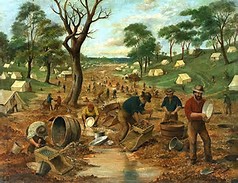
It was a feature of the various gold diggings in Australia for luckless scroungers to supplement their incomes by illegal fossicking on another’s claim. This was known as “plundering”. Our narrator is in an outback shanty bar where he has just spent all his money- or “plunder”. The subject of our song resolves to head back to the diggings and peg out a claim and settle down to some hard yakka (hard work).

The Dubliners’ 1967 version, is faster and jollier and features women. Alas, in 19th Century Australia, women were in short supply out in the bush, hence the difference in the penultimate line of the chorus where, instead of…I’ve spent all me tin with the ladies drinking gin, we get…I’ve spent all me tin in a shanty drinking gin. This may explain why the Aussie version is a lot more doleful, what, with the heat, dust, distance, shonky grog, flies, isolation- with nary a shapely ankle in view. You’ll also hear a reference to the Darling Pea. This addictive plant is poisonous to livestock. A vet from that time describes the effects of Darling Pea on livestock, They lose the ability to judge where their feet are. They become wonky, fall over, appear to be blind, walking into things. Now what does that remind you of? [insert song]

That has been the fourth postcard from Quotidia, in which things nautical and riverine have featured. For the next postcards edition, we will start with The Lark in the Morning, not the well-known song which will feature in a later postcard, but a rollicking instrumental. A Dominic Behan composition, The Patriot Game, follows. Some American listeners may think this is a rip off of Dylan’s With God on Our Side. A bit of research may amend that opinion. Sammy sings Luka Bloom’s City of Chicago and we finish with a wonderful Ewan McColl composition, Sweet Thames, Flow Softly. So, until our next encounter, a week or so hence, may your life be sweet and flow softly.

Credits: All written text, song lyrics and music (including background music) written and composed by Quentin Bega unless otherwise specified in the credits section after individual posts. Illustrative excerpts from other texts identified clearly within each podcast. I donate to and use Wikipedia frequently as one of the saner sources of information on the web.

Technical Stuff: Microphone- (for the podcast spoken content) Audio Technica AT 2020 front-facing with pop filter

Microphone (for many of the songs) Shure SM58

For recording and mixing down 64-bit N-Track Studio 9 Extended used

Music accompaniment and composition software– Band-in-a-Box and RealBand 2020 as well as- for some 20 of the songs of year 2000 vintage- I used a Blue Mountains, NSW, studioApproximately 48 Banter folk songs and instrumentals recorded live (“in the round”) with a ThinkPad laptop using the inbuilt mic.
Letters From Quotidia Episode 16 Open Your Eyes

Open Your Eyes

Welcome to Letters From Quotidia – a podcast by Quentin Bega for lovers of music, poetry, and the Crack- that most Irish of nouns which may encompass, news, gossip, fun, entertainment, and enjoyable conversation. Quotidia is that space, that place, where ordinary people lead ordinary lives. But where, from time to time, they encounter the extraordinary.

Sometime in the early 1990s, I pitched a tent at a music festival in North Queensland at a place called Pangola Park, south of Townsville. You know, I keep getting it confused with another place we camped at around the same time called Paronella Park near Meena Creek, a bit further north. My eyes were not particularly open at either venue in those years. However, as a forty-something aspirational counter-cultural fellow-traveller, I lugged my second-best guitar in a canvas case with me along with my kids and my wife, as I re-imagined, in however desultory a fashion, the day-glo dream of the sixties.

By this stage, there were no illusions as to the realities facing all of us. Remember, this was a decade before the twin towers- but we knew something was happening, that there were tectonic shifts readying themselves under our feet. You did not need to consult with one of the many crystal-gazing seers at the fair-tents set up around these festivals in order to know that something was happening. You didn’t even have to know the lyrics of “Ballad of a Thin Man” by Bob Dylan to understand that a new dispensation was forming somewhere out there beyond our knowing.

But the day after I pitched the tent… in the smoky dawn, a pleasant chill to the tropical morning, I heard a didgeridoo sounding among the palms and rain-forest remnants around us. It made me forget the images of the first Gulf War: American jets screaming off carriers, a seemingly endless line of oil wells burning, wrecked vehicles on the road back to Basra, the Highway of Death, torn apart by 20mm M61 Vulcan Gatling guns firing 6,000 rounds a minute, mounted on lumbering Lockheed AC-130s as they performed pylon turns in the desert sky. It made me forget gung-ho reports of Coalition valour such as when those giant military bulldozers buried tens of thousands of Iraqi conscripts in their trenches.

For a while, I could believe I was somewhere in Eden, listening to the earth sing. And as I walked through the grove I came upon the young man playing that ancient aboriginal instrument in front of his tepee. But, before too long, the site started to stir; from a Kombi van behind me came the crackle of a radio, a 4WD rattled and roared along the grassy, rutted track leading to the venue and a couple of happy, shrieking kids ran past. I walked back to our tent, grabbed my guitar, a notebook and pen and wandered in through the trees to find a quiet spot to compose. (Oh, here I go again, getting all autobiographical: it must be a lingering effect from the last entry.)

There was a song-writing competition and the organisers were looking for entries. I knew, even as I sat there under a tree, that I would not bother entering the comp but that I would try to write something worthy- or even better, worthwhile. But how does inspiration come, I mused (ha!)? The first image to flit through my mind- and this might have been provoked by the sight and sound of the didge player earlier- was that of flute-carrying Euterpe who inspires music, song and lyrical poetry. Next, unfathomably, the ouroboros-a snake spinning in mid-air and eating its own tail.

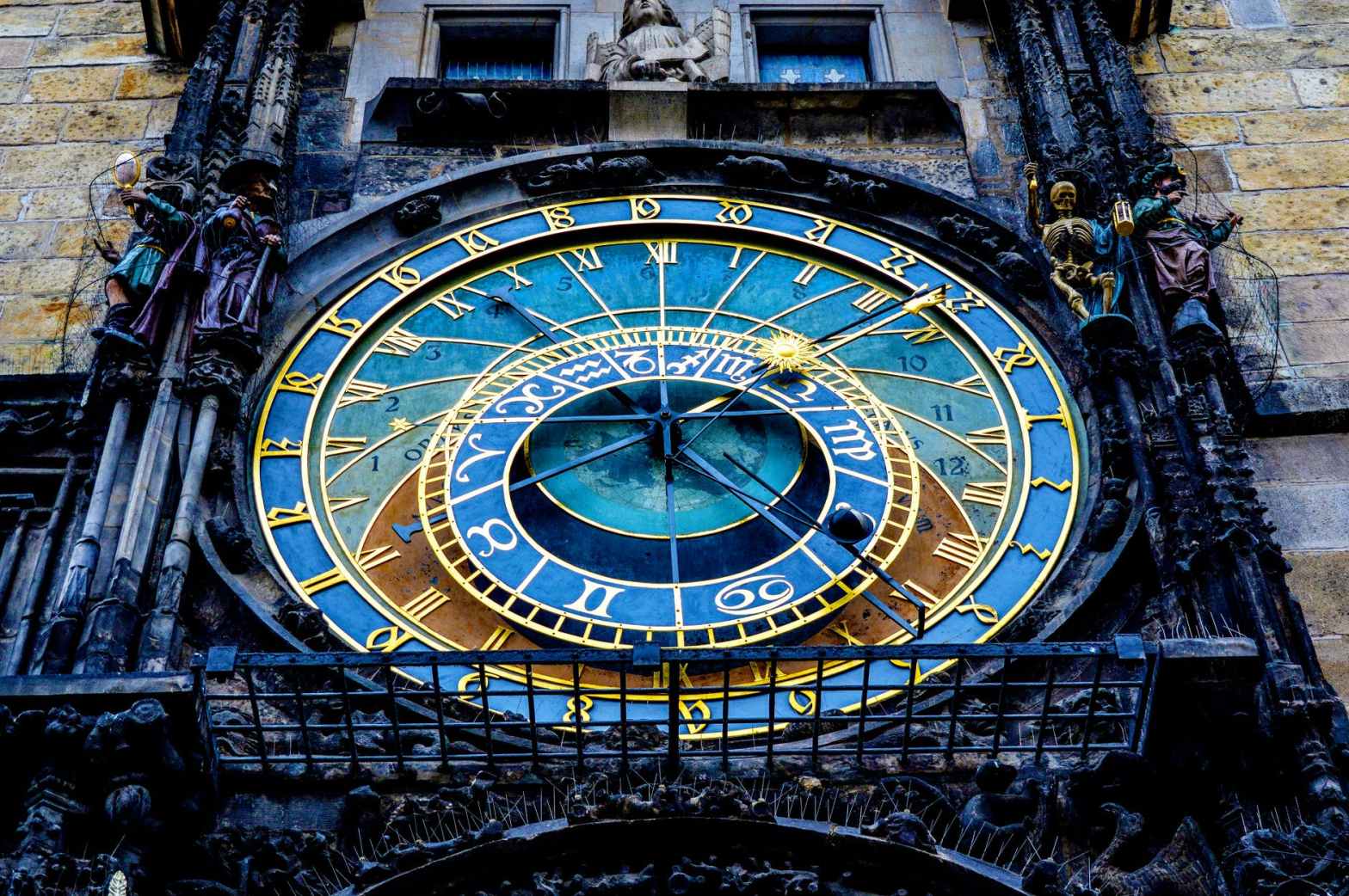
Later, I tracked the image down: was it Kekule’s discovery of the benzene ring in a dream which unlocked the formula on which the oil industry is based that was the source of the spinning image under that tree? But such fleeting images did not result in the furor poeticus so beloved of Renaissance artists and I sat noodling away on the guitar hoping that the random chords and notes would give rise to something, anything. But, no…nothing, nada, zilch. Not for the first time, I wondered how it could be that even in the farthest reaches of interstellar space, there wasn’t “nothing”: Nature abhors a vacuum as we all know, and it will create fundamental particles rather than allow “nothing” to persist anywhere in vastness of the universe.

So, how to explain writer’s block? The human mind is definitely more mysterious than the physical universe. And don’t get me started on the soul! At any rate, my self-pitying interlude was interrupted by the two kids I had seen earlier. A boy and a girl aged about eight or nine -brother and sister by the look of them- walked up to me and started to chat- mostly an innocent inquisition- Who are you? What are you doing? Is that a good guitar?

Presently, their mother sauntered over and we had a pleasant chat about the festival venue, the acts, and the bastardry of the local politicians. Inter alia, I commented on the coolness of her kids’ shirts- brightly embroidered affairs that looked bespoke and, consequently, expensive. Nah, cheap as chips at the market, the Mum replied- and then the furor poeticus struck and I knew precisely why clothing in Australia was so modestly priced. 

Credits: All written text, song lyrics and music (including background music) written and composed by Quentin Bega unless otherwise specified in the credits section after individual posts. Illustrative excerpts from other texts identified clearly within each podcast. I donate to and use Wikipedia frequently as one of the saner sources of information on the web.

Technical Stuff: Microphone- (for the podcast spoken content) Audio Technica AT 2020 front-facing with pop filter

Microphone (for many of the songs) Shure SM58

For recording and mixing down 64-bit N-Track Studio 9 Extended used

Music accompaniment and composition software– Band-in-a-Box and RealBand 2020 as well as- for some 20 of the songs of year 2000 vintage- I used a Blue Mountains, NSW, studioApproximately 48 Banter folk songs and instrumentals recorded live (“in the round”) with a ThinkPad laptop using the inbuilt mic.

Letters From Quotidia Episode 15 Looked At My Stars

Quentin Bega
OLYMPUS DIGITAL CAMERA
Looked At My Stars

Welcome to Letters From Quotidia – a podcast by Quentin Bega for lovers of music, poetry, and the Crack- that most Irish of nouns which may encompass, news, gossip, fun, entertainment, and enjoyable conversation. Quotidia is that space, that place, where ordinary people lead ordinary lives. But where, from time to time, they encounter the extraordinary.

Our fifteenth expedition into the wilds of Quotidia has us approaching the boundaries of the Shakespearian realm and now we are gazing at the firmament. The fault, dear Brutus, is not in our stars, /But in ourselves, that we are underlings. Speaking, is the lean and envious Cassius as he urges Brutus to join the conspiracy to assassinate Julius Caesar. The remarkable Helena from All’s Well That Ends Well asserts, Our remedies oft in ourselves do lie, / Which we ascribe to heaven and the bastard Edmund from King Lear sneers This is the excellent foppery of the world, that, when we are sick in fortune, often the surfeit of our own behaviour, we make guilty of our disasters the sun, the moon, and the stars.

So, then, why do most of us sneak a peek at our stars as we sit in a waiting-room idly flipping through the paper or magazine lying there? The yearning for meaning and connection tugs at us from the depths of our being- especially as we await the painful ministrations of the dentist- and no amount of logical argument will persuade us that randomness and meaninglessness are the foundations of our existence: a blindly spinning wheel elevating one while crushing another, dealing pleasure and pain without approbation or blame.

I think of Boethius the author of The Consolation of Philosophy, which has influenced the great and the good, the venal and the humble across millennia. He stands balanced between the East and the West, the Platonists and the Christians, the Free and the Imprisoned, the Blissful and the Tortured. I think, next, of the protagonist of A Confederacy of Dunces, Ignatius J Reilly, who is both a subversive, medievalist Don Quixote railing against the absurdities of the modern world and a fat, indolent slob, too timid to venture outside the confines of 1960s New Orleans.

And lastly, I think of the author of that wonderful novel: John Kennedy Toole, who committed suicide in 1969 at the age of 31, depressed at the rejection of his comic manuscript by those who should have known better. I wonder what he would have made of our world today had he not run a garden hose from the exhaust of his car into the cabin of his car in Biloxi, Mississippi, and I wonder what title he would have given to a 21st Century A Confederacy of Dunces- for he would have only been in his mid-sixties at the turn of the millennium.

So here we are in the tangled thorn-bush of the What Ifs. Like our itch to read what our stars reveal, we revel in the scratching of the What Ifs. “What if I had… what if I hadn’t…” haven’t we all been there? I have been careful, hitherto, about commenting too directly on the songs associated with particular entries, but here, with some trepidation, I’ll make an exception. In the early 1980s I submitted a script to RTE in Dublin-which was accepted. I had returned to Ireland from Australia at the beginning of 1979 and was dismayed to learn that the “Troubles” which had vexed Irish history for hundreds of years was still “alive and well” or should I say “suppurating and spreading”.

The script centred on a teacher who had been in Germany and returned to Northern Ireland to teach in a private school. I wrote a number of songs to accompany the script and one of them was a shorter version of this song. As a British soldier looked under my car and searched me, during one of my trips within Northern Ireland at that time, I recalled an earlier incident, more than a decade previously, when I had been walking up a back lane to the rented house of our first abode as a family, located in a side street off the Whiterock Road, lost in thought and dreaming of a future life, when a harsh, alien accent shattered my reverie: I’ll kill you, you Irish bastard, if you don’t stop now! I stopped. I looked. There was a young guy, a British squaddie, my age if not younger, holding an SLR pointed at my head, shaking. I knew I was within a whisker of being shot dead.

So, what do you do? I raised my hands and waited for further instructions. I survived that encounter with the emissary of Death, knowing that there would be a reckoning somewhere further on down the track, but I was relieved to know that the time was not just yet. Which brings me to the present: I have, since the time I first wrote the lyrics of the original and shorter song, been swimming in the pond of a post-modern stew where bubbling up is the mephitic revelation of so much that was denied to an earlier, more innocent conception of what the world is really like.

When it came the time to re-cast and elaborate on those more innocent words, I found myself inhabiting a darker space where the protagonist of the song has now become a malevolent entity rather than the pitiable person who sings the first part of the song. The coda, I added much later, when the song needed some expansion as it was, originally, less than two minutes long. Here, I cloak a nightmare in a sweet-sounding conclusion.  The song is titled, Looked At My Stars: [insert song]

For or next expedition we find ourselves among the ferals at a music festival in tropical Queensland in the 1990s where we learn that the image of the ouroboros inspired Kekule’s benzine ring which unlocked the key to the global oil industry which has spawned so much progress and pollution; so much warfare and waste. So come along for the ride, bumpy though it may be, as we continue our exploration of the world of Quotidia in the sixteenth letter of the series.   

Credits: All written text, song lyrics and music (including background music) written and composed by Quentin Bega unless otherwise specified in the credits section after individual posts. Mark Dougherty has a co-writer credit on the song, Looked at my Stars.Illustrative excerpts from other texts identified clearly within each podcast. I donate to and use Wikipedia frequently as one of the saner sources of information on the web.

Technical Stuff: Microphone- (for the podcast spoken content) Audio Technica AT 2020 front-facing with pop filter

Microphone (for many of the songs) Shure SM58

For recording and mixing down 64-bit N-Track Studio 9 Extended used

Music accompaniment and composition software– Band-in-a-Box and RealBand 2020 as well as- for some 20 of the songs of year 2000 vintage- I used a Blue Mountains, NSW, studioApproximately 48 Banter folk songs and instrumentals recorded live (“in the round”) with a ThinkPad laptop using the inbuilt mic.

Letters From Quotidia Episode 14 All The Women

All The Women

Welcome to Letters From Quotidia – a podcast by Quentin Bega for lovers of music, poetry, and the Crack- that most Irish of nouns which may encompass, news, gossip, fun, entertainment, and enjoyable conversation. Quotidia is that space, that place, where ordinary people lead ordinary lives. But where, from time to time, they encounter the extraordinary.

In this fourteenth letter, I’ll look at small matters such as the vexed relationship between men and women (more woke folk among you will have worked out that I am a product of the simple binary world of the twentieth century). So let’s get started with this missive entitled,  All the Women-

A circle with a small equilateral cross underneath, a stylised representation of the goddess Venus’s hand-mirror, is widely known as the symbol for woman.  There is also another association: with the element copper. Alchemists, or, at least, some among their number, represented this element by constructing the symbol from a circle (representing spirit) above an equilateral cross (representing matter). Spirit and matter: that covers all the bases, I would think.

The symbol for Man is not so interesting: the circle represents the shield of Mars, the god of war, with a spear pointing to the top-right quadrant typifies the male of the species. Men are associated, alchemically, with the element iron. Is this, I wonder, the origin of the saying Men are from Mars and Women from Venus?

Such a citation may lead one to expect a dissertation on the battle of the sexes: sorry, ain’t happening. Furthermore, because this entry is entitled “All the Women”, the listener may be expecting a learned explication on the topic. Alas, my expertise, knowledgeability and experience of the gender is lamentably narrow and, therefore, such expectations will be disappointed.  

My store of information on men is not much better but I do have the advantage of decades inhabiting the skin of one knowing what it means to grow through the feverish throes of adolescence into adulthood, trapped, as some theorists would assert, in the patriarchal paradigm. But this socio-babble is making me queasy so I’ll cease and desist, as the saying goes and retreat to the sane embrace of the Bard- Will Shakespeare.

In the bloodiest and briefest of the great tragedies, the tyrant, Macbeth, mocks the manhood of the two murderers he has engaged to slay the most immediate threat to his ignobly obtained crown- his best friend, Banquo and Banquo’s son, Fleance.

The first murderer tells Macbeth We are men, my liege./ Ay, in the catalogue ye go for men; Macbeth replies As hounds and greyhounds, mongrels, spaniels, curs,/ Shoughs, water-rugs and demi-wolves, are clept/ All by the name of dogs. Macbeth asks if they are true men and the second murderer replies I am one, my liege, /Whom the vile blows and buffets of the world/ Have so incensed that I am reckless what/ I do to spite the world.

The first murderer agrees with his homicidal buddy, And I another/So weary with disasters, tugg’d with fortune, /That I would set my life on any chance, / To mend it, or be rid on’t. So, in the catalogue, to use Shakespeare’s phrase, I am a man. But of what sort?

My innate pusillanimity would prevent me from putting myself forward as the sort of person to undertake Macbeth’s fell purpose. Let’s be frank, and to wind the clock forward to the 21st Century- the tasks in the contemporary world that men are expected to accomplish as a matter of course: fixing a leaking tap; changing a flat tire or clearing the gutters, stretch me more than somewhat. And much as I would like to bask in the reflected glory of men such as Leonardo, Albert and Amadeus by claiming shared species-hood, I retain enough self-awareness to reject such hubris and repeat the question: what sort of man am I?

Lacking a hand-mirror and left with only a shield and spear, I move forward in the phalanx of my sex (gender, I suppose is the more fashionable term nowadays) …I move forward, unreflecting and ready for conflict, if only of the most metaphorical and non-physically threatening kind.

The only respite I can imagine is if I come across a pair of copulating snakes and hit them with the wooden shaft of my spear in the hope of angering Hera the wife of Zeus who will transform me into a woman, like Tiresias, and live a life that has been recorded in myth and literature from ancient times right down to the present where the redoubtable Carol Ann Duffy has sardonically traced the hapless transmogrification in her wonderful poem, Mrs Tiresias.

I’ll read a few extracts- but get to it yourself for the full impact. All I know is this:/ he went out for his walk a man/ and came home female…Then he started his period./one week in bed./two doctors in/three painkillers four times a day…/ I see him now,/ his selfish pale face peering at the moon/ through the bathroom window.

Less scathing about the male of the species is Lucian of Samosata who lived and wrote in the 2nd Century AD. He is, incidentally, one of the earliest commentators on the fledgling Christian movement, regarding them as misguided creatures who believed they would live for all time- hence their contempt for death and disdain for worldly goods.

In his work Necyomantia, he places Tiresias in Hades responding to the question: What is the best way of life? His answer? The life of the ordinary man: forget about philosophers and their metaphysical junk.” [insert song All the Women]

That’ll do, gentle listener, that’ll do…for our fifteenth letter, we will, again, visit the magical Shakespearian World to gaze at the stars above seeking for answers to questions that puzzle us all, look admiringly at a comic novel entitled The Confederacy of Dunces and endure another brush with mortality related by the composer of these letters. So, until then, keep safe, and we will encounter one another in a letter entitled, Looked at my Stars.

Credits: All written text, song lyrics and music (including background music) written and composed by Quentin Bega unless otherwise specified in the credits section after individual posts. Illustrative excerpts from other texts identified clearly within each podcast. I donate to and use Wikipedia frequently as one of the saner sources of information on the web.

Technical Stuff: Microphone- (for the podcast spoken content) Audio Technica AT 2020 front-facing with pop filter

Microphone (for many of the songs) Shure SM58

For recording and mixing down 64-bit N-Track Studio 9 Extended used

Music accompaniment and composition software– Band-in-a-Box and RealBand 2020 as well as- for some 20 of the songs of year 2000 vintage- I used a Blue Mountains, NSW, studioApproximately 48 Banter folk songs and instrumentals recorded live (“in the round”) with a ThinkPad laptop using the inbuilt mic.