
Letters From Quotidia Episode 72 No Surrender

Letters From Quotidia Episode 72 No Surrender

Welcome to Letters From Quotidia – a podcast by Quentin Bega for lovers of music, poetry, and the Crack- that most Irish of nouns which may encompass, news, gossip, fun, entertainment, and enjoyable conversation. Quotidia is that space, that place, where ordinary people lead ordinary lives. But where, from time to time, they encounter the extraordinary.

Entry 72: No Surrender- In January 1995, we returned to Sydney from North Queensland. Yet another move. In the previous six years we had moved from Sydney (a long train journey) and lived at four different addresses. This has been the pattern for the whole of our married life, having lived at three addresses in the first two years of marriage in Northern Ireland followed by a move to Sydney (a long, long, plane journey). The migrant hostel at Orana at Dulwich Hill was followed by a grim B&B in Wollongong, followed by a flat at Mt St Thomas, then a teachers’ housing property over near the University at Gwynneville. Back to Ireland in 1979 and three more addresses, then back to Australia in 1988 and another couple of abodes- one being a caravan in a back-yard.

An average of a move every eighteen months. In my mid-forties, drinking beer in Sydney’s outer west in a backyard that was not my own, I contemplated the commute that I would have to make to get to work at St Paul’s College, Manly, which has a glorious position on the hill overlooking the harbour. However, to get there would entail a bus, train and ferry journey each way as well as the trudge along the Esplanade and up and down the hill from Manly Wharf to get to work. The commute, I realised, would be longer than the teaching day! I wrote this song in February 1995, not as the sectarian war-cry of my birthplace, but as something akin to whistling in the dark. And in that first winter back in Sydney, it was dark getting up for work and dark coming home. Home, because we bought our first Aussie home in March ’95 and still live in it.

Twenty-five years in one spot and counting. Whoo Hoo! The horrendous commute lasted for just over two years and then I was offered a job at a Girls’ College less than half an hour down the Great Western Highway- happy days! But at that time, in January ’95, when it seemed that was just more of the same old same old, we needed something to assuage the mid-life blues. Best I could come up with was this song, the chorus of which references a Ron Cobb cartoon depicting an old man in a rocking chair set out on the nature strip with the trash for collection- a withered Christmas tree by his side.

In my own private pantheon, or it may just be Elysium, it will come as no surprise that it is populated with poets, composers, painters, dramatists, novelists, sculptors, and ordinary people. I include cartoonists in this exalted company- they have lightened- and, indeed, enlightened- my existence from the time when I was a kid reading MAD magazine in Aruba to today as I laugh over the jolly japes of First Dog on the Moon. Australia is well served by its cartoonists, Bill Leak, Michael Leunig, Paula Wilcox and Bruce Petty are a few of the cartoonists I have enjoyed with my muesli over the years.  But I want to focus on Ron Cobb here; a survivor from the counter-culture of America in the ‘sixties (although, it seems a tautology to use counter-culture and cartoonist in the same sentence). Ron passed away on 21 September 2021.

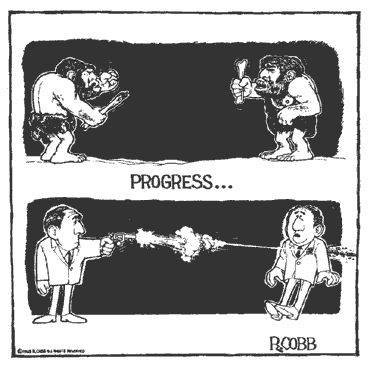
A cartoon of his that I have carried in my head and reproduced on blackboards and whiteboards in Australia and Ireland since the seventies is one called Progress. The upper panel shows two cavemen brandishing bones at one another. Then, dividing the upper panel from the lower, is the word Progress. The lower panel shows two men in suits, one has a pistol with which he has just shot his rival dead. Point made. Another cartoon which has stayed with me is one that exemplifies MAD- but not the magazine; rather the acronym Mutual Assured Destruction. Cobb, like so many of us- I refer you here to Dylan and A Hard Rain– was preoccupied with the thought that the Dr Strangeloves of the world would miscalculate badly and reduce us all to glowing nuclear ash. His cartoon has two men cowering under a broken concrete shelter surrounded by rubble and skulls. One man says to the other, There’s a rumour goin’ round that we won.

And this brings us to hell. My version of Tartarus is full of my enemies; those who threw rocks at me as a kid, or sold me dud cars, as well as the usual complement of fraudsters, predators, murderers and others of the ilk. But, let’s back up! I refuse to end a journal entry with such blackness. Instead, like they do on the Six O’Clock news, here’s something lighter to bring the damn thing to a close: John O’Brien wrote about the Irish in western NSW, especially around Boree Creek, a few  generations before I visited the place. Listen to an old woman’s simple faith in the face of adversity. What wouldn’t I give to have a simple faith?

But then, I wouldn’t be writing this stuff, would I? I’d be smelling the roses, whistling a jaunty tune and saying “Hi!” to that little girl Pollyanna who lives near the stables for the little ponies in Cloud Cuckoo Land. And there I go again, the cynic ever!  So, over to you, genial poet, for the last word: When things were at their worst./Her “Great, Big God” would justify/The trembling trust of men;/For, when the cheerless night passed by,/The sun would wink his golden eye,/And birds would sing again. [insert song]

Our next flight into Quotidia International Airport will end without drama. Air travel is just about the safest form of transportation- until it isn’t. How many of you can remember the free and easy manner in which we made our way on and of aircraft-especially in the US. Then something happened. A handful of ideologues hijacked four aircraft and steered them deliberately into buildings in New York and Virginia. The valour of passengers on United Airlines Flight 93 prevented yet another target from being hit. Twenty years down the track and President Joe Biden has announced the withdrawal of troops from the longest war in the history of the US and its allies. The next letter, 73 plunges us back to the reverberations that shook the world in the years after 9/11.

Credits: All written text, song lyrics and music (including background music) written and composed by Quentin Bega unless otherwise specified in the credits section after individual posts. Illustrative excerpts from other texts identified clearly within each podcast. I donate to and use Wikipedia frequently as one of the saner sources of information on the web.

Technical Stuff: Microphone- (for the podcast spoken content) Audio Technica AT 2020 front-facing with pop filter)

Microphone (for many of the songs) Shure SM58

For recording and mixing down 64-bit N-Track Studio 9 Extended used

Music accompaniment and composition software- Band-in-a-Box and RealBand 2020 as well as- for some 20 of the songs of year 2000 vintage- I used a Blue Mountains, NSW, studioApproximately 48 Banter folk songs and instrumentals recorded live (“in the round”) with a ThinkPad laptop using the inbuilt mic.


Letters From Quotidia Episode 71 The Emperor of Ice Cream

Letters From Quotidia Episode 71 The Emperor of Ice Cream

Welcome to Letters From Quotidia – a podcast by Quentin Bega for lovers of music, poetry, and the Crack- that most Irish of nouns which may encompass, news, gossip, fun, entertainment, and enjoyable conversation. Quotidia is that space, that place, where ordinary people lead ordinary lives. But where, from time to time, they encounter the extraordinary. If you are one of those puzzling people who hate poetry, maybe you should skip to the end of the letter and hitch a ride with the aliens who are leaving shortly on their flying saucer. If not, stick around and be wowed by poets and writers of quality and you may wish to take the opportunity to sneer knowingly at the narrator’s befuddlement as he tries to wrest meaning from some of the texts under examination.

Entry 71: Fantasia: The Emperor of Ice Cream- Wallace Stevens has wowed my world for over forty years. I can remember, sitting in the park at Gwynneville, Wollongong, watching my children playing in the sandpit on a sunny Saturday in 1974, reading this poem and struggling with its meaning. It’s only two stanzas; see what you can make of it, Call the roller of big cigars,/The muscular one, and bid him whip/In kitchen cups concupiscent curds./Let the wenches dawdle in such dress/As they are used to wear, and let the boys/Bring flowers in last month’s newspapers./Let be be finale of seem./The only emperor is the emperor of ice-cream.//Take from the dresser of deal,/Lacking the three glass knobs, that sheet/On which she embroidered fantails once/And spread it so as to cover her face./If her horny feet protrude, they come/To show how cold she is, and dumb./Let the lamp affix its beam./The only emperor is the emperor of ice-cream.

I know, baffled me too! I get that there are two rooms, one per stanza, the kitchen where ice-cream is being whipped up into concupiscent curds and the bedroom where an old woman lies dead, her face to be covered by the sheet she had embroidered in life which may not cover her calloused feet. But it wasn’t until I read today Austin Allen’s account of the poem published on the Poetry Foundation’s website that I finally got all of its allusions and interlocking bits. The lives of all creatures are fragile and temporary, and all creatures obey a sovereign impulse toward hedonism: feast as much as you can while there’s still time. And he quotes the celebrated critic Helen Vendler who paraphrases the meaning of the poem thus: The only god of this world is the cold god of persistent life and appetite; and I must look steadily at this repellent but true tableau—the animal life in the kitchen, the corpse in the back bedroom.

I’ve wrestled with quite a few of Steven’s poems in the decades since. But, real understanding notwithstanding, I responded to the various ways in which the poet handles sombre themes with playful language by writing a fantasia using the title of the poem and mashing up in it references to a handful more including Anecdote of the Jar and Sunday Morning.  I use the word fantasia advisedly because, it seldom approximates the textbook rules of any strict form. Also, when I was putting the song together, I was listening to the Ralf Vaughan Williams composition, Fantasia on a theme by Thomas Tallis.

It tickles me that this work was written and performed at about the same time that Wallace Stevens was putting together his first volume of poetry in the early decades of the twentieth century. Further, Thomas Tallis emerged as the voice of English music in that most magical of centuries, the sixteenth, which is also the time when the term fantasia came into vogue. Anyway, decades ago, I had a blast putting the song together. In some ways it is the precursor and companion piece to Harlequin’s Poles, the subject of letter 37.

Both deal with the allure of totalitarianism. One of the guises of The Emperor of Ice-Cream, of course, is the fascist leader, Benito Mussolini, for whom Wallace Stevens had a brief moment of admiration. But he was not alone- other poets, too, were enamoured by the snazzy uniforms and dynamism of fascism. Eliot, Pound and Yeats come to mind. George Orwell writing about Yeats in 1943 is scathing, Yeats, the poet, sees at a glance that Fascism means injustice, and acclaims it for that very reason. But at the same time he fails to see that the new authoritarian civilisation, if it arrives, will not be aristocratic, or what he means by aristocratic. It will not be ruled by noblemen with Van Dyck faces, but by anonymous millionaires, shiny-bottomed bureaucrats and murdering gangsters.

I wonder how far we are in our security-obsessed society, from the loathsome triad Orwell warned against. But Orwell, nothing, if not fair to those whose world-view is opposed to his goes on to write, Others who have made the same mistake have afterwards changed their views and one ought not to assume that Yeats, if he had lived longer, would necessarily have followed his friend Pound, even in sympathy. To be on the wrong side of history- what a bummer!

D. M. Thomas, wrote a dystopian poem decades ago, where he has alien super-beings visiting the nuclear wasteland of planet Earth and, using a surviving trace of DNA, resurrect the person from whom it originated. Gaining sentience and, blind at first, the man sings hosannas for the fulfilment of the old Promise. Then, as the scales fall from his eyes, he sees the merciless orbs of the aliens who, having extracted the information they wanted, mow him down with their ray-guns and move on to the next phase of their exploration. [insert song]

For letter 72 we will listen to some of the, ah, first world problems of the narrator such as the numbing and expensive matter of moving house or flat or caravan regularly. Or what about the travails of a long, long commute? Thankfully, he doesn’t go on at too much length in this vein but instead shares his love of cartoons, particularly those commenting on social and political topics. And like Dante, but not within a light-year of the Tuscan poet’s talent, he tells us how he would populate his hell and his heaven. Do you, too, have such places in the  realm of your imagination for your friends and foes? Doom and gloom are dissipated with a line or two from Australian bush poet, John O”Brien, the writing name of Patrick Joseph Hartigan.

Credits: All written text, song lyrics and music (including background music) written and composed by Quentin Bega unless otherwise specified in the credits section after individual posts. Mark Dougherty has a co-writing credit for The Emperor of Ice Cream. Illustrative excerpts from other texts identified clearly within each podcast. I donate to and use Wikipedia frequently as one of the saner sources of information on the web.

Technical Stuff: Microphone- (for the podcast spoken content) Audio Technica AT 2020 front-facing with pop filter)

Microphone (for many of the songs) Shure SM58

For recording and mixing down 64-bit N-Track Studio 9 Extended used

Music accompaniment and composition software– Band-in-a-Box and RealBand 2020 as well as- for some 20 of the songs of year 2000 vintage- I used a Blue Mountains, NSW, studioApproximately 48 Banter folk songs and instrumentals recorded live (“in the round”) with a ThinkPad laptop using the inbuilt mic.

Letters From Quotidia Episode 70 The Dispossessed

Letters From Quotidia Episode 70 The Dispossessed

Welcome to Letters From Quotidia – a podcast by Quentin Bega for lovers of music, poetry, and the Crack- that most Irish of nouns which may encompass, news, gossip, fun, entertainment, and enjoyable conversation. Quotidia is that space, that place, where ordinary people lead ordinary lives. But where, from time to time, they encounter the extraordinary. What follows next is an all-too-common tale of what happens when colonising powers come up against the indigenous peoples they encounter.

Entry 70: The Dispossessed I passed Poisoned Waterhole Creek on the way to perform at the Boree Creek pub in the Riverina of NSW in the mid-seventies. I was with Kevin Baker, his wife Beth and John Broomhall. I had a spot performing with my wife, who sang with me in various venues at that time. When I asked about the name, one man told me that squatters in the 19th Century had poisoned the creek to get rid of the local aboriginal tribe. Another vehemently disagreed and said it was a furphy.

The Narrandera Argus and Riverina Advertiser of 5 February 1951 published an article by local man George Gow who wrote, In two recent publications I have seen reference to the alleged tragedy of native blacks being poisoned by the early settlers at what is known as the Poisoned Waterholes, on the Wagga road, a few miles from Narrandera. I have been in the Narrandera district for some 57 years and. know some of the early settlers of about 100 years ago, none of whom gave credence to such statements. However, of late years the story has grown in intensity and if not contradicted will go down in history as a hideous fact… Some 57 years ago I frequently saw an ancient black from Narrandera known as Mickey. He used to interest me with tales of his youth and of the blacks when he was a boy. He never mentioned any poisoning of his tribe to me, nor did I ask him, as I had not heard of such tales myself at that particular time… So called ‘mulga’ historians, who have no connection with the very early days, spin the most blood-curdling tales and add to them as they go along to make them more interesting. Perhaps the person most responsible for the wild tales of alleged atrocities against the blacks is a lady, Dame Mary Gilmore… In a recent article in a Sydney journal Dame Mary Gilmore recalls the wholesale massacre of Riverina blacks by driving them into the river and drowning them! Just fancy trying to drown a river black by driving him into the water… she writes, ‘Shooting children was considered a waste of ammunition. They were just as effectively killed by a quick blow on the head with a stirrup iron.” If such stories spread, our early ancestors might not be very popular. It would be bad enough, even if they were true. I appeal to the people of Narrandera and the Yanko Shire generally to help refute those tales.

Stan Grant is a proud Wiradjuri man, winner of the prestigious 2015 Walkley award for coverage of Aboriginal Australia and former Indigenous affairs editor for The Guardian, Australia. As of 2020 he is the Australian Broadcasting Corporation ‘s International Affairs Analyst, occasional presenter on ABC TV, and Professor of Global Affairs at Griffith University in Queensland.  He wrote in 2015: It is here that I stand now, on the edge of the Murrumbidgee near Narrandera.

After several days I have shaken loose the noise of the city. Now I hear birdsong and the flapping of the wings of ducks as they skim the surface. In the distance I can hear the barking of a dog and there is a breeze pushing softly through the long grass. Now I know I am home. I have my youngest son with me. He has come here throughout his life and we have passed this same road to his grandparents’ house time and again, but he has never paused to question the curious name of this place: Poisoned Waterhole creek. My father would point it out to me when I was the age my son is now. And so I point it out to him. The Wiradjuri rested here and drank from the stream. As the conflict continued the local homestead owner grew tired of the black people on his property, so he poisoned their waterhole. Many drank from it and died agonising deaths. “Really, Dad?” My son asks. “Here in Narrandera?…” I tell him that later other Wiradjuri people sought refuge from a white raiding party. They huddled together on an island in the middle of the river but the white men opened fire, killing all but one boy. Today this place is known as Murdering Island. Islands and creeks with such sinister names. Yet today we can be so oblivious. They are almost casual references to long-forgotten atrocities of our past.

Now, I am unable to arbitrate the matter, but believe that oral history accounts of atrocities associated with dispossession from the land of my birth, Ireland, are more generally accurate than not and that the harassment and persecution of travelling people in many countries, continue to this day. I remember being shocked, on a trip to the outback of NSW, with a couple of friends, again in the 1970s, when we passed a cinder-block structure with a lockable gate. I was told that it was the practice to sell the local aboriginal people slabs of beer and flagons of wine then lock them inside the building until the next morning. For their own good, of course.

The song deals with three groups, the Aboriginal people of Australia, the various travelling peoples of Europe and the Irish people.  I leave you with this verse extract by George Gow’s nemesis, Dame Mary Gilmore, entitled The Waradgery Tribe, Harried we were, and spent,/broken and falling,/ere as the cranes we went,/crying and calling.//Summer shall see the bird/backward returning;/never shall there be heard/those, who went yearning.//Emptied of us the land;/ghostly our going;/fallen like spears the hand/dropped in the throwing./We are the lost who went,/like the cranes, crying;/hunted, lonely and spent/broken and dying. [insert song]

Writers and poets are the subject of our next letter: Wallace Stevens, George Orwell, D. M. Thomas and W B Yeats will provide enlightenment as we ask the urgent question: who is the Emperor of Ice Cream?

Credits: All written text, song lyrics and music (including background music) written and composed by Quentin Bega unless otherwise specified in the credits section after individual posts. Illustrative excerpts from other texts identified clearly within each podcast. I donate to and use Wikipedia frequently as one of the saner sources of information on the web.

Technical Stuff: Microphone- (for the podcast spoken content) Audio Technica AT 2020 front-facing with pop filter)

Microphone (for many of the songs) Shure SM58

For recording and mixing down 64-bit N-Track Studio 9 Extended used

Music accompaniment and composition software– Band-in-a-Box and RealBand 2020 as well as- for some 20 of the songs of year 2000 vintage- I used a Blue Mountains, NSW, studioApproximately 48 Banter folk songs and instrumentals recorded live (“in the round”) with a ThinkPad laptop using the inbuilt mic.
Letters From Quotidia Episode 69 Tomorrow’s Zero

Letters From Quotidia Episode 69 Tomorrow’s Zero

Welcome to Letters From Quotidia – a podcast by Quentin Bega for lovers of music, poetry, and the Crack- that most Irish of nouns which may encompass, news, gossip, fun, entertainment, and enjoyable conversation. Quotidia is that space, that place, where ordinary people lead ordinary lives. But where, from time to time, they encounter the extraordinary. Have your galoshes on, do you

Entry 69: Tomorrow’s Zero– I am going to take you now to an exhibition in a pub that will require you to walk past urinals while a woman dressed in a communion dress reads lewd poetry.No need to take up your bulging biros or strike your cataplexic keyboards in protest- all the participants are long dead as this performance took place almost a century ago in Cologne.

And, for those of you disappointed at this news, don’t despair, for the birthplace of the anarchic art movement known as Dadaism, the Cabaret Voltaire in Zurich, has already celebrated its centenary. Hugo Ball and Emmy Hennings opened for business in 1916, after all. The website of this venerable establishment extends a welcome, in German, of course, to all visitors and you may even enjoy a coffee freshly brewed as you attend one of the performances, COVID permitting.  

The soirees were often raucous events with artists experimenting with new forms of performance, such as sound poetry and simultaneous poetry. Mirroring the maelstrom of World War I raging around it, the art it exhibited was often chaotic and brutal. On at least one occasion, the audience attacked the Cabaret’s stage.

I wonder if one of the attacks took place when Hugo Ball regaled the patrons with his Dadaist Manifesto on July 14, 1916? Here is an English translation of part of the original- imagine it being read to you in guttural, shouted German and then decide whether you would have been one of the ones storming the stage, Dada is a new tendency in art. One can tell this from the fact that until now nobody knew anything about it…Dada comes from the dictionary. It is terribly simple. In French it means “hobby horse”. In German it means “good-bye”…In Romanian: “Yes…yes…An International word…Just a word, and the word a movement…terribly simple…How does one achieve eternal bliss? By saying dada. How does one become famous? By saying dada. With a noble gesture and delicate propriety. Till one goes crazy. Till one loses consciousness…I want the word where it ends and begins. Dada is the heart of words…The word, the word, the word outside your domain, your stuffiness, this laughable impotence, your stupendous smugness, outside all the parrotry of your self-evident limitedness. The word…is a public concern of the first importance.

In a thought-scenario, in the spirit of Dadaism, I have come prepared; my overcoat pockets stuffed with rotten tomatoes, which I hurl joyfully at the orator onstage while shouting critique concrete, critique concrete! The red mush dripping from his head and my hands is nothing compared the red mush of the cataclysmic conflict tearing the old Europe apart. It is but a kiss compared to a decapitation.

The title of the song comes from a chapter-heading of Alvarez’s acclaimed study of suicide, A Savage God, which I read in Wollongong in the mid-seventies. This book has supplied an earlier song and journal entry, Sylvia, letter number eight.

Curious about the author and how he has fared in the interim, I looked him up in Wikipedia (from whence comes all the info on Dadaism) and find that, as of today’s date, he is still alive, having published his last book in 2013, called Pondlife. He is 86 and has published twenty books on a diverse range of subjects including poker, mountaineering, divorce, the oil business, dreams as well as books about and of poetry. Add to that, his tenure as poetry editor and critic for The Observer from 1956-1966 and I think you’ll agree that he has paid his dues.  

He describes his loves and hates – his distaste for the literary world (“peopled by monsters”) and his unfaltering love on a sudden sighting of his wife: “Forty years on and my heart still jumped with pleasure.” He quotes Bette Davis: “Getting old ain’t for sissies.” And Beckett, who “got it right” when he wrote: “You must go on, I can’t go on, I’ll go on.” So writes Kate Kellaway in a review of Pondlife in The Guardian on 17/02/2013.

This someone you could warm to, eh? But alas, A A Alvarez died in 2019, I discovered when I consulted Wikipedia for an update to this entry. But back to the song: the persona is someone absorbed by the nihilism of Dada who, like Melville’s protagonist in his short story Bartleby the Scrivener, becomes more and more removed from the world; who responds to well-meaning words with a formulaic response of his own- I prefer not to, until the logical outcome of such an outlook: extinguishment. 

Instead of Bartleby the Scrivener’s polite and nihilistic repetitions of I prefer not to, I prefer to read the work of poets such as Australia’s Judith Beveridge: listen to this extract from The White Peacock, but make sure you read the whole poem,

The feathers lift -/like the sudden coming on/of sprinklered water/over imperial lawns./ Breeze-shaken and trembling -/you imagine the break/into a drift of wish-flowers./Now the fan streaming with dance -/(imagine the face of an/angel/streaming with light/in an annunciation). [insert song] The seventieth letter takes us to the Riverina area of New South Wales where we will here about the dispossession of the aboriginal people of the area in the 19th Century. Wise words from Stan Grant, a proud Wiradjuri man, and lines of poetry from Australian poet, Mary Gilmore will give context across the years, as will reference to the local paper, The Narrandera Argus and Riverina Advertiser of February 5, 1951- a 70 year-old newspaper feature to match the 70th letter.

Credits: All written text, song lyrics and music (including background music) written and composed by Quentin Bega unless otherwise specified in the credits section after individual posts. Mark Dougherty gets a co-writing credit on Tomorrow’s Zero. Illustrative excerpts from other texts identified clearly within each podcast. I donate to and use Wikipedia frequently as one of the saner sources of information on the web.

Technical Stuff: Microphone- (for the podcast spoken content) Audio Technica AT 2020 front-facing with pop filter)

Microphone (for many of the songs) Shure SM58

For recording and mixing down 64-bit N-Track Studio 9 Extended used

Music accompaniment and composition software– Band-in-a-Box and RealBand 2020 as well as- for some 20 of the songs of year 2000 vintage- I used a Blue Mountains, NSW, studioApproximately 48 Banter folk songs and instrumentals recorded live (“in the round”) with a ThinkPad laptop using the inbuilt mic.
Letters From Quotidia Postcards Edition 17

Letters From Quotidia Postcards Edition 17

Welcome to Letters From Quotidia, the Postcards edition, number 17, a podcast by Quentin Bega where you will hear Banter, a traditional Irish folk group from Sydney’s outer west, present four songs drawn from the traditions of the English-speaking world. And, as always, Quotidia is that space, that place, where ordinary people lead ordinary lives. But where, from time to time, they encounter the extraordinary.

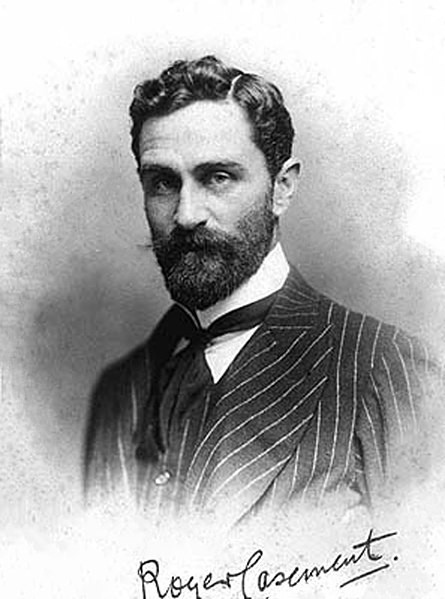
The Lonely Banna Strand: Back in the mid-seventies we sat around a fire in a bleak backyard in Werrington, a suburb which had just been established on the Cumberland plain of Sydney’s outer west with nary a tree in sight and sang this (and other) songs. Nearly fifty years on, the suburb is well-established with lots of trees. I came across a reference to this song in an old diary some years ago and, having decided to get it up and going again as a group, I think the singer interprets this portion of the story of Sir Roger Casement with real feeling.

When I lived in Cushendall in the 1980s, I would often take the family out to Moorlough Bay, which looks across the North Channel to Scotland, and walk the paths about the headland, thinking about the achievements of this great man. I taught, also, for nine years in the 1980s at Ballymena Academy, the alma mater of Sir Roger. While I was there, they did not acknowledge him, in any meaningful way. I wonder if this is still the situation at the school? [insert song]

The Ferryman– Like so many Irish urban songs, this Pete St John number tells of how economic forces affect the ways in which people regard their employment and the ways in which their relationships also may be subject to change. For all the gloomy sub-text, the song remains optimistic in spirit and this comes through in this treatment of it. Sam has sung this song for many years and it remains a favourite of his, as may be evident from his presentation of the song here. [insert song]

The Lark in the Morning– A song in progress At any rate, our bodhran player and main singer, Sam, confided the other day that he used to sing this song way back when so we struck up the band, so to speak, and this is what resulted. We’ll keep working on it ( I was about to say, refining it but that might be a bridge- or should I say,- an inaccuracy too far…) This is one of the most popular songs, covered by many artists. [insert song]

Waltzing Matilda:(Queensland version) This is Australia’s best-known bush ballad and has been described as the country’s “unofficial national anthem”. The original lyrics were written in 1895 by Australian poet Banjo Paterson, and were first published as sheet music in 1903. The Australian poet Banjo Paterson wrote the words to “Waltzing Matilda” in August 1895 while staying at Dagworth Station, near Winton owned by the Macpherson family.

It has been widely accepted that “Waltzing Matilda” is probably based on the following story: In Queensland in 1891 the Great Shearers’ Strike brought the colony close to civil war and was broken only after the military were called in. In September 1894, some shearers at Dagworth Station were again on strike. The situation turned violent with the striking shearers firing their rifles and pistols in the air and setting fire to the woolshed at Dagworth, killing dozens of sheep. The owner of Dagworth Station and three policemen gave chase to a man named Samuel Hoffmeister, an immigrant said to have been born in Batavia also known as “Frenchy” Rather than be captured, Hoffmeister shot and killed himself at the 4 Mile Creek south of Kynuna at 12.30pm on 2nd September, 1894.

On arriving in Australia, in 1972, this was one of the first Aussie songs I learned. In the mid-70s I played in a group called Currency  with Kevin Baker and John Broomhall in Wollongong and here’s where I learned the alternative music to the well-known lyrics. From lockdown, I present a version that has more than a trace of Country music in its iteration. [ insert song]

For our 18th Edition of Postcards next week, we will hear a popular song called Back Home in Derry, written by Bobby Sands, also, that perennial favourite, The Irish Rover. Johnny I Hardly Knew Ye written by  is a fine example of an anti-war song written by English songwriter and music hall impresario Joseph Georghagen in 1867 (This guy is worthy of a postcard all of his own and maybe that lies in the future). We finish out the set with a Dominic Behan composition, The Sea Around Us. All the songs explicitly or implicitly involve travel over water, so strap on your lifebelts, acquire your sea-legs and limber up your vocal cords to sing along in the choruses when next you visit Quotidia.

Credits: All written text, song lyrics and music (including background music) written and composed by Quentin Bega unless otherwise specified in the credits section after individual posts. Illustrative excerpts from other texts identified clearly within each podcast. I donate to and use Wikipedia frequently as one of the saner sources of information on the web.

Technical Stuff: Microphone- (for the podcast spoken content) Audio Technica AT 2020 front-facing with pop filter)

Microphone (for many of the songs) Shure SM58

For recording and mixing down 64-bit N-Track Studio 9 Extended used

Music accompaniment and composition software– Band-in-a-Box and RealBand 2020 as well as- for some 20 of the songs of year 2000 vintage- I used a Blue Mountains, NSW, studioApproximately 48 Banter folk songs and instrumentals recorded live (“in the round”) with a ThinkPad laptop using the inbuilt mic.

Letters From Quotidia Episode 68 Counting Game

Letters From Quotidia Episode 20 Counting Game

Welcome to Letters From Quotidia – a podcast by Quentin Bega for lovers of music, poetry, and the Crack- that most Irish of nouns which may encompass, news, gossip, fun, entertainment, and enjoyable conversation. Quotidia is that space, that place, where ordinary people lead ordinary lives. But where, from time to time, they encounter the extraordinary. Yes, I know a lot of kids today use electronic and digital companions rather than interacting with children composed of flesh, bone and blood. But there are still hold-outs, I am sure, even in sophisticated societies for modern twists on the old-fashioned games that amused children down the years. Let’s start with a rhyme:

Entry 68: Counting GameSkinny Malink Malogen legs/Big banana feet,/Went to the pictures and couldn’t get a seat/When she got a seat/She fell fast asleep/Skinny Malink Malogen legs/Big banana feet. This is one of a dozen or more Belfast skipping songs that my wife has related to our children over the years, remembered from her own childhood in the late fifties. The world of children’s games exists alongside that of adult lives and concerns: magical, colourful, rhythmical and musical- it needs few props to make it come alive. A length of rope, a ball, a hoop and a spinning top combined with the energy and agility of young bodies not yet jaded and twisted by sophisticated pursuits in the pub or club that await their later years, can create a parallel universe where fears and uncertainties fall away in the shamanism created by the chanting and dancing in the street, or by the gable wall, or up an urban alley as the swaying, stamping, intertwining shadows cast their spells that have run, no doubt, across the years back to the time before time immemorial.

Incidentally, according to Wikipedia, there is an actual date for “time immemorial”, in 1275, by the first Statute of Westminster, the time of memory was limited to the reign of Richard I (Richard the Lionheart), beginning 6 July 1189, the date of the King’s accession. But, sticklers and pedants, notwithstanding, I think that children’s games extend much further into the past than this. We know from archaeological artefacts that children in the cities of the ancient world played games. Unfortunately, we have no video evidence from those times, but I’m sure if technology is ever able to re-create childhood play scenes from the misty past, there will be a real resemblance to a 24-minute documentary entitled Dusty Bluebells recorded by BBC Northern Ireland in 1971 that I accessed on YouTube today.

The city streets I recognised with a jolt- the British soldiers on street corners armed with SLRs, the Saracen armoured cars, the rusty delivery vans, old clunkers and drab terraces of the lower Falls Road- but above all, the Dystopian nightmare of the Divis Flats complex, one of the 1960s high-rise developments that, within a couple of decades, were demolished. The children, from St Mary’s Primary School, transform that blasted cityscape with their energy and innocence.

A poem by E. E. Cummings recreates, in his inimitable way, the sounds and sights of a child’s world, in Just-spring when the world is mud-luscious the little lame balloonman whistles far and wee and eddieandbill come running from marbles and piracies and it’s spring when the world is puddle-wonderful the queer old balloonman whistles far and wee and bettyandisbel come dancing from hop-scotch and jump-rope and it’s spring and the goat-footed balloonMan whistles far and wee.

In Australia, across an ocean of water and poetics, James McAuley recorded an early memory in, Childhood Morning-homebush, The half-moon is a muted lamp/ Motionless behind a veil./As the eastern sky grows pale,/I hear the slow-train’s puffing stamp//Gathering speed. A bulbul sings,/Raiding persimmon and fig./The rooster in full glossy rig/Crows triumph at the state of things.//I make no comment; I don’t know;/I don’t know what there is to know./I hear that every answer’s No,/But can’t believe it can be so. And so, to the counting games of kids One for sorrow/two for joy/three for a kiss/four for a boy/five for silver/ six for gold/seven for a secret, never to be told.

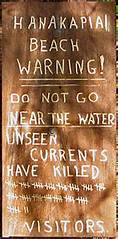
There are a myriad counting games and systems of notation that children use to master the complexity of numbers. One of the most ubiquitous is the use of the tally, to keep track of an unfolding sequence- you know what I mean, four vertical strokes and one diagonal across them to indicate the number five. Prisoners can keep tally of their durance vile on the walls of their cells by scratching an ongoing record of their incarceration. One of the most striking uses of the tally system is that found at Hanakapiai Beach, on the Hawaiian island of Kauai where a sign warns, do not go near the water, unseen currents have killed-what follows is a tally in chalk on the board and you can see the most recent death toll by counting the tally. As of August 2014 there were 83 tally marks. I can’t vouch for its accuracy, but I’m pretty sure that I would forego a swim there, despite the heat of the day.

Have you ever heard the expression- you can count on me? Or more negatively, count on you to stuff things up! How do you keep track of the items in your existence? Skilful at balancing your budget, are you? Or do you, like Prufrock, measure out your life with coffee spoons? No matter, there is one indubitable fact. No matter what systems you use to navigate and comprehend this world or to what level of proficiency: You count. [insert song Counting Game]

That concludes this week’s letters. Tomorrow is a time for folk music but when the letters resume we will be in the world of Dadaism. Nothing to do with Dad jokes, although a species of humour is present however tenuous and out there. Watch in horror or approbation as the narrator flings rotten tomatoes at a performer onstage at the Cabaret Voltaire in Zurich over one hundred years ago. We will meet the protagonist of Melville’s short story Bartleby the Scrivener, experience lines from Australian poet Judith Beveridge and look at the breadth and depth of one of England’s  foremost men on letters A. A. Alverez. So join me for the cabaret in Quotidia.

Credits: All written text, song lyrics and music (including background music) written and composed by Quentin Bega unless otherwise specified in the credits section after individual posts. Illustrative excerpts from other texts identified clearly within each podcast. I donate to and use Wikipedia frequently as one of the saner sources of information on the web.

Technical Stuff: Microphone- (for the podcast spoken content) Audio Technica AT 2020 front-facing with pop filter)

Microphone (for many of the songs) Shure SM58

For recording and mixing down 64-bit N-Track Studio 9 Extended used

Music accompaniment and composition software– Band-in-a-Box and RealBand 2020 as well as- for some 20 of the songs of year 2000 vintage- I used a Blue Mountains, NSW, studioApproximately 48 Banter folk songs and instrumentals recorded live (“in the round”) with a ThinkPad laptop using the inbuilt mic.
Letters From Quotidia Episode 67 Anything Can Happen

Letters From Quotidia Episode 67 Anything Can Happen

Welcome to Letters From Quotidia – a podcast by Quentin Bega for lovers of music, poetry, and the Crack- that most Irish of nouns which may encompass, news, gossip, fun, entertainment, and enjoyable conversation. Quotidia is that space, that place, where ordinary people lead ordinary lives. But where, from time to time, they encounter the extraordinary. Being a citizen of  one of the world powers today can be a tad nerve-wracking. Even those of us who are citizens of middling powers feel the earth beneath our feet shaking when The US and China stamp the floor in ire at one another. God help us if the take up the cudgels in earnest. Maybe there is some respite in the past- let’s see?

Entry 67: Anything Can Happen- 23 BC in Rome was interesting in a number of ways: Augustus declared himself Princeps or “first citizen”; the Roman poet, Horace, published his first three books of Odes; and, elsewhere in the Roman sphere of influence, Herod the Great built a sumptuous palace in Jerusalem and married the ravishing beauty, Mariamme, after raising her Dad to an appropriate level- one commensurate with his lascivious…eye?

But it is Horace, the poet, rather than the politicians that this entry concerns itself with. The title of the song of the entry is taken from one of the Odes. Book 1, Ode  34. The Odes cover a range of subjects – Love, Friendship, Wine, Religion, Morality, Patriotism; poems of eulogy addressed to Augustus and his relations; and verses written on a miscellany of subjects and incidents, including the uncertainty of life, the cultivation of tranquillity and contentment, and the observance of moderation or the “golden mean.”

Thank you Wikipedia. More? Horace’s career coincided with Rome’s momentous change from Republic to Empire. An officer in the republican army defeated at the Battle of Philippi in 42 BC, he was befriended by Octavian’s right-hand man in civil affairs, Maecenas, and became a spokesman for the new regime. For some commentators, his association with the regime was a delicate balance in which he maintained a strong measure of independence (he was “a master of the graceful sidestep”) but for others he was, in John Dryden’s phrase, “a well-mannered court slave”.

Poor bastard- not literally, just an Aussie epithet. Most of us know what it’s like to dodge a bullet or be utterly dependent on the patronage of a kindly person or institution or sheer blind luck. Horace had Maecenas, whose very name has become an eponym for a patron of the arts. His patronage was exercised, not from vanity or a mere dilettante love of letters, but with a view to the higher interest of the state. He recognised in the genius of the poets of that time, not only the truest ornament of the court, but a power of reconciling men’s minds to the new order of things, and of investing the actual state of affairs with an ideal glory and majesty. The change in seriousness of purpose between the Eclogues and the Georgics of Virgil was in a great measure the result of the direction given by the statesman to the poet’s genius. A similar change between the earlier odes of Horace, in which he declares his epicurean indifference to affairs of state, and the great national odes of the third book has been ascribed by some to the same guidance.

Oh, ah? Anyone else feeling slightly uncomfortable with that? Didn’t Stalin and all the other totalitarian dictators arrange for something similar in history? Have you ever been persuaded, either by self-censorship or kindly persuasion, to massage an opinion genuinely held to something other than that which you actually believe? No! Cast the first stone then, by all means! Nevertheless, Horace speaks across the millennia to us: carpe diem, anyone? Many of us know the phrase from Robin William’s portrayal of teacher John Keating in the film, Dead Poets Society, who exhorts his students to, Seize the day, boys. Make your lives extraordinary. The phrase is from Book 1, Ode 11. …life is short; should hope be more?/In the moment of our talking, envious time has ebb’d away./Seize the day; trust tomorrow e’en as little as you may.

Time and mortality were themes Horace returned to in Ode seven of the fourth book. This poem, A. E Housman considered to be the most beautiful in ancient literature, The swift hour and the brief prime of the year/Say to the soul, Thou wast not born for aye./Thaw follows frost; hard on the heel of spring/Treads summer sure to die, for hard on hers/Comes autumn, with his apples scattering;/Then back to wintertide, when nothing stirs./ But oh, whate’er the sky-led seasons mar,/Moon upon moon rebuilds it with her beams:…we are dust and dreams. Seamus Heaney, shaken by the events of 9/11, wrote Anything Can Happen based on Ode 34 of Book 1. Anything can happen, the tallest towers/Be overturned, those in high places daunted,/Those overlooked regarded./ He talks of Fortune as a bird of prey tearing the crest off one,/Setting it down bleeding on the next.

Recognising that nothing will ever be the same again he ends the poem with the lines, Capstones shift, nothing resettles right./Telluric ash and fire-spores boil away. I first read Heaney as a student in Belfast in 1968. In the decades since, I have read and admired just about everything he has ever written. Alas, that he will write no more: vale Famous Seamus. After reading District and Circle, the collection from which this poem is taken, I wrote this song in 2007. [insert song Anything Can Happen]

Let us leave behind now the world of adults with gravitas and move to the world of children in our onward journey through Quotidia. Belfast skipping songs anyone? The poets E E Cummings and James MacAuley examine aspects of children’s games. The tally system as a method of counting and keeping track of things is a method used by children as well as adults. Children find a magic in rhyme and counting-One for sorrow/two for joy/three for a kiss/four for a boy/five for silver/ six for gold/seven for a secret, never to be told. But, if the truth is to be told, there is sorrow and joy aplenty in Quotidia to say nothing of silver, gold and secrets. So, blow a good-bye kiss to that boy or girl  and board the coach which will take us further into the mist-shrouded realm to the 68th stage of our journey.

Credits: All written text, song lyrics and music (including background music) written and composed by Quentin Bega unless otherwise specified in the credits section after individual posts. Illustrative excerpts from other texts identified clearly within each podcast. I donate to and use Wikipedia frequently as one of the saner sources of information on the web.

Technical Stuff: Microphone- (for the podcast spoken content) Audio Technica AT 2020 front-facing with pop filter)

Microphone (for many of the songs) Shure SM58

For recording and mixing down 64-bit N-Track Studio 9 Extended used

Music accompaniment and composition software– Band-in-a-Box and RealBand 2020 as well as- for some 20 of the songs of year 2000 vintage- I used a Blue Mountains, NSW, studioApproximately 48 Banter folk songs and instrumentals recorded live (“in the round”) with a ThinkPad laptop using the inbuilt mic.

Letters From Quotidia Episode 66 The Long Weekend

Letters From Quotidia Episode 66 The Long Weekend

Welcome to Letters From Quotidia – a podcast by Quentin Bega for lovers of music, poetry, and the Crack- that most Irish of nouns which may encompass, news, gossip, fun, entertainment, and enjoyable conversation. Quotidia is that space, that place, where ordinary people lead ordinary lives. But where, from time to time, they encounter the extraordinary.

The entry, The Long Weekend was first drafted five years ago last New Year’s Eve. When I came to record it for the present letters, I found it held up remarkably well. I ended the original piece with a plea to Clive James, noted Australian expat, to stay with us. And he did hang around, for four more years and several books of prose and poetry of real quality as well as a literary website. He died on 29 November 2019. As a tribute to this prodigiously talented Australian, here are the first lines from his translation to Dante’s The Divine Comedy: At the mid-point of the path through life, I found/ Myself lost in a wood so dark, the way/ Ahead was blotted out. Now to the original entry-

Entry 66: The Long Weekend– Midway upon the journey of our life/I found myself within a forest dark,/For the straightforward pathway had been lost. These lines are from the beginning of Dante’s The Inferno, as translated by Henry Wadsworth Longfellow. In all literature, The Divine Comedy, of which The Inferno forms the first and most popular part, has few peers: many poets see it as a touchstone against which to test their own prowess in translation and prosody. Visual artists, too, regard this work as a test of their abilities to render to sight what has been wrought in sound (I’m told, by those who know, that Dante’s great work needs to be heard in the original Tuscan for full effect). Gustave Doré’s monochrome woodcuts set the standard, here. Many of these images have stayed with me. Dante, standing in the selva oscura, the dark forest, is one such, where he looks back towards the light as he steps deeper into the dark tunnel formed by the over-arching branches of the ominous trees.

In similar fashion, I watched appalled as the social fabric of Belfast started to warp, fray and unravel from 1968 under the political and paramilitary forces increasingly at work before my eyes. I glanced backward at the departing light of mid-sixties optimism where the city was alive with great music in the dance-halls and clubs. As the tribal war drums began to reverberate, I retreated to Belfast City Library to access reading material and listening material to help me escape. There I came across Donald Horne’s The Lucky Country. Having been intrigued by the island continent since schoolboy Geography classes, I began to read about Australia. I determined to apply for a teaching post there and subsequently got a conditional offer from the New South Wales Education Department.

Arriving in Aussie in August 1972, I found that I fit right in- a bit of an indictment really, in the light of what Ronald Conway had to say in his book The Great Australian Stupor, where he painted the Australian male as a completely inadequate father, selfish husband and incompetent lover, who took refuge from his inadequacies at the pub. Ouch! He also wrote in 1988: “Australia has become an addicted society, one which seeks a too easy and too dangerous way of breaking out of the rat trap of materialism that it has built for itself. This is a society without sufficient creative imagination to stay happy and healthy.” He was no less scathing in the new millennium, writing in 2001, “Ours could be the first century in history to turn media-heated sexuality into a universal bore.”  Married at First Sight, anyone?

I used the title of his second book, The Land of the Long Weekend, in the song, even though, now, it is a sad remnant of a long-ago time in this consumer age of 24/7 trading where the un- and under- employed and age-pensioners such as myself are in the dwindling band of those who may get- if not actually enjoy- a whole weekend of leisure. As to why we are here? He wrote, “Perhaps the wholly present point of our conscious existence is not to build a wall against mortality but live as deeply as we can so as to inspire those who come after.”  Do I agree? Yes. Yes, I do. I am indebted to distinguished Aussie journalist Tony Stephens for the information on Conway from his obituary in the Sydney Morning Herald, March 26, 2009.

Conway’s acerbic critique has been a challenge to me over the decades. First, in the 70s where I was less than half-way along my life’s path when things got twisted and I couldn’t find the way. My Beatrice led me back to where it all began, in Ireland in 1979, but as others, too, have found, you can’t go back. You’re just a ghost, wandering in a landscape where once-familiar faces look at you strangely. Returning to Australia in 1988, I was in time to catch Conway’s ongoing critique of Aussie life and I must admit that I noticed that things had changed quite a bit in the almost ten-year absence. And, they’ve continued to change; yet, strangely, despite all this- Australia remains a land of dreams and endless opportunities that the ugly spectres from the other, older and raddled hemisphere have not been able to infect so far, touch wood!

The sun-drenched optimism that pours into my backyard in Sydney’s outer West on this the last day of 2015 reminds me of a Sydney expatriate who has kept me entertained and challenged through the decades since he had me in stitches with his Unreliable Memoirs– and all the books of fiction, non-fiction, poetry, journalism and TV appearances. Of course, I’m talking about Clive James, Even my memories are clearly seen:/Whence comes the answer if I’m told I must/Be aching for my homeland/…The sky is overcast/Here in the English autumn, but my mind/Basks in the light I never left behind. Stay with us Clive, we need you, still. [insert song The Long Weekend]

Anything Can Happen, as anyone who has lived through 2020 can attest. This is the theme of our 67th Letter and I turn to the poets to help examine it: Horace from ancient Rome, A E Housman from Edwardian England and Seamus Heaney from contemporary Ireland are enlisted to help us untangle the various strands before our eyes. Join us in Quotidia.

Credits: All written text, song lyrics and music (including background music) written and composed by Quentin Bega unless otherwise specified in the credits section after individual posts. Illustrative excerpts from other texts identified clearly within each podcast. I donate to and use Wikipedia frequently as one of the saner sources of information on the web.

Technical Stuff: Microphone- (for the podcast spoken content) Audio Technica AT 2020 front-facing with pop filter)

Microphone (for many of the songs) Shure SM58

For recording and mixing down 64-bit N-Track Studio 9 Extended used

Music accompaniment and composition software- Band-in-a-Box and RealBand 2020 as well as- for some 20 of the songs of year 2000 vintage- I used a Blue Mountains, NSW, studioApproximately 48 Banter folk songs and instrumentals recorded live (“in the round”) with a ThinkPad laptop using the inbuilt mic.
Letters From Quotidia Episode 65 Homebase

Letters From Quotidia Episode 65 Homebase

Welcome to Letters From Quotidia – a podcast by Quentin Bega for lovers of music, poetry, and the Crack- that most Irish of nouns which may encompass, news, gossip, fun, entertainment, and enjoyable conversation. Quotidia is that space, that place, where ordinary people lead ordinary lives. But where, from time to time, they encounter the extraordinary.

Entry 65: Homebase– I’ve tried three times to start this entry. First attempt: I thought the phrase rootless cosmopolitan referred to an insult hurled by Stalin at Trotsky and I was going to apply it to myself. But then, a cursory examination, courtesy of Wikipedia, showed me that the ice-axe through the skull of Leon Bronstein occurred in 1940, many years before the insult became an instrument of the Soviet Dictator’s strategy for the removal of opponents.

Then, I thought that I could make a fresh start by delving into my memory and resurrecting a scene from my younger days, when I was at a protest rally in Belfast. It was in late 1970 or early 1971. I remember that I was somewhere near the city centre. Things began to get hairy; I retreated to a safer distance; black-clad police formed phalanxes and then I spotted a student politician from Queen’s University, Belfast, with whom I had been in disputation at an earlier student conference, not sloping off, as I was, but running towards the police lines and, indeed, hopping into the Black Maria, without law-and-order assistance.

Thinking I was onto the winner, I started to search my papers from files in the attic and, later, the briefcases stored in the front of the garage to see if I could get the skinny on what really had gone on all those years ago- as if it actually counts in the 21st Century! For I had seen that erstwhile radical student politician not so long ago on TV, a person who became a mover and shaker in the conservative camp, and, knowing that I could destroy his life should I so wish- what to do? Were I to follow precedent in the media over the past few years, I would name this prominent politician and watch as his career crashed and burned around him. I’ve got the proof, ha, ha!

Of course, I have no intention of doing any such thing. Finally, I hit upon a cunning plan, as Baldrick, the long-suffering sidekick of Edmund Blackadder, used to assert. I’ll re-start for a lucky third time by telegraphing the use of the first lines of the song as the denouement of this entry- thereby avoiding the difficulties of making another start at all: (cunning, you see…) I do believe I was happier, and more attuned to the world and those around me, before the rubber band of schooling began to stretch me out of shape and sort us all out as points on the elongating, narrowing and vibrating ribbon that separates the educational sheep from the goats.

The song is a sort of coming of age tale. Were it written as a novel it would be called a bildungsroman. Now according to Wikipedia, A Bildungsroman relates the growing up or “coming of age” of a sensitive person who goes in search of answers to life’s questions with the expectation that these will result from gaining experience of the world. The genre evolved from folklore tales of a dunce or youngest son going out in the world to seek his fortune. Well, I am the youngest son, and many would say I am also a bit of a dunce, too. However, no novel in sight yet for me (apart, that is, from an unfinished 80,000-word effort from almost forty years ago which I managed to hold on to for half-a-life time but have carelessly misplaced somewhere or other in the last few months).

But songs I can manage to hold on to- a few I have even been able to resurrect from memory, when the paper versions have gone AWOL. This song is just such an artefact. I wrote it in 1989 a year after returning to Australia from Ireland: an absence of almost ten years. Surprise, surprise, I lost it in the move back to Sydney from Queensland at the beginning of 1995. So, I sat down with a bottle of wine and started to re-construct it. A rootless cosmopolitan no more, I had taken out citizenship, with the rest of the family in 1994.

Clive James, one of Australia’s greatest intellectual expatriates, gave an interview in 2015, as he was dying, where he describes Australia as the promised land. He wasn’t the first (or last, I guess) who will make that claim about one place or another. But after listening to the interview, a few lines from A Difficult Patriotism, by Michael Dransfield came to mind, Europe lures away our idealists with/mythologies. Here to be different is agony/There it is easy/But this is the greatest country,/Australia, to leave it means/ death to the spirit We cannot/ change it with our verses and kisses and years… Dransfield, as a poet, has enthralled-and eluded-me since I first encountered his verse in 1973- the year of his much too early death at age 24- when young poets in Wollongong were discussing new voices in Australian letters in the exciting dawn of Whitlam’s Australia. But now, it’s time: time for the denouement promised: the first lines of the song, most things worth knowing I learned by the age of four, school was a drag and I walked out that door, All that I really want, all that I really need is you. [insert song Homebase]

In our next visit to Quotidia for our 66th letter, we’ll find ourselves within a forest dark with the great poet Dante, where the straightforward pathway has been lost. Then we’ll stand on the steps of  the Belfast City Library as any lingering remnant of the path to peace is trampled under the feet of paramilitaries as they march down Royal Avenue. And we’ll fly away to the land of the long weekend- to an Australia dreaming in the sun in shorts as the waves roll in from an ocean insulating the wide, brown land from all that other stuff somewhere else- for a short time only, perhaps.

Credits: All written text, song lyrics and music (including background music) written and composed by Quentin Bega unless otherwise specified in the credits section after individual posts. Illustrative excerpts from other texts identified clearly within each podcast. I donate to and use Wikipedia frequently as one of the saner sources of information on the web.

Technical Stuff: Microphone- (for the podcast spoken content) Audio Technica AT 2020 front-facing with pop filter)

Microphone (for many of the songs) Shure SM58

For recording and mixing down 64-bit N-Track Studio 9 Extended used

Music accompaniment and composition software– Band-in-a-Box and RealBand 2020 as well as- for some 20 of the songs of year 2000 vintage- I used a Blue Mountains, NSW, studioApproximately 48 Banter folk songs and instrumentals recorded live (“in the round”) with a ThinkPad laptop using the inbuilt mic.

Letters From Quotidia Postcards Edition 16

Letters From Quotidia Postcards edition 16

Welcome to Letters From Quotidia, the Postcards edition, number 16, a podcast by Quentin Bega where you will hear Banter, a traditional Irish folk group from Sydney’s outer west, present four tunes and songs drawn from the traditions of the English-speaking world. And, as always, Quotidia is that space, that place, where ordinary people lead ordinary lives. But where, from time to time, they encounter the extraordinary.

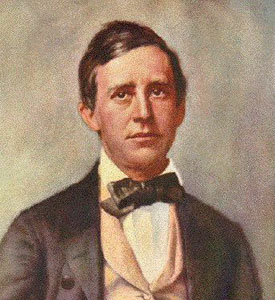
Hard Times: Written by Stephen Foster who died much too soon at age 37. The wowsers of the time were smug, characterising him as a “drunkard” who wrote songs about “pathetic people”. Well, he’s remembered and revered 150 years after his death for such classics as Beautiful Dreamer, Gentle Annie, My Jeannie with the Light Brown Hair and Camptown Races, while his mean-spirited critics have sunk into well-deserved oblivion. Here’s Jim to sing the song.[insert song]

Spancil Hill: Another much loved and requested song from the 70s onwards, in my experience. It was originally a poem written by Michael Considine, who left for America in the wake of the Great Famine. He hoped to make enough money to return home and marry his sweetheart. He died at age 23 in 1873, without ever having fulfilled his dreams. But he sent a poem to his nephew on which the song is based. The punch and power of the ballad, even in its popular, abbreviated form is a testament to his feeling for “my first and only love” . Sam Beggs takes the honours here for this great song. [insert song]

Three Rivers Hotel: An Aussie song recorded by many country artists here, most notably, the late, great Slim Dusty. It tells of the hard-working, hard-drinking blokes who undertake the hot and hellish, dirty, dusty construction jobs in the bush of Australia. The hotel, where cold beer and entertainment of various kinds is to be found, is the heart of the vastness and celebrated in more songs than this one. This is one of several variants on the song, written, I think, by Stan Coster, a songwriter and bushman of note, who died back in 1997.[insert song]

The Wild Rover: Historically, the song has been referred to in Irish folklore and, since the late sixteenth century, it has been noted in written records—although it is likely that some northern Atlantic fishing crews knew the song before these historical accounts were made. The song is a staple for artists performing live music in Irish pubs. It is often considered to be a drinking song rather than a temperance song. For many people, the Wild Rover is the stereotypical Irish drinking song.

“The Wild Rover” is the most widely performed Irish song, although its exact origins are unknown. The song tells the story of a young man who has been away from his hometown for many years. Returning to his former alehouse the landlady refuses him credit, until he presents the gold which he has gained while he has been away. He sings of how his days of roving are over and he intends to return to his home and settle down.

According to Professor T. M. Devine in his book The Scottish Nation 1700 – 2000 (Penguin, 2001) the song was written as a temperance song. The song is found printed in a book, The American Songster, printed in the USA by W.A. Leary in 1845, and spread from Scotland to America from the Temperance movement. There is another USA printed version in the “Forget-Me-Not Songster” (c 1850), published by Locke. An alternative history of the song is suggested by the fact that a collection of ballads, dated between 1813 and 1838, is held in the Bodleian Library

Raymond Daly and Derek Warfield of The Wolfe Tones describe how the fans of Celtic Football Club in Scotland  sing The Wild Rover at away matches. The chorus is well known throughout most English-speaking cultures, even among people who have no knowledge of the rest of the song. (Thanks to Wikipedia for the notes above. Do donate to a great site, if you can afford to.)

I first came across this song off the Dubliners 1964 LP and the song was a staple of the dance-halls in rural and metro Northern Ireland. The showbands of the time were nothing if not versatile: able to keep the punters entertained with songs from the Top of the Pops as well as Country staples from the USA. Add to the mix,  Irish folk songs and Ceili dance-tunes and you get the idea of what a night out was like in the mid-1960s in Ireland. It was a great time that has, alas, faded into the past.

Sam the Man helms the song in our wee group, Banter, but because the virus has us in lockdown, and, anyway, there are no venues open for live music yet, so I get to sing it and share it! [insert song]

Credits: All written text, song lyrics and music (including background music) written and composed by Quentin Bega unless otherwise specified in the credits section after individual posts. Illustrative excerpts from other texts identified clearly within each podcast. I donate to and use Wikipedia frequently as one of the saner sources of information on the web.

Technical Stuff: Microphone- (for the podcast spoken content) Audio Technica AT 2020 front-facing with pop filter)

Microphone (for many of the songs) Shure SM58

For recording and mixing down 64-bit N-Track Studio 9 Extended used

Music accompaniment and composition software– Band-in-a-Box and RealBand 2020 as well as- for some 20 of the songs of year 2000 vintage- I used a Blue Mountains, NSW, studioApproximately 48 Banter folk songs and instrumentals recorded live (“in the round”) with a ThinkPad laptop using the inbuilt mic.