
I’m Missing You


There’s no fool like an old fool, they say, so what happens when a bunch of oul’ coots gather together to make music? The next batch of posts may enlighten you as to the question just posed and may also, perhaps, enrage or entertain. Anything’s better than a yawn, I guess. And everything that is not that bloody virus is a plus. At the moment we can’t meet as a group, as we are in lockdown, so I have set out a version of songs that are in our repertoire but which have not yet been recorded. With any luck (and, as three of us are north of 70, we’ll need it!) we will be able to resume our normal practice of meeting weekly and playing tunes, singing songs and generally enjoying the crack.

Jimmy McCarthy, born in Macroom, Co. Cork, in 1953 wrote this song. Others may claim the honours, (and I have come across an imposter or two on the internet) but it is clear to me that he is the guy!

MacCarthy left school at 15 where he was unhappy and became a stable boy at Vincent O’Brien‘s place in Ballydoyle, but after five years between Tipperary and Newmarket, Jimmy returned home to help his father whose bad heart had led to the end of the business. He then made a living out of singing at pubs and was later busking in the streets of London and doing occasional concerts, opening for other singers’ gigs in Ireland.

MacCarthy is best known as a songwriter. Composing since the late 1970s, his songs have been recorded by many Irish artists including Christy Moore, Mary Black, Finbar Wright, Maura O’Connell, the Corrs and Westlife. “Ride On”, recorded by Christy Moore, is one of his best-known compositions. Moore also recorded MacCarthy’s songs “Missing You”, “Bright Blue Rose” and “Mystic Lipstick”. Mary Black, Maura O’Connell and The Corrs have recorded MacCarthy’s “No Frontiers”, while Black has also recorded his songs “Katie”, “Adam at the Window”, “Diamond Days”, “As I Leave Behind Neidín”, “Shuffle of the Buckled” and “Another Day” (Thank you Wikipedia for the notes above.)

I first heard Missing You  over twenty-five years ago when Bobby, who used to play with the group, Banter, featured this song as part of his repertoire. He left after a couple of years to return to Belfast. However, I didn’t pick it up until about five years ago. The song, as performed by Christy Moore, was the template for Bobby’s version all those years ago, and I guess I kept to that template here.

Jimmy McCarthy has written some of the most important songs from the folk revival in Ireland from the late-1970s onward. Our group has featured Ride On for at least 25 years and songs such as Bright Blue Rose, Katie, As I Leave Behind Neidin, and No Frontiers feature regularly in the Irish program Sam the Man, Ann King and I host every other Sunday for two hours between 10:00 a.m. and noon. It’s called A Touch of Ireland, and is broadcast on WOW FM 100.7, discoverable on the internet, if you want to check it out. At the moment, COVID has us locked out- but I anticipate we’ll be back in action from end June, 2020, God willing.

 I do like to track down originals, so, today, when I heard Jimmy McCarthy’s version (check it out on You Tube) I realised that his was the best version of all! Originals are usually best. If the band, Banter, ever gets together for public performances in the post-COVID dispensation, I think I’ll re-work the arrangement of the song and use  McCarthy’s vision as my template. P.S. Wikipedia spells Jimmy’s surname Mac, but I see it mostly as Mc. Take your pick (or shovel, should you prefer…)

I’m Missing You

It’s Heaven Around Galway Bay

There’s no fool like an old fool, they say, so what happens when a bunch of oul’ coots gather together to make music? The next batch of posts may enlighten you as to the question just posed and may also, perhaps, enrage or entertain. Anything’s better than a yawn, I guess. And everything that is not that bloody virus is a plus. At the moment we can’t meet as a group, as we are in lockdown, so I have set out a version of songs that are in our repertoire but which have not yet been recorded. With any luck (and, as three of us are north of 70, we’ll need it!) we will be able to resume our normal practice of meeting weekly and playing tunes, singing songs and generally enjoying the crack.

This song I came upon by accident a couple of years ago. I was on You Tube listening to music of various kinds and came upon a Dublin City Ramblers take on it. I have since, listened to several versions but reckon that the DCRs is the gun version. A couple of us in the band were going through songs one night and I pulled out this song thinking that it might suit Sam the Man. He did sing it once or twice in practice but nothing eventuated.

Still in Lockdown (though with restrictions easing here in NSW) I decided to give it a go as the first song on Banter’s ninth collection. I am still so stuck in the 20th Century that I think in terms of LPs or CDs with 12 songs per disc. Actually, Banter, as a group has only featured on the first five collections.

And this only happened because several years ago we were putting together a set of songs and tunes for a good friend and former member of the group who was returning to Ireland for a last look before Parkinson’s claimed him. He wanted to share with friends and relations the music scene he had been involved in out here in western Sydney. Since then I have put down demos thinking that I’ll get the group to record the songs. But, as they say, it’s like herding cats or folding smoke. And, don’t get me wrong, I’m one of the cats, too!

I don’t know much about this song. It was written by Eamon O’Shea (who, I found out, was a man called Herman Weight who lived in the west of Ireland) He adopted the name because it sounded more Irish! Apart from that, I found out that he is better known as the composer of the song, Come Down the Mountain, Katy Daly. This was after a lengthy and fruitless search for the history of the “Galway” song. In no time at all I came up with oodles of stuff on “Katy Daley” but very little authoritative stuff about Herman Weight himself and the provenance of this song.

However, on Mudcat.org there are threads that may interest those who might want to carry on where, clearly, I have given up- see references to herding cats etc, above. Some were surprised that the song was not an American home-grown product and questioned its Irish origins. Below I include some text that may clear this up.

Last year, Richard Hawkins of bluegrassireland.blogspot.com wrote, after nearly sixty years ‘Come down the mountain Katie Daly’ continues to be widely known and sung here; and at “Bluegrass Omagh” this coming weekend, audiences will be able to see a living link with the song’s continuing endurance as a bluegrass classic, when Joe Mullins and the Radio Ramblers come on stage.

The song, with that title, was written and recorded by ‘Eamon O’Shea’ (real name Herman Weight) on Walton’s Dublin-based Glenside label and issued in November 1961.

In 1962 the first American recording of the song was made by the Bluegrass Playboys from Kentucky, with Joe Mullins’s father, Paul (Moon) Mullins on fiddle and vocals. It was later released on the Playboys’ album The world of bluegrass (Briar M-108). The song was a hit for them, became a bluegrass favourite, and was later recorded on the Rebel label (as ‘Katy Daley’) by Ralf Stanley and the Clinch Mountain Boys., adding the word ‘on’ (‘come on down the mountain’).

Unfortunately, I can shed very little light on It’s Heaven Around Galway Bay, which does not seem to attract the same amount of critical attention as its sibling. Not that it matters all that much. If I like a song, I’ll sing it. In this arrangement, I pay tribute to transatlantic musical cross-fertilisation by including, courtesy of PG Music’s Band-in-a-Box, bluegrass mandolin fills and the swinging American waltz guitars. Cead mile failte!

It’s Heaven Around Galway Bay

Joe Hill


There’s no fool like an old fool, they say, so what happens when a bunch of oul’ coots gather together to make music? The next batch of posts may enlighten you as to the question just posed and may also, perhaps, enrage or entertain. Anything’s better than a yawn, I guess. And everything that is not that bloody virus is a plus. At the moment we can’t meet as a group, as we are in lockdown, so I have set out a version of songs that are in our repertoire but which have not yet been recorded. With any luck (and, as three of us are north of 70, we’ll need it!) we will be able to resume our normal practice of meeting weekly and playing tunes, singing songs and generally enjoying the crack.

Joe Hill (October 7, 1879 – November 19, 1915),  songwriter, and member of the Industrial Workers of the World (IWW, familiarly called the “Wobblies”). Hill, an immigrant worker frequently facing unemployment and underemployment, became a popular songwriter and cartoonist for the union. His most famous songs include “The Preacher and the Slave” (in which he coined the phrase “pie in the sky”), You will eat, bye and bye/In that glorious land above the sky;/Work and pray, live on hay,/You’ll get pie in the sky when you die.

In 1914, John G. Morrison, a Salt Lake City area grocer and former policeman, and his son were shot and killed by two men. Hill was convicted of the murders in a controversial trial. An appeal to the Utah Supreme Court was unsuccessful. Orrin N. Hilton, the lawyer representing Hill during the appeal, declared: “The main thing the state had on Hill was that he was an IWW and therefore sure to be guilty. In an article for the socialist newspaper Appeal to Reason, Hill wrote: “Owing to the prominence of Mr. Morrison, there had to be a ‘goat’ [scapegoat] and the undersigned being, as they thought, a friendless tramp, a Swede, and worst of all, an IWW, had no right to live anyway, and was therefore duly selected to be ‘the goat’.” Joe Hill was executed by firing squad on November 19, 1915 at Utah’s Sugar House Prison. When Deputy Shettler, who led the firing squad, called out the sequence of commands preparatory to firing (“Ready, aim,”) Hill shouted, “Fire — go on and fire!”

Just prior to his execution, Hill had written to Bill Haywood, an IWW leader, saying, “Goodbye Bill. I die like a true blue rebel. Don’t waste any time in mourning. Organize … Could you arrange to have my body hauled to the state line to be buried? I don’t want to be found dead in Utah.”

It generated international union attention, and critics charged that the trial and conviction were unfair. More recently, Utah Phillips considers Joe Hill to have been a political prisoner who was executed for his political agitation through song-writing.

In a biography published in 2011, William M. Adler concludes that Hill was probably innocent of murder, but also suggests that Hill came to see himself as worth more to the labor movement as a dead martyr than he was alive, and that this understanding may have influenced his decisions not to testify at the trial and subsequently to spurn all chances of a pardon.

His last will requested a cremation and reads: My will is easy to decide/For there is nothing to divide/My kin don’t need to fuss and moan/”Moss does not cling to rolling stone”//My body? Oh, if I could choose/I would to ashes it reduce/And let the merry breezes blow/My dust to where some flowers grow//Perhaps some fading flower then/Would come to life and bloom again./This is my Last and final Will./Good Luck to All of you/Joe Hill

Hill’s body was sent to Chicago, where it was cremated; in accordance with his wishes, his ashes were placed into 600 small envelopes and sent around the world to be released to the winds. Delegates attending the Tenth Convention of the IWW in Chicago received envelopes November 19, 1916, one year to the day of Hill’s execution (and not on May Day 1916 as Wobbly lore claims). The rest of the 600 envelopes were sent to IWW locals, Wobblies and sympathizers around the world on January 3, 1917.

One small packet of ashes was scattered at a 1989 ceremony which unveiled a monument to six unarmed IWW coal miners buried in Lafayette, Colorado, who had been machine-gunned by Colorado state police in 1927 in the Columbine Mine massacre. Until 1989 the graves of five of these men were unmarked. Another famous Wobbly, Carlos Cortez, scattered Joe Hill’s ashes on the graves at the commemoration.

Hill was memorialized in a tribute poem written about him c. 1930 by Alfred Hayes titled “I Dreamed I Saw Joe Hill Last Night,” sometimes referred to simply as “Joe Hill”. The lyrics were turned into a song in 1936 by Earl Robinson, who wrote in 1986, “‘Joe Hill’ was written in Camp Unity in the summer of 1936 in New York State, for a campfire program celebrating him and his songs …” Hayes gave a copy of his poem to fellow camp staffer Robinson, who wrote the tune in 40 minutes. Paul Robeson and Pete Seeger performed this song and are associated with it, along with Irish folk group The Dubliners and Joan Baez. (The notes above taken from a lengthy Wikipedia article-donate!)

I first heard the song, sung by Joan Baez in 1970.  Banter, since its formation over 25 years ago, has been performing this great song. This is another song fronted by Sam the Man and which I have purloined for this post. But then  again- it’s impossible to steal a great song which belongs to the wider world.

Joe Hill

The Galway Races

There’s no fool like an old fool, they say, so what happens when a bunch of oul’ coots gather together to make music? The next batch of posts may enlighten you as to the question just posed and may also, perhaps, enrage or entertain. Anything’s better than a yawn, I guess. And everything that is not that bloody virus is a plus. At the moment we can’t meet as a group, as we are in lockdown, so I have set out a version of songs that are in our repertoire but which have not yet been recorded. With any luck (and, as three of us are north of 70, we’ll need it!) we will be able to resume our normal practice of meeting weekly and playing tunes, singing songs and generally enjoying the crack.

The Galway Races” is a traditional Irish song. The song’s narrator is attending the eponymous annual event in Galway, a city in the west of Ireland. The song was made famous in the UK in 1967 by The Dubliners. It has been recorded by many artists since that time. This Irish horse-racing starts on the last Monday of July every year. Held at Ballybrit Racecourse in Galway, Ireland over seven days, it is one of the longest of all the race meets that occur in Ireland. The busiest days of the festival are Wednesday, when the Galway Plate is held, and Thursday, when the Galway Hurdle and Ladies’ Day take place. The summer festival is the highlight of the business year for most local businesses as crowds and horses flock from all over the world to attend one of the world’s biggest race meetings.

The pub underneath the Corrib Stand, built in 1955, was for many years the longest bar in the world. It was replaced by the Millennium Stand which opened in 1999. Thursday is traditionally the busiest and most stylish day of the week-long Galway Racing Festival. Ladies compete for the coveted title of Best Dressed Lady or Most Elegant Hat. (notes above adapted from Wikipedia- great resource-donate)

Throughout Ireland people of all ages and occupations prepare for the Galway Races with a fervour that is almost religious in its intensity ‘The apparel oft proclaims the man’, wrote the Bard of Avon. Shakespeare would surely have loved the Galway Races where ‘all the men and women are truly players’.

Galway is about voices past and present; those of the late Michael O’Hehir, and the late Luke Kelly singing “As I roved out through Galway to seek for recreation…”  Galway is about horses. Horses with nodding heads and swishing tails, contentedly circling the crowded parade ring before the shrewdly appraising eyes of gamblers and horse-lovers alike.

It is about men with caps pushed back off their foreheads to betoken astonishment at the peculiarities of racing form. Imperturbable men who, minutes after losing heavily on an odds-on certainty, will endeavour once more to prise reluctant secrets from the same specious form book that deceived them in the first place.

Galway race-goers will queue good-naturedly for smoked salmon, hamburgers or baked potatoes. Aromas of freshly mown grass, leather saddles and pipe tobacco will commingle agreeably with the bouquets of brandy and fine wines. Irish dancers will jig to a lone banjo player or the combined strains of fiddle, flute and accordion.  (notes above taken from irishcultureandcustoms.com)

The Galway Races are the subject of At Galway Races, a poem by W. B. YeatsThere where the racecourse is/Delight makes all of the one mind/The riders upon the swift horses/The field that closes in behind./We too had good attendance once,/Hearers, hearteners of the work,/Aye, horsemen for companions/Before the merchant and the clerk/Breathed on the world with timid breath;/But some day and at some new moon/We’ll learn that sleeping is not death/Hearing the whole earth change its tune,/Flesh being wild again, and it again/Crying aloud as the racecourse is;/And find hearteners among men/That ride upon horses. Yeats, with his aristocratic bent, loved the ideal of “the horse”

 Notice from the organisers: The 2020 Galway Races will no longer go ahead as originally planned due to government intervention. Michael Moloney described the Galway Race Committee’s decision as ‘unavoidable’. It read: ‘In light of the evolving situation regarding Covid-19, for public health and safety reasons Galway Race Committee has reached the difficult but unavoidable decision that the 2020 Galway Races Summer Festival, due to be held from Monday 27th July to Sunday 2nd August will not be able to take place.

That bloody virus gets in everywhere and stuffs everything! Is nothing sacred? In our group, Sam the Man usually sings this but, as I have said before, “Lockdown Rules!” So, I have put together this Band-in-a-Box version featuring guitar, drums, bass, mandolin, bouzouki and accordion. ( I couldn’t find a fiddle that sounded right, sorry Mark.) I supply a lone vocal (but I do double the chorus) over the 127- bpm swung instrumentation.

The Galway Races

The Curragh of Kildare

There’s no fool like an old fool, they say, so what happens when a bunch of oul’ coots gather together to make music? The next batch of posts may enlighten you as to the question just posed and may also, perhaps, enrage or entertain. Anything’s better than a yawn, I guess. And everything that is not that bloody virus is a plus. At the moment we can’t meet as a group, as we are in lockdown, so I have set out a version of songs that are in our repertoire but which have not yet been recorded. With any luck (and, as three of us are north of 70, we’ll need it!) we will be able to resume our normal practice of meeting weekly and playing tunes, singing songs and generally enjoying the crack.

The Curragh of Kildare, also known as The Winter, it is Past, is a folk song particularly associated with the Irish tradition. Elements of some versions of the song suggest that it dates from at least the mid-18th century. In the 19th Century the Curragh was used to rally the British Army and then, in 1922 onwards, the Irish Army.

The 5,000-acre plain in County Kildare had, since the earliest times when the legendary men of the Fianna were believed to have trained there, been a welcoming sward to military men. From the end of the sixteenth century onwards there are records of encampment there.

The camp attracted thousands of spectators and camp followers; that is, prostitutes, who soon earned for themselves the sobriquet of wrens. This term was applied to the women as many of them lived all the year round in the furze bushes which are the only ground cover on the plain.

The Curragh was the place chosen by Richard Talbot, Earl of Tyreconnell to prepare his Army for the cause of James II. Wellington passed through here on his way to the peninsular wars. It was the Crimean War (1855-1856) which led to the construction of the first permanent camp at the Curragh. Queen Victoria visited in 1861 to visit her son the Prince of Wales (Edward VII), who was serving in the Curragh, and to inspect troops. 

The history of the text is rather complicated. Versions were taken down at different times in Ireland by  various collectors. The song has also been collected  in Scotland and England; the singer Frank Purslow collected a version (The Winter’s Gone and Past) in Dorset. Petrie thought that it was an “old Anglo-Irish song” and argued that the Scottish versions were most likely developed from it.

Several printed ballad versions exist, under titles such as The Lamenting Maid. The most well-known version of the text, usually referred to by the title The Winter it is Past, is attributed to Robert Burns. He appears to have developed it from a popular stall-ballad, The Lovesick Maid, which referred to a highwayman called Johnson, who was hanged in 1750 for robbery in the Curragh. Burns polished the original text considerably and removed two stanzas referring directly to Johnson. The resulting ballad was published in the collection of the Scots Musical Museum.

Different airs have been used for the song. Petrie suspected that one had been composed expressly for the stall-ballad, probably in Scotland around 1750, but expressed an opinion that “the same song united to a melody unquestionably Irish has been […] known in Ireland […] for an equal or much longer period”. The tune used for Burns’ version has been identified as a (distant) relative of that used for the American ballad Fare You Well, My Own True Love.

The song as currently performed was popularised by The Johnstons, who are said to have received it from Christy Moore, who uncovered a version in a Dublin library in 1961. (notes above taken from Wikipedia and historyireland.com )

Did I know anything of the tangled history of the song before indulging in a bit of online research? Not a bit of it. But I do remember clearly The Johnstons singing this in the late 1960s. In my view, no one has come close to their version of this song in the half century since they recorded their take on it.

IMHO, the song has in it that indefinable “something” that all great songs possess. I don’t attempt to compete with the luminaries who have recorded this song down the decades, but merely offer my interpretation of this classic. No chorusing, just a straight ballad.

The Curragh of Kildare

Deportees

There’s no fool like an old fool, they say, so what happens when a bunch of oul’ coots gather together to make music? The next batch of posts may enlighten you as to the question just posed and may also, perhaps, enrage or entertain. Anything’s better than a yawn, I guess. And everything that is not that bloody virus is a plus. At the moment we can’t meet as a group, as we are in lockdown, so I have set out a version of songs that are in our repertoire but which have not yet been recorded. With any luck (and, as three of us are north of 70, we’ll need it!) we will be able to resume our normal practice of meeting weekly and playing tunes, singing songs and generally enjoying the crack.

Deportee (Plane Wreck at Los Gatos)” is a protest song with lyrics by Woody Guthrie and music by Martin Hoffman detailing the January 28, 1948 crash of a plane near Los Gatos Canyon…Guthrie was inspired to write the song by what he considered the racist mistreatment of the passengers before and after the accident. The crash resulted in the deaths of 32 people, 4 Americans and 28 migrant farm workers who were being deported from California back to Mexico…

A decade later, Guthrie’s poem was set to music and given a haunting melody by a schoolteacher named Martin Hoffman. Shortly after, folk singer Pete Seeger, a friend of Woody Guthrie, began performing the song at concerts, and it was Seeger’s rendition that popularized the song…

“Deportee (Plane Wreck at Los Gatos)” has been described by journalist Joe Klein as “the last great song he [Guthrie] would write, a memorial to the nameless migrants ‘all scattered like dry leaves’ in Los Gatos Canyon.” The song has been recorded many times, often under a variety of other titles, including “Deportees”, “Ballad of the Deportees”, “Deportee Song”, “Plane Crash at Los Gatos” and “Plane Wreck at Los Gatos (Deportee)”.  (from Wikipedia- a great online resource-donate!)

I remember when I first sang this song: it was 1969 and a group of long-haired students from the college I was attending (after a fashion) carted their guitars from Belfast to the beach at Bangor, County Down. We had been asked to provide the “entertainment” for the occasion. This was my contribution. I knew the chords and remembered almost all of the lyrics- which I made up for by repeating the chorus more times than strictly necessary. Hey ho.

In our wee group, Sam the Man sings the verses and I chime in on the choruses. With Jim on mandolin and Mark weaving harmony magic on fiddle, this is one of our better arrangements.

But Lockdown Rules specify ( yes, I wrote the rules) that since Sam ain’t here, I get to do the vocal. This is nothing like the way we do it. Courtesy of Band-in-a-Box, this version features two session guitarist big guns, Brent Mason and Jason Roller, who take pride of place in the arrangement. I don’t double up in the chorus as I want to give full access to the great playing of these guys. I hope my rendition here is a bit better than the effort on Bangor beach fifty years ago…

Deportees

Murisheen Durkin

There’s no fool like an old fool, they say, so what happens when a bunch of oul’ coots gather together to make music? The next batch of posts may enlighten you as to the question just posed and may also, perhaps, enrage or entertain. Anything’s better than a yawn, I guess. And everything that is not that bloody virus is a plus. At the moment we can’t meet as a group, as we are in lockdown, so I have set out a version of songs that are in our repertoire but which have not yet been recorded. With any luck (and, as three of us are north of 70, we’ll need it!) we will be able to resume our normal practice of meeting weekly and playing tunes, singing songs and generally enjoying the crack.

The Irish folk song “Murisheen Durkin” tells the story of an emigrant from Ireland who goes to mine for gold in California during the California Gold Rush, 1849. The song is about emigration, although atypically optimistic for the genre. The name “Muirsheen” is a good phonetic approximation to the pronunciation of “Máirtín” (Martin) in Connacht Irish; it could alternatively be construed as a diminutive of “Muiris” (Maurice). A pratie is a potato, the historical staple crop of Ireland. “America” is pronounced “Americay”, as was common among Gaelic peoples around Ireland

The air to which it is sung is “Cailíní deasa Mhuigheo” (pretty girls of Mayo), which is a popular reel dating from the 19th century. The song reached prominence when Johnny McEvoy’s recording reached no. 1 in Ireland in 1966. (notes above from Wikipedia, my favourite online resource, to which I donate periodically.) Johnny McEvoy’s version, which was on our turntables soon after its release, also spurred the showbands to make the song a staple of the music venues throughout Ireland.

It has been recorded by lots of artists since this time, including, Christy Moore, The Pogues, The Dubliners and The Wolfe Tones. Into that august company, the group Banter intends to venture (if I have anything to do with it!) A couple of years ago when Jim was off to Belfast to visit relatives, Sam, Mark and I had a couple of practices where we canvassed a few songs that were blasts from the past. We never got round to including the song in any of our sets after Jim’s return; however, it might well make an appearance, if and when the venues for music re-open here in western Sydney.

Murisheen Durkin

I Was Only Nineteen

There’s no fool like an old fool, they say, so what happens when a bunch of oul’ coots gather together to make music? The next batch of posts may enlighten you as to the question just posed and may also, perhaps, enrage or entertain. Anything’s better than a yawn, I guess. And everything that is not that bloody virus is a plus. At the moment we can’t meet as a group, as we are in lockdown, so I have set out a version of songs that are in our repertoire but which have not yet been recorded. With any luck (and, as three of us are north of 70, we’ll need it!) we will be able to resume our normal practice of meeting weekly and playing tunes, singing songs and generally enjoying the crack.

Only 19“, “I Was Only 19” or “A Walk in the Light Green” is the most widely recognised song by Australian folk group Redgum. The song was released in March 1983. Royalties for the song go to the Vietnam Veterans Association of Australia

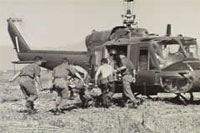
The song is a first-person account of a typical Australian soldier’s experience in the Vietnam War, from training at a military academy in Australia to first hand exposure to military operations and combat and ultimately his return home disillusioned and suffering from both PTSD and, it is implied, the harmful effects of Agent Orange.

Contrary to popular belief, the subject of this song volunteered for service in the Australian Army and was not conscripted. During the Vietnam War, Australian men did not become eligible for conscription until the age of 20.

Redgum’s lead vocalist-guitarist, John Schumann, wrote the song based on experiences he heard from veterans, particularly Mick Storen (his brother in-law) and Frankie Hunt. Schumann has said that “the power derives from the detail, provided by my mate and brother-in-law, Mick Storen, who was brave and trusting enough to share his story with me.”

For the live version, Schumann explained the title, “A Walk in the Light Green”, as referring to operational patrols in areas marked light green on topographical maps, where dark green indicated thick jungle, plenty of cover and few land mines and light green indicated thinly wooded areas, little cover and a high likelihood of land mines.

The lyrics include words, terms and place names particular to Australia and Vietnam:

  • ANZAC: Australian and New Zealand soldiers who fought in the world wars.
  • Canungra jungle warfare training centre in Queensland
  • Channel Seven: Australian television network.
  • Chinook: Military helicopter.
  • Contact!: Military term indicating an encounter with the enemy.
  • Dustoff: Casualty evacuation by helicopter.
  • Greens: Jungle Green Working Dress, the field uniform worn by the Australian Army between the early 1960s and 1989.
  • The Grand Hotel: A hotel in Vung Tau that had been converted for Army use.
  • Light green: parts on a map which indicated supposedly more dangerous areas for soldiers to patrol as there was little dense foliage and cover and an area which was more likely to be mined.
  • Nui Dat: Village in Southern Vietnam, and the main base of the 1st Australian Task Force from 1965 to 1972.
  • Puckapunyal: Former Army enlisted soldier recruit training centre in Victoria.
  • Shoalwater: Military exercise area in Queensland.
  • Sixth Battalion:: (aka 6RAR) Australian army battalion, whose D Company had been involved in the Battle of Long Tan during a tour three years earlier.
  • Slouch hat:: Parade head-dress for the Australian army.
  • SLR:: Standard 7.62 mm semi-automatic rifle issued to Australian infantrymen during the Vietnam War.
  • Tinnies: Cans of beer.
  • Townsville: City in Queensland, home of the Australian Army’s 3rd Brigade & RAAF Base Townsville. Also at the time the embarkation point for troops shipping to Vietnam from all around Australia, because it was the biggest port in Northern Australia.
  • VB: Victoria Bitter (beer). Was also used as a reference to one’s comrades in arms aka “Venerable Brethren.” e.g: “We made our tents a home VB with pin-ups on the lockers, and an Asian orange sunset through the scrub.” (A reference to the defoliant, “Agent Orange” used prolifically in Vietnam).
  • Vung Tau:: Coastal city in Southern Vietnam which was the 1st Australian Logistics Support Group base and a rest area for troops based at Nui Dat.

( Thanks to Wikipedia for the notes above- I’ve included the glossary of terms to help non-Aussie listeners understand the lyrics)

Five years ago, in post on this site (SQ 6- A Touch of Ireland) I recorded the following about the small township of St Marys, as it then was, on the banks of South Creek, on the Cumberland Plain at the foot of the Blue Mountains in New South Wales: Lines of a local poet, George Sullivan, recall those idyllic days:

DC-1914-27-d-Sarajevo-cropped

If only Victoria Park could speak/ What wondrous tales from it you’d share, /About those careless, happy days/ When it was called ‘The Square’./ It could tell of all the bullocks/That were roasted on its green;/Of the glorious games of football/By sportsmen strong and clean./ It could tell of games of cricket,/ Of how the wickets soon did fall/When demon bowlers, Royal and Tolhurst,/Did send down the ball.

The names of all too many of those sportsmen strong and clean would be inscribed in bronze on tablets marking the fallen in the Great War, and subsequent wars, on the octagonal Rotunda. The phrase, strong and clean emerges 60 years later when  Redgum sang, This clipping from the paper shows us young and strong and clean/ And there’s me in me slouch hat and me SLR and greens/ God help me, I was only 19.

VietnamVung-Tauhelicopter_w

So, the tropes that helped describe the ANZACs of the Great War in 1914-1918, strong and clean, were also used fifty years later in Vietnam. And I’m sure they filtered down the decades into Iraq and Afghanistan

I first heard the song when I was teaching at a High School south of Townsville in 1989. The VP put the song on cassette as part of the ANZAC Day commemoration. The students just shuffled around a bit in the tropical heat- not their sort of music, I guess. But I was captivated by the detail in the lyrics as well as the melody.

When I got back to Sydney in the mid-1990s the group I helped form, Banter, made the song part of the repertoire. Big Geordie sang the song with real bite. Our interpretation speeded up the song, and with acoustic folk instrumentation supported by thumping bodhran, was quite distinct from Redgum’s more sombre, funereal original.

In 1997, during a performance of the song, at The Henry Lawson Club in western Sydney, I noticed a guy of fifty-something, bearded and with greying long hair, watching the group intently. In passing (on the way to the bar for a beer after the song) I casually asked him how he was enjoying the set. He looked at me for a while and said, “I thought at first you were taking the piss- but decided there was no disrespect intended.” He was a Vietnam Vet. I assured him that, far from dissing anyone, we were honouring the soldiers who served.

Big Geordie is no longer with the group and we have discussed, from time to time, restoring the song to our sets, but no one yet has volunteered to step up and take it on. Maybe…..

I Was Only Nineteen

The Green Glens of Antrim

There’s no fool like an old fool, they say, so what happens when a bunch of oul’ coots gather together to make music? The next batch of posts may enlighten you as to the question just posed and may also, perhaps, enrage or entertain. Anything’s better than a yawn, I guess. And everything that is not that bloody virus is a plus. At the moment we can’t meet as a group, as we are in lockdown, so I have set out a version of songs that are in our repertoire but which have not yet been recorded. With any luck (and, as three of us are north of 70, we’ll need it!) we will be able to resume our normal practice of meeting weekly and playing tunes, singing songs and generally enjoying the crack.

Who wrote the damned thing? I thought I would just do a bit of an internet search, or, refer to my good mate Wikipedia, and be able to get out of here in a para or two!

Guess what? I discovered next to bugger-all. Now, I really don’t care if the tune and/or lyrics come from Timbuktu or Ulan Bator. My test is simple: if I like it, I sing it. If this makes me less than a purist- so be it, and, as and one of my Aussie mates might say, if you don’t like it: Go bury your head in a dead bear’s bum.

 I did get some somewhere by going to Mudcat.org, which is a great site that I have zoned into over the decades, in pursuit of various snippets: I discovered this: ‘The Green Glens of Antrim’ is a song I grew up with hearing regularly, in the heart of the Glens – Cushendall… The Green Glens of Antrim was written by Archie Montgomery (under the pseudonym of Kenneth North) and published in 1950. 

Now, Archie Montgomery sounds Scottish. From living in the Glens from 1964 to 1972 (off and on), I can attest that the Glens were a magnet for Scottish visitors in the 20th Century, right up until the time that the latest iteration of the  “Troubles” put paid to casual tourism.

For me, there is no problem about the provenance of a song: if there is a connection made, then it must be right! There is no doubt that this song resonates with many people down the years. It matters not a whit to me whether on not the composer was a native of the Glens of Antrim, or indeed, Ireland.

Maybe I can illustrate the point by reference to my own history and involvement in the Glens: I can remember that my father took his treasured AKAI reel-to-reel tape recorder down to a hotel where there would be a recital featuring the song. This would have been in the mid-1960s. He was proud as punch to be able to memorialise the event, as no one else in the village (Cushendall) has such equipment back then. I can remember him playing the tape for me in the front room of our home.

Now to me: in the early 1980s, after I had returned from Australia, I had the honour to direct a play by the local drama society which had been going for over 60 years- and for which my mother had been an early thespian in the 1920s. Obviously, I was good to go as director! It’s in the blood!

She tread the boards“, as one member said! “OK!” I said, “I’ll do it.” This, in spite of my having little to no experience of directing a bunch of headstrong actors. I learned later, that no one else was foolhardy enough to take on the challenge, and, a few had been approached! So, guess who was the bunny?

The play was Crime on Goat Island by Ugo Betti. Such outré choices are not unusual in Irish amateur dramatic circles, and I loved the play. I love literature and I recognised the quality of this play. I got a talented artist, Jimmy Crabbe, to design a fabulous poster. After heaps of rehearsals and competition, we got through to the All-Ireland Finals (confined section).

In other words, we didn’t have to compete against the big companies from Belfast, Dublin or Cork. But we were up against a lot of quality opposition from the rest of non-metropolitan Ireland: just ask around to see what the quality of Irish provincial amateur drama is (or was at that time). 

Anyway, we loaded up our sets and props and travelled south-west into the west of Ireland. We put on our dark, Italian drama. We got placed! Hey, did we want to celebrate? Of course. We chafed through the speeches and presentations and then…

We adjourned to the hotel in which a few of the travelling acts were billeted, and we started to drink to our successes (and near-successes). As the evening wore on, the Cushendall contingent grew more and more raucous. (We were, after all, from the Glens of Antrim…)

Someone, (it was not me, alas) started to sing: Far across yonder blue… within seconds, the actors, stage-hands, make-up artists, lighting and sound people, supporters,  and everyone else (including myself) associated with the Cushendall performance, began to sing, a capella, the quintessential song of the Glens, which is given below.

I have never heard a better rendition! What you hear here (do you like the homophone?) is a mild version, only. In my memory, the real thing would shatter your speakers and take the roof off your abode. Not Lying! Not Kidding! So, please, imagine the scene, and sing along.

The Green Glens of Antrim

The Augathella Drovers (Brisbane Ladies)

There’s no fool like an old fool, they say, so what happens when a bunch of oul’ coots gather together to make music? The next batch of posts may enlighten you as to the question just posed and may also, perhaps, enrage or entertain. Anything’s better than a yawn, I guess. And everything that is not that bloody virus is a plus. At the moment we can’t meet as a group, as we are in lockdown, so I have set out a version of songs that are in our repertoire but which have not yet been recorded. With any luck (and, as three of us are north of 70, we’ll need it!) we will be able to resume our normal practice of meeting weekly and playing tunes, singing songs and generally enjoying the crack.

“The Long Paddock” is the colloquial name given to the historical travelling stock routes of Australia. “The Augathella Drovers”, also known as “Augathella Station”, “Farewell Brisbane Ladies”, or simply “The Drover’s Song” is an Australian folk song based on a well-known English original called “Ladies of Spain. The song bids farewell to the Ladies of Brisbane on the drovers’ departure and follows their journey along the stock route to the Augathella Station (nearly 800 kilometres inland) in much the same way that the English sailors bid farewell to the ladies of Spain. (notes above by Brett Thompson/fourandtwentymusic.com)

The lyric dates back to at least the 1880s and is credited to a jackaroo turned shopkeeper, named Saul Mendelsohn, who lived near Nanango. The place names used in the song were part of the route that cattle drovers used when returning from Brisbane to the cattle station at Augathella, which is located in west-central Queensland. 

Banter has gone over the song a few times in practice; however, we haven’t yet got the vocal and instrumental parts sufficiently together for public performance. I reckon it would go well with another great droving song, The Overlander, which is a staple of the group (have a listen to A Bit of Banter 41). If and when we emerge from lockdown to something approximating  the previously normal pub/club milieu, we may well rant and roar the song out…after a few soothing ales.  

The Augathella Drovers