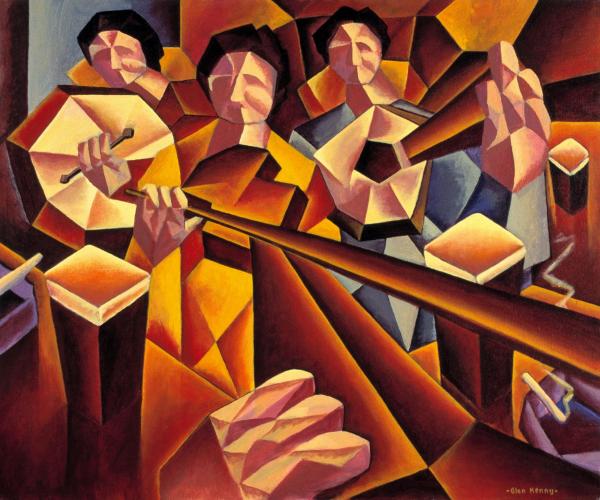
There’s no fool like an old fool, they say, so what happens when a bunch of oul’ coots gather together to make music? The next batch of posts may enlighten you as to the question just posed and may also, perhaps, enrage or entertain. Anything’s better than a yawn, I guess. And everything that is not that bloody virus is a plus. At the moment we can’t meet as a group, as we are in lockdown, so I have set out a version of songs that are in our repertoire but which have not yet been recorded. With any luck (and, as three of us are north of 70, we’ll need it!) we will be able to resume our normal practice of meeting weekly and playing tunes, singing songs and generally enjoying the crack.
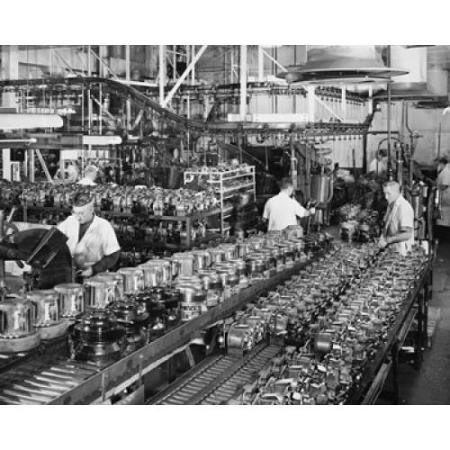
This song was written in the 1950s by Ewan McColl about the truckies who plied their trade throughout Britain before the advent of the motorways when roads were treacherous and rigs were prone to breakdowns. To wrangle the gears on these old beasts you needed finesse and strength. This particular version of the song I dedicate to the memory of John Reddington, married to my wife’s sister, who gave me, from time to time, employment on his lorry, when I was a teen, as he travelled around the place with a variety of loads. One of his son’s, named John also, kept up the family tradition by trucking around Ireland, Britain and Europe (or he used to).
Ewan McColl used the music of the Irish song, The Limerick Rake, for his account of the truck drivers of England in the decade after the end of the second world war.
There’s no fool like an old fool, they say, so what happens when a bunch of oul’ coots gather together to make music? The next batch of posts may enlighten you as to the question just posed and may also, perhaps, enrage or entertain. Anything’s better than a yawn, I guess. And everything that is not that bloody virus is a plus. At the moment we can’t meet as a group, as we are in lockdown, so I have set out a version of songs that are in our repertoire but which have not yet been recorded. With any luck (and, as three of us are north of 70, we’ll need it!) we will be able to resume our normal practice of meeting weekly and playing tunes, singing songs and generally enjoying the crack.
“Down by the Glenside (The Bold Fenian Men)” is an Irish rebel song written by Peadar Kearney, an Irish Republican and composer of numerous rebel songs, including “The Soldier’s Song” (“Amhrán na bhFiann“), now the Irish National Anthem and “The Tri-coloured Ribbon”.
Kearney was a member of the Irish Republican Brotherhood, popularly known as the Fenians. He wrote the song about the time of the 1916 Rising. It evokes the memory of the freedom-fighters of the previous generation (strong, manly forms…eyes with hope gleaming), as recalled by an old woman down by the glenside. It is effectively a call to arms for a generation of Irishmen accustomed to political nationalism.
Three verses to this song were sung by Ken Curtis and The Sons of the Pioneers in the 1950 John Ford movie Rio Grande.
The song became popular again in the 1960s, when it was recorded by The Clancy Brothers. It has since been recorded by numerous artists, including The Dubliners, Cherish The Ladies, Omnia, Screaming Orphans, Jim McCann, Harry O’Donoghue, and The Wolfe Tones.
The song is also sung in the first episode of the BBC series Days of Hope, written by Jim Allen and directed by Ken Loach. An Irish barmaid is forced to sing after being sexually harassed by British soldiers and impresses them with her song.
The info here above courtesy of Wikipedia which I often access and donate to.
I have long admired the song, even though I omit the third, original verse which details the old woman’s thrill at seeing a previous generation of bold fenian men drilling when she was young.
Another member of the group usually sings this in our practices, but, as he is not here…
There’s no fool like an old fool, they say, so what happens when a bunch of oul’ coots gather together to make music? The next batch of posts may enlighten you as to the question just posed and may also, perhaps, enrage or entertain. Anything’s better than a yawn, I guess. And everything that is not that bloody virus is a plus. At the moment we can’t meet as a group, as we are in lockdown, so I have set out a version of songs that are in our repertoire but which have not yet been recorded. With any luck (and, as three of us are north of 70, we’ll need it!) we will be able to resume our normal practice of meeting weekly and playing tunes, singing songs and generally enjoying the crack.
(Notes for VLQB taken from Wikipedia, a marvellous resource I urge everyone to support.)
Viva la Quinta Brigada (listed as Viva la Quince Brigada in later recordings) is a Christy Moore song about the Irishmen who fought in the Spanish Civil War against Franco. The title was inspired by a Spanish song about the war,Viva la Quince Brigada.
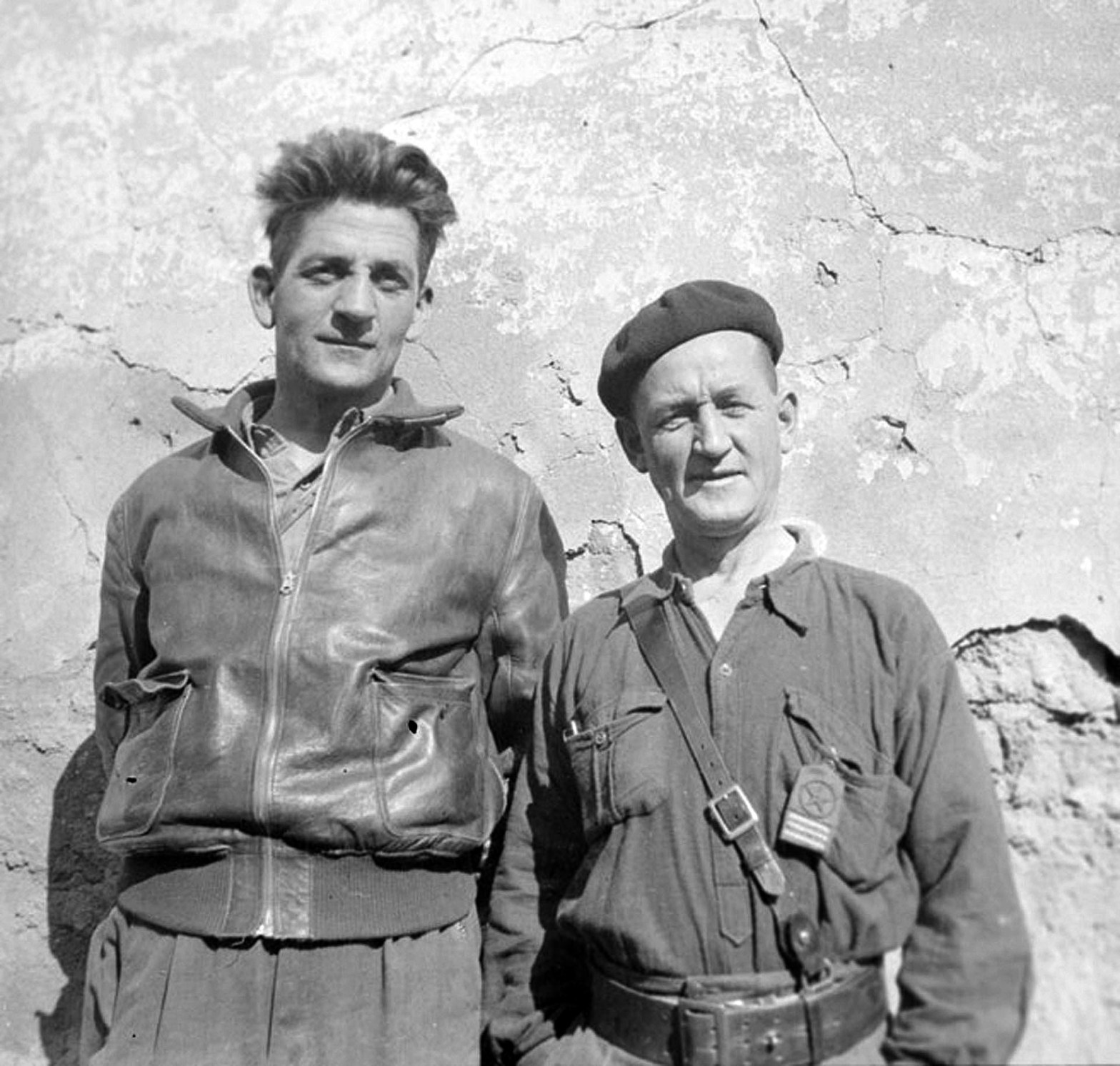
Moore wrote this song choosing to focus on the Irish socialist volunteers (who in later years became known as the Connolly Column) who were a small contingent within the 15th International Brigade. The tune which he used was substantially similar to the version of Viva la Quince Brigada recorded by Pete Seeger and the Almanac Singers in the early 1940s.
The song was inspired by Spanish Civil War veteran Michael O’Riordan’s book Connolly Column.
Moore said: Without Michael O’Riordan I’d never have been able to write Viva la Quince Brigada. I must have performed the song over a thousand times and every single time I sing it I think of Mick and wonder how can I ever thank him enough. In Spain in 1983 I was reading his book, Connolly Column – the story of the Irishmen who fought for the Spanish Republic, and I began this song as I read on. The song was lifted entirely from his book.
Moore’s original song title – which translates as “Long live the Fifth Brigade” – was a slip due to the similarity in Spanish between “quinta” (fifth) and “quince” (fifteen). The bulk of Irish volunteers served with the XV (Fifteen) International Brigade; the “Fifth Brigade” was not one of the International Brigades. The song later appeared listed as Viva la Quince Brigada as Moore corrected the mistake in subsequent recordings. Both titles are correct however, originally there were ten brigades in the Spanish army, the five international brigades were then added to the list making the 5th International Brigade the 15th Brigade of the Spanish republic.
Robert Martin Hilliard (7 April 1904 – 22 February 1937) was an Olympic boxer, Irish republican, Church of Ireland minister and, later, communist. He was killed in the Spanish Civil War fighting in the International Brigades.
Name-checked were men from all parts of Ireland, Catholic, Protestant and of no faith, including Bob Hilliard who ended his life as an atheist. In later versions of the song, Christy amended locales of a couple of the people name-checked but I have stuck to the version I learned a quarter of a century ago.
There’s no fool like an old fool, they say, so what happens when a bunch of oul’ coots gather together to make music? The next batch of posts may enlighten you as to the question just posed and may also, perhaps, enrage or entertain. Anything’s better than a yawn, I guess. And everything that is not that bloody virus is a plus. At the moment we can’t meet as a group, as we are in lockdown, so I have set out a version of songs that are in our repertoire but which have not yet been recorded. With any luck (and, as three of us are north of 70, we’ll need it!) we will be able to resume our normal practice of meeting weekly and playing tunes, singing songs and generally enjoying the crack.
The Patriot Game was written by Dominic Behan to the tune of an Irish traditional song, The Merry Month of May . Its narrator is Fergal O’Hanlon, who was a member of an IRA team who attacked the RUC barracks at Brookeborough, Co. Fermanagh on New Year’s Day, 1957. He, along with Sean South from Limerick, was killed; also killed in the attack was a young Catholic constable, John Scalley. I sang the song many years ago at a pub in western Sydney and a couple of blokes there objected to the “IRA song”. Yet, I view the song as an example of the tragic deaths fuelled by love of country, particularly of young men. Interestingly, Christy Moore notes that the song is often requested at his gigs by British soldiers. Dominic Behan once, in a phone conversation, furiously berated Bob Dylan who had used the song as a template for his composition, With God On Our Side”. Dylan suggested that their lawyers should meet to discuss the situation. Behan retorted that he only had two lawyers, and they were at the end of his wrists. The version I sing retains the slighting reference to the first Irish President, Eamon de Valera, but omits the verse that justifies the killing of police officers. Yes, it is a controversial song, but, IMHO, worth singing, nevertheless.
In my first journal entry for the sequence The Summa Quotidian in 2015, I mentioned the fact that it had been fifty years since I had written my first song. For thisconcluding entry to the sequence, A Bit of Banter, I wish to record the fact that the song included here took me fifty years to complete. I wrote the first part as a 17-year-old, pimply, schoolboy on the inside cover of a Clancy Brothers songbook that I had been working my way through. I added to it over the years, putting a final touch to it
three years ago, when I was 67. A couple of other examples from the 120 songs in The Summa Quotidian, also underwent a similarly, leisurely (some might aver, slothfully) compositional process. By comparison, the 56 songs recorded over a period of three months during the pandemic achieved warp-speed!
Two days ago, before dawn on Anzac day, April 25th, I stood in my driveway and listened to the broadcast from the Australian War Memorial. I set a candle on my letterbox and, glancing up and down the street saw men and women, at the end of their driveways, paying silent tribute to the fallen. A 70-something veteran with a chest full of medals walked past and we nodded a greeting. After the ceremony, I returned to my home where we are in lockdown and thought, this was good, nothing like it before or, perhaps, after. The tens of thousands of Australians who shared in this experience will remember it for the rest of their lives- long or short.
Some Millennial commentators have welcomed the advent of SARS-CoV-2 as an efficient Boomer Remover. Unfortunately for them, it does not so finely discriminate. While those of retirement age are more heavily afflicted, the virus does strike down many of those in their demographic as well. Careful what you wish for, eh?
Have you noticed that the crisis engendered by the pandemic has brought people of real worth to the fore? Not the vain-glorious bloviating buffoons who, hitherto, pranced across the (inter)national stage. I’m thinking about media-hungry politicians and the gross (and grossly overpaid) shock jocks. But now, quietly spoken experts in epidemiology, nurses, doctors, check-out operators and shelf-stackers in supermarkets, paramedics, truck drivers and public transport employees-to name but a few- have engaged the respect of the public by their willingness to step forward in these strange time and do their duty, fully mindful of the potential consequences for themselves and their families. Meanwhile, the self-absorbed, pollies and celebs flout the regulations as if they don’t apply.
I’m now north of seventy years old with a handful of co-morbidities. My wife’s sister-in-law has died from coronavirus (on April 6, 2020, in Northern Ireland) and will be buried next to her mother in a small country graveyard in Rasharkin, County Antrim. She is the first person in our family circle to have been taken from us by the pandemic (May she rest in peace). Because her husband had pre-arranged their funeral-and-burial details some years previously, there have been no problems with the internment. Hitherto, some had felt that he was just too…what? Fastidious? Careful? Over-scrupulous?
What about, perspicacious! How many of us will follow her to a grave that will not be marked by the usual obsequies because of the overwhelming wave of deaths that will accompany the savagery of SARS-CoV-2 as it sweeps across the world as we know it. When I viewed the mass graves in New York City on April 10, it was with horror I asked, Are we living in the 21st Century? And then I reflected, this has been happening in all too many countries, without respite, for every year of this century (and the one before) while most of us were looking away, or at fatuous reality shows on TV…
I do not know if I will survive this event. I may hope. I certainly will pray. I intend to persevere and endure.
There’s no fool like an old fool, they say, so what happens when a bunch of oul’ coots (+ one middle aged son) gather together to make music? The next series of posts may enlighten you as to the question just posed and may also, perhaps, enrage or entertain. These songs were the result of a few sessions around a table laden with alcoholic beverages of various kinds. Plonked in the centre of the table is, now, an iPad with connected mic that has somehow survived the knocks and spillages that are part and parcel of the sessions. So here we are, up and running again…
Song 64: This Cold Bed– This is a demo I recorded a while back. We have played the song in rehearsal but have yet to record it or perform it in our present incarnation of Banter. I wrote the words about 20 years ago but my wife told me the tune I had crafted was not a fit for the genre. Can you do better, riposted the wounded artiste? Yes. And she took the lyrics and hummed the tune that is used here, off the top of her head! Collaboration is a wonderful thing. The inspiration for the song was the hunger strike of 1981 which saw ten republican prisoners starve to death, most notably, Bobby Sands, who had been elected to the British Parliament on 9 April. The strikes were a turning point for Sinn Fein which supplanted the various nationalist groupings to become the major political force in the politics of Northern Ireland. I originally, and somewhat pretentiously, gave the song the title, The Dying Revolutionary, as I did not intend it as, solely, a loosely-based biographical item about Bobby Sands. I wanted to examine what forces could persuade an artistic individual to move from art to violence as I know the events of that summer in 1981 almost prised me from a life-long belief in liberal democracy and non-violence. Still, that awful working title stuck in my craw so I substituted what is now the better option. Sometimes it takes a while to work these things through…
There’s no fool like an old fool, they say, so what happens when a bunch of oul’ coots (+ one middle aged son) gather together to make music? The next series of posts may enlighten you as to the question just posed and may also, perhaps, enrage or entertain. These songs were the result of a few sessions around a table laden with alcoholic beverages of various kinds. Plonked in the centre of the table is, now, an iPad with connected mic that has somehow survived the knocks and spillages that are part and parcel of the sessions. So here we are, up and running again…
Song 63: The Sea Around Us– Although he died almost 30 year ago, the songs of Dominic Behan continue to be played around the world, especially by Irish bands and performers. Notable songs include, The Patriot Game (which he claimed, with much justification, was plaigarised by Bob Dylan for God On Our Side.), McAlpine’s Fusiliers, of which you’ll find a version elsewhere on the site, and Come Out Ye Black and Tans. He was a committed socialist and republican and he had a wide network of friends and collaborators in the media politics and arts. The verse below, from this song, demonstrates his acerbity and humour: Two foreign old monarchs in battle did join/Each wanting his head on the back of a coin;/If the Irish had sense they’d drowned both in the Boyne/And partition thrown into the ocean. One summer in the mid-sixties, my brother and I hitch-hiked to Bundoran, a holiday town on the Atlantic coast of Donegal. We stopped into a church hall to hear Dominic Behan perform: still a happy memory.
There’s no fool like an old fool, they say, so what happens when a bunch of oul’ coots (+ one middle aged son) gather together to make music? The next series of posts may enlighten you as to the question just posed and may also, perhaps, enrage or entertain. These songs were the result of a few sessions around a table laden with alcoholic beverages of various kinds. Plonked in the centre of the table is, now, an iPad with connected mic that has somehow survived the knocks and spillages that are part and parcel of the sessions. So here we are, up and running again…
Song 62: I’m Not a Merry Ploughboy– In some ways, this song is a companion piece to Paddy Went Home Today. It was written around the same time (1995ish) and features a working man in Sydney. This character, however, springs not from an anecdote or acquaintance but rather is a product of pure (or should that be, fevered, imagination). In SoundCloud, where I also have a site, it is quite popular. It was given an outing or two at the Henry Lawson Club where the band used to play regularly in the mid-1990s. Now, it is being re-introduced for a new audience at the Penrith Gaels in outer-western Sydney. And, when we get round to recording our usual folk ensemble version, featuring guitar, mandolin, fiddle and bodhran, I’ll update it here. Until such time, here is a Band-in-a-Box rendition from when I was reduced to playing with myself (so sad).
There’s no fool like an old fool, they say, so what happens when a bunch of oul’ coots (+ one middle aged son) gather together to make music? The next series of posts may enlighten you as to the question just posed and may also, perhaps, enrage or entertain. These songs were the result of a few sessions around a table laden with alcoholic beverages of various kinds. Plonked in the centre of the table is, now, an iPad with connected mic that has somehow survived the knocks and spillages that are part and parcel of the sessions. So here we are, up and running again…
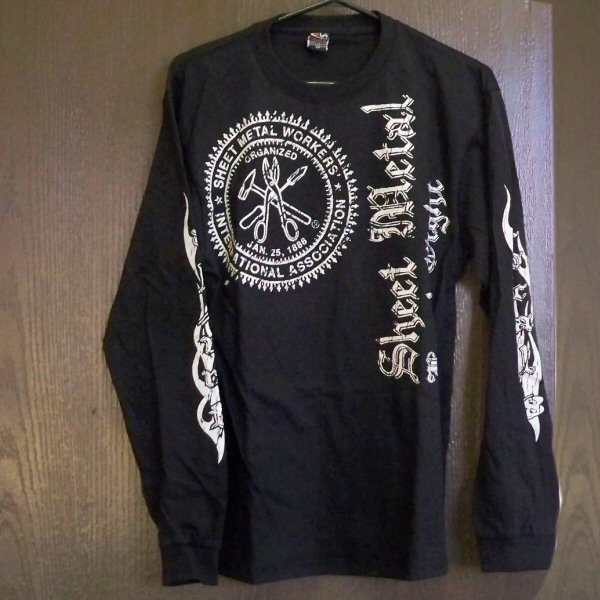
Song 61: Paddy Went Home Today– I wrote this in the mid-1990s. It was inspired by an anecdote by one of the group during a refreshment break (our rehearsals often feature such breaks, which we deem necessary- for our mental and emotional well-being, of course). We were chatting about “characters” we had encountered in our working lives. One of these characters was a sheet metal worker encountered in the mid-1970s in inner-Sydney. This guy would slope off to the pub at morning smoko for a “cure”. Often enough he would be missing in action when the foreman looked for him later. We have revived the song for our current repertoire as hosts of the folk club at The Penrith Gaels in outer-western Sydney. This version is a Band-in-a-Box demo I recorded a couple of years back. I’ll update this with the current, acoustic version featuring guitar, mandolin, fiddle and bodhran in the not-too-distant-future.
There’s no fool like an old fool, they say, so what happens when a bunch of oul’ coots (+ one middle aged son) gather together to make music? The next series of posts may enlighten you as to the question just posed and may also, perhaps, enrage or entertain. These songs were the result of a few sessions around a table laden with alcoholic beverages of various kinds. Plonked in the centre of the table is, now, an iPad with connected mic that has somehow survived the knocks and spillages that are part and parcel of the sessions. So here we are, up and running again…
Song 60: Ballyhootry– I wrote this back in the mid-1990s. I must have fallen out on the wrong side of the bed that day because I created a town called Ballyhootry in the County Anywhere. I let fly at the ersatz Irish or Oirishry so beloved by Hollywood B-movies and songs. You know, where leprechauns frolic at the ends of rainbows and the beer is dyed green and quaintness rules the day to the deedle-lee-dee tootling of a tin whistle. Also a target is the rampant commercialism where Mammon trumps Tradition every time. (the use of the previous verb is not coincidental, by the way). FYI, I still love Ireland, her blemishes notwithstanding, but I live in Australia now and consider it home- for all its imperfections. The song here is not backed by Banter but Band-in-a-Box because we have not yet recorded any version of the song, even though we’ve play it enough in the past. I’ll update, when or if we ever get round to it. In the meantime, enjoy a more rocky rendition than is heard in our acoustic oeuvre.


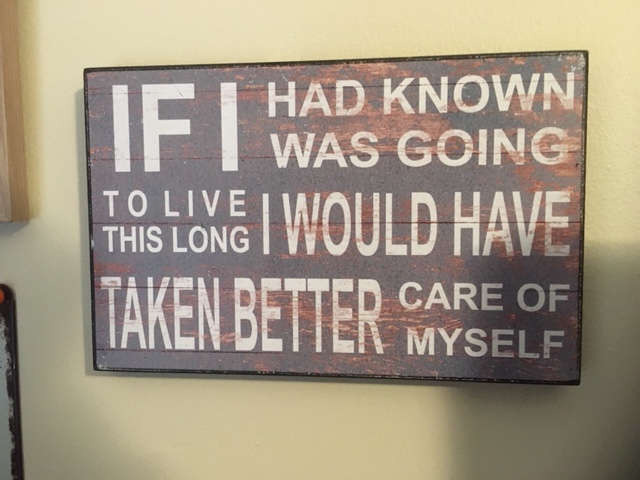

 glancing up and down the street saw men and women, at the end of their driveways, paying silent tribute to the fallen. A 70-something veteran with a chest full of medals walked past and we nodded a greeting. After the ceremony, I returned to my home where we are in lockdown and thought, this was good, nothing like it before or, perhaps, after. The tens of thousands of Australians who shared in this experience will remember it for the rest of their lives- long or short.
  Boomer Remover. Unfortunately for them, it does not so finely discriminate. While those of retirement age are more heavily afflicted, the virus does strike down many of those in their demographic as well. Careful what you wish for, eh?
 She is the first person in our family circle to have been taken from us by the pandemic (May she rest in peace). Because her husband had pre-arranged their funeral-and-burial details some years previously, there have been no problems with the internment. Hitherto, some had felt that he was just too…what? Fastidious? Careful? Over-scrupulous?
 know it.