

Entry 47: Waiting for the Drought to Break- Writers, any writer, is a god. You summon something out of nothing- even if it’s dire, ordinary, inconsequential. Is this how the Creator felt in that unknowable state before time and space existed at the instant of creation? ‘cause, let’s admit it- we are not a particularly good product, are we?
I know, staring at the screen now, that the prior 61 words will not prompt Shakespeare to spin in his grave over there in Stratford. But still, we are gods, aren’t we? Conjuring something out of nothing remains a deep mystery to me. Enticing others to engage with the effluvia seems like a confidence trick, at times. Yet we go on, don’t we?
Whenever I visit my local library, I am struck by the huge number of books that I will never read. I don’t care too much about the stuff that I have no inclination to read, but I am haunted by the fear that I may pass by the one volume on the shelf that holds the key to my salvation- be it spiritually or secularly defined. The paralysis of too much choice: it has been defined and studied. So, how do we break this stasis?
I like to resort to absurdity. I imagine an intergalactic auction where Lot 354 is an audio recording of the last fart emitted by the last survivor of the human race. It is passed in for lack of interest in one iteration of the fantasy; in another, it sparks a bidding frenzy where whole star systems are put up as collateral. See what I mean about being god-like? Why read when you can write- yeah! In my case, why half-read when you can half-write. I have a shelf full of books that I have yet to finish reading as well as a drawer full of writing projects that are suspended: just waiting for the drought to break.
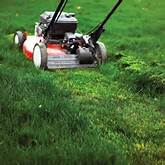
Another example of absurdity happens in spring and summer. I trundle the mower from the shed and check the oil, clean the air-filter, replenish the petrol and stoop down, bracing for the inevitable. I grasp the starter cord and, having ensured the choke is on and the fuel tap open, I briskly pull the cord out. Nothing happens. Sometimes my shoulder and arm are aching, repetitive strain having taken its toll, and I am on the verge of tears of rage and frustration. Yet, at some point, even if it’s the next day or the day after, the mower roars to life and I stride out muttering your ass is grass to the expanse of weeds, dandelions and struggling fragments of lawn that masquerade as my suburban back-yard.
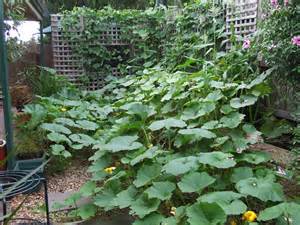
This is analogous to the difficulties of fashioning this entry: which you may have guessed from the mention of God at the beginning and the subsequent references to mystery and astronomy. But the motor is running, the blades are spinning and the unruly growth hiding the fecund earth is being tucked into the catcher in readiness for transfer to the organics bin which will be proudly wheeled to the kerb on collection day, confirming me as a successful suburban citizen. I feel, at times, like the man in Bruce Dawe’s poem, Homo Suburbiensis,
…hearing vaguely the clatter of a disk/in a sink that could be his, hearing a dog, a kid,/a far whisper of traffic, and offering up instead/Not much but as much as any man can offer/- time, pain, love, hate, age, war, death, laughter, fever.

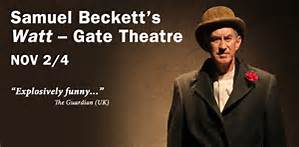
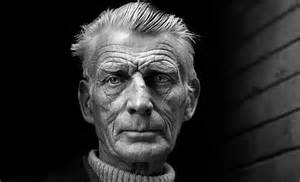
Almost like Beckett, who is another writer I look to for a commentary on existence. I first came across him as a student in 1969, having borrowed his 1938 novel, Murphy from the Belfast City library. It was a matter of you had me at hello. Its opening line marked the start of a journey through his output that is not yet over. The line? The sun shone, having no alternative, on the nothing new. Try this out for size, But he had turned, little by little, a disturbance into words, he had made a pillow of old words, for his head, from the novel Watt, written in Roussillon, southern France, where Beckett, a member of the French Resistance, had gone to evade the ministrations of the Gestapo.
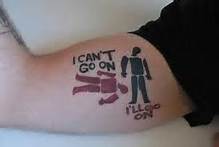
In the short prose work, The End, an old man, yet another in a line of tramps and down-and-outs that inhabit Beckett’s world in droves remarks, I tried to groan, Help! Help! But the tone that came out was that of polite conversation. The bleak novel, The Unnameable, ends with a phrase that has provided sustenance for decades, you must go on, I can’t go on, I’ll go on.
There is no room in this entry to even scratch the surface of this artist’s dramatic output- in any case, you need to see plays like Waiting for Godot, Krapp’s Last Tape or Happy Days to get the full meaning. This is true of any play but, for Beckett, the minutiae of set, costume and stage direction were integral parts of the drama rather than mere background or dressing.

I’ll leave you with a quote from 1983’s Worstward Ho, which I think I’ve seen as a tattoo on one of the many ink shows on TV, Ever tried. Ever failed. No matter. Try again. Fail again. Fail better. Fail better!
<div style=”font-size: 10px; color: #cccccc;line-break: anywhere;word-break: normal;overflow: hidden;white-space: nowrap;text-overflow: ellipsis; font-family: Interstate,Lucida Grande,Lucida Sans Unicode,Lucida Sans,Garuda,Verdana,Tahoma,sans-serif;font-weight: 100;”><a href=”https://soundcloud.com/user-57392937″ title=”Quentin Bega” target=”_blank” style=”color: #cccccc; text-decoration: none;”>Quentin Bega</a> · <a href=”https://soundcloud.com/user-57392937/waiting-for-the-drought-to-breaktrio” title=”Waiting For The Drought To Break(trio)” target=”_blank” style=”color: #cccccc; text-decoration: none;”>Waiting For The Drought To Break(trio)</a></div>

 preferably. A fringe-dweller forever, I have been in little danger of tripping over any of the living legends that I have revered over the years, some of whom have been memorialised in these entries. Samuel Beckett, himself, of course, a legend to many and a genuine hero in that he put his life on the line for the French Resistance during the Second World War, came a cropper when he met with one of his heroes in Dublin.
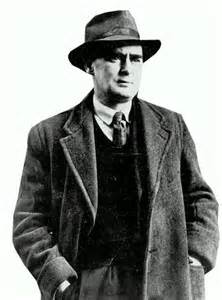 I read somewhere that he was not too impressed upon meeting with that chameleon, Flann O’Brien, a.k.a. Myles Na gColapeen a.k.a Brian O’Nolan who has given the world such masterpieces in fiction as At Swim-Two Birds and The Third Policeman. Writing as Myles Na gColapeen, he wrote a column in The Irish Times entitled Cruiskeen Lawn from 1940 until his death in 1966 in which he regularly bit the hand that fed him, excoriating the Irish managerial class.
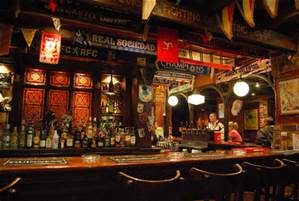 into myriad pubs in cities, towns, villages and hamlets across the length and breadth of the Emerald Isle. He may not have become an alcoholic and consequently have been liberated to write many more masterpieces.
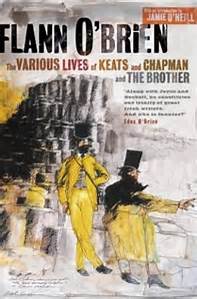 This is taken from The Spectator of 12 October 1990, but you can easily find current iterations of the game online- Flann O’Brien invented this game, which features the two characters above- mentioned. The idea is to involve them both in a long-drawn-out, po-faced but unlikely story, which is finally crowned (or sunk) by an excruciating pun on the part of Keats. Here is a very short example: “The poet and Chapman once visited a circus. Chapman was very impressed by an act in which lions were used. A trainer entered a cage in which were two ferocious-looking specimens, sat down unconcernedly, took out a paper, and began to read. `He’s reading between the lions,’ Keats said.”
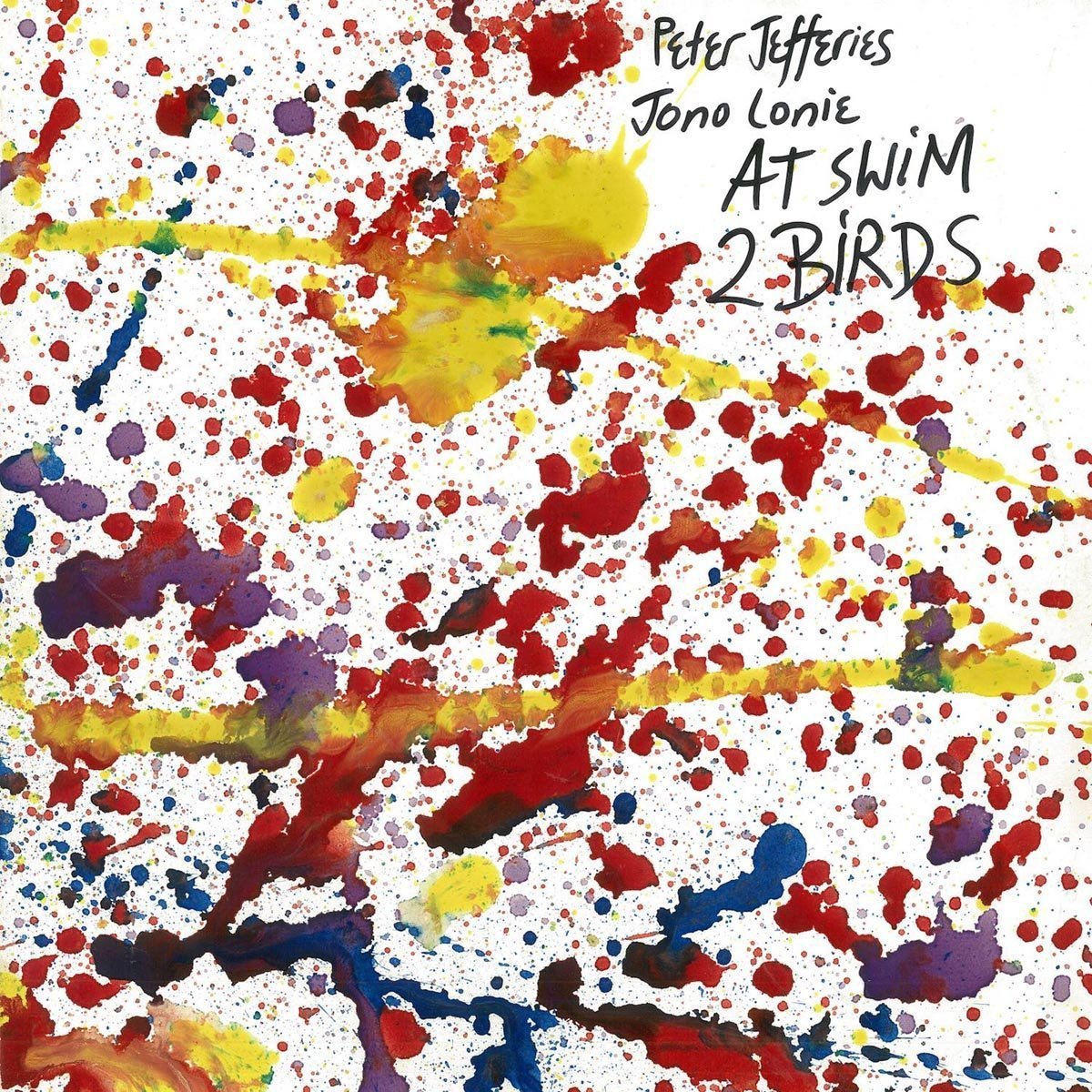 Birds, published in 1939 when the author was 28, to appreciate his astonishing demolition of the conventional novel form. Why have one opening when you can have three? Where characters can conspire among themselves to drug their fictional creator in order to avoid the melodrama of his plots and have a normal existence? Where separate plot-lines can merge and tangle? Where natural and supernatural characters coexist and where language, exuberant and playful, dances on the page.
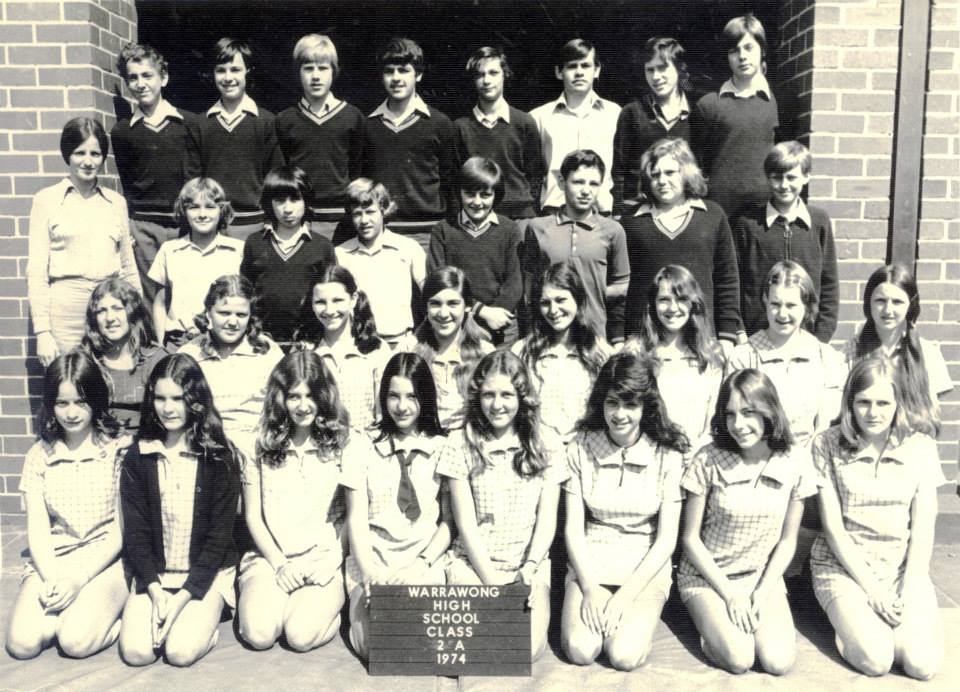 High School in the 1970s. I loved this stuff and I wanted my students to know the liberation that language could make possible and I still hope that some of those I taught will get in touch to tell me that either, I was just a windbag, or someone who gave them the means of escape.
 his death. The Third Policeman, in my opinion, is among the most profound novels in modern literature. I know that I have felt like the protagonist of the novel: what am I doing? How did I come to be here? What are they saying to me? When will I understand what is going on?