



Welcome to Letters From Quotidia, episode 192 – a podcast by Quentin Bega for lovers of music, poetry, and the Crack- that most Irish of nouns which may encompass, news, gossip, fun, entertainment, and enjoyable conversation. Quotidia is that space, that place, where ordinary people lead ordinary lives. But where, from time to time, they encounter the extraordinary.
Metaphors abound in this Letter: primarily the wind and the road but also clocks and calendars. First though, an apology wrapped up in a cliche. First the cliché: better late than never. Since the beginning of the year past until now ( a time metaphor may be looming large, listeners!) I have been the soul of punctuality. First, on a daily basis, then weekly, I have delivered a podcast on time, every time. But not this time.
Might I blame it on the floods- which have been of Biblical proportions here in New South Wales? Or perhaps a delayed reaction to the raging bush fires of 2019/20? Maybe the pestilence which is presently working its way through the Greek alphabet? No! My truly, deeply, dithery, procrastinatory nature sluggishly surfaced and soporifically sprawled across my good intentions of reaching 200-letters-published without a stutter. To fall at hurdle 192 out of 200, though, ain’t bad-wouldn’t you agree?
So let me say sorry to my good intentions as they transmogrify into those paving stones leading downwards to Hades. And sorry also to the odd listener to these Letters who may be jonesing for their weekly quotidian fix. After that windy preface, let me unpack the metaphor that informs the first part of this post.
If Life is like a candle bright/Then death must be the wind, are the lines which open the country song, Too Old To Die Young, written by Moe Bandy in the 1980s and referenced in an earlier Letter From Quotidia. I first heard this song at a music festival in Katoomba almost 20 years ago, sung by Kevin Welch. My first poetic memory of the power of wind was when I was in 6th form in 1968. Our English teacher read us Wind: by Ted Hughes, where wind wielded/ Blade-light, luminous black and emerald,/ Flexing like the lens of a mad eye. And, as the inhabitants of the West Yorkshire cottage sheltered indoors from the ferocity of the winter’s gale, we grip/ Our hearts and cannot entertain book, thought,/ Or each other.
But it wasn’t until I moved to Ayr in North Queensland to take up the position as head of English, that I fully understood the tremendous force that moving air can impart when the town was stomped on by Cyclone Aivu on 4th April 1989. A friend from Northern Ireland, Mark Dougherty, who was building a career as a music producer, arrived in town on that day and we huddled safely inside a concrete bungalow and provided shelter for the family next door whose more flimsy wooden structure was coming apart- they raced across when the eye of the storm passed overhead, and we all rode out the event without further incident.
The wind is associated, too, with Pentecost where tongues of fire descend upon the apostles to the sound of a rushing wind. And, by the way, the Catholic Church celebrates this event as its official birthday! But wind and fire are not always so beatific- during the most recent bushfires in South-eastern Australia they combined to form huge pyrocumulonimbus storms which generate their own weather systems that can deliver pollutants into the stratosphere while creating lightning strikes spawning spot fires many kilometres distant from their source.
The final verse of the song, Too Old To Die Young goes-If I could have one wish today/And I know it would be done/I’d say everyone could stay/’Til they’re too old to die young Alas, this wish- which I fervently endorse- will not obtain for increasing numbers of innocent civilian casualties in the ongoing brutal attack upon Ukraine by the Russian dictator. Here is my version of the song: [insert song]
Time now to unpack the road metaphor which informs the rest of this podcast. But before I do so, another admission- I haven’t been able to deliver a fully formed original song for this post. My muse, as distinct from my nature, was not so much soporific in the past week as frenetic, churning out three instrumental versions of songs with snippets of melody and text streaming from each. But unless accompanied by coherent lyrics and a complete melody, they are just a bunch of chord progressions of limited interest to anyone- yours truly included.
But back to the road: no need to painstakingly uncover the musculature beneath the skin of this metaphor- everyone and their aunt are well acquainted with the ubiquitous nature of this whiskery old part of speech. Walt Whitman: What do you say? Afoot and light-hearted I take to the open road,/Healthy, free, the world before me,/The long brown path before me leading wherever I choose. The open road has been a clarion call to generations of seekers after whatever will o’ the wisp they choose to call their goal.
Cormac McCarthy’s 2006 novel, The Road, which seems more a prophecy nowadays than a dystopian fantasy, depicts a post-apocalyptic world covered in ash and populated by survivors desperate for some respite among the detritus of civilisation. It is too close to the bone for detailed contemplation, and I choose to travel a different road in the remainder of this post. No, it won’t be The Road Not Taken though if you want to tread one or other of the bifurcated lanes of the poem, be my guest, but I’d rather journey with G. K. Chesterton on a jollier thoroughfare: Before the Roman came to Rye or out to Severn strode,/The rolling English drunkard made the rolling English road./A reeling road, a rolling road, that rambles round the shire,/And after him the parson ran, the sexton and the squire;/A merry road, a mazy road, and such as we did tread/The night we went to Birmingham by way of Beachy Head …/
Now, I’ve never been to Birmingham by way of Beachy Head, but I have been on many roads as puzzlingly circuitous in my boozy time. Another road can be found in J. R. R. Tolkien’s great Lord of the Rings trilogy which I first read and was enthralled by in my late-teens, The Road goes ever on and on/Out from the door where it began./Now far ahead the Road has gone./Let others follow, if they can!/Let them a journey new begin./But I at last with weary feet/Will turn towards the lighted inn,/My evening-rest and sleep to meet.
In Australia, The Open Road, is the journal of the NRMA, the motoring organisation of New South Wales. It supplies maps and apps and many helpful booklets to those embarking on a road trip- a concept that came into its own here and in America after the Second World War. Jack Kerouac’s On the Road became a secular bible for the Beatniks who were superseded by their successors, the Deadheads, and their heavenly band of muses, The Grateful Dead who toured coast to coast, border to border from 1968 until 1995 and the untimely death of Gerry Garcia, singer and lead guitarist.
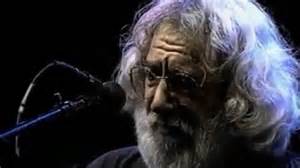
His last gig was at Soldier Field in Chicago on 9th July. One of the songs he sang was, So Many Roads, written with Robert Hunter, his long-time collaborator. It’s Hunter writing from my point of view, you know what I mean? Garcia said of So Many Roads in a 1992 interview. Only a long-term and intimate relationship with a guy as brilliant as Hunter coughs up that kind of result. The video of the concert shows a man who looks decades older than his 53 years. The toll he had to pay for all the roads he travelled along for all those storied years were etched in his face and reflected in his voice.
It was a magnificent final rendition of the song and I listened to it with awe and aching earlier today as I put together my version of So Many Roads, which I hope all Deadheads and all listeners to my Letters, enjoy. Have a listen to Letters From Quotidia, Episode 79 entitled Deadhead for more detail on my lasting regard for this group. [insert song]
So, many hours past my previously self-imposed deadline, I bid au revoir, and hope to re-connect with my listeners, on time, next week. No promises: therefore- no regrets. To conclude these road metaphors- remember Gandhi’s admonition: there is no path to peace: peace is the path.
Credits: All written text, song lyrics andmusic (including background music) written and composed by Quentin Bega unless otherwise specified in the credits section after individual posts. Illustrative excerpts from other texts identified clearly within each podcast. I donate to and use Wikipedia frequently as one of the saner sources of information on the web.
Technical Stuff: Microphone- Shure SM58; (for the podcast spoken content) Audio Technica AT 2020 front-facing with pop filter); Apogee 76K also used for songs and spoken text.
For recording and mixing down: 64-bit N-Track Studio 9 Extended used; Rubix 22 also used for mixing of microphone(s) and instruments. I use the Band in a Box/RealBand 2022 combo for music composition.
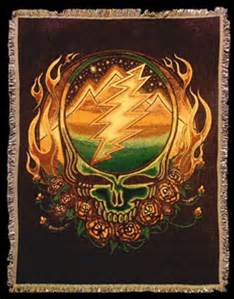
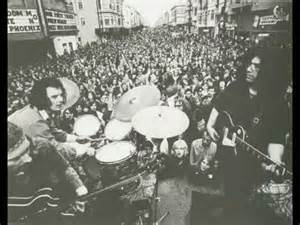 career of The Grateful Dead from the San Francisco event of March 3rd 1968, I remember getting off the bus on Haight Street that Spring day, pushing my way through the crowds to see what all the excitement was about (I didn’t know- did anyone? -that the Dead were parking a flatbed truck across Haight Street to play a free gig!)
 People ask me what my favourite show was, and I always say the next one. But this is actually one of my favourites. The mood before, during, and after the show seemed to be one of unity and healing…The masterpiece for me was “So Many Roads” I remember leaving the show on a high that lasted for days. It would have been nice to see where we could have taken that. In the end, though, how do you rate a miracle.
 inspired many lamentable bumper stickers, but one good one captured how it felt, and feels, to be under their sway: “Who are the Grateful Dead, and why do they keep following me?”
 produced some of the most memorable songs: I’ll mention a trio of greats: Scarlet Begonias, which is usually linked in concert to Fire on the Mountain and which fans usually refer to as Scarlet Fire. Begonias has the memorable lines It seldom turns out the way it does in the song, but my favourites are the final lines, Strangers stopping strangers/ Just to shake their hand, Everybody is playing/ In the Heart of Gold Band/The Heart of Gold Band.
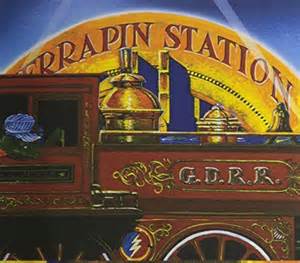 say it’s a sixteen-minute long, sprawling, rococo, musical- and here I’ll use a technical term- mess! The lyrics are derivative, obscure and somewhat pretentious, and yet…yet, I do not skip past it on a playlist and I will often seek it out as I search for sleep on many a night. Go figure.
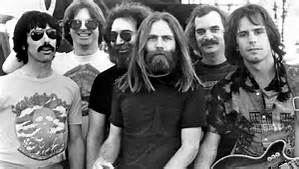 Constanten and Vince Welnick, keyboards. I must mention the other writer associated with the band, John Perry Barlow, who wrote memorable songs with Bob Weir such as Estimated Prophet and Throwing Stones.
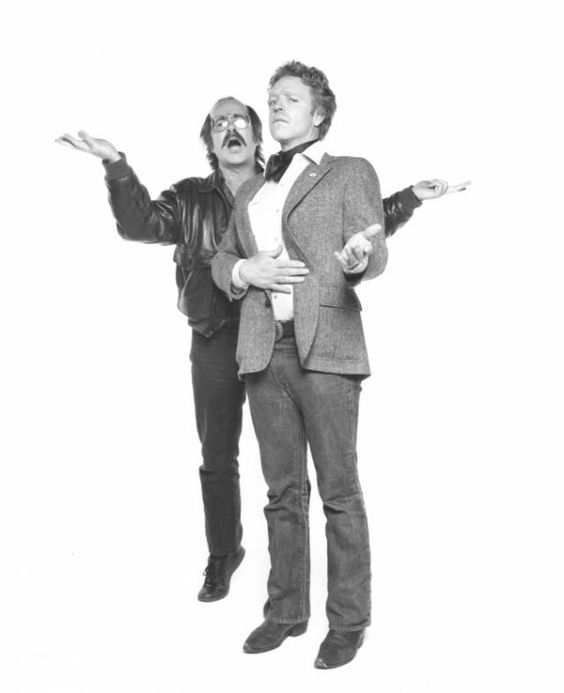 another you wouldn’t say to him. 3 Never assume the motives of others are, to them, less noble than yours are to you. 5 Don’t trouble yourself with matters you truly cannot change. 6 Expect no more of anyone than you can deliver yourself. 7 Tolerate ambiguity. 8 Laugh at yourself frequently. 9 Concern yourself with what is right rather than who is right. 10 Never forget that, no matter how certain, you might be wrong. 12 Remember that your life belongs to others as well. Don’t risk it frivolously. 13 Never lie to anyone for any reason. 14 Learn the needs of those around you and respect them. 15 Avoid the pursuit of happiness. Seek to define your mission and pursue that. 16 Reduce your use of the first personal pronoun. 17 Praise at least as often as you disparage. 18 Admit your errors freely and soon. 19 Become less suspicious of joy. 20 Understand humility. 21 Remember that love forgives everything. 22 Foster dignity. 23 Live memorably. 24 Love yourself.