


Welcome to Letters from Quotidia Hologram 8. Are you ready for the big reveal? The magician has thrown his cape over the box covered in mysterious symbols and, as a drumroll builds to a crescendo, he utters the words of power, triggering a flash of light and a puff of billowing smoke as he pulls away his cape revealing…wow…a scantily-clad glamorous female assistant who twirls in her sequinned costume as the audience (you, me) clap enthusiastically at the legerdemain.
This, pretty much, was how I first pictured the three wise men in their exotic robes and swaying camels as they approached the manger to honour the Child with gold, frankincense and myrrh. A far cry, mind you, from the vision of T.S. Eliot in his poem about the Event which I did not encounter until I was in my early twenties. A cold coming we had of it, / Just the worst time of the year / For a journey, and such a long journey: / The ways deep and the weather sharp. /The very dead of winter. And the camels galled, sore footed and refractory, / Lying down in the melting snow…/ the camel men cursing/ and grumbling and running away, / and wanting their liquor and women…//
How many of us have not yet experienced and are still awaiting our own personal epiphany? You know, that moment of insight where the whole axis of your world shifts and everything is bathed in a new and glorious light? If not, instead of this transcendental transformation is the traverse from birth to death a slow plodding along an increasingly tiresome path that you wish would come to an end? I suspect I would have been on the last-mentioned journey were it not for the fact that I have found adequate substitutes for the big, flash-bang, personal epiphany in family, of course, but also music, song, poetry, drama, art, and literature. And let us not forget the astonishing revelations of cosmology and the other sciences. I am buoyed up almost daily by these encounters, as well as the natural world around me. My engagement, in a small way, with the creative endeavours of writing and music also keeps the flickering light alive.
What sparked this particular post was my coming across a story, The Other Wise Man, by American author Henry Van Dyke (1852-1933). In his story, Artaban, sets off to join the three wise men but is late because he stops to help a sick man and thus misses the Epiphany. He spends the rest of his life trying, and failing, to meet Jesus, but along the way funds acts of compassion by selling off his gift of three precious jewels, finally dying in Jerusalem when a roof tile hits him on the head which had been loosened by the earthquake coinciding with the death of Jesus on the Cross.
“I do not know where this little story came from,” Van Dyke wrote, “out of the air, perhaps. One thing is certain; it is not written in any other book…yet I have never felt as if it were my own. It was a gift and it seemed to me as if I knew the Giver.” Henry Van Dyke was an author, diplomat, professor, and clergyman who wrote the well-known moving verse, Time is too slow for those who Wait/ Too swift for those who Fear/ Too long for those who Grieve/ Too short for those who Rejoice/ But for those who Love/ Time is Not.
I think Henry Van Dyke was another wise man, too. The poet Mary Oliver has this to say which touches tangentially from whence comes such gifts, The World I Live in have refused to live / locked in the orderly house of reasons and proofs. / The world I live in and believe in is wider than that. And anyway, what is wrong with Maybe? // You wouldn’t believe what once or twice I have seen. I’ll just / Tell you this: / only if there are angels in your head will you ever, possibly, see one. // Mary Oliver, like Robert Frost, has been one acquainted with the night, as revealed in her poem, The Uses of Sorrow, with the epigraph, (In my sleep I dreamed this poem) / Someone I loved once gave me / a box full of darkness. // It took me years to understand that this, too, was a gift. // Re-gifting to some is an ungrateful act but I don’t think this applies to sharing such stories as The Other Wise Man, and, if I may be so immodest, the song I wrote- and which I also regard as a gift- based on the Van Dyke story which I call, My Name is Artaban. It deals with the final moments of the other, wise man’s life. [insert song]
But we all know that fact is stranger than fiction: that what happens in the real world has often prompted Lady Fantasy to throw up her arms in disbelief. What if I told you that a twice married, twice divorced socialite of Beverly Hills with seven children decided on the basis of a dream at age 50 to leave all that luxury and everything else behind her and move into a Mexican prison cell to offer comfort and aid to prisoners in their overcrowded and unhygienic hell.
What was her dream? Wikipedia tells us, in 1969 she had a dream that she was a prisoner at Calvary and about to be executed, when Jesus Christ appeared to her and offered to take her place. She refused his offer, touched him on the cheek and told him that she would never leave him, no matter what happens to her…As an older divorced woman, [she] wasn’t accepted as a candidate by a religious order or congregation, so she founded an institute for those in her situation: the Eudist Servants of the Eleventh Hour. She named the order after St John Eudes, a 17th Century French priest who was dedicated to the marginalised, particularly women in dangerous situations.
Those of us past our half century can testify how increasingly invisible we become to the broader society, who, when noticed at all, are usually regarded as nuisances, obstacles and taking up valuable real estate- sometimes literally! And talking about real estate, Mother Antonia, (for this is the name taken by Mary Clarke, the Beverly Hills socialite), Mother Antonia related a story in her videoed final testament about a good woman who died and went to heaven. She was, however, disappointed with her accommodation, complaining that it was much inferior to that she had been accustomed to on earth, and furthermore, she could see much ritzier residences in her neighbourhood.
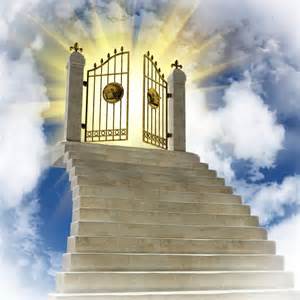
What gives, she demanded of a passing saint- perhaps one of heaven’s realtors? The saint patiently explained that the houses in heaven were built up brick by brick according to the good deeds carried out on earth by the resident: the more good deeds the more capacious the accommodation in the afterlife. I had a bit of a chuckle at this until, upon reflection, I wondered would I even qualify for a shack in a shanty town on the outskirts of paradise- should I be so lucky as to gain admittance at the Pearly Gates? This prompted me to write a song based on Mother Antonia’s anecdote. It’s called The Eleventh Hour, and I dedicate it to that small band of courageous women who have followed Mother Antonia into this work of aiding those in real need.
And once again I am reminded that unsung heroes such as these are everywhere- except of course within the frenetic media circuses that infest our communications channels where blowhards and bloviators bray and bellow, elbow and belly one another aside as they jostle to occupy the limelight at the top of the heap. Edgar Lee Masters, as listeners to previous Letters from Quotidia will know, is one of my favourite poets, who in his magnum opus, The Spoon River Anthology, laid bare the lives, the loves, passions and prejudices of his hometown of Lewiston, Illinois. He, also, has something to say about the eleventh hour- I quote from his poem E. C Culbertson written in 1915, For it is a law of the Kingdom of Heaven / That whoso enters the vineyard at the eleventh hour / Shall receive a full day’s pay. / And it is a law of the Kingdom of this World / That those who first oppose a good work / Seize it and make it their own, / When the cornerstone is laid, / And memorial tablets are erected. // Has anything really changed in the century or so since these words were written? [insert song]
And that’s the thing about the eleventh hour, few in number are those who, luckily or otherwise, are aware of when it will arrive in their own lives. But that it will arrive, sooner or later, is a surefire bet, or as Australian slang would have it, a lay down misère.
My Name is Artaban- an Epiphany Tale (words and lyrics Quentin Bega)
Am Em Am Em C G Dm-2 F C F C F C C G Dm G
Thank you for stopping just let me lie still but I fear friend that you are too late
The roof tile and my skull intersected just here but allow me to tell you my tale
My name is Artaban, I came from the East, I’ve travelled a long winding trail
Jerusalem is such a wonderful place so to die here is a wonderful fate
Thirty-three years I have searched high and low for the One I had wanted to gift
With three precious jewels but I was too late, for I stopped to assist a sick man
I missed my appointment with three of my kind, so they carried on with the plan
To honour the Saviour while I came too late I guess I was just cast adrift
I went first to Egypt to search for the Child but it’s a vast alien place
I sold my first jewel for camels traverse the desert like ships in the sand
Another was sold to save a young child from the chains of a slavery band
And so I travelled through lands far and near, imagining His shining face
The last of my gifts a pearl of great price I gave as a ransom to free
A woman in thrall to a vile bandit chief who would use her for his cruel sport
My wealth stripped away I took any trade I could master so I could support
The search which has lasted for much of my life finally found me in deep Galilee
And thence to this holy place where I heard a scandal that swirled through the street
It brought me at last to a hill outside town and three men crucified there
The bodies were lowered and one was taken away by women who care
Somehow I knew I was too late again, Someone I would now never meet
So thank you for listening all things must pass my long search as left me downcast
I don’t know the answer, but I am now weak and my sight it is fading away
But angels are singing, my race now is finished, and I now no longer need stay
Yes angels are singing, Someone is waiting, Someone I can now see at last
… Someone I can now see at last
The Eleventh Hour (words and music Quentin Bega)
Intro: D2 Bm G2 A Verse: D C G A D C G Em A- 6 Outro Em A D
May I stop you for a bit as you race along
Upon this giant hamster wheel which looks a lot of fun
Once I was in just your spot running to keep still
And then the eleventh hour passed and my time was done
On a vacant lot I found myself and looked about
Nothing but some scattered bricks as the wind kicked up the dust
Night was closing in and a chill was coming down
There wasn’t any shelter and I hadn’t even a crust
I saw an old guy walking past I called out to him, “Friend
Can you tell me where I am and where can I get some aid”?
He said, “Well this is your place now you earned it down below
And so you’ll have to lie inside in the only bed you made
You could have built a handsome home, built it brick by brick
By deeds of your compassion to the people that you met
Along the way as you were faced with choices right or wrong
So what you see around you is all the aid you get”
(Instrumental verse)
Across the way a choir of angels sang in voices sweet
As I hunkered down and wrapped my cloak about my freezing head
The voices lullabied me into a fitful sleep
I woke up in my own bed- realised I wasn’t dead
So if you’re up to listening to what I have to say
The message isn’t all that hard for you to understand
Don’t waste your time on trinkets or on empty vicious talk
Helping other people is the way to The Promised Land
Helping other people is the way to The Promised Land
Credits: All written text, song lyrics and music (including background music) written and composed by Quentin Bega unless otherwise specified in the credits section after individual posts. Illustrative excerpts from other texts identified clearly within each podcast. I donate to and use Wikipedia frequently as one of the saner sources of information on the web.
Technical Stuff: Microphone-songs Shure SM58; (for the podcast spoken content) Audio Technica AT 2020 front-facing with pop filter); Apogee 76K also used for songs and spoken text. For recording and mixing down: 64-bit N-Track Studio 10 Extended used; Rubix 22 also used for mixing of microphone(s) and instruments. I use the Band in a Box/RealBand 2023 combo for music composition.
Discover more from Quentin Bega's Blog
Subscribe to get the latest posts sent to your email.
