

Welcome to Radio Quotidia, episode 6, 15 minutes or so of music and musings. Quentin Bega here at the microphone. I’m broadcasting from our studio located somewhere in the depths of Quotidia inside a digital onion. My aim to keep you entertained for a while. Two days into another month, and time to unpack the theme Last Things.
A theme that fits November: as English poet Thomas Hood (1799-1845) observed- No sun – no moon! No morn – no noon – No dawn – no dusk – no proper time of day. No warmth, no cheerfulness, no healthful ease, No comfortable feel in any member – No shade, no shine, no butterflies, no bees, No fruits, no flowers, no leaves, no birds! – November. Of course, this sentiment properly belongs to the Northern Hemisphere, particularly the smoggy environs of Victorian London, but that’s OK- we’ll go with that as I relax here in the sunny gardens surrounding Radio Quotidia where butterflies, bees and birds abound amidst the various flowers and fruits as I prepare for our first program of the month.
My first selection for this theme is a song I wrote many years ago when I was affected by seasonal affective disorder while living in Ballymena during November in the mid-1980s. The resultant song, An Impervious Wall, prompted a post in Letters From Quotidia, episode 108 in July of 2021. Before I built a wall, I’d ask to know/What I was walling in or walling out,/And to whom I was like to give offence./Something there is that does not love a wall, that wants it down.
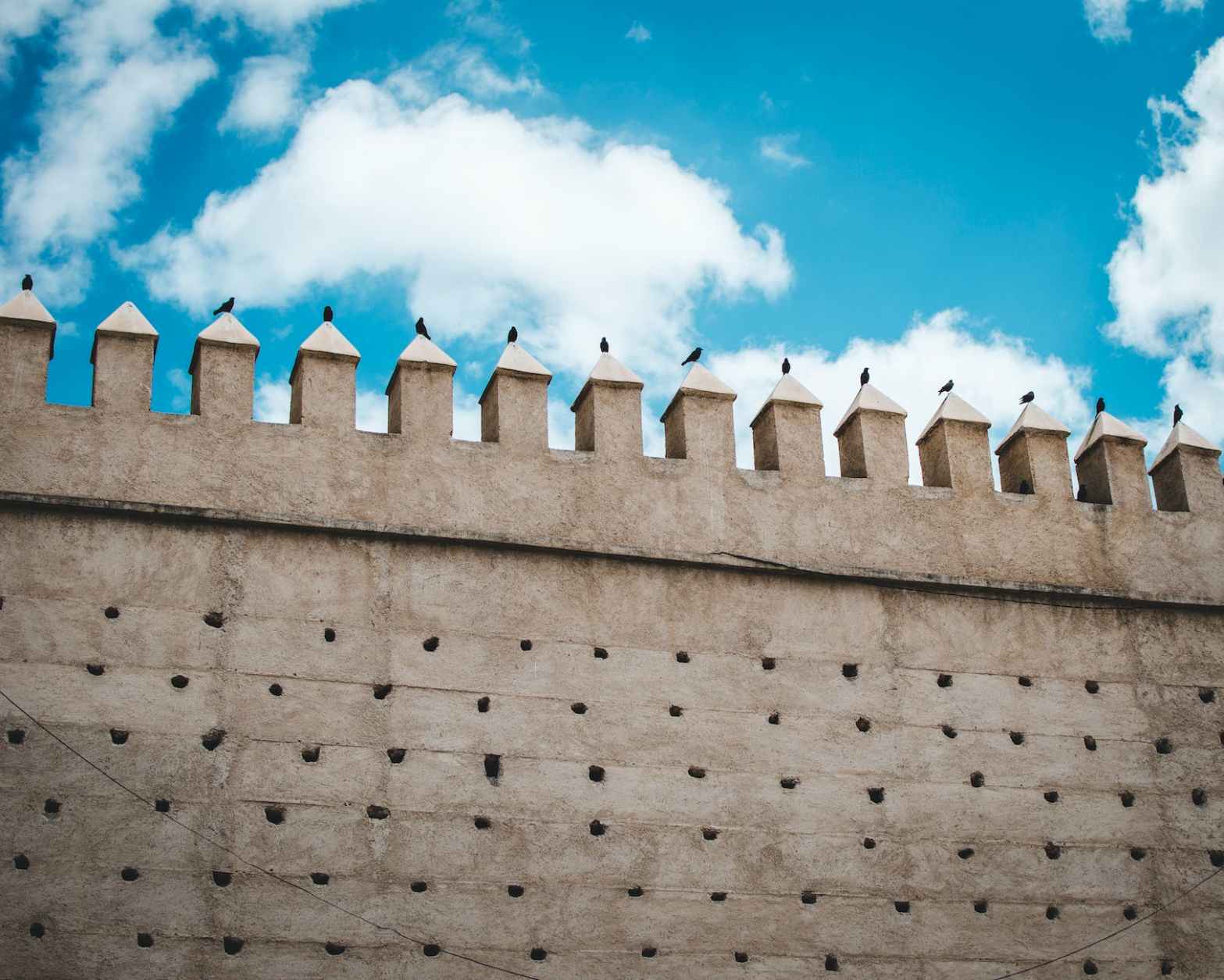
Truly spoken, Robert Frost. In Edwin Muir’s poem, The Castle, the besieged look unconcernedly from the turret walls surrounding the fortress at the foe half a mile distant confident in the knowledge of their ample provisions. But There was a little private gate,/A little wicked wicket gate./The wizened warder let them through. And why? Our only enemy was gold,/And we had no arms to fight it with. The Great Wall of China is stupendous to look at but failed miserably in its purpose of keeping out determined invaders, who simply rode around it or had its gates opened by traitors.
The Berlin Wall failed, and one may surmise (indeed, hope) that similar walls still in place around the world, will ultimately fail, too. Walls made of unobtanium would be the ideal of oppressors throughout history. Such a wall would be impervious to any agency- but it’s out of reach in our material world. The only place such walls may be forged are in the furnaces of the dogmatic mind. Is there anything in this universe more adamantine than the certitude of the religious bigot or political ideologue? [insert song]
What is it about them…Photographs. I mean- the older sort- printed on special paper and placed in albums or behind frames or in glossy magazines, not the digital imposters that feature grinning, gesticulating loons having such a hell of a good time all of the time that they can barely maintain continence. There goes that old man yelling at clouds again!
Susan Sontag, in 1977, wrote that the proliferation of photographic images had created in people a chronic voyeuristic relation to the world around them; and this, mind you, thirty years before the iPhone amplified that to include an overwhelming, self-absorbed narcissism. For some, a photograph is more precious than any material treasure. In wildfires, the family photo album is taken ahead of the silverware.
Although, I must admit that technology enabling images to be saved to the cloud may consign future albums to the flames. The idea for the song originated in the aftermath of the bombing of the Abercorn Restaurant and Bar in central Belfast on Saturday 4th March 1972 where innocent shoppers were caught in the blast which killed two young women and injured 130 leaving many with horrific wounds. Such loss, such evil. The Silver Frame imagines a photograph discovered twenty years after a tragic loss, in the aftermath of the Holocaust: precious, irreplaceable, unrepeatable. [insert song]
Next week, two songs, the first looks at the first crime recorded in Genesis and the second tracks human progress from the primitive missiles of wooden spears to the slim tubes of ballistic rockets delivering Armageddon.
Credits: All written text, song lyrics andmusic (including background music) written and composed by Quentin Bega unless otherwise specified in the credits section after individual posts. Illustrative excerpts from other texts identified clearly within each podcast. I donate to and use Wikipedia frequently as one of the saner sources of information on the web.
Technical Stuff: Microphone- Shure SM58; (for the podcast spoken content) Audio Technica AT 2020 front-facing with pop filter); Apogee 76K also used for songs and spoken text. For recording and mixing down: 64-bit N-Track Studio 9 Extended used; Rubix 22 also used for mixing of microphone(s) and instruments. I use the Band in a Box/RealBand 2023 combo for music composition.
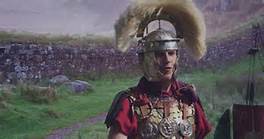 walling out,/And to whom I was like to give offence./Something there is that does not love a wall, that wants it down. Truly spoken, Robert Frost. Another poet, W. H. Auden wrote about Hadrian’s Wall in Roman Wall Blues, where he captures the loneliness and misery of sentinels the world over throughout history as they stand vigil on their particular wall and peer into the mist for signs of the enemy, The rain comes pattering out of the sky,/I’m a Wall soldier, I don’t know why.
 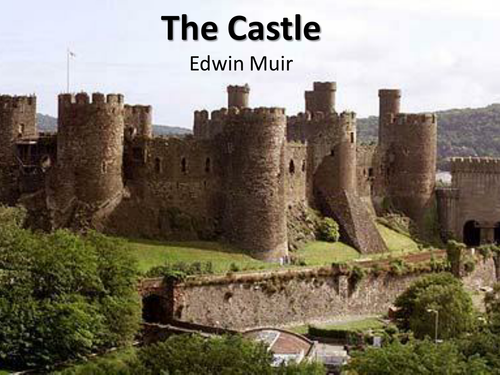 There is something about walls that engender complacency- in Edwin Muir’s poem, The Castle, the besieged look unconcernedly from the turret walls surrounding the fortress at the foe half a mile distant confident in the knowledge of their ample provisions, brave defenders, stout fortifications and allies drawing near. But… There was a little private gate,/A little wicked wicket gate./The wizened warder let them through. And why? Our only enemy was gold,/And we had no arms to fight it with.
 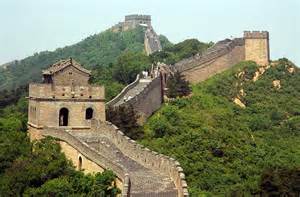 is stupendous to look at but failed miserably in its purpose of keeping out determined invaders, who simply rode around it or had its gates opened by traitors. The Berlin Wall failed and one may surmise (indeed, hope) that similar walls still in place around the world, will ultimately fail, too.
 be impervious to any agency, method or technology. Impenetrable, resisting any level of energy or density of matter, this wall would serve the wildest fantasies of even the most certifiable of megalomaniacs. But it’s out of reach in our material world. The only place such walls can be forged are in the furnaces of the dogmatic mind. Is there anything in this universe more adamantine than the certitude of the religious bigot or political ideologue?
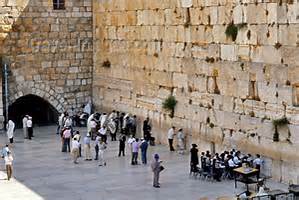 prayers on scraps of paper stuffed into cracks is one that fulfils a deep human need to connect in a tangible way with sacred places. In the city of Leiden, the Netherlands, there is a modern version of the wailing wall, it seems to me. Two artists, Ben Walenkamp and Jan-Willem Bruins, with the assistance of various civic and philanthropic bodies arranged that on various walls throughout the city you will be able read 101 poems by a range of poets, starting in 1992
 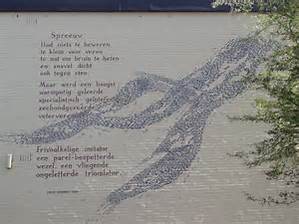 with a poem in Russian by Marina Tssvetaeva
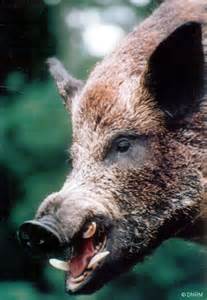
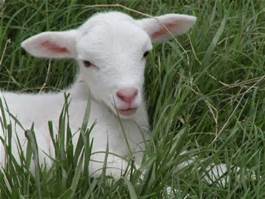 about to happen. He sat down on the broken-off capital of a pillar lying toppled there. A tiny lamb came out to browse in the weeds among the ruins, appearing like an angel of mist, out of nowhere, to turn solitude into something human, dropping like a gentle petal on the solitude of the place. The poet no longer felt alone. Suddenly a herd of swine also came into the area. There were four or five dark animals, half-wild pigs with a savage hunger and hoofs like rocks. Then Federico witnessed a blood-curdling scene: the swine fell on the lamb and, to the great horror of the poet, tore it to pieces and devoured it.