Letters From Quotidia Episode 116 The Frost or the Fire

Letters From Quotidia Episode 116 The Frost or the Fire

Welcome to Letters From Quotidia – a podcast by Quentin Bega for lovers of music, poetry, and the Crack- that most Irish of nouns which may encompass, news, gossip, fun, entertainment, and enjoyable conversation. Quotidia is that space, that place, where ordinary people lead ordinary lives. But where, from time to time, they encounter the extraordinary.

I have never killed a man, but I have read many obituaries with great pleasure- Fine words! I wonder where you stole them. Hold your horses, Jonathan Swift!If you’d given me the time, I would have admitted my debt to Clarence Darrow, a famous- some would say, infamous- American lawyer. Will you be content if I quote lines from what I consider a minor masterpiece of yours? I have been assured by a very knowing American of my acquaintance in London, that a young healthy child well nursed is at a year old a most delicious, nourishing, and wholesome food, whether stewed, roasted, baked, or boiled, and I make no doubt that it will equally serve in a fricassee, or a ragout.

Your stinging satire, A Modest Proposal, published anonymously in 1729, in which an unnamed proposer coolly advances his plan for simultaneously relieving Irish poverty and increasing the store of protein available for consumption by the moneyed classes, places your heart in Ireland with the urban and rural poor, even though the ambitions thronging your head wished for preferment among the upper echelons in England. Almost two hundred years later, we hear an impassioned speech in a courthouse in Tennessee, where Darrow is defending John T Scopes, a high school teacher who has run afoul of a law prohibiting the teaching of evolution in public schools,

If today you can take a thing like evolution and make it a crime to teach it in the public school, tomorrow you can make it a crime to teach it in the private schools…After a while, your honor, it is the setting of man against man and creed against creed until with flying banners and beating drums we are marching backward to the glorious ages of the sixteenth century when bigots lighted fagots to burn the men who dared to bring any intelligence and enlightenment and culture to the human mind. Both Darrow and Swift have their detractors: The Irish clergyman is often painted as a misanthrope because of the blackness of his vision, so apparent in his most famous work, Gulliver’s Travels and for his much-quoted words, principally I hate and detest that animal called man.  

But then he goes on to say, although I heartily love John, Peter, Thomas, and so forth. A true misanthrope wouldn’t take the time or effort to produce polemics aimed at altering the behaviour of his fellow human beings for the better. Darrow has been maligned for his greed for money and publicity, his lack of legal qualifications and his blind belief in deterministic science as the only lens through which the world can be revealed. A militant atheist, he claimed, the purpose of life is living. Men and women should get the most they can out of their lives. The smallest, tiniest intellect may be quite as valuable to society as the largest. It may be still more valuable to itself: it may have all the capacity for enjoyment that the wisest has. The purpose of man is like the purpose of the pollywog (this is not a racist epithet but an American dialect term for a tadpole)— to wriggle along as far as he can without dying; or to hang on until death takes him.

Two very different people, Swift the frosty satirist and Darrow the fiery populist; but both, at their core, believed in the worth of the individual, however insignificant, after their own fashion. There are two poets, among many such possible pairings, that I would put forward as representatives of the dichotomy between the frost and the fire: Robert Frost and Henry Lawson. Some say the world will end in fire,/Some say in ice./From what I’ve tasted of desire/I hold with those who favour fire./But if it had to perish twice,/I think I know enough of hate/To say that for destruction ice/Is also great/And would suffice.  Frost, the ironical, detached observer, in another poem, watches people on a beach looking out to sea, …wherever the truth may be-/The water comes ashore,/And the people look at the sea./They cannot look out far./They cannot look in deep./But when was that ever a bar/To any watch they keep?

Compare this to Henry Lawson in Macleay Street and Red Rock Lane, Macleay Street looks to Mosman,/Across the other side,/With brave asphalted pavements/And roadway clean and wide…Red Rock Lane looks to nowhere,/With pockets into hell;/Red Rock Lane is a horror/Of heat and dirt and smell…And-well, there seems no moral,/And nothing more to tell,/But because of that fierce sympathy/Of souls to souls in hell;/And because of that wild kindness/To souls in sordid pain,/My soul I’d rather venture/With some in Red Rock Lane.

And now, for something completely different: the song following was written in 1983 when I was afflicted by itchy feet and wanted to move on… At the time, I was working with a music student who challenged me to write something commercial, even if it be crass! OK! Have a listen and decide for yourselves  how crass and commercial it is. If it’s truly crass and commercial- offer me a million dollars for the rights![ insert song]

Our next stop in our tour of Quotidia finds us passing through, Velleity, the province of wishing wells, where, in every town square there are examples of these constructions in the centre, in pride of photogenic place. If you wish to throw in a few coins, well, why not? You’re on vacation after all, and you can post your ironic-oh-so-clever beneficence to your insta account for all your envious followers. However, if you are claiming this holiday as a tax-deductible study excursion, then it might be wise to cite the saint, Francis de la Sales as well as poets, Andrew Marvell, T.S. Eliot and Langston Hughes. As well, you may wish to flourish the six-syllable adjective antepenultimate as a way of identifying the next letter. If, on the contrary, you are simply out for a good time, then kick back and relax as the tour bus wends its way through more of the idyllic sights of yet another province of the mysterious land we all know as Quotidia.

Credits: All written text, song lyrics and music (including background music) written and composed by Quentin Bega unless otherwise specified in the credits section after individual posts. Mark Dougherty has a co-writing credit for the song, The Frost or the Fire. Illustrative excerpts from other texts identified clearly within each podcast. I donate to and use Wikipedia frequently as one of the saner sources of information on the web.

Technical Stuff: Microphone- (for the podcast spoken content) Audio Technica AT 2020 front-facing with pop filter)

Microphone (for many of the songs) Shure SM58

For recording and mixing down 64-bit N-Track Studio 9 Extended used

Music accompaniment and composition software– Band-in-a-Box and RealBand 2020 as well as- for some 20 of the songs of year 2000 vintage- I used a Blue Mountains, NSW, studioApproximately 48 Banter folk songs and instrumentals recorded live (“in the round”) with a ThinkPad laptop using the inbuilt mic.


Letters From Quotidia Episode 31 The Cycle of Love

Letters From Quotidia Episode 31 The Cycle of Love

Welcome to Letters From Quotidia – a podcast by Quentin Bega for lovers of music, poetry, and the Crack- that most Irish of nouns which may encompass, news, gossip, fun, entertainment, and enjoyable conversation. Quotidia is that space, that place, where ordinary people lead ordinary lives. But where, from time to time, they encounter the extraordinary.

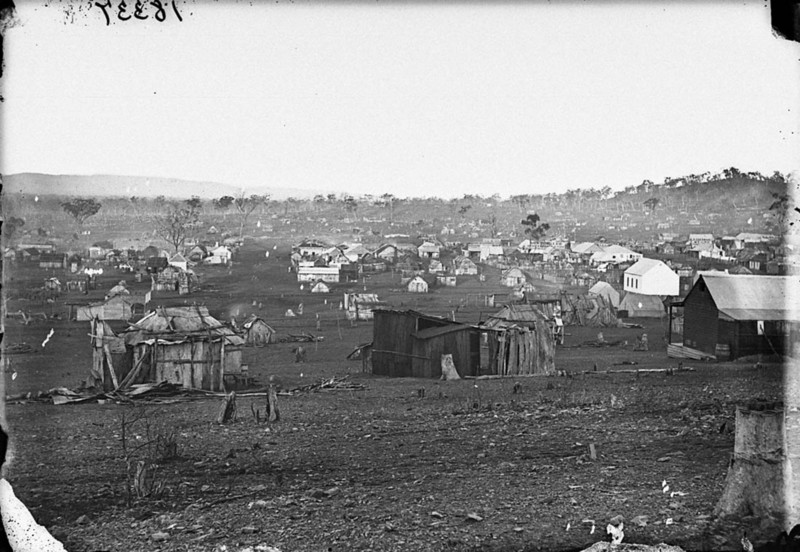
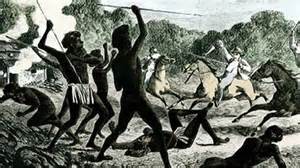
Gulgong is a memorable spot. Situated in the Central Tablelands of New South Wales about 300 kilometres north-west of Sydney, it afforded the indigenous Wiradjuri people plentiful game and sweet water before white settlement. In the 1820s, conflict between white settlers and the aboriginal inhabitants intensified, with martial law being decreed in 1824. Shooting parties, freed to roam at will, killing the tribespeople on sight, ensured that, within a generation, very few survivors remained.

One William Cox, who, according to some sources made a significant contribution to their extermination, claimed the last local black died in 1876.  By this time, a gold rush had been in full swing for six years, with the population of the area swelling to over 20,000. But by 1881, it was all over, with the population subsiding to a little over twelve hundred souls. In its hey-day, though, Gulgong swanked it with the best of her larger metropolitan sisters what, with dancing girls having nuggets of gold thrown in their laps and crowds of rowdy fortune seekers surging through the narrow streets.

Henry Lawson sets the tone in The Roaring Days, So let us fill our glasses/ And toast the Days of Gold;/ When finds of wondrous treasure/ Set all the South ablaze. Between 1870 and 1880, the fabled Cobb and Co coaches took away 483,170 ounces of gold from Gulgong and nearby fieldsAnd the poet captures the excitement of the time with Behind six foaming horses,/And lit by flashing lamps,/Old Cobb and Co., in royal state,/Went dashing past the camps. Henry would have been somewhat bemused to find himself on the first ten-dollar note, given his lack of luck with money during his lifetime. Almost always desperately poor, he spent time in Darlinghurst Gaol for drunkenness and non-payment of child support.

The tone of One Hundred and Three, his prison number, and the title of a sombre poem, published in 1908, is far removed from The Roaring Days, The brute is a brute and a kind man kind and the strong heart does not fail-/A crawler’s a crawler everywhere but a man is a man in gaol! But I like to think that he would have laughed out loud to find that Francis Greenaway, a convict transported for the crime of forgery, is depicted on the obverse of the note.

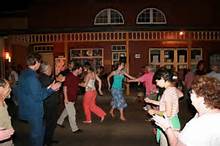
In 1989 a white VG Valiant drove slowly up to the Ten Dollar Motel as the sun was rising on New Year’s Eve. The back of the 4000 km return journey between North Queensland and Sydney was broken and that’s how my spine felt as we settled into our rooms. My wife and daughter were excited by the buzz in the streets, surging again with people, as revellers got set for a night’s dancing and drinking as singers in the town’s pubs revisited the region’s past in varying displays of competency at bush balladeering.

The 19th Century streetscape is one of the attractions of the town and it was featured as a backdrop to Lawson’s image on the new decimal currency paper note. We had a fine old time dancing up and down the street as the bush band bashed out old favourites such as The Heel and Toe Polka and before we knew it, a new decade had ticked over. Returning to Sydney at the end of 1994, we flew over the sunlit landscape below where a little over four years previously I had managed to take a wrong turn during the night drive down from Queensland and found the redoubtable Valiant bouncing down a dry creek-bed where the big, lazy, Detroit six cylinder, displacing 245 cubic inches, shrugged off the sucking sand and rounded river stones to shoulder past whipping branches as the headlights made crazy patterns in the darkness while my passengers made comments on my sanity and prowess as a driver.

When, somehow, I regained a passable dirt road without ripping out the sump, I told my captive audience that I had merely taken a scenic detour to enliven their journey. I have been back to Gulgong to two more occasions since then, in ’96 and ’97 to take in the Folk Festival at the turn of the year. I would have liked to have played a few sessions in the pubs with the group I helped get started in Sydney, but family circumstances and work commitments made it impossible. However, carting my second-best guitar, I strolled into a pub and, waiting my opportunity, I sang a song I had composed earlier in the year to a small crowd who had done nothing at all to provoke me.

The stimulus for composition was reports in the media about abuse of various kinds that got me thinking that there were more cycles that those of abuse. Standing in the pub that afternoon, what prompted me to unsling the instrument was the sight of an elderly, smiling woman who reminded me of my mother, who had died five years previously. As I say, Gulgong is a memorable spot.  The song featuring on this 31st visit to Quotidia has the title, The Cycle of Love [insert song]

The Germanic world occupies almost half of Quotidia in our next letter, what, with Fredrich Nietzsche, Thomas Mann and Frederich Holderlin seeking, nay, demanding our attention almost from the get go. However, we escape this highbrow buttonholing by fleeing to Singapore aboard a strange vessel where we will listen to rumours of Mick Jagger appearing in drag, perhaps,  in Bugis Street. So, until then, I wish you well and look forward to greeting you aboard the Kota Singapura as we cruise under the smouldering gaze of Krakatoa.

Credits: All written text, song lyrics and music (including background music) written and composed by Quentin Bega unless otherwise specified in the credits section after individual posts. Illustrative excerpts from other texts identified clearly within each podcast. I donate to and use Wikipedia frequently as one of the saner sources of information on the web.

Technical Stuff: Microphone- (for the podcast spoken content) Audio Technica AT 2020 front-facing with pop filter

Microphone (for many of the songs) Shure SM58

For recording and mixing down 64-bit N-Track Studio 9 Extended used

Music accompaniment and composition software- Band-in-a-Box and RealBand 2020 as well as- for some 20 of the songs of year 2000 vintage- I used a Blue Mountains, NSW, studioApproximately 48 Banter folk songs and instrumentals recorded live (“in the round”) with a ThinkPad laptop using the inbuilt mic.

Letters From Quotidia Episode 4 Foss Hill (The Old Comedian)

Foss Hill: The Old Comedian Welcome to Letters From Quotidia – a podcast by Quentin Bega for lovers of music, poetry, and the Crack- that most Irish of nouns which may encompass, news, gossip, fun, entertainment, and enjoyable conversation. Quotidia is that space, that place, where ordinary people lead ordinary lives. But where, from time to time, they encounter the extraordinary.  This, the fourth instalment, is titled Foss Hill: The Old Comedian, where the protagonist discovers that his time in the sun is over.

What happens when the ground shifts, when you misjudge your audience, when you fail to notice that the fashion has changed? Being a Baby Boomer and transitioning into the twilight, I feel particularly empathetic towards those old guys who wowed them at the pubs and clubs around the English-speaking world in the 60s and 70s: the old comedians.

Then things began to change: a certain correctness began to infiltrate. Is there anything more frightening or difficult than standing up in front of a crowd and trying to make them laugh? (Well, standing in front of a crowd and trying to get them to applaud your song maybe comes close). The ground has shifted under me from time to time but lately it has been happening more often than I would like.

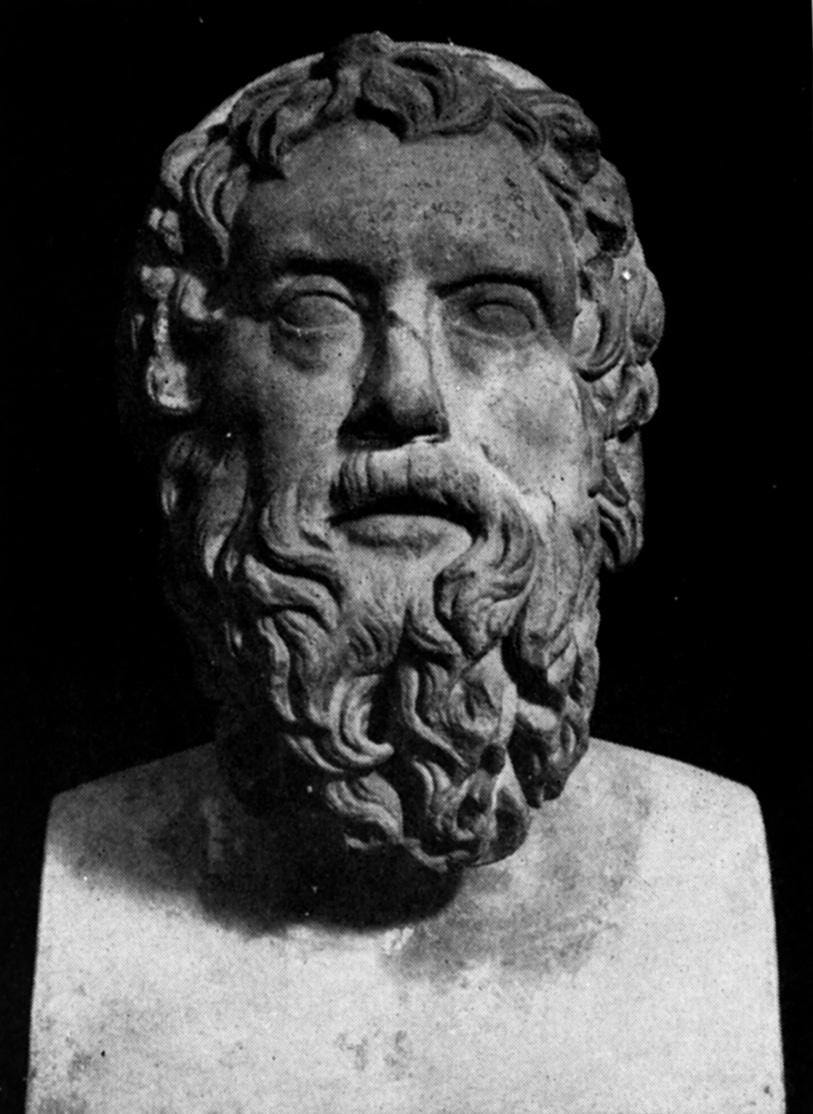
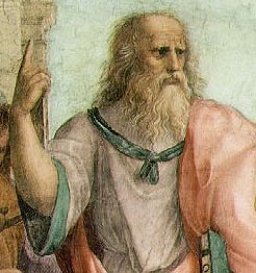
Plato hadn’t much time for comedy: according to my trusty guide, Wikipedia- he asserted that the Guardians of the state should avoid laughter, “‘for ordinarily when one abandons himself to violent laughter, his condition provokes a violent reaction.’ “The po-faced philosopher goes on to say that comedy should be tightly controlled if one wants to achieve the ideal state. I can think of a few politicians who would vote for that legislation. Obviously, tyrants everywhere and at every time have followed his strictures.  The earliest recollection I have of being reduced to violent spasms of laughter was when I was about twelve or so. I was reading one of the early editions of MAD magazine and I can’t recall now, what it was that set me off, but my mother rushed into the room to see what was wrong, dropping a casserole which shattered on the wooden floor. The noises I was making, she later said, were like nothing she had ever heard from me. Why is it that I can remember details like the casserole dish but cannot, however much I try, recall the content of the magazine which had sent me into paroxysms of laughter?

  But I loved the irreverent attitude the comic adopted then, and wherever I encounter this attitude in print or broadcast or in a live venue, I am still prone to lose control. But, satire goes back a long way. My old mate, Aristophanes had this to say about Cleon, the political leader of Athens in his play, The Knights Hit him, hit him, hit the villain, hateful to the cavalry,/Tax-collecting, all-devouring monster of a lurking thief!/Villain, villain! I repeat it, I repeat it constantly, / With good reason since this thief reiterates his villainy. Old Comedy, eh!   

Dear listener, have you ever been at a boring “do” of one sort or another and, upon leaving, uttered the words “I’ve had a perfectly wonderful evening” I know I have, but I’m too well-bred to imitate Groucho Marx who extended the polite fiction thus-“I’ve had a perfectly wonderful evening” but this wasn’t it.” the Greeks have a word for it, of course, – paraprosdokian which means “against expectation”. We just call them “one-liners” and I can’t get enough of them. I’m probably too lazy to take the time to savour the subtleties of longer works such as Alexander Pope’s The Rape of the Lock but Homer Simpson I can cope with: “If I could just say a few words… I’d be a better public speaker.”

I can cope with couplets, too. A newspaper in England ran a competition asking for a rhyme with the most romantic first line… but the least romantic second line. Try these out for size: I love your smile, your face, and your eyes / Damn, I’m good at telling lies! Or My love, you take my breath away. /What have you stepped in to smell this way? I know, don’t give up my day job…mmm, hold on, I don’t have one anymore!  So, I wrote a song about an old comedian: his name? I’ll spell it: F.O.S.S. H.I.L.L. Foss Hill. Fossil. Groan-worthy, isn’t it? The song was written in 1998 after I attended a show featuring several British comedians, all of them pretty long in the tooth, at The Henry Lawson Club, Werrington, in Sydney’s outer west. Now, coincidentally, Lawson was an accomplished comedic writer. In his poem St Peter he imagines himself in Heaven and knows that he’ll get a fair hearing from a bloke used to tramping round Palestine He won’t try to get a chorus/ Out of lungs that’s worn to rags, /Or to graft the wings on shoulders/That is stiff with humpin’ swags. /But I’ll rest about the station/Where the work-bell never rings, /Till they blow the final trumpet/ And the Great Judge sees to things.

I’ve a good idea that Henry Lawson would have approved of the old comedians, as laughter echoed around the smoke-filled room in the club named in his honour. Such smoke-filled rooms are no longer widely available, alas, nor are comedians of the old school found any more in the comedy venues of this city. In the song coming up now, you will hear about a comedian who knows the time has come to give it all away. And, as I felt the ground shifting under me, I knew it was time, too, for me to gracefully (or grumpily) depart: [insert song Foss Hill: The Old Comedian] Join me next time for an examination of the topic “Changes” where we’ll wander through a couple of creation myths, look at a Grecian urn and listen to verse from a couple of poets as well as listening to a piano ballad to end our session.

Credits: All written text, song lyrics and music (including background music) written and composed by Quentin Bega unless otherwise specified in the credits section after individual posts. Illustrative excerpts from other texts identified clearly within each podcast. I donate to and use Wikipedia frequently as one of the saner sources of information on the web.

Technical Stuff: Microphone- (for the podcast spoken content) Audio Technica AT 2020 front-facing with pop filter

Microphone (for many of the songs) Shure SM58

64-bit N-Track Studio 9 Extended used for recording and mixing down

Music accompaniment and composition software- Band-in-a-Box and RealBand 2020 as well as- for some 20 of the songs of year 2000 vintage- I used a Blue Mountains, NSW, studioApproximately 48 Banter folk songs and instrumentals recorded live (“in the round”) with a ThinkPad laptop using the inbuilt mic.
SQ 4 Foss Hill (The Old Comedian)

Old Comedian

Entry 4: Foss Hill (The Old Comedian)- What happens when the ground shifts, when you misjudge your audience, when you fail to notice that the fashion has changed? Being a Baby Boomer and transitioning into the twilight, I feel particularly empathetic towards those old guys who wowed them at the pubs and clubs around the English-speaking world in the 60s and 70s: the old comedians.

Then things began to change: a certain correctness began to infiltrate. Is there anything more frightening or difficult than standing up in front of a crowd and trying to make them laugh? (Well, standing in front of a crowd and trying to get them to applaud your song maybe comes close). The ground has shifted under me from time to time but lately it has been happening more often than I would like.

Plato

Plato hadn’t much time for comedy: according to my trusty guide, Wikipedia- he asserted that the Guardians of the state should avoid laughter, “‘for ordinarily when one abandons himself to violent laughter, his condition provokes a violent reaction.’ “The po-faced philosopher goes on to say that comedy

should be tightly controlled if one wants to achieve the ideal state. I can think of a few politicians who would vote for that legislation.

Obviously, tyrants everywhere and at every time have followed his strictures. The earliest recollection I have of being reduced to violent spasms of laughter was when I was about twelve or so. I was

mad

reading one of the early editions of MAD magazine and I can’t recall now, what it was that set me off, but my mother rushed into the room to see what was wrong, dropping a casserole which shattered on the wooden floor. The noises I was making, she later said, were like nothing she had ever heard from me.

Why is it that I can remember details like the casserole dish but cannot, however much I try, recall the content of the magazine which had sent me into paroxysms of laughter? But I loved the irreverent attitude the comic adopted then, and wherever I encounter this attitude in print or broadcast or in a live venue, I am still prone to lose control. But, satire

Aristophanes

goes back a long way. My old mate, Aristophanes had this to say about the political leader of Athens, Cleon, in his play, The Knights

Hit him, hit him, hit the villain, hateful to the cavalry,/Tax-collecting, all-devouring monster of a lurking thief!/Villain, villain! I repeat it, I repeat it constantly, / With good reason since this thief reiterates his villainy. Old Comedy, eh!  

Dear listener, have you ever been at a boring “do” of one sort or another and, upon leaving, uttered the words “I’ve had a perfectly wonderful evening” I know I have, but I’m too well-bred to imitate Groucho Marx by adding, “but this wasn’t it.” Of course, the Greeks have a word for it- paraprosdokian which means “against expectation”. We just call them “one-liners” and I can’t get enough of them. I’m probably too lazy to take the time to savour the subtleties of longer works such as Alexander Pope’s The Rape of the

homer-s

Lock but Homer Simpson I can cope with: “If I could just say a few words… I’d be a better public speaker.”

I can cope with couplets, too. A newspaper in England ran a competition asking for a rhyme with the most romantic first line… but the least romantic second line. Try these out for size: I love your smile, your face, and your eyes / Damn, I’m good at telling lies! Or My love, you take my breath away. /What have you stepped in to smell this way?

I know, I know, don’t give up my day job…mmm, hold on, I don’t have one anymore! So, I wrote a song about an old comedian: his name? I’ll spell it: F.O.S.S. H.I.L.L. Foss Hill. Fossil. Groan-worthy, isn’t it? The song was written in 1998 after I attended a show featuring several British comedians, all of them pretty long in the tooth, at The Henry Lawson Club, Werrington, in Sydney’s outer west. Now, coincidentally, Lawson was a wonderful comedic writer. In his poem St Peter he imagines himself in Heaven and knows that he’ll get a fair hearing from a bloke used to tramping round Palestine:

Henry Lawson

 He won’t try to get a chorus/ Out of lungs that’s worn to rags, /Or to graft the wings on shoulders/That is stiff with humpin’ swags. /But I’ll rest about the station/Where the work-bell never rings, /Till they blow the final trumpet/ And the Great Judge sees to things.

I’ve a good idea that Henry Lawson would have approved of the old comedians, as laughter echoed around the smoke-filled room in the club named in his honour. Such smoke-filled rooms are no longer widely available, alas, nor are comedians of the old school found any more in the comedy venues of this city. In the song coming up now, you will hear about a comedian who knows the time has come to give it all away. And, as I felt the ground shifting under me, I knew it was time, too, for me to gracefully (or grumpily) depart:


Foss Hill (The Old Comedian)

SQ 31 The Cycle of Love

Entry 31: The Cycle of Love- Gulgong is a memorable spot. Situated ingulgong-panorama-on4_38955r the Central Tablelands of New South Wales about 300 kilometres north-west of Sydney, it afforded the indigenous Wiradjuri people plentiful game and sweet water before white settlement. In the 1820s, conflict between white settlers and the aboriginal inhabitants intensified, with martial law being decreed in 1824. Shooting parties, freed to roam at will, killing the tribespeople on sight, ensured that, within a generation, very few survivors remained. One William Cox, who, according to some abor-conflictsources made a significant contribution to their extermination, claimed the last local black died in 1876. 
By this time, a gold rush had been in full swing for six years, with the population of the area swelling to over 20,000. But by 1881, it was all over, with the population subsiding to a little over twelve hundred souls. In its hey-day, though, Gulgong swanked it with the best of hergoldrush larger metropolitan sisters what, with dancing girls having nuggets of gold thrown in their laps and crowds of rowdy fortune seekers surging through the narrow streets.

Henry Lawson sets the tone in The Roaring Days, So let us fill our glasses/ And toast the Days of Gold;/ When finds of wondrous treasure/ Set all the South ablaze. Between 1870 and 1880, the fabled Cobb and Co coaches took away 483,170 cobb-and-coounces of gold from Gulgong and nearby fieldsAnd the poet captures the excitement of the time with Behind six foaming horses,/And lit by flashing lamps,/Old Cobb and Co., in royal state,/Went dashing past the camps.

Henry would have been somewhat bemused to find himself on the first ten-dollar note, given his lack ofarticle-lead-wide10086lawson luck with money during his lifetime. Almost always desperately poor, he spent time in Darlinghurst Gaol for drunkenness and non-payment of child support. The tone of One Hundred and Three, his prison number, and the title of a sombre poem, published in 1908, is far removed from The Roaring Days, The brute is a brute and a kind man kind and the strong heart does not fail-/A crawler’s a crawler everywhere but a man is a man in gaol!

australia_10dollar_note_1968But I like to think that he would have laughed out loud to find that Francis Greenaway, a convict transported for the crime of forgery, is depicted on the obverse of the note. In 1989 a white VG Valiant drove slowly up to the Ten Dollar Motel as the sun was rising on New Year’s Eve. The back of the 2000 kdancingm  journey between North Queensland and Sydney was broken and that’s how my spine felt as we settled into our rooms.

My wife and daughter were excited by the buzz in the streets, surging again with people, as revellers got set for a night’s dancing and drinking as singers in the town’s pubs revisited the region’s past in varying displays of competency at bush balladeering. The 19th Century streetscape is one of the attractions of the town and it was featured as a backdrop to Lawson’s image on the new decimal currency paper note. We had a fine old time dancing up and down the street as the bush band bashed out old favourites such as The Heel and Toe Polka and before we knew it, a new decade had ticked over.

sydneyReturning to Sydney at the end of 1994, we flew over the sunlit landscape below where a little over four years previously I had managed to take a wrong turn during the night drive down from Queensland and found the redoubtable Valiant bouncing down a dry creek-bed where the big, lazy, Detroit six cylinder, displacing 245 cubic inches, shrugged off the sucking sand and rounded river stones to shoulder past whipping branches as the headlights made crazy patterns in thecreek-bed darkness while my passengers made comments on my sanity and prowess as a driver. When, somehow, I regained a passable dirt road without ripping out the sump, I told my captive audience that I had merely taken a scenic detour to enliven their journey.

I have been back to Gulgong to two more occasions since then, in ’96 and ’97 to take in the Folk Festival at the turn of the year. I would have liked to have played a few sessions in the pubs with the group I helped get started in Sydney, but family circumstances and work commitments made it impossible. However, carting my second-best guitar, I strolled into a pub and, waiting my opportunity, I sang a song I had composed earlier in the year to a small crowd who had done nothing at all to provoke me.

The stimulus for composition was reports in the media about abuse of various kinds that got me thinking that there were more cycles that those of abuse. Standing in the pub that afternoon, what prompted me to unsling the instrument was the sight of an elderly, smiling woman who reminded me of my mother, who had died five years previously.

 As I say, Gulgong is a memorable spot.


The Cycle of Love