
Letters From Quotidia Episode 84 …Your 32nd Birthday

Letters From Quotidia Episode 84a (on what would have been) Your 32nd Birthday

Welcome to Letters From Quotidia – a podcast by Quentin Bega for lovers of music, poetry, and the Crack- that most Irish of nouns which may encompass, news, gossip, fun, entertainment, and enjoyable conversation. Quotidia is that space, that place, where ordinary people lead ordinary lives. But where, from time to time, they encounter the extraordinary.

Pawn yo’ gold watch/An’ diamond ring./Git a quart o’ licker,/Let’s shake dat thing!/Skee-de-dad! De-dad!/Doo-doo-doo!/Won’t be nothin’ left/When de worms git through/An’ you’s a long time Dead/When you is/Dead, too./So beat dat drum, boy!/Shout dat song:/Shake ’em up an’ shake ’em up/All night long. This is the middle section of Langston Hughes’ poem Saturday Night. I used the opening and conclusion of the poem to close Entry 82. The exuberant shout against mortality is one response, and one I admire.

Here’s another take on the matter from the song Still Gonna Die by Shel Silverstein, Drink ginseng tonics, you’re still gonna die./Try high colonics, you’re still gonna die./You can have yourself  frozen and suspended in time,/But when they do thaw you out, you’re still gonna die. For a more solemn view, you may wish to visit or re-visit the great elegy by Thomas Gray, Written in a Country Graveyard, which opens, The curfew tolls the knell of parting day,/The lowing herd wind slowly o’er the lea/The ploughman homeward plods his weary way,/And leaves the world to darkness and to me. There are so many memorable lines in this justly famous poem, but these four lines will serve to illustrate the quality of the whole, The boast of heraldry, the pomp of power,/And all that beauty, all that wealth e’er gave,/Awaits alike th’ inevitable hour,/The paths of glory lead but to the grave.

John Donne, in his own inimitable way, defies the grim reaper, DEATH be not proud, though some have called thee/Mighty and dreadfull, for, thou art not so. In the sestet of his sonnet, he scorns the power of death and affirms his own adamantine faith, Thou art slave to fate, chance, kings, and desperate men,/ And dost with poison, war, and sickness dwell,/And poppy or charms can make us sleep as well/And better than thy stroke; why swell’st thou then?/ One short sleep past, we wake eternally/ And death shall be no more; Death, thou shalt die. 

Ah, the power of poetry, the wonder of words.  Brueghel the Elder’s contemporaneous The Triumph of Death must give one pause, though. Stand, if you will, before this panorama of desolation, painted on panel measuring 117cm x 162 cm and read it from left to right, top to bottom. Two skeletons toll the death of humanity as fires pour out palls of smoke from hills and ships burning in a bay while ashore skeletal figures ride famished horses as they hunt down peasants fleeing in despair. Bodies hang from trees and gallows while carrion birds wheel above. Skeleton armies swarm in the middle-ground, herding the masses into a false sanctuary marked with a cross as a pair of skeletons frame this section- one on a wagon filled with skulls, plays the hurdy-gurdy while the other beats triumphantly on a pair of timpani. Along the bottom of the painting a king vainly tries to prevent the looting of his treasury; in the centre a hound chews on the face of a child and a skeletal assassin cuts the throat of a supine man. The feast on the right has been interrupted by the forces of desolation: the stools upended, the cards scattered, the cup overturned. A fool tries to crawl under the table as a demon empties the flasks of wine; a skeleton grapples with a young woman in a parody of an amorous embrace as, in the lower right corner of the painting, a pair of young lovers, oblivious, sing from a musical manuscript to the accompaniment of a lute. At last! A sign of hope, you gasp…sorry, see that death’s head reading the music over her shoulder?

The dance of death is also depicted in the woodcuts of Hans Holbein and in the music of Saint-Saens whose Danse Macabre, a tone poem written in 1874 in the key of G minor, which, despite initial critical rejection, lives on in the repertoire and in adaptations such as the theme for the TV series Jonathan Creek. On a more personal level, people give and acquire memorabilia associated with death. In Shakespeare’s time it was not unusual to have memorial rings made to be given to the favoured few- a pity it is not still a widespread custom.

We, ourselves, have a score or more memorial cards of those family members and friends we have lost over the years. Over the past 27 years I have written nine songs specifically in remembrance of my son who died at age 15 years. They take different forms but are all part of an ongoing engagement on my part with him. If we can’t go to the pub or sit out on the back veranda and shoot the breeze, then, at least, I can let him know how things are going, as in this 2005 song where I bring him up to date on what has been happening within the family group.

I started writing it on 19th December of that year and finished it two days later on the summer solstice, his birthday. The letters this week offer a wide range of views and touch on quite a number of topics but what will be clear to you all is that they form a quartet in memory of my son. This was not planned but just fell out this way in the sequencing of songs for this project. [insert song] 

Next week we are backing up a bit to get some perspective: one billion years, to be precise. I love the sciences and I love the arts. Does anyone remember that dull but deadly dichotomy between these fields postulated by some in academia- with science as the sister among the cinders. CP Snow, a novelist and scientist, not much remembered now, challenged this prissy snobbery in a lecture in 1959 entitled The Two Cultures which refers to the sciences on the one hand and the humanities, on the other.

Then, the humanists derided the scientists as having little knowledge of say, the works of Shakespeare. But they hadn’t a clue about the most fundamental of scientific concepts such as mass or acceleration. And, now, 60-odd years later, the shoe’s on the other foot. Try proposing a course in liberal arts to this generation’s bureaucrats and see how far you get…

On a personal note: tomorrow, 4th June, is what would have been my younger sister’s 69th birthday had cancer not claimed her on March 13th of this year. According to her wishes, her ashes are buried under a Ginkgo tree in a forest in Germany. Vale, my beloved sister, Mary.   

Credits: All written text, song lyrics and music (including background music) written and composed by Quentin Bega unless otherwise specified in the credits section after individual posts. Illustrative excerpts from other texts identified clearly within each podcast. I donate to and use Wikipedia frequently as one of the saner sources of information on the web.

Technical Stuff: Microphone- (for the podcast spoken content) Audio Technica AT 2020 front-facing with pop filter)

Microphone (for many of the songs) Shure SM58

For recording and mixing down 64-bit N-Track Studio 9 Extended used

Music accompaniment and composition software– Band-in-a-Box and RealBand 2020 as well as- for some 20 of the songs of year 2000 vintage- I used a Blue Mountains, NSW, studioApproximately 48 Banter folk songs and instrumentals recorded live (“in the round”) with a ThinkPad laptop using the inbuilt mic.


Letters From Quotidia Episode 58 Open Season

Letters From Quotidia Open Season

Welcome to Letters From Quotidia – a podcast by Quentin Bega for lovers of music, poetry, and the Crack- that most Irish of nouns which may encompass, news, gossip, fun, entertainment, and enjoyable conversation. Quotidia is that space, that place, where ordinary people lead ordinary lives. But where, from time to time, they encounter the extraordinary. Join the narrator in letter 58 as, under the influence of perhaps a little too much red wine at 3:30 in the morning a few years ago, he crafts some sort of epiphany out of a freight train screeching past and sheds a tear or two for victims of famine and conflict.

Entry 58: Open Season– We live in perilous times and in perilous places, wondering all the while whether the complexion of the universe is benign, malign or merely indifferent. I found a ball of grass among the hay/And progged it as I passed and went away/And when I looked I fancied something stirred/And turned again and hoped to catch the bird/When out an old mouse bolted in the wheat/With all her young ones hanging at her teats/She looked so odd and so grotesque to me/I ran and wondered what the thing could be/And pushed the knapweed bunches where I stood/When the mouse hurried from the craking brood/The young ones squeaked and when I went away/She found her nest again among the hay./The water o’er the pebbles scarce could run/And broad old cesspools glittered in the sun.

There is a microcosm here, in John Clare’s The Mouse’s Nest, as finely detailed as any found in theological or cosmological treatises on the matter. John Clare knew privation and the prospect of a bird at hand no doubt stimulated his salivary glands. The odd and grotesque sight stimulates his curiosity and he runs to see more but soon turns away and notices now the broad old cesspools which glitter in the sun. But the world of the mother mouse and her young ones has been considerably disrupted. The god-like persona soon loses the certitude of being the prime mover in a very short time. I am—yet what I am none cares or knows;/My friends forsake me like a memory lost:/I am the self- consumer of my woes. I am the self-consumer of my woes- what a profound statement- yet who knows this little known poet?

Confined to an insane asylum by friends, he seems to have been given better treatment than most people in similar circumstances two centuries later. He is a bit like Kit Smart, who was also considered a lunatic in the previous century, but who, instead of focusing on a mouse, recorded his cat, Jeoffry, …I will consider my Cat Jeoffry./For he is the servant of the Living God duly and daily serving him./For at the first glance of the glory of God in the East he worships in his Way./For this is done by wreathing his body seven times round with elegant quickness./For then he leaps up to catch the musk, which is the blessing of God upon his prayer.

This was written in an age that knew nothing of the problems of feral cats in Australia. There are lots of people in the antipodean great south land that consider cats as servants of Satan rather than the living God. There was a time when hunting the whale was a worthy, indeed, heroic, undertaking. This makes me wonder which activities that attract approbation today will be considered barbarous in out grandchildren’s world. God! Did they actually kill mosquitoes back then! This, after scientists discover that the mozzie is the only thing standing between us and the worst impacts of climate change. Who knows?

Writing this entry at 3:30 a.m. I was distracted by a beautiful sound- listening to a streaming audio, I thought it was part of that effusion. Then I realised that it was something else. Still curious, after all these years, I got up from my desk and wine, and wandered outside to hear the sound of a freight-train, trying to- maximise? – the clangour by slowing down as it passed by. The metal wheels made weirdly harmonic music and I stood transfixed.  If only I were as talented as, say, Phillip Glass or any one of the minimalists, I would now be notating another masterpiece of minimalism based on those squeaking, screeching and craking sounds.

But I have promises to keep: porterhouse steaks to sear and a breaking in of the Weber barbeque- this must happen tomorrow if I am to be accorded full acceptance into the pantheon of Aussie manhood- or so my wife asserts. Yet, in the 1970s, as I recall, I wielded tongs over an Hibachi on North Beach, Wollongong and scorched some meat that passed muster. But now, in the 21st Century, I have to search out strange herbs and spices, uncommon cuts of meat, in-fashion fish and source matching wines to be in the race, it seems. It’s hard to live comfortably with this beneficence after viewing online a still photograph of a mother and child in Syria standing in front of a ruined streetscape in a village near the Turkish border, liberated from Islamic State.

There is something in the eyes that hooks your soul; like the Steve McCurry photo of the Afghan girl, and the Madonna and child image from Ethiopia in the 1980s, there is a cri de Coeur here too, No man is an island,/Entire of itself./Each is a piece of the continent,/A part of the main./If a clod be washed away by the sea,/Europe is the less…/Each man’s death diminishes me, For I am involved in mankind./Therefore, send not to know/For whom the bell tolls,/ It tolls for thee. These lines, fromJohn Donne’s Meditation 17, still apply. [insert song]

Letter 59 finds us wondering how we could embody the resilient characteristics of creatures measuring less than half a millimetre. That slippery concept “hope” puts in another appearance courtesy of that wonderful American poet, Emily Dickinson. Carl Sandburg wrote a poem containing his hopes for a son, though he only had daughters. We watch a clash between orthodoxy and heterodoxy high up on an escarpment in North Queensland and witness the narrator, in his usual pusillanimous guise of observer, reflect on changing approach to the Eucharist since Vatican Two.

Credits: All written text, song lyrics and music (including background music) written and composed by Quentin Bega unless otherwise specified in the credits section after individual posts. Illustrative excerpts from other texts identified clearly within each podcast. I donate to and use Wikipedia frequently as one of the saner sources of information on the web.

Technical Stuff: Microphone- (for the podcast spoken content) Audio Technica AT 2020 front-facing with pop filter)

Microphone (for many of the songs) Shure SM58

For recording and mixing down 64-bit N-Track Studio 9 Extended used

Music accompaniment and composition software- Band-in-a-Box and RealBand 2020 as well as- for some 20 of the songs of year 2000 vintage- I used a Blue Mountains, NSW, studioApproximately 48 Banter folk songs and instrumentals recorded live (“in the round”) with a ThinkPad laptop using the inbuilt mic.
Letters From Quotidia Episode 21 When It Isn’t Heaven

LFQ Episode 21 When It Isn’t Heaven

Welcome to Letters From Quotidia – a podcast by Quentin Bega for lovers of music, poetry, and the Crack- that most Irish of nouns which may encompass, news, gossip, fun, entertainment, and enjoyable conversation. Quotidia is that space, that place, where ordinary people lead ordinary lives. But where, from time to time, they encounter the extraordinary. In this 21st Letter there will be howling and singing, verse from poets Banjo Paterson and John Donne, references to a Miyazaki anime film and a nod to a tragic Shakespearian love story.

 Howling-adjective-producing a long, doleful cry or wailing sound. Oxford Dictionaries) Now that I no longer have to join the stream of traffic down the Great Western Highway to access the means to keep the wolf from the door and a roof over our heads, I luxuriate in reading the books, listening to the music and indulging in those sundry, random activities I didn’t have the time or energy for in the “working” phase of my existence. Leafing through a collection of Banjo Paterson’s verse the other day I came across the lines, Just now there is a howling drought/That pretty near has starved us out.

The poem dealt with the hellish conditions in the environs of the western Riverina town of Booligal in the final decades of the 19th Century. A woodcut from The Illustrated Australian News of 1889 shows a barren plain bisected diagonally by a cracked dirt track where the carcasses of animals consumed by the drought lie scattered across this stark tableau. A lone tree on the horizon is etched against the sky where dark clouds mock the arid desolation below.

Paterson treats the subject semi-humorously by having a denizen of the benighted town opine that apart from the isolation, heat, sand, dust, flies, mozzies, snakes and a plague of rabbits…the place ain’t too bad! The speaker concludes by noting that, in the unlikely event of rain, the track would become impassable and they’d be stuck in Booligal. Those listening to him are horrified, ‘We’d have to stop!’ With bated breath/We prayed that both in life and death/Our fate in other lines might fall:/‘Oh, send us to our just reward/‘In Hay or Hell, but, gracious Lord,/‘Deliver us from Booligal!’

For some reason I picture Paul Hogan as the speaker. Australians find humour in the grimmest of situations: the tragic aesthetic does not sit well in the island continent which was earmarked as the dumping ground for the worst elements of British and Irish society but which transformed in an astonishingly short time into one of the most desirable residences of the planet Earth. I put down the volume of Paterson’s verse and lifted a dictionary of quotations which opened at a page marked by a decades-old anniversary card from my wife to me. As I was lifting it out, I read the lines: Howling is the noise of hell, singing the voice of heaven, according to John Donne in his guise as a preacher rather than poet.

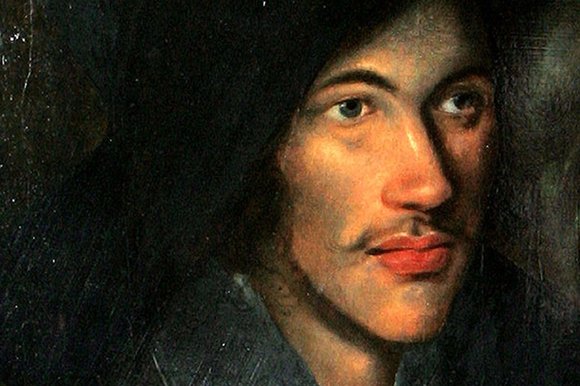
Singing and howling exist on a continuum of sound: one person hears music where another hears a racket. Donne was well acquainted with both concepts, heaven and hell, in his life and work. A saturnine, handsome, young Elizabethan blade with the worlds of adventure, love and preferment in front of him as well as travels as a spy and battle experience with the likes of the Earl of Essex and Sir Walter Raleigh, stares out from a portrait painted around 1595 when he was 24. Fast forward 37 years to the months after his death and we find an engraving of a sunken-cheeked, grizzled, death’s head in a shroud: something to frighten children with.

Engraved by Martin Droeshout, better known for the image of Shakespeare that adorns the First Folio, it is based on a portrait that Donne had commissioned and hung on his wall in his final years to remind him of the transience of life.  As I looked from one image to the other I was reminded of Miyazaki’s 2004 anime, Howl’s Moving Castle, where the 18-year-old protagonist, Sophie, is befriended by Howl, a strange, conflicted wizard, who lives in a magical moving castle. She is turned into an aged crone by the Witch of the Wastes. Perilous journeys, transformations and magical encounters within a surrealistic world lead in the end to Sophie and Howl at the bow of the flying castle sharing a tender kiss- oh, my God, shades of the movie, Titanic!

And yet, we are suckers for the happy ending, particularly one sealed with a loving kiss. Such a pity, isn’t it, that such endings are as rare as a blood-red diamond. Or are they? Tragic love stories attract the limelight: who would rate R+J if the Capulets and Montagues reconciled in time for the young couple to move into a new apartment in Verona and start putting up pictures while arguing over the décor of the ensuite? So, probably, there are lots of happy endings out there, under the radar, under the doona…

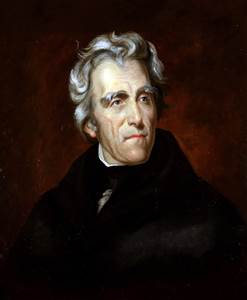
The idea of a prescriptive pair-bonding, though, seems quaint in the 21st Century. The ideal nuclear family of the 20th Century has morphed into a range of relational paradigms and you can take your pick of which one suits you. Me? Born in the middle of the 20th Century and married for 50 years in July of this year, I still look to the old paradigm and I find a surprisingly poignant connection with Andrew Jackson, 7th President of the United States, when he said shortly before he died: Heaven will be no heaven to me if I do not meet my wife there. And that is the cue for the song, When It Isn’t Heaven. [insert song]

Are you up for a debate among a horse a sheep and a goose? Or, what about Shakespeare’s 18th sonnet? Perhaps John Donne’s excoriating poem The Comparison is more to your liking? Maybe you just want to get on with it and cogitate on the differences between sacred and unhallowed ground in the 22nd Letter From Quotidia.

Credits: All written text, song lyrics and music (including background music) written and composed by Quentin Bega unless otherwise specified in the credits section after individual posts. Mark Dougherty, long-time friend and collaborator, has a writing credit for the song, “When It Isn’t Heaven”. Illustrative excerpts from other texts identified clearly within each podcast. I donate to and use Wikipedia frequently as one of the saner sources of information on the web.

Technical Stuff: Microphone- (for the podcast spoken content) Audio Technica AT 2020 front-facing with pop filter

Microphone (for many of the songs) Shure SM58

For recording and mixing down 64-bit N-Track Studio 9 Extended used

Music accompaniment and composition software– Band-in-a-Box and RealBand 2020 as well as- for some 20 of the songs of year 2000 vintage- I used a Blue Mountains, NSW, studioApproximately 48 Banter folk songs and instrumentals recorded live (“in the round”) with a ThinkPad laptop using the inbuilt mic.

Letters From Quotidia Episode 58 Open Season

Letters From Quotidia Open Season

Welcome to Letters From Quotidia – a podcast by Quentin Bega for lovers of music, poetry, and the Crack- that most Irish of nouns which may encompass, news, gossip, fun, entertainment, and enjoyable conversation. Quotidia is that space, that place, where ordinary people lead ordinary lives. But where, from time to time, they encounter the extraordinary. Join the narrator in letter 58 as, under the influence of perhaps a little too much red wine at 3:30 in the morning a few years ago, he crafts some sort of epiphany out of a freight train screeching past and sheds a tear or two for victims of famine and conflict.

Entry 58: Open Season– We live in perilous times and in perilous places, wondering all the while whether the complexion of the universe is benign, malign or merely indifferent. I found a ball of grass among the hay/And progged it as I passed and went away/And when I looked I fancied something stirred/And turned again and hoped to catch the bird/When out an old mouse bolted in the wheat/With all her young ones hanging at her teats/She looked so odd and so grotesque to me/I ran and wondered what the thing could be/And pushed the knapweed bunches where I stood/When the mouse hurried from the craking brood/The young ones squeaked and when I went away/She found her nest again among the hay./The water o’er the pebbles scarce could run/And broad old cesspools glittered in the sun.

There is a microcosm here, in John Clare’s The Mouse’s Nest, as finely detailed as any found in theological or cosmological treatises on the matter. John Clare knew privation and the prospect of a bird at hand no doubt stimulated his salivary glands. The odd and grotesque sight stimulates his curiosity and he runs to see more but soon turns away and notices now the broad old cesspools which glitter in the sun. But the world of the mother mouse and her young ones has been considerably disrupted. The god-like persona soon loses the certitude of being the prime mover in a very short time. I am—yet what I am none cares or knows;/My friends forsake me like a memory lost:/I am the self- consumer of my woes. I am the self-consumer of my woes- what a profound statement- yet who knows this little known poet?

Confined to an insane asylum by friends, he seems to have been given better treatment than most people in similar circumstances two centuries later. He is a bit like Kit Smart, who was also considered a lunatic in the previous century, but who, instead of focusing on a mouse, recorded his cat, Jeoffry, …I will consider my Cat Jeoffry./For he is the servant of the Living God duly and daily serving him./For at the first glance of the glory of God in the East he worships in his Way./For this is done by wreathing his body seven times round with elegant quickness./For then he leaps up to catch the musk, which is the blessing of God upon his prayer.

This was written in an age that knew nothing of the problems of feral cats in Australia. There are lots of people in the antipodean great south land that consider cats as servants of Satan rather than the living God. There was a time when hunting the whale was a worthy, indeed, heroic, undertaking. This makes me wonder which activities that attract approbation today will be considered barbarous in out grandchildren’s world. God! Did they actually kill mosquitoes back then! This, after scientists discover that the mozzie is the only thing standing between us and the worst impacts of climate change. Who knows?

Writing this entry at 3:30 a.m. I was distracted by a beautiful sound- listening to a streaming audio, I thought it was part of that effusion. Then I realised that it was something else. Still curious, after all these years, I got up from my desk and wine, and wandered outside to hear the sound of a freight-train, trying to- maximise? – the clangour by slowing down as it passed by. The metal wheels made weirdly harmonic music and I stood transfixed.  If only I were as talented as, say, Phillip Glass or any one of the minimalists, I would now be notating another masterpiece of minimalism based on those squeaking, screeching and craking sounds.

But I have promises to keep: porterhouse steaks to sear and a breaking in of the Weber barbeque- this must happen tomorrow if I am to be accorded full acceptance into the pantheon of Aussie manhood- or so my wife asserts. Yet, in the 1970s, as I recall, I wielded tongs over an Hibachi on North Beach, Wollongong and scorched some meat that passed muster. But now, in the 21st Century, I have to search out strange herbs and spices, uncommon cuts of meat, in-fashion fish and source matching wines to be in the race, it seems. It’s hard to live comfortably with this beneficence after viewing online a still photograph of a mother and child in Syria standing in front of a ruined streetscape in a village near the Turkish border, liberated from Islamic State.

There is something in the eyes that hooks your soul; like the Steve McCurry photo of the Afghan girl, and the Madonna and child image from Ethiopia in the 1980s, there is a cri de Coeur here too, No man is an island,/Entire of itself./Each is a piece of the continent,/A part of the main./If a clod be washed away by the sea,/Europe is the less…/Each man’s death diminishes me, For I am involved in mankind./Therefore, send not to know/For whom the bell tolls,/ It tolls for thee. These lines, fromJohn Donne’s Meditation 17, still apply. [insert song]

Letter 59 finds us wondering how we could embody the resilient characteristics of creatures measuring less than half a millimetre. That slippery concept “hope” puts in another appearance courtesy of that wonderful American poet, Emily Dickinson. Carl Sandburg wrote a poem containing his hopes for a son, though he only had daughters. We watch a clash between orthodoxy and heterodoxy high up on an escarpment in North Queensland and witness the narrator, in his usual pusillanimous guise of observer, reflect on changing approach to the Eucharist since Vatican Two.

Credits: All written text, song lyrics and music (including background music) written and composed by Quentin Bega unless otherwise specified in the credits section after individual posts. Illustrative excerpts from other texts identified clearly within each podcast. I donate to and use Wikipedia frequently as one of the saner sources of information on the web.

Technical Stuff: Microphone- (for the podcast spoken content) Audio Technica AT 2020 front-facing with pop filter)

Microphone (for many of the songs) Shure SM58

For recording and mixing down 64-bit N-Track Studio 9 Extended used

Music accompaniment and composition software- Band-in-a-Box and RealBand 2020 as well as- for some 20 of the songs of year 2000 vintage- I used a Blue Mountains, NSW, studioApproximately 48 Banter folk songs and instrumentals recorded live (“in the round”) with a ThinkPad laptop using the inbuilt mic.

SQ 21 When It Isn’t Heaven

Entry 21: When It Isn’t Heaven- (Howling-adjective-producing a long, doleful cry or wailing sound. Oxford Dictionaries) Now that I no longer have to join the stream of traffic down thehighway traffic Great Western Highway to access the means to keep the wolf from the door and a roof over our heads, I luxuriate in reading the books, listening to the music and indulging in those sundry, random activities I didn’t have the time or energy for in the “working” phase of my existence.
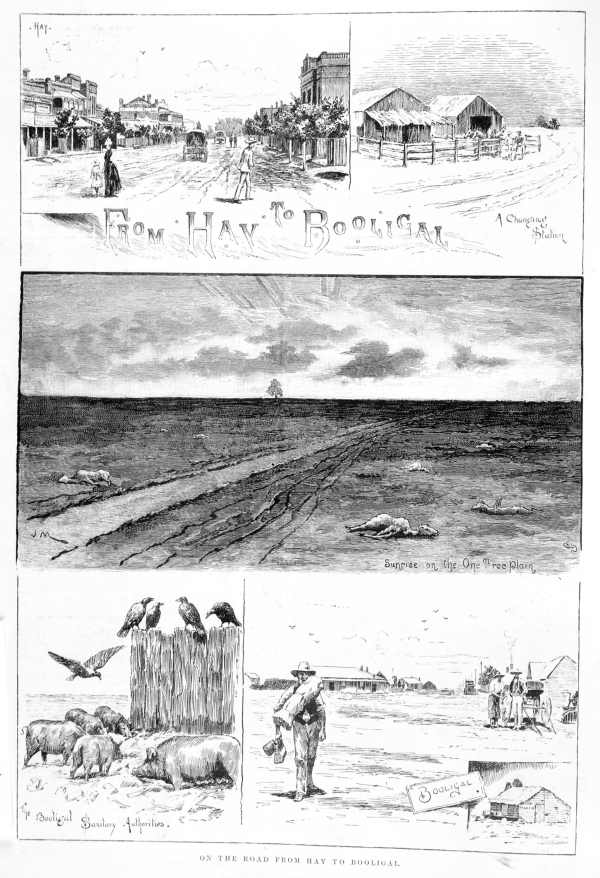
Leafing through a collection of Banjo Paterson’s verse the other day I came across the lines,  Just now there is a howling drought/That pretty near has starved us out.  OnTheRoadFromHayToBooligal The poem dealt with the hellish conditions in the environs of the western Riverina town of Booligal in the final decades of the 19th Century. A woodcut from The Illustrated Australian News of 1889 shows a barren plain bisected diagonally by a cracked dirt track where the carcasses of animals consumed by the drought lie scattered across this stark tableau. A lone tree on the horizon is etched against the sky where dark clouds mock the arid desolation below.
Paterson treats the subject semi-humorously by having a denizen of the benighted town opine that apart from the isolation, heat, sand, dust, flies, mozzies, snakes and a plague of rabbits…the place ain’t too bad! The speaker concludes by noting that, in the unlikely event of rain, the track would become impassable and they’d be stuck in Booligal. Those listening to him are horrified, ‘We’d have to stop!’ With bated breath/We prayed that both in life and death/Our fate in other lines might fall:/‘Oh, send us to our just reward/‘In Hay or Hell, but, gracious Lord,/‘Deliver us from Booligal!’

 For some reason I picture Paul Hogan as the speaker. Australians find humour in the grimmest of situations: the tragic aesthetic does not sit well in the island continent which was earmarked as the dumping ground for the worst elements of British society but which transformed in an astonishingly short time into one of the most desirable residences of the planet Earth. I put down the volume of Paterson’s verse and lifted a dictionary of quotations which opened at a page marked by a decades-old anniversary card from my wife to me.

As I was lifting it out, I read the lines: Howling is the noise of hell, singing the voice of heaven,STR17POET_331045k according to John Donne in his guise as a preacher rather than poet. Singing and howling exist on a continuum of sound: one person hears music where another hears a racket. Donne was well acquainted with both concepts, heaven and hell, in his life and work. A saturnine, handsome, young Elizabethan blade with the worlds of adventure, love and preferment in front of him as well as travels as a spy and battle experience with the likes of the Earl of Essex and Sir Walter Raleigh, stares out from a portrait painted around 1595 when he was 24.
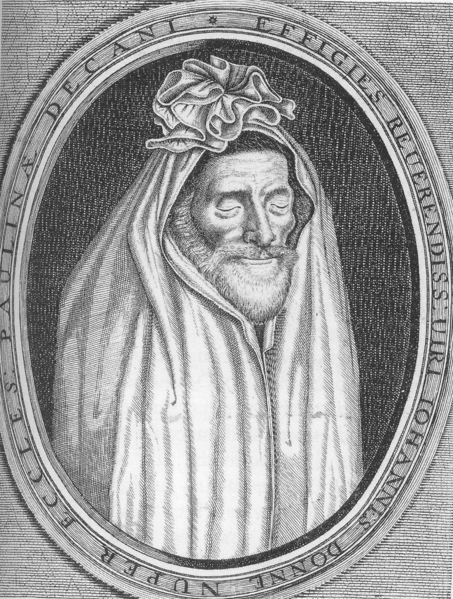
Fast forward 37 years to the months after his death and we find an engraving of a sunken-cheeked, grizzled, death’s head in a shroud: something to frighten children with. 453px-donne-shroudEngraved by Martin Droeshout, better known for the image of Shakespeare that adorns the First Folio, it is based on a portrait that Donne had commissioned and hung on his wall in his final years to remind him of the transience of life.
As I looked from one image to the other I was reminded of Miyazaki’s 2004 anime, Howl’s Moving Castle, where the 18-year-old protagonist, Sophie, is befriended by Howl, a strange, conflicted wizard, who lives in a magical moving castle. She is turned into an aged crone by the Witch of the Wastes. Perilous journeys, transformations and magical encounters within a surrealistic world lead in the end to Sophie and Howl at the bow of the flying castle sharing a tender kiss- oh, my God, shades of the movie, Titanic! And yet we are suckers for the happy ending, particularly onetitanic sealed with a loving kiss. Such a pity, isn’t it, that such endings are as rare as a blood-red diamond.
Or are they? Tragic love stories attract the limelight: who would rate R+J if the Capulets and Montagues reconciled in time for the young couple to move into a new apartment in Verona and start putting up pictures while arguing over the décor of the ensuite? So, probably, there are lots of happy endings out there, under the radar, under the doona…

The idea of a prescriptive pair-bonding, though, seems quaint in the 21st Century. The ideal nuclear family of the 20th Century has morphed into a range of relational paradigms and you can take your pick of which one suits you. Me? Born in the middle of the 20th Century and married for 44 years, I still look to the old paradigm and I find a surprisinglyandrewjackson poignant connection with Andrew Jackson, 7th President of the United States, when he said shortly before he died: Heaven will be no heaven to me if I do not meet my wife there.

When It Isn’t Heaven