Welcome to Letters From Quotidia, the Postcards edition, number 10, a podcast by Quentin Bega where you will hear Banter, a traditional Irish folk group from Sydney’s outer west, present four tunes and songs drawn from the traditions of the English-speaking world. And, as always, Quotidia is that space, that place, where ordinary people lead ordinary lives. But where, from time to time, they encounter the extraordinary.
The first selection for our tenth postcard combines the folk song, Sam Hall and the tune, The Palmer River (which is a transplant of the British tune ten thousand miles). The song has been in my repertoire for decades and when I discovered that there were chimney sweeps in my ancestry it made sense at a deep, even DNA, level. The song is twinned with a great tune recalling the gold-rush days in Far Northern Queensland. [insert song/tune]
Rhonda Valley Girls– A rousing songs about Welsh miners. We have seen the sad decline of old industries and processes over the past few decades and know all about the fate of workers in once valued occupations who find themselves out of work or offered a paltry alternative in the casualised service sector. The election of Donald Trump is, like Brexit, a manifestation of the anger of the demoralised working class who have been waiting vainly for generations for the elites to offer them something more than promises come election time. Whoa. Getting all soap-boxy here! Sam brought this song to the group. It was written by Frank Hennessy, who was born in Cardiff of Irish parentage. With his family he has written and recorded songs that celebrate Cardiff and the Welsh experience. He has worked in radio for decades and currently presents the program Celtic Heartbeat on BBC Radio Wales. Take it away Sam! [insert song]
William Bloat/Sash– Belfast built the Titanic and was also a centre for the flax industry in the 19th Century. The song is a humorous boast concerning a man having a spot of trouble with his wife. We twin it with a tune beloved of Orange folk. Belfast was one of the great industrial cities of the British Isles in the 19th Century and, like other manufacturing centres, there was a great pride taken in the quality of goods produced in the city. According to Ulster blogger, Mark Thompson, This famous and brutal old black comedy murder ballad is very well known, but its origin less so. It was written by Helen’s Bay man Raymond Calvert. In December, 1926, 20 year old Raymond recited it for the first time at a theatre after-party. His wife Irene later said that “it was conceived as a piece of fun with no political significance whatsoever … the ballad has passed into the folk memory of Ulster people at home and abroad”. [insert song]
I first heard Fiddlers Green from the Dubliner’s album Plain and Simple in the mid-1970s. I do believe that Barney McKenna sang it- a rarity- for he usually just confined himself to being the best tenor banjo player in the known universe. I learned from the Mainly Norfolk website that the song was, according to Danny Spooner, “written by John Conolly in 1966, this song has become so much a part of the folksong culture that it’s often referred to as a traditional song—a great compliment indeed. Fiddler’s Green was a name for areas of docklands and ports frequented by sailors ashore. But over time the sailor’s imagination turned those districts into Utopia or even Heaven. Wouldn’t it be nice?” Herman Melville describes Fiddler’s Green, in his novella Billy Budd, Sailor, as a sailors’ term for the place on land “providentially set apart for dance-houses, doxies, and tapsters”. Also, Fiddler’s Green appears in Frederick Marryat’s novel The Dog Fiend, published in 1856, as lyrics to a sailors’ song: At Fiddler’s Green, where seamen true/When here they’ve done their duty/The bowl of grog shall still renew/And pledge to love and beauty. What I find interesting: Many places associated with the U.S. Military have been named Fiddler’s Green, including:
The U.S. Marine Corps operated Firebase Fiddler’s Green in the heart of the Helmand River Valley, in Helmand Province, Afghanistan.
An artillery Fire Support Base in Military Region III in Vietnam in 1972, occupied principally by elements of 2nd Squadron, 11thArmored Cavalry.
The base pub at the Joint Forces Training Base, Los Alamitos, CA
Former dining facility used by 2nd Cavalry Regiment at Fort Polk, LA
An artillery only pub for the 10th Marine Regiment, Camp Lejeune, NC The reason for this association is not immediately evident, but may stem from a poem The Cavalrymen’s Poem, also entitled “Fiddlers’ Green” which was published in the U.S. Army’s Cavalry Journal in 1923. Some of the lines are given below: Halfway down the trail to Hell in a shady meadow green,/are the Souls of all dead troopers camped near a good old-time canteen,/and this eternal resting place is known as Fiddlers’ Green…Marching past, straight through to Hell, the Infantry are seen,/accompanied by the Engineers, Artillery and Marine,/for none but the shades of Cavalrymen dismount at Fiddlers’ Green. ( my thanks to Wikipedia for the information given above) [insert song] That’s it! We’ll see ya next week for another dive into the sometimes murky but always fascinating world of folk music.
Credits:All written text, song lyrics and music (including background music) written and composed by Quentin Bega unless otherwise specified in the credits section after individual posts. Illustrative excerpts from other texts identified clearly within each podcast. I donate to and use Wikipedia frequently as one of the saner sources of information on the web.
Technical Stuff:Microphone- (for the podcast spoken content) Audio Technica AT 2020 front-facing with pop filter)
Microphone (for many of the songs) Shure SM58
For recording and mixing down 64-bit N-Track Studio 9 Extended used
Music accompaniment and composition software- Band-in-a-Box and RealBand 2020as well as- for some 20 of the songs of year 2000 vintage- I used a Blue Mountains, NSW, studio. Approximately 48 Banter folk songs and instrumentals recorded live (“in the round”) with a ThinkPad laptop using the inbuilt mic.
Welcome to Letters From Quotidia – a podcast by Quentin Bega for lovers of music, poetry, and the Crack- that most Irish of nouns which may encompass, news, gossip, fun, entertainment, and enjoyable conversation. Quotidia is that space, that place, where ordinary people lead ordinary lives. But where, from time to time, they encounter the extraordinary.
In this, our 40th letter, you will be asked to make a life or death decision regarding four children, only two of whom can be saved. You’ll be asked to listen to several lines of poetry from two poets and you will be asked to name the astronauts who have walked on the moon. Of the three tasks above, which are you dreading most? Mmm, I thought so, having to listen to a bit of poetry.
This is the 40th letter called, Patrimony. When you reach a certain age, you look back and tot up what it is you have achieved and what, if anything, you can pass on. Consider a tramp dying in a ditch with nothing except holes in his pockets before the gates of a mansion filled with the products of opulence owned by a man who has fleets of ships and warehouses filled with consumer goods. Can you judge which man has more claim as to who is the better person? Which one is worthier of salvation? Do you need more information or will you leave the decision to a higher power, say, the Twittersphere?
Patrimony is defined by Merriam-Webster as anything derived from one’s father or ancestors. It may be material and exogenous, such as that mansion or something less tangible but nevertheless real- such as an inheritable characteristic such as a predisposition to…what? Let us conduct a mind experiment where the progeny of St Francis of Assisi and Snow White are set against the issue of, say, Adolph Hitler and Cruella De Ville. The children: a boy and a girl from each union, are stranded on a sinking ship. There are only two places left on the last lifeboat. You must choose who is to be saved. Do you save the girls? The boys? The pair from the forces of Good or those of the forces of Evil? Or one from each family? Choose. Perhaps you want to leave that to the Twittersphere, too…
Now lest any think that I am opposed to the digital universe which is disrupting so much of our lives and will continue to do so, let me say that I am more than happy to give it a big thumbs up. As an example, I am listening to a track that I thought was lost and gone forever- thanks to the power of musical streaming and downloading. I am referring to Billy the Mountain, by Frank Zappa and the Mothers of Invention from an LP I bought in Wollongong in 1973 entitled Just Another Band from LA. I lost it, with a whole lot else, somewhere in the Seventies. For a fistful of digital dollars, I have recovered the lost item. Now, whether it’s a blessing or a curse remains to be seen.
But back to the questions posed earlier: have you consulted anyone? Played a lifeline, perhaps? Where, or to whom, do you turn? As for me- I trust the artists- and the poets, in particular. Countless millions of men have looked into a mirror as they shaved and conducted a silent Q&A as they started the day. Thomas Hardy must have had a similar colloquy sometime in the 19th Century. I am the family face;/ Flesh perishes, I live on,/ Projecting trait and trace/ Through time to times anon,/ And leaping from place to place/Over oblivion.
Let’s face it- our DNA is more durable than the stuff we squabble about endlessly. The years-heired feature that can/ In curve and voice and eye/ Despise the human span/ Of durance- that is I;/ The eternal thing in man,/ That heeds no call to die. I love that line- the eternal thing in man that heeds no call to die. When I think of the faults and foibles that I possess in more than abundant measure, I spread the blame down the endless years back to our ancestral mother and father, and thus, feel that I am able to go on living.
So, if I were you, I wouldn’t be so quick to discount the concept of Original Sin. Be like me and turn around the Biblical curse of the sins of the fathers visited on subsequent generations and use it as an excuse. Worth a try, anyway. Yeah, I know, I’m not fooling anyone, am I? I can’t answer the question of who should be allowed in the lifeboat. Our whole world is a lifeboat and the few privileged individuals who have stood outside it have attested to the ineluctable conclusion that we are all inheritors of the most precious gift the universe can bestow- our blue planet.
Now I’m listening to the last track of 2015’s The Best of The Grateful Dead, Standing on the Moon, written by Robert Hunter back in the late Eighties. Only twelve people in the history of the Earth have, in fact, stood on the moon. How many can you name? After Neil Armstrong and Buzz Aldrin, I mean? Even one? Of course, this sort of taunting is meaningless today- by thumbing your device you will easily recite these names: Pete Conrad, Alan Bean, Alan Shepard, Edgar Mitchell, David Scott, James Irwin, John Young, Charles Duke, Eugene Cernan, and Harrison Schmitt. Thereby also thumbing your nose at me!
At ten years of age I thought I would be an astronaut, but guess what? So where do we turn when our dreams turn to ash? Me? I turn to poetry. Billy Collins, the American poet laureate, wrote a brilliant poem entitled On Turning Ten.The last stanza: It seems only yesterday I used to believe/there was nothing under my skin but light./If you cut me I could shine./But now when I fall upon the sidewalks of life,/I skin my knees. I bleed. Do yourself a favour: find the whole poem and read it. Patrimony is really just the good stuff we tell each other. [insert song]
Family secrets, we all have them. The Buddha talked about three things that cannot be hidden. Denise Levertov wrote a delightful poem in the ‘sixties called, The Secret. And there is a secret language of flowers. Do you know what floriography is? All this and more is uncovered in the forty-first letter from Quotidia. Bring a tussie-mussie with you, please.
Credits:All written text, song lyrics and music (including background music) written and composed by Quentin Bega unless otherwise specified in the credits section after individual posts. Illustrative excerpts from other texts identified clearly within each podcast. I donate to and use Wikipedia frequently as one of the saner sources of information on the web.
Technical Stuff:Microphone- (for the podcast spoken content) Audio Technica AT 2020 front-facing with pop filter)
Microphone (for many of the songs) Shure SM58
For recording and mixing down 64-bit N-Track Studio 9 Extended used
Music accompaniment and composition software- Band-in-a-Box and RealBand 2020as well as- for some 20 of the songs of year 2000 vintage- I used a Blue Mountains, NSW, studio. Approximately 48 Banter folk songs and instrumentals recorded live (“in the round”) with a ThinkPad laptop using the inbuilt mic.
Welcome to Letters From Quotidia – a podcast by Quentin Bega for lovers of music, poetry, and the Crack- that most Irish of nouns which may encompass, news, gossip, fun, entertainment, and enjoyable conversation. Quotidia is that space, that place, where ordinary people lead ordinary lives. But where, from time to time, they encounter the extraordinary. In the forum of Quotidia today you will learn about the homo sacer, that Robin Hood always beats the Sherriff in a popularity contest, what name a couple of lefty students gave the college rag they published and why, and finally how many heavily armed policemen it took to shoot dead the Australian bushranger, Ben Hall in 1865.
We need our outlaws- but only at the distance of myth and not in our day-to-day existence. The archaic Roman concept of homo sacer may be illuminating here: it refers to the accursed man, that is, a person who is outside the protection of the law and may be killed with impunity. Wanted: dead or alive and shoot on sight are aligned with this concept. But, in its ancient definition and in its etymology, it also refers to the sacred man; that is, a person who is outcast from society but cannot be used as a ritual sacrifice.
So then, the core meaning of homo sacer unites the unpunishability of his killing and the ban on his sacrifice! This curious linkage makes it fertile ground for learned debate but I will just limit myself to the reference in order to point to the ambiguity of our response, as a community, to the outlaw. The common folk have always celebrated those who stick it to the man. The common lot of the common man, woman and child is to endure the insults and imposts of authority as part of their lived experience. The legend of Robin Hood is probably as old as Chaucer and robbing the rich to give to the poor will always have massive popular support if for no other reason that there are far fewer of the former than the latter.
Billy the Kid lives on in the imagination of novelists, biographers, screenwriters and, more potently, in the games of children. Born a Catholic in Northern Ireland, I absorbed tales of heroes and rebels from Cú Chulainn to James Connolly. Cú Chulainn was quite a lad; listen to this anecdote about him, One day, Cú Chulainn overhears the seer, Cathbad, teaching his pupils. One asks him what that day is auspicious for, and Cathbad replies that any warrior who takes arms that day will have everlasting fame. Cú Chulainn, though only seven years old, goes to the king, Conchobar, and asks for arms. But when Cathbad sees this he grieves, because he had not finished his prophecy—the warrior who took arms that day would be famous, but his life would be short. Soon afterwards, he sets off on a foray and kills three warriors who had boasted they had killed more Ulstermen than there were Ulstermen still living. He returns in his battle frenzy still, and the people are afraid he will slaughter them all. Conchobar’s wife leads out the women and they bare their breasts to him. The seven-year-old averts his eyes, and the Ulstermen are able to wrestle him into a barrel of cold water, which explodes from the heat of his body. They put him in a second barrel, which boils, and a third, which warms to a pleasant temperature.
In late 1969, I was in my college room with the British-born co-editor of the magazine we had named TET after the North Vietnamese Army and Viet Cong coordinated attacks of the year before. The mag was filled with the bog-standard lefty student satire of the late 60s. We were coolly ironic and I was playing I am the very model of the modern major-general at volume. Then, the door of the room burst open and a phalanx of full-throated students started singing: A great crowd had gathered outside of Kilmainham…the opening line of one of the most popular rebel songs- James Connolly. After this rousing riposte to the quintessentially British ditty I had been playing, we all laughed good-naturedly.
But that was to change: within a couple of years, there was no more room for satire as a polity more grim and driven by the increasing violence in the province and, particularly, Belfast, replaced the SRC of which I had been a member and which had funded the production of the magazine. I guess that the barrel I had been in started out pleasantly warm but, all too soon, became too hot for me to handle. Not being Cú Chulainn, I began planning for a life away from the increasingly bloody streets of Belfast. In Australia, I found a place that was a sanctuary that was familiar but strange at the same time.
The anti-authoritarianism, sense of humour, folk music and love of the underdog were like an old coat but the ocean rips, leeches, spiders and swooping black and white birds punctured the homelike elements, somewhat. Before too long I was playing in a couple of folk ensembles, one Irish and one Australian. Most people think of Ned Kelly as the icon of Aussie outlaws and I suppose he is. Sidney Nolan certainly thought so, producing a series of paintings featuring the outlaw with his iron helmet on horseback in a variety of evocative Australian landscapes.
But the bushranger I first sang about was Ben Hall, shot dead in ambush at age 27 in 1865 by eight heavily-armed policemen. Bill Dargin he was chosen to shoot the outlaw dead,/The troopers then fired madly and they filled him full of lead,/They rolled him in his blanket and strapped him to his prad,/ And they led him through the streets of Forbes, to show the prize they had. We need our outlaws. [insert song]
In our 40th letter we will consider the curious pairing of St Francis of Assisi and Snow White against that of Adolf Hitler and Cruella De Ville, endure the pathetic gratitude the narrator feels when he is reunited with Billy the Mountain, enjoy respite in lines of poetry from Thomas Hardy and American laureate Billy Collins. We also, find ourselves standing on the moon looking out to the variegated blue and white opal of planet earth.
Credits:All written text, song lyrics and music (including background music) written and composed by Quentin Bega unless otherwise specified in the credits section after individual posts. Illustrative excerpts from other texts identified clearly within each podcast. I donate to and use Wikipedia frequently as one of the saner sources of information on the web.
Technical Stuff:Microphone- (for the podcast spoken content) Audio Technica AT 2020 front-facing with pop filter)
Microphone (for many of the songs) Shure SM58
For recording and mixing down 64-bit N-Track Studio 9 Extended used
Music accompaniment and composition software– Band-in-a-Box and RealBand 2020as well as- for some 20 of the songs of year 2000 vintage- I used a Blue Mountains, NSW, studio. Approximately 48 Banter folk songs and instrumentals recorded live (“in the round”) with a ThinkPad laptop using the inbuilt mic.
Welcome to Letters From Quotidia – a podcast by Quentin Bega for lovers of music, poetry, and the Crack- that most Irish of nouns which may encompass, news, gossip, fun, entertainment, and enjoyable conversation. Quotidia is that space, that place, where ordinary people lead ordinary lives. But where, from time to time, they encounter the extraordinary. Your encounters, in Letter 38, will include a child’s apotheosis, a poem called Because, a tropical paradise, and how a Little Boy created hell on earth in a millisecond.
Who do you think you are? What a wonderful title for a TV concept. We are all a bit curious about who we are and where we come from. As kids, of course, we riff on the idea that we are, in fact, the progeny of aristocrats or some impossibly glamorous couple who have somehow become sundered from their child who is now, for some unfathomable reason, languishing in a common-or-garden family from Dullsville.
If only we could be re-united! Can you imagine the celebrations! How they would be marked by fireworks and headlines and flashing bulbs as the paparazzi of the world clambered over one another to gain the perfect shot of the perfect lost child now returned to the bosom of the perfect family waiting in their until-now-imperfect paradise which is now complete and unassailable.
Some say this is the reason that stories of blue heaven are replete in the literature of the world’s religious traditions: at heart, we are all kids yearning for apotheosis. In 1972 I first read James McAuley’s poem Because and it made me cry. Just arrived in Australia from Ireland, I was trying to acclimatise by reading the poets of the place. This seemed (and seems) to me as good a way of getting to know the lie of the land as any other.
Feeling homesick, I wondered if I would see my parents and siblings again. My father had dammed up his Irish blood/Against all drinking praying fecklessness,/And stiffened into stone and creaking wood…Small things can pit the memory like a cyst:/Having seen other fathers greet their sons,/I put my childish face up to be kissed/After an absence. The rebuff still stuns/My blood. McAuley wrote about a time when fathers were distant and mothers affectionate. This equation obtained on my side of the world; additionally, in my time, kids were also meant to be thankful for the peace won by their elders and betters without asking too many questions.
In 1964 we had returned to Northern Ireland, for the last time, from the sunny sojourn that was my childhood; from the Lotus Land that was the small Caribbean island of Aruba where my father had worked for twenty-five years as a tug-master for the oil company founded by old man Rockefeller, one of the icons of Capitalism. From time to time, to break the monotony, I would rummage about in the attic of a rainy day- and the small coastal village of Cushendall had more than its share of these that year, as I remember it.
There was, in an old, green steamer trunk, brass-bound with an ornate hasp and decaying leather handles, piles of newspapers, copies of The Irish News from the years of the Second World War. And I began to read: there in black and white was the frisson of living in exciting times. A newspaper that doesn’t know if it will publish the next day, courtesy of a German bomb, has rather more focus than the indulged rags of peaceful epochs. A bit like a man facing execution- as Doctor Johnston said- it concentrates the mind wonderfully.
At any rate, this was history. My father and mother were in its pages, in very, very, small print- he hadn’t been a general at Stalingrad but has watched a U-Boat blow a friend out of the water, literally. Strange how glibly that phrase “blown out of the water” falls from the mouths of those who have never been closer to conflict than raised voices, a shove or a drunken slap.
They were on the Maracaibo run bringing crude oil from Venezuela to the oil-refinery in Aruba. He never spoke about it to me- it was part of the family legend and some things you knew better than to broach. My mother, meanwhile, an ocean away, helped console the shattered survivors of the Luftwaffe’s attacks on Belfast. They made monsters in those days, and even the ordinary people seemed larger-than-life.
But I was born into the next age, the Age of Anxiety. In the early sixties, Castro was a renegade on the rampage not too far to the north- but somehow comic with his beard and cigar, a Latin Groucho Marx rather than the more imposing German Karl. However, the Cuban missile crisis sparked nervous cocktail conversations in the patios of expatriate Americans: You can bet the refinery will be hit! The periodicals were full of details of how to build bomb shelters. The commie bastards would, of course, be utterly destroyed. MAD was more than a magazine title, in those days.
As I write this,spring approaches western Sydney: I hear and see helicopters passing overhead. I think they may be police aircraft and I wonder who or what they are searching for. 75 years ago last August, the crew of a B-29 captained by Colonel Paul Tibbets dropped a bomb nicknamed Little Boy on the Japanese city of Hiroshima killing 80,000 people instantly, Burned onto the step, cracked and watery red,/the mark of the blood that flowed as intestines melted to mush:/a shadow. Who were you, shadow, and what were your dreams that morning as you approached those concrete steps? Listen to the song Airman, now [insert song]
In our next visit to Quotidia we will encounter heroes, outlaws, villains and visit a college dorm where a door will spring open as two musical antipodes are revealed in conflict in the stark Belfast milieu of the late 1960s. We also learn how bare-breasted women and barrels of water are necessary for cooling the martial ardour of the great Irish warrior, Cú Chulainn.
Credits:All written text, song lyrics and music (including background music) written and composed by Quentin Bega unless otherwise specified in the credits section after individual posts. Mark Dougherty has a co-credit for the song, Airman. He wrote the music for the bridge in the song. Illustrative excerpts from other texts identified clearly within each podcast. I donate to and use Wikipedia frequently as one of the saner sources of information on the web.
Technical Stuff:Microphone- (for the podcast spoken content) Audio Technica AT 2020 front-facing with pop filter)
Microphone (for many of the songs) Shure SM58
For recording and mixing down 64-bit N-Track Studio 9 Extended used
Music accompaniment and composition software– Band-in-a-Box and RealBand 2020as well as- for some 20 of the songs of year 2000 vintage- I used a Blue Mountains, NSW, studio. Approximately 48 Banter folk songs and instrumentals recorded live (“in the round”) with a ThinkPad laptop using the inbuilt mic.
Letters From Quotidia Episode 37 Harlequin’s Poles
Welcome to Letters From Quotidia – a podcast by Quentin Bega for lovers of music, poetry, and the Crack- that most Irish of nouns which may encompass, news, gossip, fun, entertainment, and enjoyable conversation. Quotidia is that space, that place, where ordinary people lead ordinary lives. But where, from time to time, they encounter the extraordinary. Cue spooky space music as a hologrammatic narrator shows you dystopias from the past, present and future in this 37th Letter with the weird title, Harlequin’s Poles.
Several bodies ago, I read Repent, Harlequin! Said the Ticktock Man by Harlan Ellison. Now, isn’t that an appropriately sci-fi opening sentence? The belief that the human body turns over on a cellular (or is it atomic?) level every 7 to 10 years has whiskers on it, of course. George Bernard Shaw, in the preface to one of his novel’s wrote in 1905, Physiologists inform us that the substance of our bodies (and consequently of our souls) is shed and renewed at such a rate that no part of us lasts longer than eight years: I am therefore not now in any atom of me the person who wrote The Irrational Knot in 1880. The last of that author perished in 1888; and two of his successors have since joined the majority. Fourth of his line, I cannot be expected to take any very lively interest in the novels of my literary great-grandfather.
Interesting thought: can we shed responsibility for our actions as easily as we shed skin cells, I wonder? Richard Feynman, one of the truly great minds of 20th Century science, relates, once in Hawaii, I was taken to see a Buddhist temple. In the temple, a man said, “I am going to tell you something that you will never forget.” And then he said “To every man is given the key to Heaven. The same key opens the gates of Hell.” He went on to write, in an essay entitled The Value of Science, the thing I call my individuality is only a pattern or dance, that is what it means when one discovers how long it takes for the atoms of the brain to be replaced by other atoms. The atoms come into my brain, dance a dance, and then go out – there are always new atoms, but always doing the same dance, remembering what the dance was yesterday.
One of the dances he was remembering was the fact that he, as a member of the Manhattan project, was one of the architects of the Atomic bombs that obliterated the centres of Hiroshima and Nagasaki in August 1945. But let’s go back to Harlequin and the Ticktock Man. We have all the time in the world; unlike the dystopia of the short story where human beings are rigorously regimented and where falling behind schedule is punishable by having that time taken away from your allotment of that precious commodity. When your time runs out, the Ticktock Man switches off your heart- although whether your heart was ever really a going concern is a question posed by this piece of speculative fiction.
The image of the harlequin reminds me of the reality of my employment for more than 40 years. My life was punctuated by bells as I rushed from class to class or class to staffroom or staffroom to class, always behind, arms full of exercise books not yet marked, the Ticktock Man pursing his lips as, once again, I stumbled into the classroom to be faced with faces waiting with me, the clown at the front of the room, for the summons of the next bell.
Like a lot of people, clowns have not been a joyful memory from childhood but a vision that has usually had ambiguous overtones. Charlie Chaplin’s “The Tramp” is one of the most memorable clown variants and in The Great Dictator the great comic showed greater insight than most of his contemporaries in satirising the contemptible Nazis and their odd-looking leader. The representation of the clown as trickster plays to our dislike of those in power and we cheer when pomposity is punctured yet remain wary of the jeering japester who capers on the edge of our comfort zone sneering sardonically at our incapacity for truly independent action; the sad ordinariness of us.
But there is respite from the mundane humdrum of the daily round that consumes us from the tick of eyelid snapping open to the tock of it drawing down the blinds on another rotation. And that respite takes many forms. For some, it is the opening of a novel at the exact spot where the promise of swift submersion beckons like a lover’s arms; for others, closing the door on the world to resume a passion (or hobby) suffices. For only a few does it comprise what occupies most of our waking hours.
Which explains the persistence of poetry, perhaps, for the rest of us. As Carl Sandburg says, Poetry is a sliver of the moon lost in the belly of a golden frog. Or, as he more mischievously defines it, Poetry is the achievement of the synthesis of hyacinths and biscuits. An interesting, final definition, Poetry is a dance music measuring buck-and-wing follies along with the gravest and stateliest dead-marches. Collins dictionary defines buck-and-wing as a boisterous tap dance, derived from Black and Irish clog dances. Dance, like music, is inextricably bound up in time yet together they conspire to overcome its tyrannical hold on our existence. So let’s dance on, oblivious to the Watcher at the window, waiting for the music to stop; waiting for the process to resume its relentless tick-tock goose-step, to take us over the edge of everything that ever was. Listen now, to Harlequin’s Poles [insert song]
Come fly with me to the land of Quotidia where we encounter a wonderful poem by James McAuley, re-create a childish vision of the perfect family, rummage through a wartime newspaper stack searching for authenticity, shiver on a patio in Aruba in the early 1960s as a crowd of American expat oil employees anticipate a nuclear strike with cocktails in their gesticulating hands as, less than twenty years earlier a shining aluminium aircraft approaches a Japanese treaty port leaving, afterwards, in its wake, a blood-shadow burned into concrete steps.
Credits:All written text, song lyrics and music (including background music) written and composed by Quentin Bega unless otherwise specified in the credits section after individual posts. Illustrative excerpts from other texts identified clearly within each podcast. I donate to and use Wikipedia frequently as one of the saner sources of information on the web.
Technical Stuff:Microphone- (for the podcast spoken content) Audio Technica AT 2020 front-facing with pop filter
Microphone (for many of the songs) Shure SM58
For recording and mixing down 64-bit N-Track Studio 9 Extended used
Music accompaniment and composition software- Band-in-a-Box and RealBand 2020as well as- for some 20 of the songs of year 2000 vintage- I used a Blue Mountains, NSW, studio. Approximately 48 Banter folk songs and instrumentals recorded live (“in the round”) with a ThinkPad laptop using the inbuilt mic.
Welcome to Letters From Quotidia – a podcast by Quentin Bega for lovers of music, poetry, and the Crack- that most Irish of nouns which may encompass, news, gossip, fun, entertainment, and enjoyable conversation. Quotidia is that space, that place, where ordinary people lead ordinary lives. But where, from time to time, they encounter the extraordinary.
In my mid-teens I dated a witch, briefly. She was from Barrow-in Furness, just across the Irish Sea from Douglas in the Isle of Man where I met her at a holiday camp at which I worked during the summer break of 1966. No Emos or Goths in those days; I was dressed like a Mod but spouting the verse of Lord Byron and waxing lyrical about the black magic novels of Dennis Wheatley made me a forerunner of the type. So, we got talking and she revealed her interest in the occult confiding that she was a witch.
Intrigued, I accepted an invitation to visit her in her home-town the next weekend. Catching the Douglas to Heysham ferry, that Friday, I made my way via rail and bus to that Cumbrian town stuck at the end of the Furness peninsula. We saw The Small Faces perform at a municipal hall and agreed that they were “Fab”. Turns out I was bored by the semi-literate stuff she showed me and that was the start of my disengagement with matters magical and the world of Wicca. Still loved Byron, though: an affection that has persisted over the decades.
I used the poem, Darkness, in a unit on Romantic Poetry featuring, among other works, My Chemical Romance’sThe Black Parade in 2009. (FYI: neither the poem nor the Music CD were part of the increasingly irksome curriculum prescription of recommended texts to be duly recorded in the college’s computer.)
Byron’s apocalyptic picture of the end of the world was inspired by the year without a summer in 1816, a couple of hundred years ago, which was caused by the eruption of Mt Tambora: the most massive volcanic event of the 19th Century which killed tens of thousands of people and wiped out for all time the island culture of Sumbawa in the Indonesian archipelago. This was in the era before the telegraph and the later eruption of Krakatoa in 1883 has hogged the limelight: who now remembers Mt Tambora when its effects dumped snow in New England in June and famine in various parts of the world. An Italian so-called scientist’s prediction that the sun would go out on July 18th caused riots, suicides, and religious fervour all over Europe according to Jeffery Vail in “‘the Bright Sun was Extinguis’d’: The Bologna Prophecy and Byron’s ‘Darkness’.”
The poem deals with the sun going out and the chaos that inevitably ensues. Two foes survive at the end of the world and they meet beside /The dying embers of an altar-place/ Where had been heap’d a mass of holy things /For an unholy usage; They blow on the embers and then, they lifted up/Their eyes as it grew lighter, and beheld/Each other’s aspects–saw, and shriek’d, and died /Even of their mutual hideousness they died,/Unknowing who he was upon whose brow/Famine had written Fiend. /The world was void/ Seasonless, herbless, treeless, manless, lifeless/The rivers, lakes, and ocean all stood still,/And nothing stirred within their silent depths; /The waves were dead; the tides were in their grave,/The moon their mistress had expir’d before;/ The winds were withered in the stagnant air,/And the clouds perish’d; Darkness had no need /Of aid from them-She was the Universe.
Pretty grim stuff, but youth have always been avid consumers of horror, death and destruction. Which brings me to another pop band the Mods were mad about- The Who. I saw them in concert that same summer in the Palace Ballroom, Douglas. At the end, Pete Townsend smashed his guitar and amp to the outrage of some among the crowd; indeed, it got a few boos and I must admit that I looked on in anguish as an electric guitar splintered onstage- I would have given my eye-teeth to have had one like it.
That year, The Rolling Stones, too, were drawing from the well of dark Romanticism when they wrote Paint It Black which charted at number one for ten weeks that spring and summer. But it would be a mistake to represent that time as one unrelievedly drenched in gloom- it was shot through with a happy vibe that, when you are 16, just goes on and on as you listen to The Kinks’ Sunny Afternoon or The Hollies’ Bus-stop or The Beatles’ Paperback Writer. The Seekers, Australia’s super group, sang bright, up-tempo folk-rock while back home Robin Askin, Premier of NSW, exhorted his driver to Run the bastards over, as Vietnam War protesters chanted at his august guest, Hey, Hey LBJ how many kids did you kill today!
I’ll conclude, though, with lines from what must be one of the quirkiest songs Pete Townsend ever wrote but which captures how I was feeling that wonderful summer: Happy Jack wasn’t old, but he was a man/He lived in the sand at the Isle of Man/The kids couldn’t hurt Jack/They tried, tried, tried…/But they couldn’t stop Jack, or the waters lapping/And they couldn’t prevent Jack from feeling happy. Listen now to The Goodtimes of Doris and Ronnie [insert song]
In our next reading from Quotidia, The Letters attain the somewhat spurious dignity of a score- or 20 in modern lingo. In an attempt to drape itself in more sober garb, it examines what it means to be a hero or role-model. We meet again with the Greek hero Heracles and the soothsayer, Tiresias. As always, poetry gets a mention in that wonderful poem by Ian Mudie, My Father Began as a God. The pagans don’t get it all their own way because Daniel, he of Old Testament fame, graces the letter with his presence and provides several anecdotes of note as well as the wonderful tale of Susanna and the Elders. Lecherous predators everywhere- take note!
Credits:All written text, song lyrics and music (including background music) written and composed by Quentin Bega unless otherwise specified in the credits section after individual posts. Illustrative excerpts from other texts identified clearly within each podcast. I donate to and use Wikipedia frequently as one of the saner sources of information on the web.
Technical Stuff:Microphone- (for the podcast spoken content) Audio Technica AT 2020 front-facing with pop filter
Microphone (for many of the songs) Shure SM58
For recording and mixing down 64-bit N-Track Studio 9 Extended used
Music accompaniment and composition software– Band-in-a-Box and RealBand 2020as well as- for some 20 of the songs of year 2000 vintage- I used a Blue Mountains, NSW, studio. Approximately 48 Banter folk songs and instrumentals recorded live (“in the round”) with a ThinkPad laptop using the inbuilt mic.
Foss Hill: The Old Comedian Welcome to Letters From Quotidia – a podcast by Quentin Bega for lovers of music, poetry, and the Crack- that most Irish of nouns which may encompass, news, gossip, fun, entertainment, and enjoyable conversation. Quotidia is that space, that place, where ordinary people lead ordinary lives. But where, from time to time, they encounter the extraordinary. This, the fourth instalment, is titled Foss Hill: The Old Comedian, where the protagonist discovers that his time in the sun is over.
What happens when the ground shifts, when you misjudge your audience, when you fail to notice that the fashion has changed? Being a Baby Boomer and transitioning into the twilight, I feel particularly empathetic towards those old guys who wowed them at the pubs and clubs around the English-speaking world in the 60s and 70s: the old comedians.
Then things began to change: a certain correctness began to infiltrate. Is there anything more frightening or difficult than standing up in front of a crowd and trying to make them laugh? (Well, standing in front of a crowd and trying to get them to applaud your song maybe comes close). The ground has shifted under me from time to time but lately it has been happening more often than I would like.
Plato hadn’t much time for comedy: according to my trusty guide, Wikipedia- he asserted that the Guardians of the state should avoid laughter, “‘for ordinarily when one abandons himself to violent laughter, his condition provokes a violent reaction.’ “The po-faced philosopher goes on to say that comedy should be tightly controlled if one wants to achieve the ideal state. I can think of a few politicians who would vote for that legislation. Obviously, tyrants everywhere and at every time have followed his strictures. The earliest recollection I have of being reduced to violent spasms of laughter was when I was about twelve or so. I was reading one of the early editions of MAD magazine and I can’t recall now, what it was that set me off, but my mother rushed into the room to see what was wrong, dropping a casserole which shattered on the wooden floor. The noises I was making, she later said, were like nothing she had ever heard from me. Why is it that I can remember details like the casserole dish but cannot, however much I try, recall the content of the magazine which had sent me into paroxysms of laughter?
But I loved the irreverent attitude the comic adopted then, and wherever I encounter this attitude in print or broadcast or in a live venue, I am still prone to lose control. But, satire goes back a long way. My old mate, Aristophanes had this to say about Cleon, the political leader of Athens in his play, The KnightsHit him, hit him, hit the villain, hateful to the cavalry,/Tax-collecting, all-devouring monster of a lurking thief!/Villain, villain! I repeat it, I repeat it constantly, / With good reason since this thief reiterates his villainy. Old Comedy, eh!
Dear listener, have you ever been at a boring “do” of one sort or another and, upon leaving, uttered the words “I’ve had a perfectly wonderful evening” I know I have, but I’m too well-bred to imitate Groucho Marx who extended the polite fiction thus-“I’ve had a perfectly wonderful evening” but this wasn’t it.” the Greeks have a word for it, of course, – paraprosdokian which means “against expectation”. We just call them “one-liners” and I can’t get enough of them. I’m probably too lazy to take the time to savour the subtleties of longer works such as Alexander Pope’s The Rape of the Lock but Homer Simpson I can cope with: “If I could just say a few words… I’d be a better public speaker.”
I can cope with couplets, too. A newspaper in England ran a competition asking for a rhyme with the most romantic first line… but the least romantic second line. Try these out for size: I love your smile, your face, and your eyes / Damn, I’m good at telling lies! Or My love, you take my breath away. /What have you stepped in to smell this way? I know, don’t give up my day job…mmm, hold on, I don’t have one anymore! So, I wrote a song about an old comedian: his name? I’ll spell it: F.O.S.S. H.I.L.L. Foss Hill. Fossil. Groan-worthy, isn’t it? The song was written in 1998 after I attended a show featuring several British comedians, all of them pretty long in the tooth, at The Henry Lawson Club, Werrington, in Sydney’s outer west. Now, coincidentally, Lawson was an accomplished comedic writer. In his poem St Peter he imagines himself in Heaven and knows that he’ll get a fair hearing from a bloke used to tramping round Palestine “He won’t try to get a chorus/ Out of lungs that’s worn to rags, /Or to graft the wings on shoulders/That is stiff with humpin’ swags. /But I’ll rest about the station/Where the work-bell never rings, /Till they blow the final trumpet/ And the Great Judge sees to things.
I’ve a good idea that Henry Lawson would have approved of the old comedians, as laughter echoed around the smoke-filled room in the club named in his honour. Such smoke-filled rooms are no longer widely available, alas, nor are comedians of the old school found any more in the comedy venues of this city. In the song coming up now, you will hear about a comedian who knows the time has come to give it all away. And, as I felt the ground shifting under me, I knew it was time, too, for me to gracefully (or grumpily) depart: [insert song Foss Hill: The Old Comedian] Join me next time for an examination of the topic “Changes” where we’ll wander through a couple of creation myths, look at a Grecian urn and listen to verse from a couple of poets as well as listening to a piano ballad to end our session.
Credits:All written text, song lyrics and music (including background music) written and composed by Quentin Bega unless otherwise specified in the credits section after individual posts. Illustrative excerpts from other texts identified clearly within each podcast. I donate to and use Wikipedia frequently as one of the saner sources of information on the web.
Technical Stuff:Microphone- (for the podcast spoken content) Audio Technica AT 2020 front-facing with pop filter
Microphone (for many of the songs) Shure SM58
64-bit N-Track Studio 9 Extended used for recording and mixing down
Music accompaniment and composition software- Band-in-a-Box and RealBand 2020as well as- for some 20 of the songs of year 2000 vintage- I used a Blue Mountains, NSW, studio. Approximately 48 Banter folk songs and instrumentals recorded live (“in the round”) with a ThinkPad laptop using the inbuilt mic.
Much is made of statements such as, the first casualty of war is the truth which some claim dates back to the ancient Athenian playwright Aeschylus – a proud veteran of Marathon and Salamis –in the fifth century BC, or the metaphor the fog of war which some have attributed to the 19th Century Prussian general and military theorist, Carl von Clausewitz. So, when I began to write a song about my great-uncle, John Joseph Mitchell, who was killed in action at Passchendaele on the 18th of September, 1917, I came to realise the sad truth of these aphorisms.
Courtyard of the Australian War Memorial, Canberra
There is a wealth of information to be gleaned on websites, such as those connected to the Australian War Memorial, and, also, from family members, which is helpful in trying to piece together what transpired more than 100 years ago. But so much was still tantalisingly out of my grasp. I was confronted with a sprawling puzzle, the pieces from which I could not form a coherent picture, no matter how I tried.
I was on the verge of giving up on the idea of writing a song to commemorate the sacrifice made by J. J. Mitchell, when a thought… (I think that’s what it was)… flashed into my mind: Remember way back when you attended Eng Lit lectures in Belfast 50 years ago, and the sad old bloke at the front of the room burbled on about the concept of the unreliable narrator? You know, that time before you walked out, intent on sinking a few pints of Harp at The Hunting Lodge in Andersonstown before dinner? Yeah, so what? Well, sunshine, why not apply this to your predicament now? Better late than never, right?
And so it clicked! Of course, we live now in the era of fake news and post-truth. Who cares any more about what is real? Ah, sorry, I do.
Polygon Wood
Captured German Blockhouse
But still, still, something lodged in my brain. Why not have John Joseph Mitchell, my great uncle (or JJ as I shall refer to him henceforth) narrate a portion of his life, after a brief mention of his birth in Belfast, from his meeting with his wife, Hannah in 1903 to his death next to a captured German blockhouse near Hell Fire Corner and Polygon Wood in Belgium in 1917?
And this was the key that provided me with the audacity to write a song about his life and death. JJ was one of more than 62,000 Australian men killed in that awful conflict- and those numbers from population of less than five million people! Is it any wonder that there are memorials in just about every Aussie city, suburb, town, and hamlet to mark the sacrifice?
St Marys War Memorial, New South Wales, Australia: over one hundred men enlisted from this small settlement in 1914. Twenty-two of those who enlisted did not return.
I usually don’t include lyrics; but here, because of the need (IMHO) for explanatory footnotes, I set them out- with thanks to my nephew in Glenariffe, Joe Mitchell, who, apart from supplying me with a wealth of information about JJ, ran a professional sub-editor’s eye over my drafts and steered me away from errors of one kind or another (that is, both egregious and just plain dumb). Any remaining lacunae, anachronisms, or solecisms, of course, are not down to Joe Mitchell- but me, your honour!
View looking down Glenariffe glen over Red Bay towards Scotland in the distance
Rising Sun insignia
(I Wasn’t With The Diggers) Marching Home From That War(dedicated to the memory of Pte J.J. Mitchell, K.I.A. 18th September 1917)
HMAS Ayrshire transported JJ from Port Melbourne to Plymouth
They gave me a number: 5-1-4-1; on my slouch hat pinned the Rising Sun1 From Port Melbourne to Plymouth Sound with the 22nd we were Europe bound2 Belfast born but I didn’t stay long; these itchy feet keep moving me along In Liverpool I met fiery Hannah, fell for her although she had a child
Irish famine scene
Hitched up after I agreed to take the soup3, we set up shop in Melbourne town She’s a nurse, I’m an engine-fitter, there is nothing here will ever get me down! But four kids on, completely worn through, life has given this for free
Rollestone Camp in Wiltshire, England
A.I.F. infantry World War I
22 Church Street feels like a coffin, A. I. F.4 enlistment now for me
Billeted in Rollestone5 Camp in Wiltshire, bleak and under canvas – what care I? Went walkabout against the regs6 as Aussies often do- six days docked I paid, all told
JJ’s charge sheet detailing 2 days AWL
Bed-ridden for two weeks with rheumatism, isn’t it a bugger getting old? Off to France tomorrow, will I return upon another tide?
Statue of an Australian Digger at Bullecourt
Passchendaele scene
I don’t take it well when told what I should do – a problem I’ve had all my life It’s why I call myself a Digger7 now: instead of bullshit, we would rather fight A good bloke would write on my conduct sheet: ‘This man served at Bullecourt’8 That’s a boast it’s true but what came next was the hell you know as Passchendaele9
Scapulars worn around the neck
It ended thus: a midnight blitz on a German blockhouse- then the fatal shell Hannah got her Dead Man’s Penny10 and the scapulars11 that hung around my neck Now with my pals Twist, Kunin, Kelly, Carey, Bragg, Baker, Kennedy, Northcott and Ray12 Side by side in Hooge Crater Cemetery13 as we await the judgement day
Dead Man’s Penny
JJs gravestone at Hooge Crater Cemetery, Belgium
The Bay Chapel now
The Bay Chapel- JJs boyhood
Old Father White said a Requiem for me one hundred years after I was killed14 The chapel in Glenariffe overlooks the beach15 where I paddled when I was a boy Place a poppy by my name16 on the bronze tablets they set up in Canberra for all Those, for any reason, who served, who fought, who sacrificed and fell
Drawing of Westhoek Ridge where JJ was killed
And I’m still marching through your mind as you try to work out just who I amThere’s nothing I can share that will help you write this songBut one thing I can tell you that is true: I wasn’t with the DiggersMarching home from that war…
Hooge Crater Cemetery
The Rising Sun badge, also known as the General Service Badge or the Australian Army Badge, is the official insignia of the Australian Army and is mostly worn on the brim of a slouch hat. Here is the badge JJ would have worn, in use from 1904 to 1949.
we were Europe bound The HMAS Ayrshire transported JJ along with thousands of Australian soldiers from Port Melbourne to the war zones of Europe and the Middle East. The men of the 22nd Battalion of the A.I.F. were involved in major conflicts from Gallipoli to the Western Front.
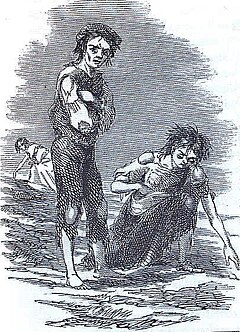
To take the soup sounds rather quaint- but harmless. However, in the Irish Catholic oral tradition it has a sinister meaning. Souperismwas a phenomenon of the Irish Famine. Protestant Bible societies set up schools in which starving children were fed, on the condition of receiving Protestant religious instruction at the same time. Its practitioners were reviled by the Catholic families who had to choose between Protestantism and starvation. By extension, even into the 20th Century, Catholics who converted to Protestantism, for any reason, were said to have taken the soup.
The Australian Imperial Force (A.I.F.) By the end of the war the A.I.F. had gained a reputation as being a well-trained and highly effective military force, playing a significant role in the final Allied victory. However, this reputation came at a heavy cost with a casualty rate among the highest of any belligerent for the war.
Rollestone Camp: Situated in an upland area of Wiltshire, it was described by one soldier stationed there as a bit bleak, especially for Australians used to a warmer climate. The water froze around Christmas time, and one night the troops’ corrugated iron cinema was blown away.
walkabout against the regs The Australian soldiers were not much inclined to obey what they would have seen as onerous and restrictive regulations. JJ, like many others, had his pay docked. In his case it was for being AWL for two days. The term walkabout is properly associated with the initiation ceremonies of Australian first nations’ young boys who prove their capacity for the transition to manhood by foraging in the Australian bush. As the estimable Wikipedia puts it Walkabout is a rite of passage in Australian Aboriginal society, during which males undergo a journey during adolescence, typically ages 10 to 16, and live in the wilderness for a period as long as six months to make the spiritual and traditional transition into manhood. I would hope I am not disrespecting our aboriginal traditions and lore by using this term to characterise the ways in which our Diggers struck out, in the ghastly reality that was the battlegrounds of the First World War, to assert their Australian manhood and identity. I know that there is a long and honourable tradition of Aboriginal service in conflicts in which Australia has been involved, yet to be fully acknowledged.
Digger as a usage has been traced back to early 19th Century but its current usage in a military context did not become prominent until World War I, when Australian and New Zealand troops began using it on the Western Front around 1916–17. Evolving out of its usage during the war, the term has been linked to the concept of the Anzac legend, but within a wider social context, it is linked to the concept of egalitarian mateship. I imagine that JJ would have latched on to the term Digger as a matter of pride!
Bullecourt more than any other battle, shook the confidence of Australian soldiers in the capacity of the British command; the errors, especially on April 10th and 11th, were obvious to almost everyone. Charles Bean, Official Historian.
Passchendaele. The battle took place on the Western Front, from July to November 1917, for control of the ridges south and east of the Belgian city of Ypres in West Flanders. In his Memoirsof 1938, Lloyd George wrote, Passchendaele was indeed one of the greatest disasters of the war … No soldier of any intelligence now defends this senseless campaign.
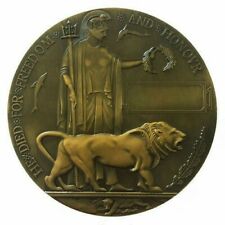
Dead Man’s Penny. This was a round bronze Memorial Plaque, 120 mm in diameter. It shows Britannia and a lion on the front and bears the inscription: He died for freedom and honour. The full name of the dead soldier is engraved on the right hand side of the plaque. No rank, unit or decorations are shown, befitting the equality of the sacrifice made by all casualties. The shape and appearance of the plaque earned it nicknames such as the Dead Man’s Penny, the Death Penny, and the Widow’s Penny.
Scapulars. A small necklace of sorts constructed from two wool patches of cloth. The most common scapular in Ireland in JJ’s time was the Brown Scapular of Our Lady of Mount Carmel upon which the words, Whosoever dies wearing this scapular shall not suffer eternal fire are stitched. I can remember wearing one like it when I was a boy, and, I think, it was the brown scapular…
Twist, Kunin, Kelly, Carey, Bragg, Baker, Kennedy, Northcott and Ray. These are some of the men killed in the H.E. blast that took JJ’s life. They are included in the lyric line as a litany to stand for the multitudes who perished in the conflict. May they rest in peace.
Hooge Crater Cemetery was begun by the 7th Division Burial Officer early in October 1917. [ shortly after JJ was killed] It contained originally 76 graves, in Rows A to D of Plot I, but was greatly increased after the Armistice. There are now 5,916 Commonwealth servicemen of the First World War buried or commemorated in this cemetery. 3,563 of the burials are unidentified, but special memorials record the names of a number of casualties either known or believed to be buried among them, or whose graves in other cemeteries were destroyed by shell fire.
one hundred years after I was killed My nephew, Joe Mitchell, arranged with the parish priest of Glenariffe, Father White, to have a Requiem Mass said on the centenary of JJ’s death. This was streamed online and I was honoured and deeply moved to be able to watch this event in real time from my home in Sydney, Australia.
The chapel in Glenariffe overlooks the beachThe chapel JJ would have known as a boy was burned down in 1915. Red Bay beach which stretches from the chapel site to the river at Waterfoot a mile or so away has been popular with holiday crowds for a long, long time.
Place a poppy by my name A quarter of a century ago, when Joe Mitchell wrote to me about JJ, I made a point of travelling to the War Memorial in Canberra where I placed a poppy next to his name, which I found on the rows of bronze tablets where, listed in alphabetical order, are the names of the fallen. On every visit since, I have placed a poppy next to his name, and, COVID restrictions allowing, our family will soon re-visit the site and continue the tradition of honouring his memory.
I wasn’t with the diggers marching home from that war.Some might think this is an incredibly stupid and self-evident statement as an ending for the song.
But I think (to set aside, for one moment, the traditional and eschatological Christian view) that any fallen warrior would regret the descent into Hades rather than returning to the sunlit meadows of our own fair Earth.
JJ’s anguished final cry in the song, is the one I would feel in his position, as I sank Lethe-wards and, reluctantly, crossed the Styx.
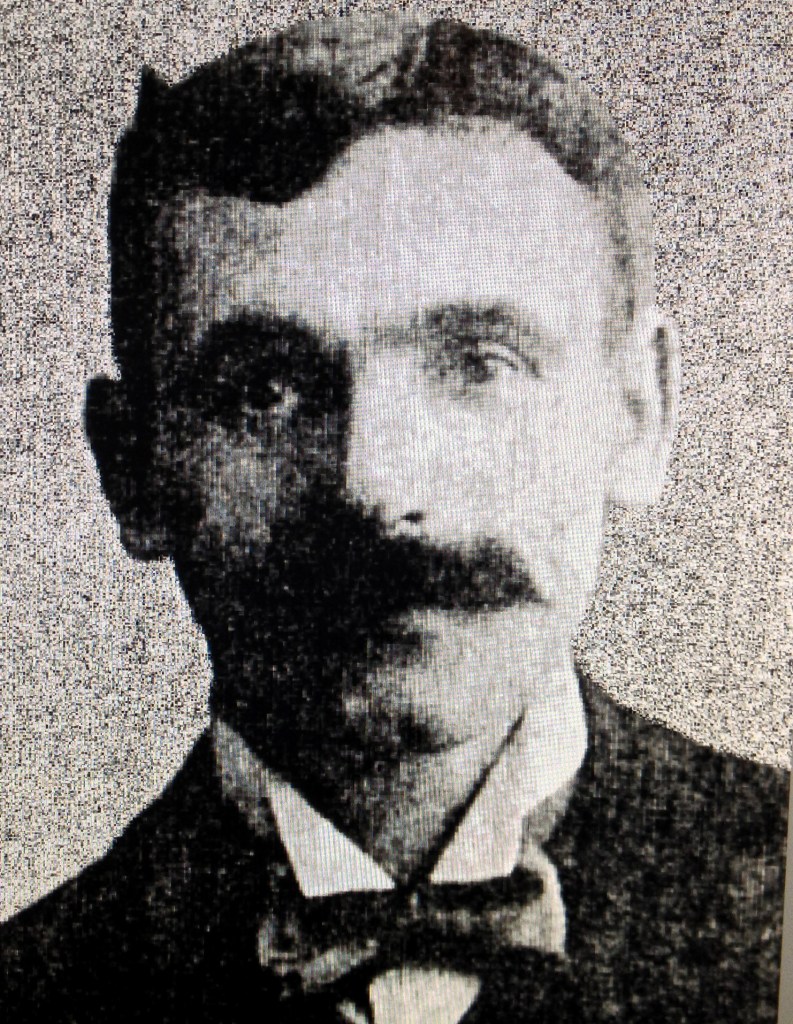
As I look at the grainy photograph of that handsome, mustachioed, face of my relative from over a century ago (of a man who is much younger than I am now) I hope that JJ will forgive me for any inadvertent misrepresentation that is embedded in the lyrics and accept that all I was trying to do was to honour his memory.
I felt a similar twinge about a quarter of a century ago when I wrote a song about my paternal grandmother, Rose, which can be accessed at https://quentinbega.com/2016/08/13/sq-41-rose/. My nephew, Joe Mitchell, was instrumental in my writing this song, too! Rose was another casualty of that war- not that she was a combatant. She was interned in Germany and returned to Ireland where she perished in an asylum, her mind broken by the trauma of imprisonment and separation from her husband- another Mitchell, who was captain of a ship en route to Hamburg as the clouds of war gathered.
[The author’s grandmother, Rose Henry Mitchell, was an officially unacknowledged casualty of WWI (at least her name is not inscribed on a monument) for reasons set out above but she is still remembered by her kin. Rose has a simple marker in the Bay cemetery, Glenariffe, and flowers are still being placed on her grave. Rose, married to John Joseph’s brother James, died of pulmonary phthisis in Antrim Area Asylum on November 19, 1915 nearly two years before JJ’s death in action . The site of the old Mitchell farm in the townland of Foriffe in Glenariffe – which would have been known well by both JJ and Rose – is still in the family.] additional notes by Joe Mitchell
There’s no fool like an old fool, they say, so what happens when a bunch of oul’ coots gather together to make music? The next batch of posts may enlighten you as to the question just posed and may also, perhaps, enrage or entertain. Anything’s better than a yawn, I guess. And everything that is not that bloody virus is a plus. At the moment we can’t meet as a group, as we are in lockdown, so I have set out a version of songs that are in our repertoire but which have not yet been recorded. With any luck (and, as three of us are north of 70, we’ll need it!) we will be able to resume our normal practice of meeting weekly and playing tunes, singing songs and generally enjoying the crack.
In my first journal entry for the sequence The Summa Quotidian way back in 2015, I mentioned the fact that it had been fifty years since I had written my first song. For this concluding entry to the sequence, A Bit of Banter, I wish to record the fact that the song included here took me fifty years to complete!
I wrote the first part as a 17-year-old, pimply, schoolboy on the inside cover of a Clancy Brothers songbook that I had been working my way through. I added to it over the years, putting a final touch to it three years ago, when I was 67. A couple of other examples from the 120 songs in The Summa Quotidian, also underwent a similarly, leisurely (some might even aver, slothfully) compositional process. By comparison, the 56 songs recorded over the past two months (61 days,) in lockdown, for the sequence, A Bit of Banter, achieved warp-speed! Of course, they are all, with the exception of the song at the end of this entry, covers, and not original compositions. So, what was happening just two days before I began recording for this project? Read on-
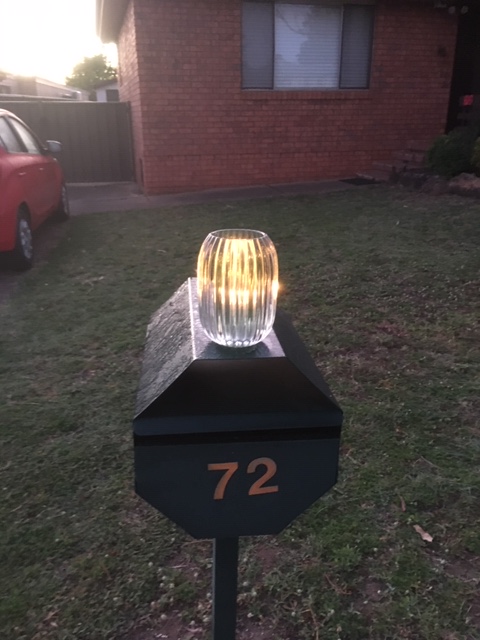
Just before dawn on Anzac day, April 25th, 2020, I stood in my driveway and listened to the broadcast from the Australian War Memorial. I set a candle on my letterbox and, glancing up and down the street saw men and women, at the end of their driveways, paying silent tribute to the fallen. A 70-something veteran with a chest full of medals walked slowly past and we nodded a greeting. After the ceremony, I returned to my home, where we are in lockdown, and thought, this was good– nothing like it before or, perhaps, after, the usual gatherings at war memorials throughout Australia cancelled because of the threat the virus posed, particularly to the aged. The thousands of Australians, like me, who shared in this experience will remember it, I would think, for the rest of their lives- long or short.
Some Millennial commentators have welcomed the advent of SARS-CoV-2 as an efficient Boomer Remover. Unfortunately for them, it does not so finely discriminate. While those of retirement age are more heavily afflicted, the virus does strike down many of those in other demographics as well. Careful what you wish for, eh?
Have you noticed that the crisis engendered by the pandemic has brought people of real worth to the fore? Not the vain-glorious bloviating buffoons who, hitherto, pranced across the (inter)national stage. I’m thinking about media-hungry politicians and the gross (and grossly overpaid) shock jocks.
But now, quietly spoken experts in epidemiology, nurses, doctors, check-out operators and shelf-stackers in supermarkets, paramedics, truck drivers and public transport employees-to name but a few- have engaged the respect of the public by their willingness to step forward in these strange times and do their duty, fully mindful of the potential consequences for themselves and their families. Meanwhile, the self-absorbed, those self-serving politicians and god-alone-knows how many vacuous celebrities infesting the media (social and mainstream) all continue to flout the regulations as if they don’t apply. Dante would have found a special circle of hell to accommodate them…
I’m now north of seventy years old with a handful of co-morbidities. My wife’s sister-in-law has died from coronavirus (on April 6, 2020, in Northern Ireland) and will be buried next to her mother in a small country graveyard in Rasharkin, County Antrim. She is the first person in our family circle to have been taken from us by the pandemic (May she rest in peace). Because her husband had pre-arranged their funeral-and-burial details some years previously, there have been no problems with the internment. Hitherto, some had felt that he was just too…what? Fastidious? Careful? Over-scrupulous?
What about, perspicacious! How many in the world today will follow her to a grave that will not be marked by the usual obsequies because of the overwhelming wave of deaths that will accompany the savagery of SARS-CoV-2 as it sweeps across the planet. When I viewed the mass graves in New York City on April 10, it was with horror I asked, Are we living in the 21st Century? And then I reflected: this has been happening in all too many countries, without respite, for every year of this century (and the one before) while most of us were looking away, or at fatuous reality shows on TV…
I do not know if I will survive this event. I may hope. I certainly will pray. I intend to persevere and, Deo Volente, endure. I had intended to update the posts to The Summa Quotidian which occupied 14 months from 27 April 2015 to the following 14 June 2016. Or 414 days. But I got side-tracked on the A Bit of Banter, sequence. Consequently, instead of Take This Frame Away being the start of something, I have decided that it might, more appropriately, put a full stop to the A Bit of Banter sequence.
There’s no fool like an old fool, they say, so what happens when a bunch of oul’ coots gather together to make music? The next batch of posts may enlighten you as to the question just posed and may also, perhaps, enrage or entertain. Anything’s better than a yawn, I guess. And everything that is not that bloody virus is a plus. At the moment we can’t meet as a group, as we are in lockdown, so I have set out a version of songs that are in our repertoire but which have not yet been recorded. With any luck (and, as three of us are north of 70, we’ll need it!) we will be able to resume our normal practice of meeting weekly and playing tunes, singing songs and generally enjoying the crack.
The Old House had always brought to my mind the ruins of Irish cottages you can find scattered throughout the island, redolent of failed lives and suffused with emigrant longing. And then I started to research (online, of course, especially but not only during the exigencies of the present pandemic). What did I find? Not what I expected! I envisioned a humble schoolmaster, perhaps, setting down these lines to an old half-remembered Irish air as he dwelt on his impoverished beginnings. The truth was diametrically opposed to my former imaginings! The writer of the song was a scion of an ancient Irish family: read on.
For many years, Baltrasna House was the ancestral home of the O’Reilly family…Baltrasna House and Estate were in the control of the O’Reilly family and later through marriage the O’Connor’s until the early 20th century … In the early 19th century the O’Reilly’s of Baltrasna House fell into financial difficulties… When the O’Reilly’s failed to keep up with the repayments they were dispossessed… However, the new owners were despised by their tenants and were terrorised by the Ribbon Men, a secret society that was active in pre-Famine times, that specialised in making life difficult for notorious landlords. The upshot of all this was that Anthony O’Reilly was reinstated at Baltrasna and continued to reside there until his death aged 62 in 1874…Anthony planted a tree for each of his seven daughters along the main avenue to the house. With the death of his only son, James, the family name at Baltrasna died with him. Anthony’s eldest daughter, Harriet Georgina (born 1841) married Matthew Richard Weld O’Connor in 1865 (source, irishidentity.com)
Lieutenant-Colonel Sir William Frederick Travers O’Connor (30 July 1870 – 14 December 1943) was an Irish diplomat and officer in the British and British Indian armies. He is remembered for his travels in Asia, cartography, study and publication of local cultures and language, his actions on the Younghusband expedition to Tibet, Royal Geographic Society council member, member of the Royal Automobile Club and for his work negotiating and signing the Nepal–Britain Treaty of 1923. O’Connor was born in 1870, Longford, Ireland, son of land agent Matthew Weld O’Connor, and Harriet Georgina, daughter of Anthony O’Reilly, of Baltrasna, County Meath. (source, Wikipedia)
O’Connor noted in his book, Things Mortal, that the famous Irish tenor, John McCormack, sang The Old House at The Royal Albert Hall in London on November 27, 1938. He was an exemplar of the British Imperial administrative elite- resourceful, multi-talented, showered with medals and widely travelled. Educated at Charterhouse, he attended the Royal Military Academy and was gazetted into the Royal Artillery. After a long, distinguished military career, ending in 1925, he travelled to the Americas where, in 1931 he was reported as inviting five men, with deep pockets, to accompany him on a tiger hunt to India for $100,00 apiece! Whether this transpired or not is problematical because two days later a bankruptcy petition was filed against him. Will I sing the song, anyway? Hell yes!
I use an orchestral ¾ time Band-in-a-Box setting and, as this is such a short song, I play mandolin over a penultimate instrumental verse. The song has no chorus, just three verses, so I follow some other artists in rising a semitone in the final verse. Compared to John MCormack and my favourite rendition by John McDermott- and I know I don’t compare-this version fairly lopes along at 100 bpm.