

Entry 61: The Answer– Back in 1979, when the German Democratic Republic was still a
glowering presence on the front-line of the Warsaw Pact, I watched a BBC documentary which showed East German scientists conducting animal research involving rats in order to find a “cure” for homosexuality.
The song, The Answer, was written then as a reaction against the excesses of reductionist philosophies such as Marxist dialectical materialism which produces this sort of absurd activity; although, falling to one’s knees to pray as a reaction may be seen as equally absurd.
 The mathematicians smug it up as they point to the answers contained in their elegant and, to most of us, incomprehensible equations. One, though, I like- perhaps because it’s the only one I sort of understand: the equation goes, 1=0.99 repeating.
Stephen Strogatz of Cornell University cites it as his fave, I love how simple it is — everyone understands what it says — yet how provocative it is. Many people don’t believe it could be true. It’s also beautifully balanced. The left side represents the beginning of mathematics; the right side represents the mysteries of infinity.
Popular culture goes for another number, though. In The Hitchiker’s Guide to the Galaxy by Douglas Adams, “The Answer to the Ultimate Question of Life, the Universe and Everything” calculated by an enormous supercomputer named Deep Thought over a period of 7.5 million years turns out to be the number 42. Unfortunately, the question is lost to us.
Maybe Adams was aware of the mathematician, Paul Cooper who theorised in 1966 that, the fastest, most efficient way to travel across continents would be to bore a straight hollow tube directly through the Earth, connecting a set of antipodes, remove the air from the tube and fall through. The first half of the journey consists of free-fall acceleration, while the second half consists of an exactly equal deceleration. The time for such a journey works out to be 42 minutes.
 Even if the tube does not pass through the exact centre of the Earth, the time for a journey powered entirely by gravity (known as a gravity train) always works out to be 42 minutes, so long as the tube remains friction-free, as while the force of gravity would be lessened, the distance travelled is reduced at an equal rate. (The same idea was proposed, without calculation by Lewis Carroll in 1893 in Sylvie and Bruno, Concluded.)
Doug Adams was a big fan of Lewis Carroll. The American Sara Teasdale who composed clear, elegant verse wrote a poem entitled The Answer early in the 20th Century. Again, you will have to search for the question, but it may be a tad uncomfortable, particularly if you are a male,
When I go back to earth/And all my joyous body/Puts off the red and white/That once had been so proud,/If men should pass above/With false and feeble pity,/My dust will find a voice/To answer them aloud:/“Be still, I am content,/Take back your poor compassion,/Joy was a flame in me/Too steady to destroy;/Lithe as a bending reed/Loving the storm that sways her—/I found more joy in sorrow/Than you could find in joy.”
The search for meaning takes people on strange and arduous paths. The image of a guru on a mountain top dispensing wisdom, wit or cynicism 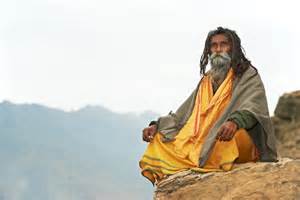 to an endless procession of seekers has become an enduring meme in popular culture. I remember being somewhat puzzled, as a teen in the sixties, by the Beatles’ infatuation with the giggling Maharishi; although, not much later, I followed them eastwards to explore the worlds of Buddhism and Taoism.
Not on anything so arduous as a pilgrimage, mind you. I used books as my means of conveyance- cheaper and more comfortable, I found (or, rather, I didn’t find- for interesting and diverting though the textual exploration was, in the end, I had to admit that I still hadn’t found what I was looking for).
That said, the concept of pilgrimage has always had an appeal to me, ever since, as a teen, I read Byron’s Childe Harold’s Pilgrimage,
…in Albion’s isle there dwelt a youth,/Who ne in virtue’s ways did take delight;/But spent his days in riot most uncouth,/And vexed with mirth the drowsy ear of Night./Ah, me! in sooth he was a shameless wight,/Sore given to revel and ungodly glee;/Few earthly things found favour in his sight/Save concubines and carnal companie,/And flaunting wassailers of high and low degree.
The 16-year old boy was, unsurprisingly, much taken by this. The Australian-Greek poet, Dimitris Tsaloumas  approximates where I am now, fifty years later, in his poem, The Pilgrimage, I’ve been on this pilgrimage for a long, bitter time…twelve austere couplets lead to the desolate conclusion that I share, as I flash in and out of belief, …I fear the message; there is no temple/ of light, no priest to read barefoot the voice of God.

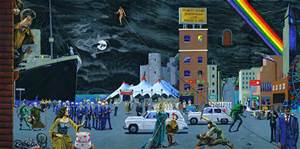 1979 (having just returned from a seven-year sojourn in Australia) and I had spent some time driving around Ireland and staying in various B&Bs and above pubs. I look at the photographs from that time and weep that I was so unconscious. My wife and kids were there too, thinking that I knew what I was doing. After all, would Hubby/Dad take off, driving them around Ireland without some sort of plan?
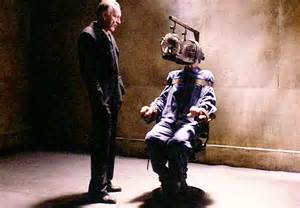 Mmm, as it transpired, Yes! The 1960s were the decade of coming of age; transition between Aruba and Ireland; between adolescence and young adulthood. The 1970s were years of graduation, marriage, children, emigration to Australia and first employment, return to Ireland and first (but not only) taste of unemployment. The song references two of the great influences on what might loosely be termed my development as a songwriter- Dylan’s phantasmagorical lyricism and Orwell’s pellucid prose.
 have a clear memory of a meal with my family at our home in Cushendall. This would have been sometime late in 1965. I was sixteen years old and my brother, Brendan had bought for me, as a birthday present, an LP by Bob Dylan called Highway 61 Revisited.
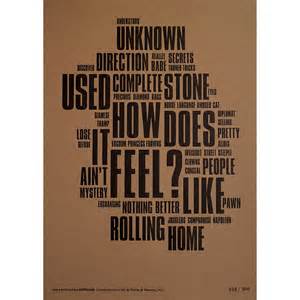 our family, Jim, who was visiting from County Cork where he was established as one of the new, young Vets of modern Ireland. He was knocked out- demanding that the 11-minute song, Desolation Row, was allowed to be played rather than turned off, when the meal was to be served. Did I preen? Yes. Did I get all the allusions Dylan peppered throughout his song? No. But I knew, at a visceral level, that this was an important work of art and that it would follow me down the years.
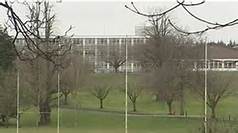 year, I mean. I was teaching English at Ballymena Academy to O-Level and A-Level. For a change, nothing much was going on politically or para-militarily in the province.
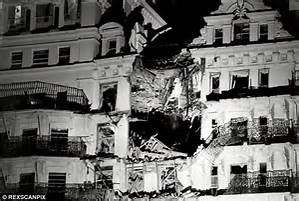 UK and Irish rockers to stage the Band-Aid charity event while in Australia, Bob Hawke was Prime Minister and a bunch of feuding bikies shot it out in a gun-battle that became known as the Milperra massacre. In the US, a gunman killed 20 people at a McDonalds in San Ysidro, California and in the UK the IRA blew up the Grand Hotel in Brighton where the Conservatives were holding their annual conference.
 Discovery made its maiden voyage. 1984, the novel, has given us some enduring concepts and memorable quotations. Doublethink, where one is capable of holding two contradictory ideas in one’s mind simultaneously and accepting both of them, is one of the concepts Orwell has bequeathed to us. His image of the future as a boot stamping on a human face, forever, is as chilling now as it was in 1949 when it was published.
 Irish poet, Louis MacNiece was among the ‘thirties poets, W.H. Auden, Cecil Day-Lewis and Stephen Spender who were opposed to fascism but he rejected the armchair activism of some of his contemporaries for a more wry take on the world that I responded to immediately when I read his poem, Bagpipe Music,
 gold;/When all is told/We cannot beg for pardon…// And not expecting pardon,/Hardened in heart anew,/But glad to have sat under/Thunder and rain with you,/And grateful too/For sunlight on the garden.
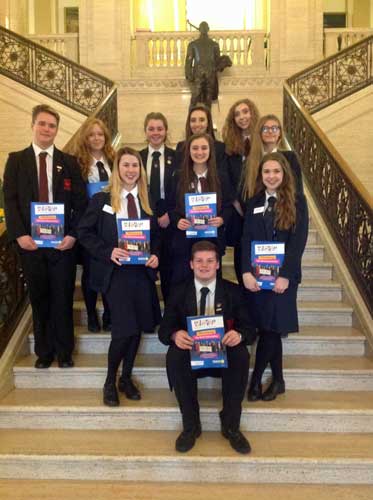 1980. It was a bit of a change from the multicultural, behavioural and academic mix that was Warrawong High School in NSW where I had worked for six years. The Academy was selective, taking the top 10% of students sorted by an exam at age 11. It was almost exclusively white and Christian- mostly Protestant although a few of the wealthier Catholic families sent their kids there. 95% of the kids wore their uniform neatly, did their homework without complaint and were attentive and cooperative in class. The polished, civilised, veneer of middle-class respectability shone out- for most of the time.
 in Cushendall, again) by the news that John Turnley, the area’s biggest landowner, had been assassinated on his way to a council meeting by three members of the UDA, the biggest Protestant paramilitary group. Although a scion of the Protestant ascendency, he had been drawn to the nationalist side of politics and, as a recent member of the Irish Independence Party, was agitating for recognition of political status for Republican prisoners in the H-Block.
 I almost love you/but would have cast, I know, /the stones of silence… I who have stood dumb/when your betraying sisters,/ cauled in tar,/wept by the railings. Like my students a few years later, he understands the exact and tribal… revenge.
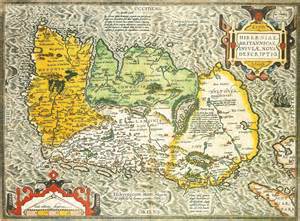 map, of course, the maker gets to name (or rename) all the places and notate the roads, bridges, forests, hills, settlements and other strategic elements that form the necessary preparation for the consolidation of imperial rule.
 On once asking an Irish peasant, why he sent his children to a school master who was notoriously addicted to spirituous liquors, rather than to a man of sober habits who taught in the same neighbourhood, “Why do I send them to Mat Meegan, is it?” he replied – “and do you think, Sir,” said he, “that I’d send them to that dry-headed dunce, Mr. Frazher, with his black coat upon him, and his caroline hat, and him wouldn’t take a glass of poteen wanst in seven years? Mat, Sir, likes it, and teaches the boys ten times betther whin he’s dhrunk nor when he’s sober; and you’ll never find a good tacher, Sir, but’s fond of it.
 range of subjects, including Greek and Latin as well as a curriculum geared to local needs. Where, oh where, are they now? The song which follows maps three different scenarios of imposing one’s will.
 Canaveral Launch Complex 41 sixteen days after its twin, Voyager 2, for a stupendous mission to chart the outer reaches of our solar system and beyond- that continues to this day. On August 25, 2012 it crossed the heliopause to become the first man-made object to enter interstellar space.
 German industrialist Hanns Martin Schleyer and subsequently murdered him among thirty-three others whose deaths they were responsible for. And as the tiny space craft, weighing only 721.9 kilograms, entered interstellar space, Norwegian mass murderer Anders Behring Breivik was sentenced to twenty-one years in jail for killing seventy-seven innocent people in Oslo and on the island of Utoya.
 the space-craft does not include details of human atrocities but instead images of the beauty and variety of life on earth as well as our cultural treasures. From the world of classical music, Bach, Mozart and Beethoven and Blind Willie Johnston and Chuck Berry from the realm of popular music. Incredibly, EMI refused permission to have the Beatles’ Here Comes the Sun included because of copyright concerns!
 to the interior, can be remarkable, too, as Margaret Atwood demonstrates in her poem about inward voyaging, that travel is not the easy going/from point to point, a dotted/line on a map…that here, too, are found cliffs and swamps, hills and a tangle of trees. And, crucially, I know/ it is easier for me to lose my way/ forever here, than in other landscapes.
 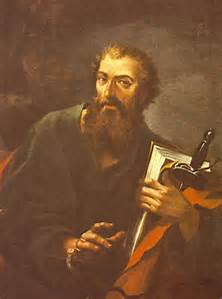 an account which deals with what is within- from a time thirteen hundred years before Marco Polo set out on his journey- is the towering figure of St Paul. The song is about him- but not only him, because I mash him up with another outstanding character from world history, contemporaneous with the apostle of the Gentiles; St Peter- you know, the guy who denied his leader- how many times?
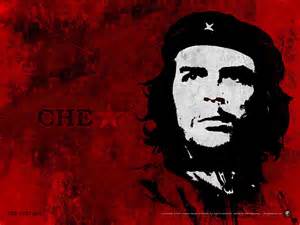 Then, when I found out that I had been lied too, egregiously, I swung to the fashionable Left, featuring Che Guevara et al. But, later, finding that the pendulum had swung to an equal and opposite lie- I became somewhat apathetic. Today, I find myself wondering if I should even pay attention to the volume of shite coming down the various pipes that masquerade as the media.
 was committed in Australia that filled me with anguish and broke the hearts of those who loved a vivacious and intelligent young woman named Jill Meagher who was raped and murdered in Melbourne.
 So intertwined are the stories of Peter and Paul that, in this song, I ascribe Peter’s Quo Vadis moment to Paul, as well. Heretic!
 phrase rootless cosmopolitan referred to an insult hurled by Stalin at Trotsky and I was going to apply it to myself. But then, a cursory examination, courtesy of Wikipedia, showed me that the ice-axe through the skull of Leon Bronstein occurred in 1940, many years before the insult became an instrument of the Soviet Dictator’s strategy for the removal of opponents.
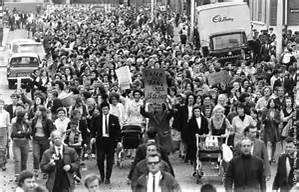 Then, I thought that I could make a fresh start by delving into my memory and resurrecting a scene from my younger days, when I was at a protest rally in Belfast. It was in late 1970 or early 1971. I remember that I was somewhere near the city centre. Things began to get hairy; I retreated to a safer distance; black-clad police formed phalanxes and then I spotted a student politician from Queen’s University, Belfast, with whom I had been in disputation at an earlier student conference, not sloping off, as I was, but running towards the police lines and, indeed, hopping into the Black Maria, without law and order assistance.
 Were I to follow precedent in the media over the past few years, I would name this prominent politician and watch as his career crashed and burned around him. I’ve got the proof, ha, ha! Of course, I have no intention of doing any such thing.
 making another start at all: (cunning, you see…) I do believe I was happier, and more attuned to the world and those around me, before the rubber band of schooling began to stretch me out of shape and sort us all out as points on the elongating, narrowing and vibrating ribbon that separates the educational sheep from the goats.
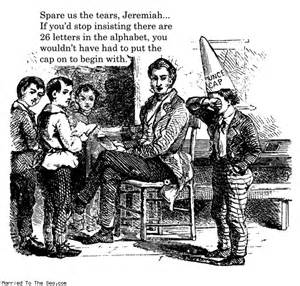 A Bildungsroman relates the growing up or “coming of age” of a sensitive person who goes in search of answers to life’s questions with the expectation that these will result from gaining experience of the world. The genre evolved from folklore tales of a dunce or youngest son going out in the world to seek his fortune.
 promised land. He wasn’t the first (or last, I guess) who will make that claim about one place or another. But after listening to the interview, a few lines from A Difficult Patriotism, by Michael Dransfield came to mind,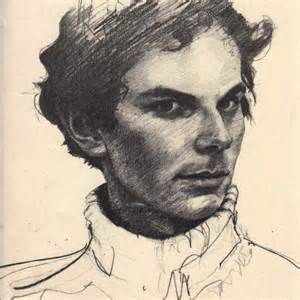

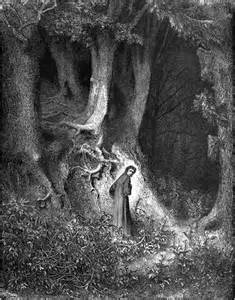 dark,/For the straightforward pathway had been lost. These lines are from the beginning of Dante’s The Inferno, as translated by Henry Wadsworth Longfellow. In all literature, The Divine Comedy, of which The Inferno forms the first and most popular part, has few peers: many poets see it as a touchstone against which to test their own prowess in translation and prosody.
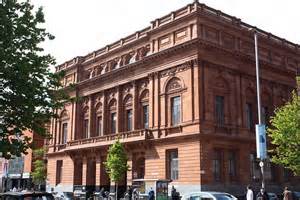 In similar fashion, I watched appalled as the social fabric of Belfast started to warp, fray and unravel from 1968 under the political and paramilitary forces increasingly at work before my eyes. I glanced backward at the departing light of mid-sixties optimism where the city was alive with great music in the dance-halls and clubs. As the tribal war drums began to reverberate, I retreated to Belfast City Library to access reading material and listening material to help me escape.
 continent since schoolboy Geography classes, I began to read about Australia. I determined to apply for a teaching post there and subsequently got a conditional offer from the New South Wales Education Department. Arriving in Aussie in August 1972, I found that I fit right in- a bit of an indictment really, in the light of what Ronald Conway had
 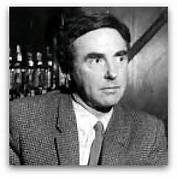 to say in his book The Great Australian Stupor, where he painted the Australian male as a completely inadequate father, selfish husband and incompetent lover, who took refuge from his inadequacies at the pub.
 now, it is a sad remnant of a long-ago time in this consumer age of 24/7 trading where the un- and under- employed and age-pensioners such as myself are in the dwindling band of those who may actually get- if not enjoy- a whole weekend of leisure. As to why we are here? He wrote, “Perhaps the wholly present point of our conscious existence is not to build a wall against mortality but live as deeply as we can so as to inspire those who come after.”
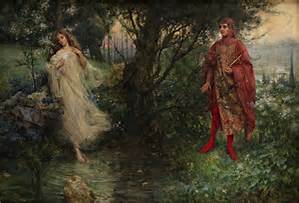 2009. Conway’s acerbic critique has been a challenge to me over the decades. First, in the 70s where I was less than half-way along my life’s path when things got twisted and I couldn’t find the way. My Beatrice led me back to where it all began, in Ireland in 1979, but as others, too, have found, you can’t go back.
 life and I must admit that I noticed that things had changed quite a bit in the almost ten-year absence. And, they’ve continued to change; yet, strangely, despite all this- Australia remains a land of dreams and endless opportunities that the ugly spectres from the other, older and raddled hemisphere have not been able to infect so far, touch wood!
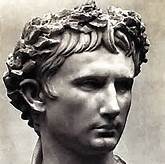 Augustus declared himself Princeps or “first citizen”; the Roman poet, Horace, published his first three books of Odes; and, elsewhere in the Roman sphere of influence, Herod the Great built a sumptuous palace in Jerusalem and married the ravishing beauty, Mariamme, after raising her Dad to an appropriate level- one commensurate with his lascivious…eye?
 entry concerns itself with. The title of the song of the entry is taken from one of the Odes. Book 1, Ode 34. The Odes cover a range of subjects – Love, Friendship, Wine, Religion, Morality, Patriotism; poems of eulogy addressed to Augustus and his relations; and verses written on a miscellany of subjects and incidents, including the uncertainty of life, the cultivation of tranquillity and contentment, and the observance of moderation or the “golden mean.” Thank you Wikipedia.
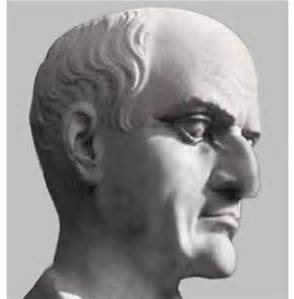 commentators, his association with the regime was a delicate balance in which he maintained a strong measure of independence (he was “a master of the graceful sidestep”) but for others he was, in John Dryden‘s phrase, “a well-mannered court slave”.
 His patronage was exercised, not from vanity or a mere dilettante love of letters, but with a view to the higher interest of the state. He recognised in the genius of the poets of that time, not only the truest ornament of the court, but a power of reconciling men’s minds to the new order of things, and of investing the actual state of affairs with an ideal glory and majesty. The change in seriousness of purpose between the Eclogues and the Georgics of Virgil was in a great measure the result of the direction given by the statesman to the poet’s genius. A similar change between the earlier odes of Horace, in which he declares his epicurean indifference to affairs of state, and the great national odes of the third book has been ascribed by some to the same guidance.
 other totalitarian dictators arrange for something similar in history? Have you ever been persuaded, either by self-censorship or kindly persuasion, to massage an opinion genuinely held to something other than that which you actually believe? No! Cast the first stone then, by all means! Nevertheless, Horace speaks across the millennia to us: carpe diem, anyone?
 William’s portrayal of teacher John Keating in the film, Dead Poets Society, who exhorts his students to, Seize the day, boys. Make your lives extraordinary. The phrase is from Book 1, Ode 11. …life is short; should hope be more?/In the moment of our talking, envious time has ebb’d away./Seize the day; trust tomorrow e’en as little as you may. Time and mortality were themes Horace returned to in Ode seven of the fourth book.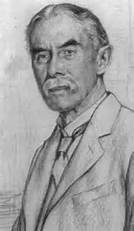
 regarded./ He talks of Fortune as a bird of prey tearing the crest off one,/Setting it down bleeding on the next.
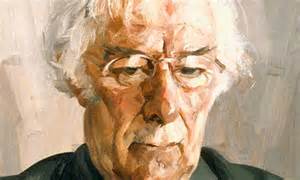 Famous Seamus. After reading District and Circle, the collection from which this poem is taken, I wrote this song in 2007.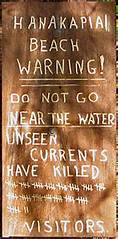
 couldn’t get a seat/When she got a seat/She fell fast asleep/Skinny Malink Malogen legs/Big banana feet. This is one of a dozen or more Belfast skipping songs that my wife has related to our children over the years, remembered from her own childhood in the late fifties.
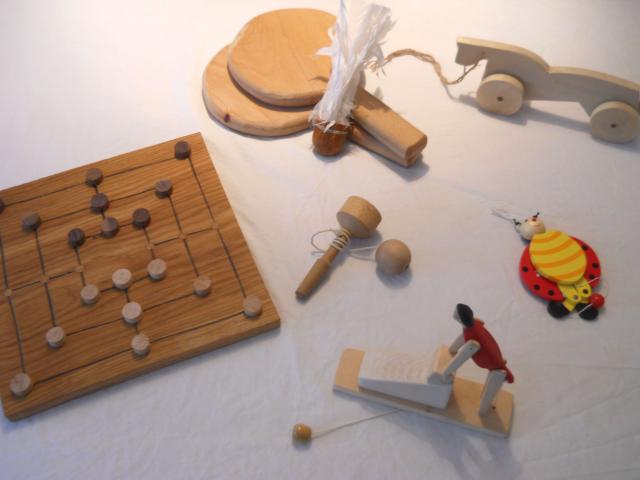 Incidentally, according to Wikipedia, there is an actual date for “time immemorial”, in 1275, by the first Statute of Westminster, the time of memory was limited to the reign of Richard I (Richard the Lionheart), beginning 6 July 1189, the date of the King’s accession. But, sticklers and pedants, notwithstanding, I think that children’s games extend much further into the past than this. We know from archaeological artefacts that children in the cities of the ancient world played games.
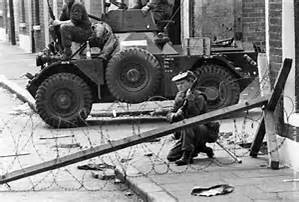 with a jolt- the British soldiers on street corners armed with SLRs, the Saracen armoured cars, the rusty delivery vans, old clunkers and drab terraces of the lower Falls Road- but above all, the Dystopian nightmare of the Divis Flats complex, one of the 1960s high-rise developments that, within a couple of decades, were demolished.
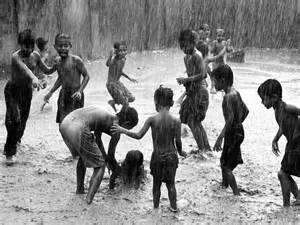 in Just-spring when the world is mud-luscious the little lame balloonman whistles far and wee and eddieandbill come running from marbles and piracies and it’s spring when the world is puddle-wonderful the queer old balloonman whistles far and wee and bettyandisbel come dancing from hop-scotch and jump-rope and it’s spring and the goat-footed balloonMan whistles far and wee.
 the slow-train’s puffing stamp//Gathering speed. A bulbul sings,/Raiding persimmon and fig./The rooster in full glossy rig/Crows triumph at the state of things.//I make no comment; I don’t know;/I don’t know what there is to know./I hear that every answer’s No,/But can’t believe it can be so.
 children use to master the complexity of numbers. One of the most ubiquitous is the use of the tally, to keep track of an unfolding sequence- you know what I mean, four vertical strokes and one diagonal across them to indicate the number five. Prisoners can keep tally of their durance vile on the walls of their cells by scratching an ongoing record of their incarceration.
 Hawaiian island of Kauai where a sign warns, do not go near the water, unseen currents have killed-what follows is a tally in chalk on the board and you can see the most recent death toll by counting the tally. As of August 2014 there were 83 tally marks. I can’t vouch for its accuracy, but I’m pretty sure that I would forego a swim there, despite the heat of the day.
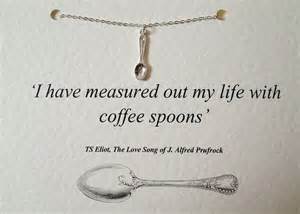 you, like Prufrock, measure out your life with coffee spoons?
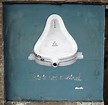 require you to walk past urinals while a woman dressed in a communion dress reads lewd poetry. No need to take up your bulging biros or strike your cataplexic keyboards in protest- all the participants are long dead as this performance took place almost a century ago in Cologne.
 the Cabaret Voltaire in Zurich, is celebrating 100 years since Hugo Ball and Emmy Hennings opened for business in 1916. The website of this venerable establishment extends a welcome, in German, of course, to all visitors and you may even enjoy a coffee freshly brewed as you attend one of the performances.
 German and then decide whether you would have been one of the ones storming the stage,
 In a thought-scenario, in the spirit of Dadaism, I have come prepared; my overcoat pockets stuffed with rotten tomatoes, which I hurl joyfully at the orator onstage while shouting critique concrete, critique concrete! The red mush dripping from his head and my hands is nothing compared the red mush of the cataclysmic conflict tearing the old Europe apart. It is but a kiss compared to a decapitation.
 suicide, A Savage God, which I read in Wollongong in the mid-seventies. This book has supplied an earlier song,
 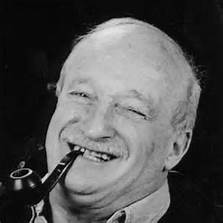 books on a diverse range of subjects including poker, mountaineering, divorce, the oil business, dreams as well as books about and of poetry. Add to that, his tenure as poetry editor and critic for The Observer from 1956-1966 and I think you’ll agree that he has paid his dues.
 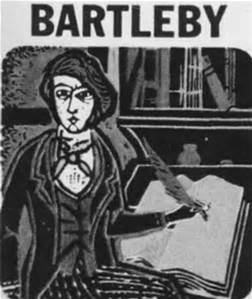 absorbed by the nihilism of Dada who, like Melville’s protagonist in his short story Bartleby the Scrivener, becomes more and more removed from the world; who responds to well-meaning words with a formulaic response of his own- I prefer not to, until the logical outcome of such an outlook: extinguishment.
 The feathers lift -/like the sudden coming on/of sprinklered water/over imperial lawns./ Breeze-shaken and trembling -/you imagine the break/into a drift of wish-flowers./Now the fan streaming with dance -/(imagine the face of an/angel/streaming with light/in an annunciation).
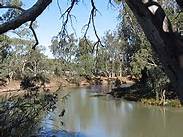 Boree Creek pub in the Riverina of NSW in the mid-seventies. When I asked about the name, one man told me that squatters in the 19th Century had poisoned the creek to get rid of the local aboriginal tribe. Another vehemently disagreed and said it was a furphy.
 poisoned by the early settlers at what is known as the Poisoned Waterholes, on the Wagga road, a few miles from Narrandera. I have been in the Narrandera district for some 57 years and. know some of the early settlers of about 100 years ago, none of whom gave credence to such statements.
  curdling tales and add to them as they go along to make them more interesting. Perhaps the person most responsible for the wild tales of alleged atrocities against the blacks is a lady, Dame Mary Gilmore…
  In October, 2015, Stan Grant, proud Wiradjuri man, winner of the prestigious 2015 Walkley award for coverage of Aboriginal Australia and the Indigenous affairs editor for The Guardian, Australia, wrote,
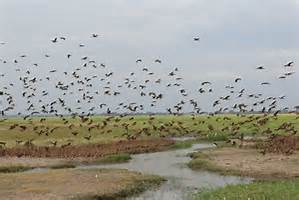 as they skim the surface. In the distance I can hear the barking of a dog and there is a breeze pushing softly through the long grass.
 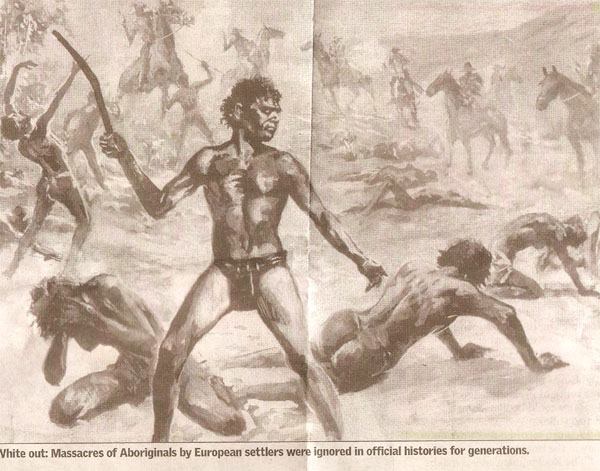 The Wiradjuri rested here and drank from the stream. As the conflict continued the local homestead owner grew tired of the black people on his property, so he poisoned their waterhole. Many drank from it and died agonising deaths. “Really, Dad?” My son asks. “Here in Narrandera?…” I tell him that later other Wiradjuri people sought refuge from a white raiding party.
 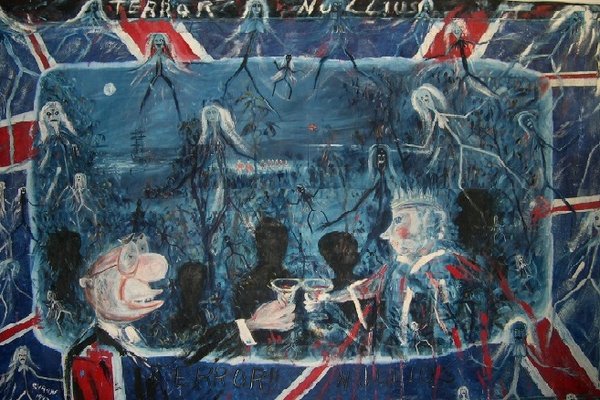 associated with dispossession from the land of my birth are more generally accurate than not and that the harassment and persecution of travelling people continue to this day. The song deals with three groups, the Aboriginal people of Australia, the various travelling people of Europe and the Irish people.
 I leave you with this verse extract by George Gow’s nemesis, Dame Mary Gilmore, entitled The Waradgery Tribe,