
Entry 91: Parting Words- The amiable Duke of Gloucester, upon being presented with the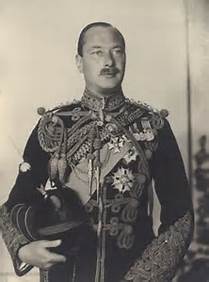 second volume of Edward Gibbon’s Decline and Fall… exclaimed to the author, Another damned, thick, square book! Always scribble, scribble, scribble! Eh! Mr Gibbon? So, you see, Prince Phillip is far from being the first aristocratic dolt when it comes to matters cerebral.
I must confess, dear listener, that the punk inside can’t help but whoop with glee: How dare people be so talented! I aimed for mediocrity and fell short… Words, words, words. I wonder what Gibbon would have made of Bo Burnham’s YouTube routine? Rather than an exploration of words, this entry narrows it to first words, last words and parting words.
First words need not detain us long as they do not overly whelm, do they? Mama, Dada, Goo-goo, Gaga. Last words are a bit more entertaining: Lady Astor, awakening briefly during her final illness to find her family gathered around her inquired, Am I dying or is this 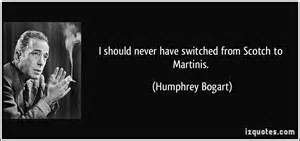 my birthday? Cautionary notes are sounded, too: I should never have switched from Scotch to Martinis, Humphrey Bogart warned before shuffling off this mortal coil in 1957.
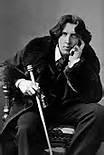
For those who prefer a more tragic tone to this most tragic of outcomes will reflect upon the final words of Caesar, Et tu, Brute? Aficionados of wit will find it hard to go past Oscar Wilde’s final observation: Either that wallpaper goes, or I do. The cats among us will relate to the Italian Renaissance painter, Pietro Perugino, the teacher of Raphael, who explained why he refused to allow a priest to hear his final confession, I am curious to see what happens in the next world to one who dies unshriven.
And so, to parting words. Some are spiteful, such as those of Malvolio, the pompous ass who has been made a fool of in  Shakespeare’s Twelfth Night, I’ll be revenged on the whole pack of you! If you are a romantic soul, you will nod your head slowly and sing along to Nat King Cole’s 1949 recording of the wonderful For all we know, we may never meet again/Before you go, make this moment sweet again/For all we know, this may only be a dream/We come and go like a ripple on a stream.
How often have you been afflicted by staircase wit? You know, someone hits you with a zinger and you only think of the telling retort when it is too late. The phrase, staircase wit, comes from the French of philosopher, Denis Diderot who encountered such a situation at a soiree in Paris, “a sensitive man, such as myself, overwhelmed by the words levelled against him, becomes confused and can only think clearly again when he reaches the bottom of the stairs”.
Winston Churchill, for all his weaknesses, was not prone to this one. A famous exchange involving the great man and Lady Astor is well-known but worth repeating, Winston, you’re drunk!/But I shall be sober in the morning and you, madam, will still be ugly./Mr. Churchill, if you were my husband, I’d put poison in your tea./Madam, if I were your husband, I’d drink it. Another British 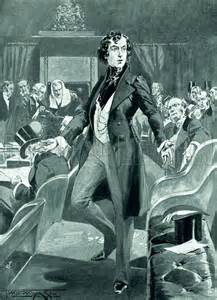 politician, Benjamin Disraeli, was heckled by an opposition MP, Sir, you will either die on the gallows or of some unspeakable disease./That depends, sir, on whether I embrace your policies or your mistress, was Disraeli’s response.
And now to the inspiration for the song: The Moon and Sixpence, a novel by Somerset Maugham, one of my favourite authors, published in 1919. I am tempted to introduce the thing with a profound-ish quote such as, Money is the string with which a sardonic destiny directs the motions of its puppets, but self-awareness insists upon the use of one aimed, it seems, at me, the ability to quote is a serviceable substitute for wit.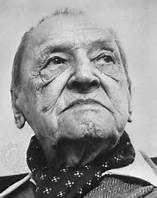
Ouch! The Moon and Sixpence deals with a protagonist, Charles Strickland, who abandons wife and children, is oblivious to the sufferings of others in the pursuit of his art, and who dies of leprosy in Tahiti leaving paintings of genius but whose magnum opus was painted on the walls of his final habitation, a native hut, which was burnt to the ground on his orders after his death. Although the title was not explained in the text of the novel, Maugham provided the following in a letter dated 1956, If you look on the ground in search of a sixpence, you don’t look up, and so miss the moon.
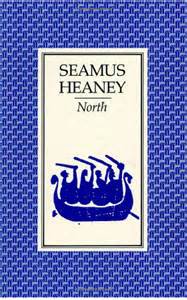 The song was written in 1979 and I was writing and drinking furiously. I was re-reading the poems in North by Seamus Heaney and in the final poem of the collection, Exposure, I found something that spoke to me as I put together the words and music of Parting Words. I was feeling cut off and uncertain of direction, and Heaney’s verse seemed particularly apt:
How did I end up like this?/ I am neither internee nor informer;/An inner emigre, grown long-haired/And thoughtful;/ Who, blowing up these sparks/For their meagre heat, have missed/The once-in-a-lifetime portent,/The comet’s pulsing rose.
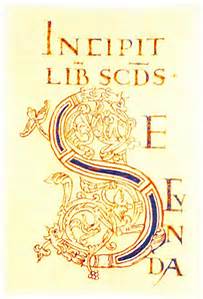 to be confused with insipid which is an adjective meaning weak or tasteless. This sonic confusion may be the reason that many choose to pronounce it in- kip – it. An incipit is the first few words of a text that serves instead of a title and they are found on some of the earliest examples of writing.
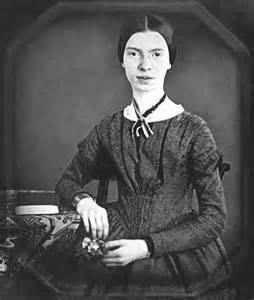 A literary game to pass an idle afternoon involves selecting a number of first lines to create a “new” Dickinson poem, a feather from the whippoorwill/a face devoid of love or grace/a faded boy in sallow clothes/ a doubt if it be us. One doubts that such games would have been played in the literary salons of 18th Century Paris or London given their more serious aims of educating and enlightening but I like to think that the following anecdote (possibly apocryphal) concerning Samuel Johnson might have occurred as he was seeking entrée to one of the London salon evenings of that severely moral bluestocking, Lady Elizabeth Montagu,
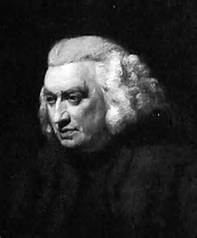 hosted by an aristocratic lady with his clothes in disarray. Here’s what allegedly followed: Aristocratic lady: “Dr Johnson, your penis is sticking out!” Dr Johnson: Madame, you flatter yourself. “It’s HANGING out.”
 Unlike the learned doctor, we are unlikely to gain admittance to a literary salon, if for no other reason than we lack a functioning time machine. However, most of us have indulged in parlour games of one sort or another. Some, such as blind man’s buff go back millennia, others merely centuries such as charades. But I am happy to report that ingenious games continue into modern times.
 where players must link to a previously uttered title of a book, film, play or song. For example, A Tale of Two Cities can elicit the response Great Expectations (the link being Charles Dickens, author of both novels). The response, Tea for Two, a song from the film, No No Nanette, is permissible because of the link work two. Links employing puns, the more groan-worthy the better, are allowable also. For example, the Eagles’ song Tequila Sunrise, can prompt the response To Kill a Mockingbird, provided it’s pronounced Tequila Mockingbird!
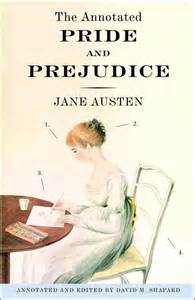 Famous first lines from novels, plays, and songs are a fertile source of harmless parlour activity. Can you identify the novel and author of the following? It is a truth universally acknowledged, that a single man in possession of a good fortune, must be in want of a wife. Or
 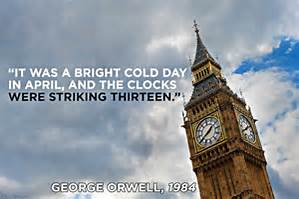 what about, It was a bright cold day in April, and the clocks were striking thirteen. The next example is a bit longer, but I’m sure you’ll nail it, It was the best of times, it was the worst of times, it was the age of wisdom, it was the age of foolishness, it was the epoch of belief, it was the epoch of incredulity, it was the season of Light, it
  was the season of Darkness, it was the spring of hope, it was the winter of despair, we had everything before us, we had nothing before us, we were all going direct to Heaven, we were all going direct the other way.
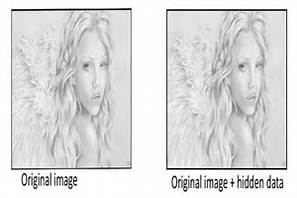 of such a remark, you’ll- rightly- assume that your perspicacity has been called into question. And yet, how unfair! Steganographers regularly conceal nefarious texts within innocent-seeming pictures. Pictures do not always tell the truth. People who delight in deceit, obfuscation, puzzles, riddles, conundrums and sleight of hand are drawn to this practice.
 long way. (A note to Gen Y: photo-shopping is not really a new idea.) The Spartan king, Demaratus, sent a warning to the Greeks of an impending Persian attack by writing the message on the wooden board under an innocent wax covering upon which was written innocuous material. Tricky, eh? But not as tricky as Demaratus himself when he eventually switched sides and served as an advisor to Xerxes during his invasion of Greece in 480 BC.
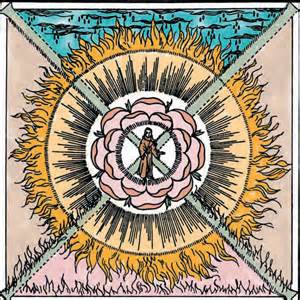 with cryptocurrency testing. But they are probably a small group of tech-savvy anti-establishment geeks who would have been Rosicrucians in medieval times or members of the Hermetic Society of the Golden Dawn a century ago.
 For my part, I cross the Nepean River to the Penrith Regional Art Gallery or travel by train to the Art Gallery of NSW or drive down to Canberra to the National Gallery- especially when there is a touring international show. Should my- generally prevailing- inertia prevent so much activity, I listen to music, say, Mussorgsky’s Pictures at an Exhibition in Ravel’s magnificent orchestration, as played by the Chicago Symphony under Solti.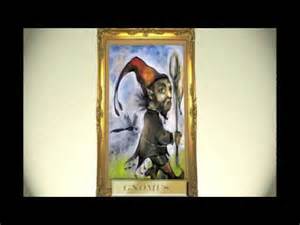
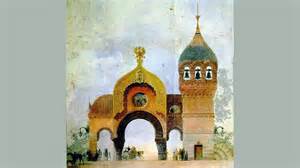 piece so much is that it is a testament to friendship.
 published an, admittedly, flawed version in 1886, it, arguably, would have been lost to posterity. It makes you wonder how many masterpieces have sunk without trace because of the lack of a friend to pull it from oblivion.
 Like Mussorgsky, I place value in drinking as an aid to inspiration, and during one bibulous late night alone I found myself surveying the living room: first, a wedding photograph in a silver frame, next, a family tree with photos of grandparents, us and the kids, followed by a wooden warrior with a shield from New Guinea. A ceramic Taoist philosopher made by my daughter sat on the cathode-ray TV which we still possessed then on which a muted re-run of Twin Peaks was showing.
 to a partially completed cryptic crossword. Picking up the pen lying beside the paper, I jotted down a few ideas which, a day later, I worked up into this song. As Nietzsche so cogently observed, for art to exist… a certain physiological precondition is indispensable: intoxication
 three days now in preparation for the feast. For the first time since it was inaugurated in Sydney, the St Paddy’s Day parade will not be held. The reason? Money. The organisers discovered the debt too late to do much more than pass round the begging bowl in the hopes that next year it will be reinstated.
 One would have thought the fact that this year is the Centenary of the Easter Rising in Dublin, a not inconsequential event in Irish history, might have concentrated the minds of the committee. Ah, well. So Irish. And so much for thinking ahead.
 of the gathering in the park near Central station in the mid-to-late 90s. In the years since, the celebration moved to another, enclosed, location and it has gone up-market with the tight security and ballooning expenses that goes with such a move.
 love of money is the root of all evil. When we started, we were a knock-about group playing in small rooms in the back of pubs and clubs. Then we got ideas. What about getting better equipment? Mics, a PA, stands, cables? But to pay for these? Charge the venues. And slowly and inexorably things changed. A mate who was OK in the more relaxed atmosphere of an informal session, found he could not fit in to the more disciplined requirements of the new regime. So, he left.
 dancing? Not really, having neither a bass nor a drum-kit. But if you can stomp a hornpipe or reel or double jig- go for your life! Now, seeing how musicians, however accomplished, have become merely part of the backdrop, a blood-and-guts juke-box over which the audience discuss loudly the minutiae of their lives or consult constantly their digital devices lest they miss out on the latest ephemeral tit-bit chiming through the ether, I am glad that I don’t have to endure the ignominy that is par for the course.
 Some don’t seem to mind; a duo playing along to backing tracks with vocal enhancers makes more economic sense than having to divvy up the meagre spoils among five or six. Still, radix malorum est cupiditas. Chaucer’s tale of three young drunken revellers who set out to murder Death, who had claimed one of their friends that very day, is a masterpiece of storytelling.
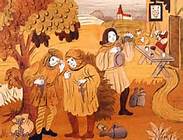 ye shal hym fynde. And under the oak tree, instead of their quarry, they find bags of gold. They draw straws to determine who should go back to the tavern to get wine to celebrate their great fortune. The youngest draws the short straw and sets off.
 I was there for the inaugural event in 1995 and returned for quite a few years but have not been there for at least a decade. On a whim, upon learning that there was no parade, I decided to book my wife and myself into accommodation there. I reckon that I must have got just about the last room going in Katoomba and I reckon that I paid about five times the normal tariff. Silly me. Radix malorum est cupiditas is alive and well.
 this account; instead, let Goethe have the last word, One ought, every day at least, to hear a little song, read a good poem, see a fine picture, and, if it were possible, to speak a few reasonable words.
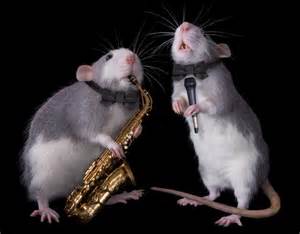 actually- it doesn’t look too bad from a human perspective. Lots of friends and things to do, plentiful food and diverting activities including the odd hit of stimulating substances such as cocaine: what’s not to like? In Rat Park there is no war on drugs and hence no multi-billion-dollar organised criminal rodent cartels corrupting the institutions of society and spreading misery and mayhem through every level of Rat Park.
 The rats are free to have a blast whenever they feel like it. But, surely then, there are hordes of addicted, drug-addled rats committing all sorts of dastardly rat-crimes all over the place? No… Back in the 1970s a perceptive psychology professor from Vancouver, Bruce K Alexander, questioned the accepted protocol of placing lone rats in a bare cage and offering them drug-laced water. The outcome of such a protocol was: heavily addicted rats who would take the drugged water repeatedly until death intervened.
 lived in a healthy, harmonious community, they partook of the stimulants offered- but did not become dysfunctional. I read an article (or it may be a transcript of a speech) of his from July 3 2014 which begins,
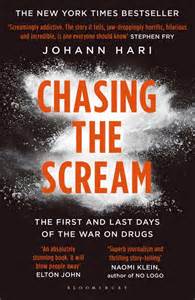 fragmented societies, addiction leaves few people untouched. This dislocation thesis is eloquently elaborated by Johann Hari in his book, Chasing the Scream: the First and Last Days of the War on Drugs.
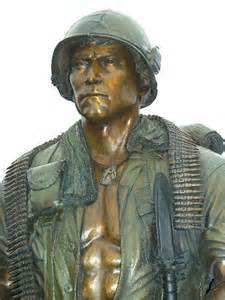 the addicted soldiers…simply stopped. Very few had rehab. They shifted from a terrifying cage back to a pleasant one, so didn’t want the drug any more. WTF! All this was known forty years ago?
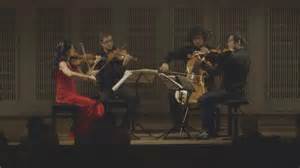 Beethoven’s late quartets as I toss and turn in the sheets and try to imagine a sun rising sometime soon when I can re-join the world of birds and buses and busy, busy, busy people.
 by the eight chemical kisses./What a lay me down this is/with two pink, two orange,/ two green, two white goodnights./Fee-fi-fo-fum-/Now I’m borrowed./Now I’m numb.
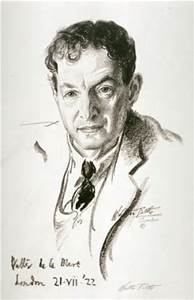 you must have been a budding guitarist along with me as I took up the challenge of negotiating the pathways of the guitar. Walter de La Mare knew the feeling, When music sounds, gone is the earth I know,/ And all her lovely things even lovelier grow.
 a position with the Catholic establishment of the diocese. He raped me, or did his best to, one night when I was more than just a wee bit in my cups. The shadow at my left-hand told me that it was OK to lie to achieve whatever you wanted as long as you didn’t get caught in the arms of someone’s wife. The shadow at my right-hand told me that anything was OK as long as you didn’t get caught and you were secure in the arms of mother church.
 surveyed the drunken crowd at the Penrith Gaels on Paddy’s Day, 2016. I identified with him as he played to a largely oblivious audience. And this is why it is good to go to music festivals. The day after, we spent three days in Katoomba wandering from venue to venue within the festival site and heard some of the best music going on this planet. Some of it was courtesy of artists with an international reputation but, if you are lucky, a new unknown emerges to gasps of delight as the audience members recognise that a new star has ignited and was starting to shine in the musical firmament.
 idn’t really have the requisite chops.
 poem, Music, When music sounds, all that I was I am/ Ere to this haunt of brooding dust I came. Brooding dust- don’t you love poets for their verbal felicity!
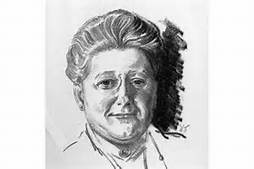 Journalist Heywood Broun Jr, who is remembered for his passion for battling social ills and for taking the part of the underdog, defended Amy Lowell in his obituary notice for her, Given one more gram of emotion, Amy Lowell would have burst into flame and been consumed to cinders. Very handsomely done, sir! You get a sense of this in a poem of hers entitled, Music, where the persona lies in bed at night and listens to a flute being played by her neighbour.
 always the sky to look at,/Or the water in the well!/But when night comes and he plays his flute,/I think of him as a young man,/With gold seals hanging from his watch,/And a blue coat with silver buttons./As I lie in my bed/The flute-notes push against my ears and lips,/And I go to sleep, dreaming.
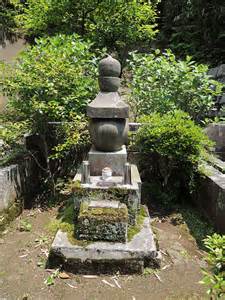 half-opened, a mirror wiped clean. It is a way of returning to nature, to our moon nature, our cherry blossom nature, our falling leaf nature, in short, to our Buddha nature. It is a way in which the cold winter rain, the swallows of evening, even the very day in its hotness, and the length of the night, become truly alive, share in our humanity, speak their own silent and expressive language.
  My first memory of haiku was reading Alan Watts, a populariser of eastern philosophies, when I began, during the mid-1970s, to search for meaning outside the frame of Western, Judeo-Christian perspectives. Watts, also, has influenced generations of writers and I was taken by the lucidity with which he communicated his enthusiasm for exploring elements of being and consciousness, particularly in his books The Way of Zen and Tao: the watercourse way.
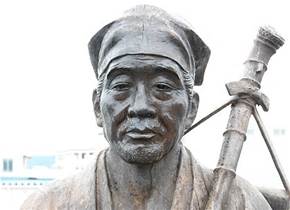 talks to new, digital generations. Both Blyth and, later, Watts brought the 17th Century Edo Period poet Basho to the attention of Western audiences. Working in my box-room tonight, cut off from every natural sight and sipping spirits, I am reminded of one of Basho’s haiku, No blossoms and no moon,/and he is drinking sake/all alone! Not an exact match, though- my computer tells me there is a waning gibbous moon outside, 71% illumination, and I am imbibing whiskey, not sake. But close enough for the purposes of this journal.
 So let’s talk about flowers now- in particular Camellia sasanqua. That excellent resource, Wikipedia informs me, At the beginning of the Edo period, cultivars of Camellia sasanqua began appearing… It has a long history of cultivation in Japan for practical rather than decorative reasons. The leaves are used to make tea while the seeds or nuts are used to make tea seed oil, which is used for lighting, lubrication, cooking and cosmetic purposes. Tea oil has a higher calorific content than any other edible oil available naturally in Japan. Camellia sasanqua is valued in gardens for its handsome glossy green foliage, and fragrant single white flowers produced extremely early in the season.
 Along this road/Goes no one/This autumn evening.
 Moonlight slants through/ The vast bamboo grove:/ A cuckoo cries
 From time to time/The clouds give rest/To the moon beholders.
 The butterfly is perfuming/Its wings in the scent/Of the orchid.



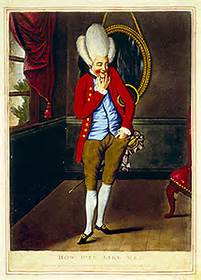
 planned by my daughter to make a fool out of me. She had to leave to catch the bus (for something or other) and my wife came into the bedroom to advise me that I had just dodged a bullet. But, me being me, I lolled in bed for a further three hours to make assurances doubly sure. I’ve been fooled before, of course, and I will be again.
 myself in: I luxuriate under the sheets while the rest of the family are up and moving and shaking and generally making a good impression of being productive citizens. So, I reprise, if only for a short while, the part of an indolent dandy. As a teen I discovered mad, bad and dangerous to know Lord Byron. I dressed, for a time, in paisley cravats, bell-bottom trousers and floral shirts ensuring hoots of derision as I walked past Belfast building sites on my way to visit my Mod girlfriend- later, wife.
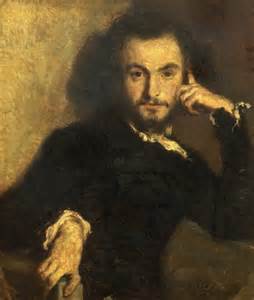 of beauty in their own persons… The dandy must aspire to be sublime without interruption; he must live and sleep before a mirror. His poems, especially in the 1857 volume, The Flowers of Evil, with their themes of sex and death, are perennially appealing to youth.
 Sooner or later, though, most of us out-grow the fashion for feculence and recognise dandyism for what it ultimately is: nihilistic nonsense. Camus points this out in his 1951 book-length essay The Rebel, The dandy is, by occupation, always in opposition. He can only exist by defiance…He can only be sure of his own existence by finding it in the expression of others’ faces. Other people are his mirror. A mirror that quickly becomes clouded, it’s true, since human capacity for attention is limited. It must be ceaselessly stimulated, spurred on by provocation…Perpetually incomplete, always on the fringe of things, he compels others to create him, while denying their values. He plays at life because he is unable to live it.
  pranked by my wife (who, for all I knew, was in cahoots with my daughter to visit some indignity on my spirit or person) I resolved to get a fix of culture and so I drove across the Nepean River and along the River Road to the regional art gallery. A great place to chill: it looks out over the Nepean River and is set in a beautiful garden with a lively café and an interesting collection.
 that include Uluru, that great red omphalos in the centre of the continent. From the exhibition notes it is, an exhibition celebrating the stories and Law of Anangu culture told through intricate carvings and artefacts…for Anangu the country dies without its people because human beings, who act according to the law, are fundamental to the wellbeing of the land.
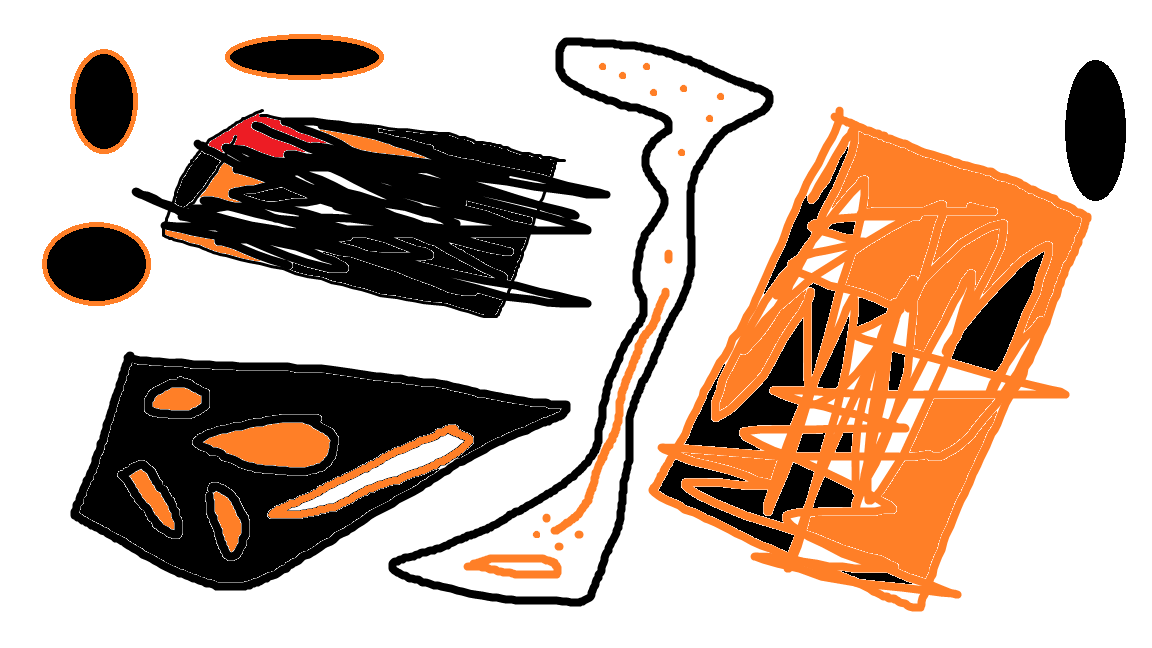 there is an exhibition by a non-Aboriginal artist who spent months in the east Kimberley region and who has a number of large modernist paintings with three colours only- black, white and orange in blocks reminiscent of Mark Rothko. A couple alongside me remarked that their daughter, at pre-school, could do better.
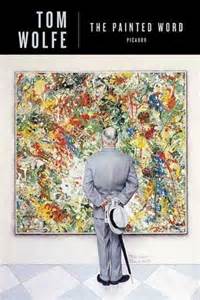 I thought about Tom Wolfe’s The Painted Word that I had read in the mid-seventies and Andy Capp’s quip about abstract art that sums up, it seems to me, Wolfe’s acerbic critique, a product of the untalented, sold by the unprincipled to the utterly bewildered. And I really feel for the young artist who would struggle, and I hope successfully, to overcome the cynicism made so manifest by the young couple also getting their fix.
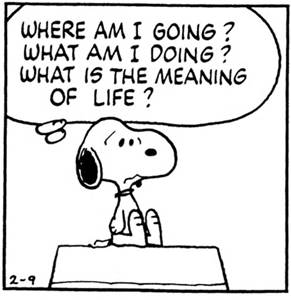 ask myself this question until I was approaching 25 years of age. Well, maybe these existential queries did intrude on my psyche before this time, but, for the sake of this journal entry, let’s just pretend that I was a wide-eyed innocent as I answered the door one Saturday morning.
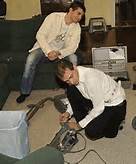 time. He tried to tell me that I needed his product even though it was evident that I had sanded and estapolled the floorboards of the whole house and had scattered a few budget rugs here and there to make the Government Real Estate property seem more like a home.
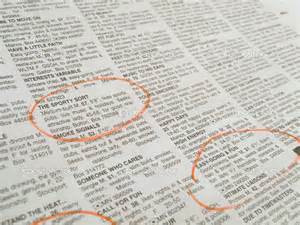 like a man. Fast forward about ten years and I’m back in Sydney. Again, six months without a job, I scan the papers: not that I have many options outside of teaching. Even so-called educationalists are a bit leery about employing Shakespeare-loving, poetry-spouting candidates: one snide Principal even writes that my CV is incredible.
 report that I did not pay much attention to his sob-story, especially because he seemed perfectly mobile and displayed no pain; I also remember thinking that he could kick back and collect benefits for the rest of his natural.
 them and soon avoided the interaction. Ten years later in Werrington, I again felt adrift and afflicted with ennui as I left my wife at the station to commute to Parramatta for her job while I picked up a few casual teaching days here and there, wondering when a permanent job would eventuate: back then the idea that experienced teachers would long endure the uncertainty of casualisation was not a reality until the new millennium with its challenges and changes hove into view in the mid-nineties when I wrote this song.
 I thought of the vacuum-cleaner salesman and the injured muso from twenty years before and wondered how they had fared. Bruce Dawe, in his poem, Doctor to Patient, compares unemployment with a disease that increasingly isolates the individual as, in the monologue, the doctor outlines some of the treatment options to his patient, you’ll no doubt be urged to try the various / recommended anodynes: editorials in newspapers, / voluntary unpaid work for local charities, booze, / other compulsive mind-destroyers, prayers, comforting talks with increasingly less-interested friends. The doctor concludes by reassuring the afflicted teenager that you will be relieved to know the disease/is only in a minority of cases terminal. / Most, that is, survive.
 suicides a year- or one in five of the total worldwide- are attributable to the distress and despair brought on by unemployment. But this is only the tip of the iceberg, warns Roger Webb and Navneet Kapur, from the University of Manchester,
 those who have never had this accusation, or some synonymous hoot, levelled at them. Oh…Kay… can you just shift over to the liars’ corner- now, please?
 however brow-beaten, and possibly beaten in other ways, too. So she devised a gift-sharing party for her son in mid-December which coincided with his birthday.
 could exchange gifts with another child if you hated your gift and the swap was agreeable. My gift was a quality thermos flask. I hated it on sight. An older child, whose name I will supress to protect the guilty, suggested a swap with his gift- a plastic ray-gun that made a snazzy sound and had sparks. Of course, I made the swap!
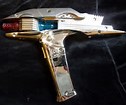 and he had respect among the hard men, Rusty’s Dad included, on that enchanted desert island. But I loved that space-gun for the two days that it worked. And, do you know, even at this remove in time of over half a century, I do not regret the choice I made on that hot, tropical afternoon. Two days of pretend wars in space! How could a thermos flask compare?
 out for her, that subversive believer who delivered to me a ray-gun that sparked my imagination for two whole days. As you can imagine, I remained mute in the face of my father’s scorn at my ill-advised deal with the older boy. Of course, he was only trying to toughen me up for the real world, of which he knew a great deal. I’ll dedicate the remainder of the content of this entry to the courage of the woman who defied her husband to bring to kids like me the joys of sharing gifts.
 rivers of Babylon. Whatever the case, no one suggested that he was stupid. There can be no doubt, though, if you choose to accept the testimony of Luke 1: 18-22, that Zacharias, priestly husband of Elizabeth and father of John the Baptist, choosing to disbelieve the tidings of the archangel Gabriel, was, in fact, struck dumb from the moment of doubt through the duration of his wife’s pregnancy and was not released from his mute state until he had written on a wax tablet, at the ceremony of circumcision of his son, that his name was to be John, as mandated by the archangel and not Zacharias, as custom dictated.
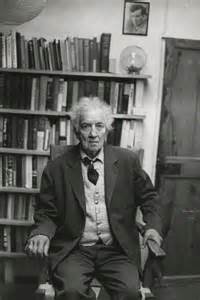 Children are dumb to say how hot the day is,/How hot the scent is of the summer rose,/How dreadful the black wastes of evening sky,/How dreadful the tall soldiers drumming by. Robert Graves knew about childhood and he tells us of the cool web of language and how we are trapped in its sticky essence as we grow older:
 sense of how not to fly:/He lurches here and here by guess/And God and hope and hopelessness./Even the aerobatic swift/Has not his flying-crooked gift. Another of God’s dumb creatures.