
 Entry 41: Rose- Family secrets: everyone knows one or more about their own family and one or more about other families, if only through the media. What one generation may hang its head in shame over the next, more likely than not, just shrugs and says, so what! The convict stain in Australian society became a badge of honour in the space of a generation or two.
Distance in time lends enchantment to a roguish ancestor or two in the family tree. People who seek information about their  forbears are more likely to advertise relationship to a pirate than an accountant. Note also, that privacy for individuals becomes an increasingly rare commodity in inverse proportion to the growing obfuscation surrounding the activities of transnational corporations and governments. The contradictory signals make reading the signs of the times about as reliable as the practice of palmistry.
I am reliably informed the Buddha once said “Three things cannot long stay hidden: the sun, the moon and the truth”. Much as I admire the ancient sage, smog covers the sun and coal-fired power station emissions deal with the moon for a lot of people a lot of the time. And the truth? The Roman procurator of Judea sometime around the end of the third decade of the first century asked what that was and the question has reverberated down the millennia since.
When someone begins a sentence with the phrase, the fact is, chances are- it isn’t. Now, as usual, I don’t go to politicians or economists for answers, but poets. Denise Levertov wrote a poem entitled The Secret back in the 60s that is as thought-provoking now as then,
 Two girls discover/the secret of life /in a sudden line of/poetry./I who don’t know the/secret wrote/the line.
Of course, the girls don’t reveal the line to Levertov’s informant and the poet knows that, now a week later, the line has been forgotten…
I love them/for finding what/I can’t find,/and for loving me/for the line I wrote,/and for forgetting it/so that/a thousand times, till death/finds them, they may/discover it again in other/lines/ …or/assuming there is/such a secret, yes,/for that/most of all.
That is the sort of secret I can relate to. Unlike the secret that excludes everyone but the chosen few. Such as the rosy cross of the Rosicrucians. Roman banquet halls had roses painted on them so that matters discussed there under the influence of wine (sub vino) would also remain sub rosa or secret.
The Victorians loved floriography- the language of flowers and would exchange nosegays, charmingly known as tussie-mussies, and parade around with these small bouquets trying  to decipher what, if any, meaning lay hidden in the arrangements held by friends they might encounter in their perambulations.
So, if anyone presents you with an arrangement featuring aconite, aloe and lobelia, my advice would be for you to run a mile because, if my reading of the wreath is accurate, they represent misanthropy, grief and malevolence.
What’s in a name? as Shakespeare asked so memorably in Romeo and Juliet. I wonder what was in the minds of my paternal great-grandparents when they christened their daughter Rose. As I write this, I am listening to The Grateful Dead’s version of the Dylan classic, Visions of Johanna, sung by Jerry Garcia before a crowd at the Delta Centre in Salt Lake City, Utah in February 1995: it’s a fitting close to the 2015 release of 30 Trips Around the Sun: The Definitive Live Story.
The crowd sing along, they know the words, they know the secret the same way the two girls knew the secret in the Denise Levertov poem which was written around the same time Dylan was writing this. The song’s on repeat as I drink doubles of Scotch and Cola out of a Rolling Stones’ tall glass and get torn up all over again over the fate of my father’s mother.
 I first knew her as a photograph of an elegant Edwardian lady in an oval frame hanging in the reception room of my childhood home in Cushendall, Northern Ireland. My enquiries were deflected, brushed off with the bare bones info that this was my father’s mother but not the one who raised him.
My nephew later did a little delving into family history and rattled some skeletons in the closet. My grandmother had taken a trip to Germany on a ship captained by her husband in 1914 and had been interned because war had broken out. She was returned to Ireland without her husband and, driven out of her mind with worry, was confined to an insane asylum where she died before the end of the war.
Mental illness was a shameful thing for that generation so the only thing I heard was, she was delicate, highly strung, and other euphemisms of the kind. My nephew, a journalist, gained access to her medical records through FOI legislation and I was hurt to read about her pain, set down in clinical prose by the treating physician.
 Entry 42: Oblivion Mountain- You hang on to what is familiar, don’t you? Like Linus from Peanuts, have you a favourite blanket? Or an old rag doll passed down from great grandma? For me, books, first, and then music and the guitar have been sources of comfort and escape. Radio also was a refuge. Like so many people on the periphery of the great goings-on, I could stay abreast with events at the centre of the maelstrom through this medium.
 Halfway through my sojourn in North Queensland in 1991, I was listening to Phillip Adams, the new presenter of Late Night Live on the ABC. I thought Europe had turned its back on the excesses of World War II but it was clear that a new barbarism had emerged as if it had never gone away at all. As Yugoslavia split apart, the various militias showed the world what atrocity really meant.
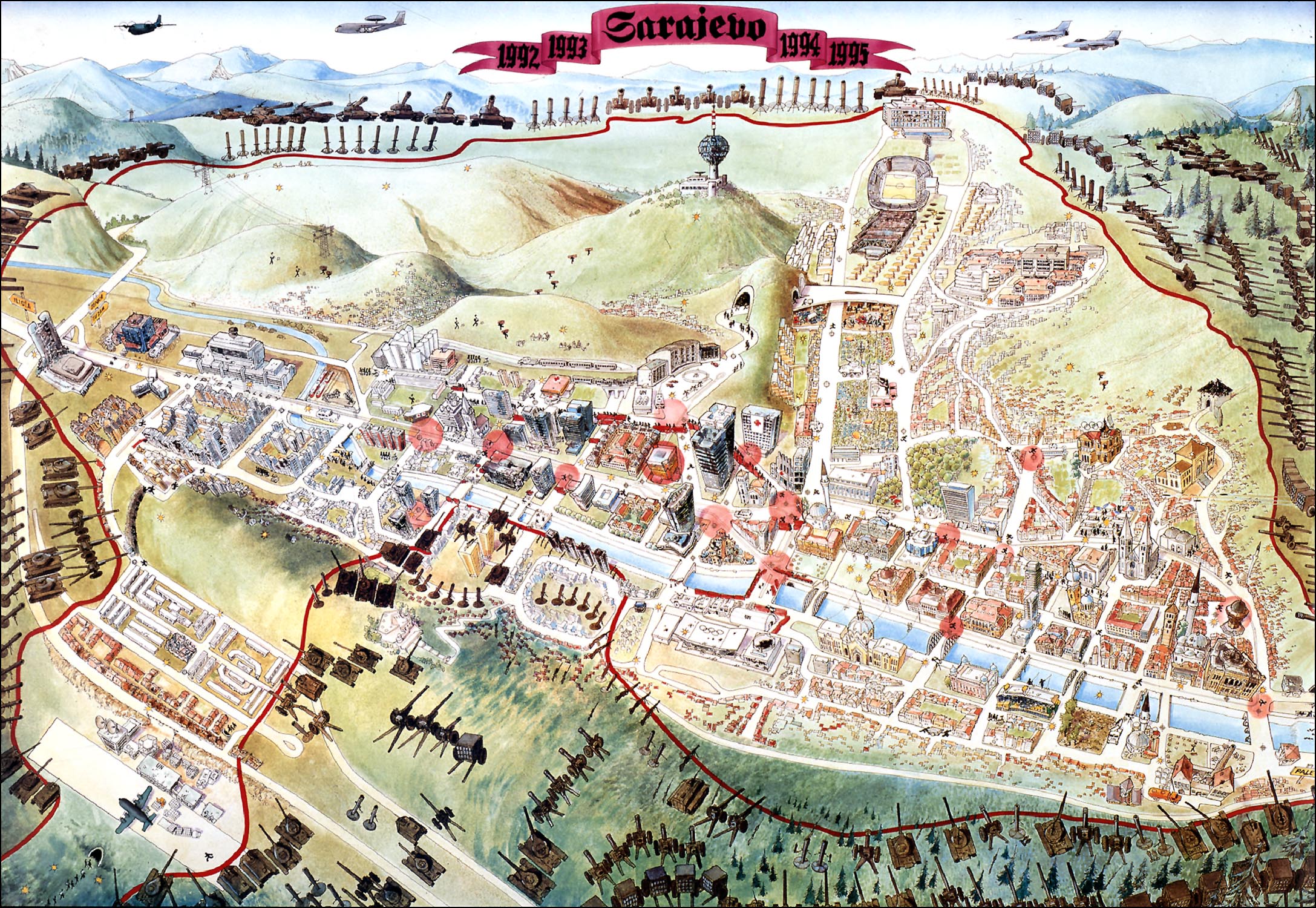 in the death camps of the Nazis in 1945; the siege of Sarajevo lasted 1,425 days which was one year longer that the siege of Leningrad during World War II.
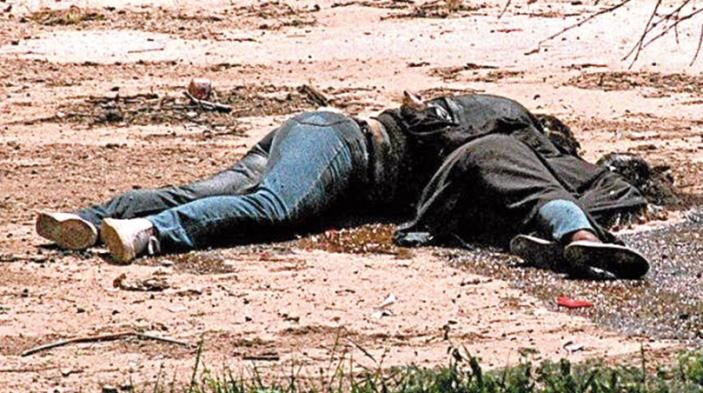 Boško Brkić, a Bosnian Serb, decided to flee the city. Having friends on all sides involved in the conflict, there was a general thought that their passage through the city and its infamous Sniper Alley, under constant fire from hills occupied by the Serbs, could be a safe one. An arrangement was made for 19 May 1993 at 5:00 pm that no one would fire as the couple approached. According to Dino Kapin, who was a Commander of a Croatian unit allied at the time with Bosnian Army forces, around 5:00 pm, a man and a woman were seen approaching the Vrbjana Bridge. As soon as they were at the foot of the bridge, a shot was heard, and, according to all sides involved in their passage, the bullet hit Boško Brkić and killed him instantaneously. Another shot was heard and Admira Ismić screamed, fell down wounded, but was not killed. She crawled over to her boyfriend, cuddled him, hugged him, and died. It was observed that she was alive for at least 15 minutes after the shooting.
 Sebrenica massacre in July 1995 when the genocidal killing of 8,000 Bosniak men and boys preceded the forcible transfer of between 25,000 and 30,000 Bosniak women, children and the elderly which was found to be confirming evidence of the genocidal intent of members of the Bosnian Serb Army Main Staff who had orchestrated the massacre in what the UN had declared to be a safe area.
 Rape on a vast scale was used as a tactic by this group- and a new term entered our lexicon of horror: ethnic cleansing. Goran Simic’s poem, The Calendar is a stark reminder of the cost on a personal level among all the statistics.
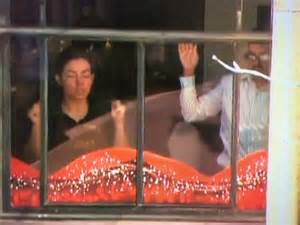 cake at the Lindt Café in Sydney’s Martin place in 2014 would have turned into a horror show so soon after 28 Australians were among the 298 innocent civilians slaughtered above the Ukraine in July 2014 as a missile tore apart Malaysian Airways Flight 17. Meanwhile, on the ground below that fateful explosion at 33,000 feet, civilians continue to die, to starve, cut off from the benefits of life in the prosperous world of Europe in the second decade of the 21st Century.
 waiting for the rest of the group to arrive for our practice session. I was early and I picked up my guitar and started to strum. On the far wall, a TV showed images of a Balkan War scene and gradually the music of Oblivion Mountain began to take shape. By the time the rest of the group arrived, I was scribbling the verses of the song onto my notepad.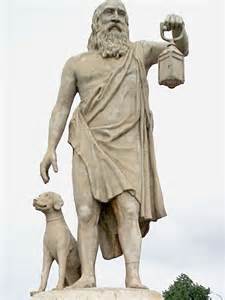
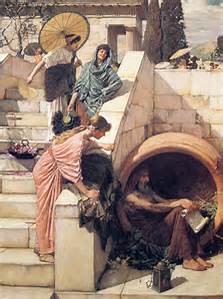 box? If instead, you were faced with a large jar, one large enough to house a body you might instead just give up especially if it were inhabited by Diogenes the Cynic who often slept in one in the marketplace of Ancient Athens.
 He was known for his philosophical exercises such as carrying a lamp in the daytime, claiming to be looking for an honest man. In his translation of the myth in the 16th Century, Erasmus renders the Greek word pithos which means a large jar- with pyxis which means a small box. From that time, reinforced by painters’ treatment of the myth, box it remains.
 Zeus, somewhat miffed at Prometheus for gifting Man with fire, commanded Hephaestus to fashion Pandora out of clay. Let me say now that, when I referred to humanity as Man before, it wasn’t a PC lapse.
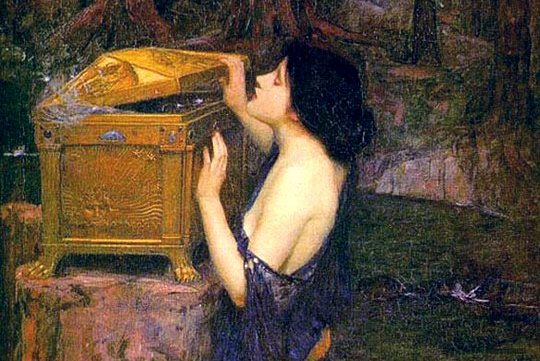 advanced society by creating woman. Thus, Pandora was created as the first woman and given the jar which releases all evils upon man. The opening of the jar serves as the beginning of the Silver Age, in which man is now subject to death, and with the introduction of woman to birth as well, giving rise to the cycle of death and rebirth.
 hope is left in the box, what sort of hope is being referred to? My head hurt after reading the many contending views so I’ll just cite the astringent argument of Nietzsche and leave it for you to sort out,
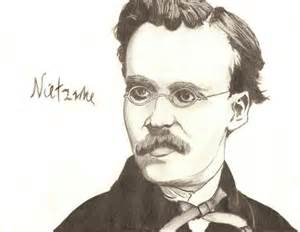 he fancies it. For he does not know that the jar which Pandora brought was the jar of evils, and he takes the remaining evil for the greatest worldly good—it is hope, for Zeus did not want man to throw his life away, no matter how much the other evils might torment him, but rather to go on letting himself be tormented anew. To that end, he gives man hope. In truth, it is the most evil of evils because it prolongs man’s torment.
 Some mistakes you profit from- I refer here to the pithos to pyxis of Erasmus: how else could I draw the line so strongly between older TVs where the cathode ray tube nestles in a box-like housing, with the ills which stream from the contraption into the world of the 20th Century where I have lived the majority of my life? TV was also called the idiot box and blamed for all sorts of ills that poured from it- inciting teens to promiscuous sex and the like.
 The metaphor doesn’t work in the 21st Century though: flat-screen TVs aren’t boxlike and, in any case, the exploding world of alternative devices and ways of receiving information and entertainment means that no longer do we crouch before the electronic sage in the corner, communally absorbing its emanations. But for a few generations, it was a way of life and Howard Nemerov, in a poem entitled A Way of Life, spoke for those now receding generations,
 fire behind.
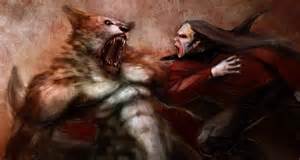 preternatural strength, swamp monsters, assorted trolls, goblins and giants from grim folk tales peopled?…no, creatured my hungry, youthful imagination fed by books and movies that seem quaint today beside the chic- ironic, yet puerile, slayer in designer clothes wisecracking to befuddled, barely-comprehending adults as demons explode in colourful pixels against the point of her post-modern wooden stake.
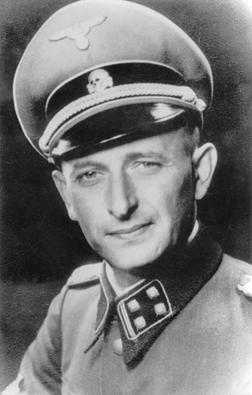 Another generation’s hunger for information about the dark side is nourished by a flashier special- effects menu than was available to mine. And those years of feeding at the table of horrors wasn’t preparation enough to enable me to comprehend the real horrors that lurked in recent history. I remember when Eichmann was captured by the Israelis and tried in Jerusalem. I looked in vain for the mark of the Beast on those bland features. I had read The Scourge of the Swastika and stared at stark photographs of black-booted sinisters, some smoking nonchalantly, standing over pits of murdered people. Could this bespectacled clerk be the author of so many deaths?
 nsee Conference so many years ago.
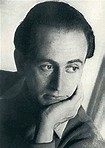 But the English fails to capture the black angularities of the original: for that, go to YouTube and listen to the poet himself reading this work. The world of the poem is one of shouting, digging, dark music playing, serpents, dogs, glittering stars, smoke, whistles, stabbing and two women: the golden haired Margarete and the ashen haired Shulamith.
 . My mind is not filled with the scorpions tyrants have to contend with nightly. C.S. Lewis, author of those innocent, those enabling fictions, the Narnia tales, also wrote The Screwtape Letters during the dark years of the Second World War. His readers, avid for more insights into the Satanic mind, were disappointed when he called it quits. He could no longer bear the burden of dwelling imaginatively in those dark regions. He feared for his very soul. And rightly so.
 Human life needs light and love and natural things and if this means a quotidian existence where one has to forgo the depths of Faustian knowledge and the heights of Elysian experience, then, so be it. Limits are, often, not so much limiting, as lifesaving, after all. And again and again poets come to the rescue.
 And another from James Arlington Wright entitled A Blessing where, with a friend, he greets two Indian ponies in their meadow, in itself a metaphor of love. One of the ponies has walked over and nuzzled his hand,

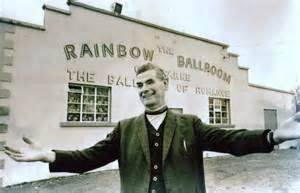 that rural dance-hall in Ireland in the late 1960s- a trio, with my brother and cousin? Maybe it was an atavistic, male, cautionary tale, but I can remember a shiver of premonitory trepidation as I approached the first girl in the line at the opposite end of the fluorescently-lit hall.
 The accent was a lilting brogue that brought welts up on my soul. I could feel the eyes: from across the hall, my brother and cousin smirking and a ruck of male unknowns- as well as the sidelong glances and micro-expressions of amusement from the girls who had heard the put-down, stretching, as it seemed to me, to the crack of doom.
 answer but turned away and continued a conversation with her friend. I don’t have to go on, do I? In some sad corner of my imagination I am in that dance-hall to this very day, moving along a line of increasingly lovely girls who reject me in a variety of fiendishly humiliating ways.
 nightclubs and dance-halls during the latter half of the 1960s. Club Rado and the Jazz Club, Romano’s and the Astor in Belfast, the Marquee in Cushendall and Castlegreen on the road to Ballycastle were among the magical places where people could meet and mingle to music that was of a surprisingly high quality.
 Enniskillen and then a couple of days in a cabin on Lough MacNean bisected by the Irish border. This was in 1985. Having driven for some hours, feeling a bit tired from the trip, I sat out on a bench with my guitar and watched the water-birds among the reeds. A sequence of notes stuck in my head and I started to find the accompanying chords.
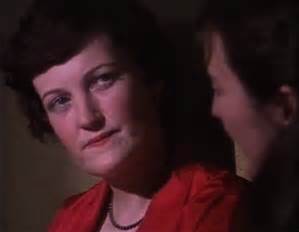 The original ballroom of romance was located across the Lough in the nearby village of Glenfarne: a famous location drawing crowds from the surrounding parishes for generations. I had viewed the short movie about this place a few years before. Starring Brenda Fricker, the evocation of the desperation faced by her 36-year-old character Bridie who has been putting on her best dress every Friday night for twenty years in order to attend the Ballroom of Romance has stayed with me for decades.
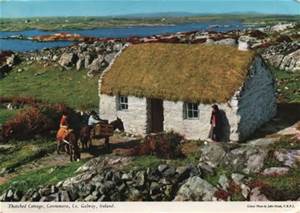 emigration and lost love. Set in the eponymous ballroom in 1950s rural Ireland, it is by turns, poignant, funny and excruciating as we follow Bridie from the farm she shares with her crippled father to the windswept dance venue. She hopes to form an alliance with the drummer in the trio which is providing the music for the dance. He is dependable, doesn’t drink and will be able to help her run the hardscrabble hill farm when her ailing father dies.
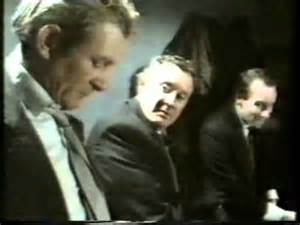 She realises, however, during the tea-break, that his landlady has her hooks into him and, so, she retires from that romantic field of battle. Her only other choice is one of another trio: three middle-aged boozy no-hopers who attend the dance every week after fuelling up at the nearby pub. Bowser Egan is the man- not of her dreams, for that person emigrated to England when she was still a young woman, nor is he the second choice, for the silver medal goes to the drummer in the band.
 as she makes her way towards home on her bicycle, he renews his suit, promising to come and see her as soon as his mother has gone to meet her maker- a reformed man who will even make her a little flower garden. Then, a pause, and his main reason for being there, Will you come into the field, Bridie?
 In some meeting, in some relationship, in some internal conversation you have had with yourself- perhaps as part of a cognitive behaviour therapy you are undergoing?
 This was not perceived as being out of order because my life had been, for so many years, constructed out of these bricks of self-destruction. Why they did not crash down upon my head? I have had reason to reflect upon it the years since. So many times I have been, because of my affection for the demi-monde and, particularly, alcohol, in situations of considerable danger.
 for my survival- but I know that is part of this whole magical thinking phenomenon. We all live till we die. Nothing will alter the fact that there is a limit to life. Do you want to live forever? Not me, but, given the choice, I don’t want to go just yet! So much to do; so much to see; so much to… you get the drift.
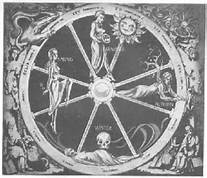 well be familiar with. But what do you think about this insight into the nature of perception:
 is just absolute shite, the opposite of what James Joyce famously termed as an epiphany. Yet, just about everyone I know; everyone who has spoken to me about the deep and meaningful stuff, has, at one time or another, talked about “a sudden spiritual manifestation, whether from some object, scene, event, or memorable phase of the mind–the manifestation being out of proportion to the significance or strictly logical relevance of whatever produces it.”
 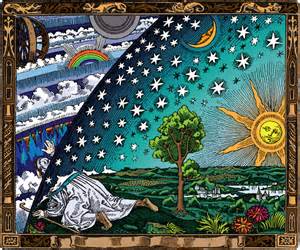 And here’s the thing: I hate listening to others wittering on about their meaningful objects, scenes, events, et cetera. And I’m going to do just that. At the turn of the millennium…actually the year 2000, but who’s counting, my eyesight began to fade, I was feeling dreadful- beyond hangover, which I was habituated to. I felt mortality pressing down on me more than usual and the dreams of death were becoming tiresomely frequent.
 1996 when my doctor told me not to return to work the next day (as I was in danger of dropping dead at any second) and sent me on a round of tests and dosed me with a large number of pharmaceutical products that finally got the blood pressure under control.
 Someone spouting crap in multisyllabic torrents as nodding heads around the table give assent to the madness. So, I nodded with the panic dwarfs and waited for too many years until the mortgage was paid and the government decided that it could pay me a stipend, called the age pension for the rest of my days. What was this apophany?
 something. And that you do, too. Insane, isn’t it? William Blake put it in these terms, To see a world in a grain of sand/And heaven in a wild flower/Hold infinity in the palm of your hand/And eternity in an hour. Lord, where would we be without our poets?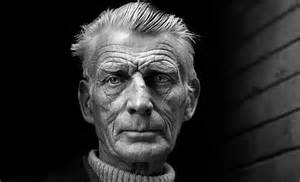











 preferably. A fringe-dweller forever, I have been in little danger of tripping over any of the living legends that I have revered over the years, some of whom have been memorialised in these entries. Samuel Beckett, himself, of course, a legend to many and a genuine hero in that he put his life on the line for the French Resistance during the Second World War, came a cropper when he met with one of his heroes in Dublin.
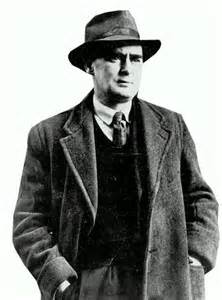 I read somewhere that he was not too impressed upon meeting with that chameleon, Flann O’Brien, a.k.a. Myles Na gColapeen a.k.a Brian O’Nolan who has given the world such masterpieces in fiction as At Swim-Two Birds and The Third Policeman. Writing as Myles Na gColapeen, he wrote a column in The Irish Times entitled Cruiskeen Lawn from 1940 until his death in 1966 in which he regularly bit the hand that fed him, excoriating the Irish managerial class.
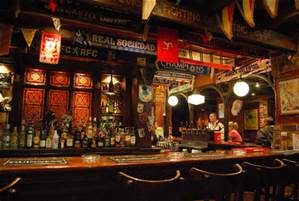 into myriad pubs in cities, towns, villages and hamlets across the length and breadth of the Emerald Isle. He may not have become an alcoholic and consequently have been liberated to write many more masterpieces.
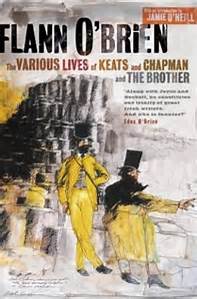 This is taken from The Spectator of 12 October 1990, but you can easily find current iterations of the game online- Flann O’Brien invented this game, which features the two characters above- mentioned. The idea is to involve them both in a long-drawn-out, po-faced but unlikely story, which is finally crowned (or sunk) by an excruciating pun on the part of Keats. Here is a very short example: “The poet and Chapman once visited a circus. Chapman was very impressed by an act in which lions were used. A trainer entered a cage in which were two ferocious-looking specimens, sat down unconcernedly, took out a paper, and began to read. `He’s reading between the lions,’ Keats said.”
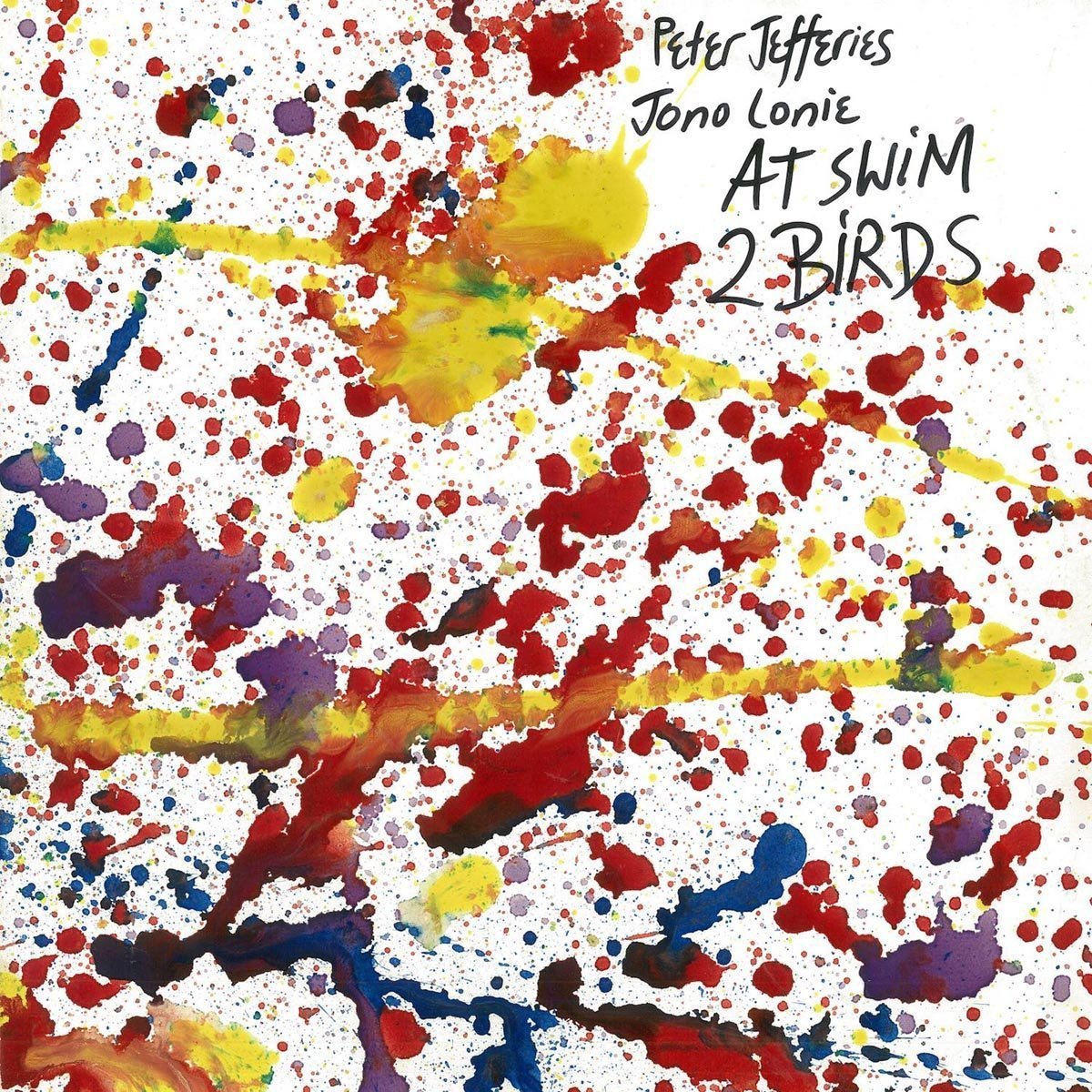 Birds, published in 1939 when the author was 28, to appreciate his astonishing demolition of the conventional novel form. Why have one opening when you can have three? Where characters can conspire among themselves to drug their fictional creator in order to avoid the melodrama of his plots and have a normal existence? Where separate plot-lines can merge and tangle? Where natural and supernatural characters coexist and where language, exuberant and playful, dances on the page.
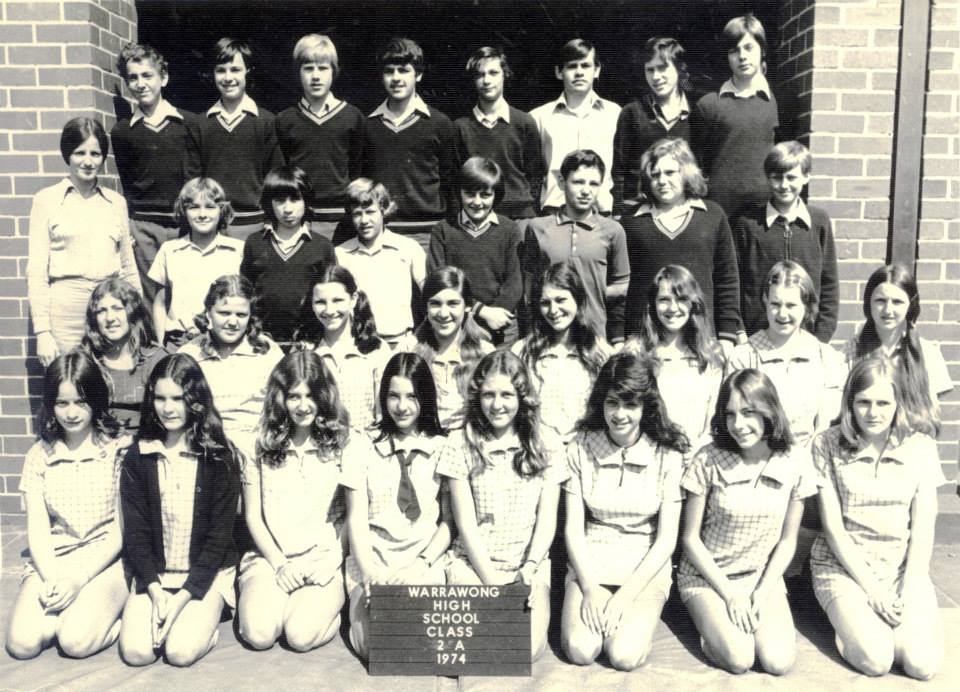 High School in the 1970s. I loved this stuff and I wanted my students to know the liberation that language could make possible and I still hope that some of those I taught will get in touch to tell me that either, I was just a windbag, or someone who gave them the means of escape.
 his death. The Third Policeman, in my opinion, is among the most profound novels in modern literature. I know that I have felt like the protagonist of the novel: what am I doing? How did I come to be here? What are they saying to me? When will I understand what is going on?

 They prospered in their Garden of Ediacara for untold eons, in their fool’s paradise until…well, until the Cambrian explosion- a 25-million-year event that saw the arrival of most of the modern animal families: vertebrates, molluscs, arthropods, sponges and jellyfish. All that remains of the Ediacarans are delicate imprints of their fossilised shapes preserved in sand or ash that look, in miniature, like spinning galaxies, far off in interstellar space. Our fools, in evolutionary terms, then, are those fossilised images which remind us of the spiral galaxies turning relentlessly in the unreachable universe beyond.
 attach themselves to a rock and suck life from the surrounding environment. Things that could move independently and sustain themselves by eating other organisms began to roam around the Garden of Ediacara. The rest is history, as they say. Some say we are within a few generations of joining the Ediacarans because of the rise of intelligent machines.
 A.I. is the sexiest new frontier according to some, and our worst nightmare, according to others. But, in the interregnum, I would like to celebrate humanity and its combination of wisdom and folly, laughter and grief. The Bible has quite a lot to tell us about wisdom and folly: Proverbs 16:16 reminds us, How much better to get wisdom than gold, to choose understanding rather than silver! So, then, what choices have you made? If that is awkward, how about what Proverbs 18:7 has to say, a fool’s mouth is his ruin, and his lips are a snare to his soul. Listening, shock jocks? Of course not! Too much gold and silver on offer!
 and stink. Oh, yes. Shakespeare, as usual, puts it best. The Fool in King Lear is one of the glories of world literature,
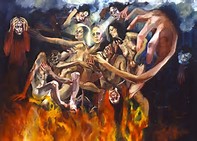 Indeed, who would want to be Lear as he faced the destruction of everything he had known and believed. Fools, and other damaged individuals, have licence to speak the unspeakable truth to the mightiest in the land, even though they may face whipping or worse. Flannery O’Connor’s short story, Revelation, set, initially, in a doctor’s waiting room features Mrs Ruby Turpin, who is a complacent and pious hypocrite, certain of her own rightness and assured of her throne among the celestial throng.
 property at sunset where she sees a vast procession of those she considered beneath her leaping and shouting as they made their way up to heaven-ahead of the likes of Mrs Turpin.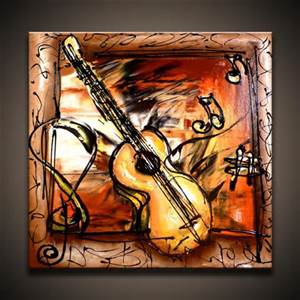
 one had this journal been organised chronologically according to date of song composition. But it’s fifty! And if I wind the clock back fifty years, I see a gawky, 16-year old with acne and a cheap guitar trying to impress his girl-friend (now wife) with his prowess on the fretboard. This is made rather difficult by the high action and rusting strings of the instrument and low degree of skill of the guitar’s owner. The high action made it difficult to hold down the chords with any facility or, indeed, accuracy and the teenage show-off made much of his ability to play runs on the top two strings (the thinnest of the bunch) that made a modicum of musical sense.
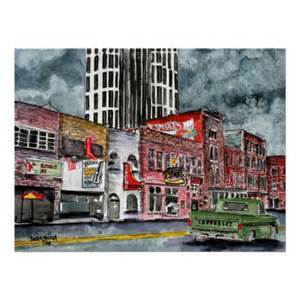 Being a mid-teen and therefore very cynical and worldly-wise I cracked on that I was beyond the appreciation of country music having thrown my lot in with the Stones, Beatles, Who and any rock or pop act that was current. Acts from my younger and more foolish life, shared with parents and older siblings, such as Hank Williams, Jim Reeves, Marty Robbins and Johnny Cash were thoroughly scorned and discounted. Strange, then, that my first composition was recognisably of just that despised genre. It was a parody, yes, and, as it turns out, incomplete, for I had only the first section, lyrically and musically, when first I flashed my song-writing credentials to my mildly amused partner.
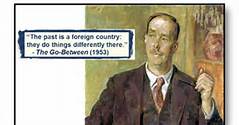
 what made me return to the abhorred artefact time and time again? Not a rhetorical question, by the way: I really don’t know. Not entirely. In the mid-sixties, confusion reigned in my world and on my horizons. In my English classroom, under the magisterial Mr Leahy, I was struggling to find anything of interest in L.P. Hartley’s The Go-Between.
 Built as a summer residence by Frances Ann Vane, Marchioness of Londonderry, in the style of an English castle, the property was acquired by the Catholic Bishop of Down and Connor in 1950 for use as a boarding school for boys as part of a long-term strategy for combating the sectarian stranglehold on higher education by the Protestant ascendancy of the Northern Ireland state-let, which had been established in 1921.
 Perhaps…it seems to have been magically co-located in time and space because there are two wildly divergent narratives about my Alma Mater: one upholds a glowing testament to the saying that schooldays are the best days of your life and another that would, if verifiable, be the subject of judicial sanctions of the graver kinds against certain persons of authority.
 my expatriate American Junior High School in Aruba I was shocked by the regimentation, bullying and corporal punishment that were par for the course. However, I survived because I became a day-boy in 1965 when my parents returned from overseas and, in any case, I threw my lot in with the smokers, gamblers and drinkers who formed their own protective clique.
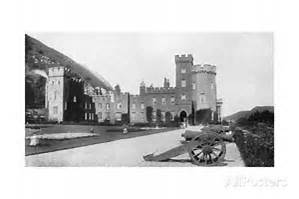 We light our cigarettes, cupping them in our covert hands, thinking that we have fooled the patrolling priests who amble below, as if in prayer, around the circular path in front of the imposing façade of the College, past the seven cannon pointing out over the North Channel at the future.