
Entry 81: The Holy Ground– It is 1816, a sailing ship limps past Roche’s Point, its rigging all torn. Exhausted mariners, returning after months at sea, perform their duties in desultory fashion but begin to perk up as they round Spike Island and spot the rows of terraces rising above the quay in Cove.
They swarm ashore and make for the places of entertainment for lonely and thirsty sailors in the section of town known as The Holy Ground. 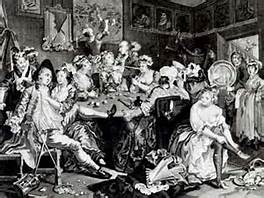 Soon they make the rafters roar with their shouts and songs, calling for strong ale and porter as the serving girls move among them, sometimes tumbling into the willing lap of a lusty tar.
Meanwhile, further to the north a popular young graduate of Trinity College, Dublin, called Charles Wolfe, is putting the finishing touches to his manuscript of a poem destined to become one of the most memorised throughout the English-speaking world.
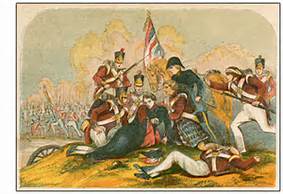
I refer, of course, to The Burial of Sir Thomas Moore, after Corruna, and give the opening and closing verses here,
Not a drum was heard, not a funeral note,/As his corse to the rampart we hurried;/Not a soldier discharged his farewell shot/O’er the grave where our hero we buried./We buried him darkly at dead of night,/The sods with our bayonets turning;/By the struggling moonbeam’s misty light/And the lantern dimly burning.//No useless coffin enclosed his breast,/Nor in sheet nor in shroud we wound him,/But he lay like a warrior taking his rest/With his martial cloak around him./…But half of our heavy task was done/When the clock struck the hour for retiring;/And we heard the distant and random gun/That the foe was sullenly firing./Slowly and sadly we laid him down,/From the field of his fame fresh and gory;/We carved not a line, and we raised not a stone,/But left him alone with his glory.
 Little did the poet know what an impact his poem would have throughout the world, and little did he know that just seven years later, he would find his rest in Old Church Cemetery outside Cobh, at age 31, having died of consumption.
In due course, he would be joined by Sir James Roche Verling, personal physician to Napoleon Bonaparte during his exile on St Helena, also, Fredrick Daniel Parslow, VC, the first member of the Mercantile Marine to receive the award and the remains of 193 victims of RMS Lusitania, sunk by a German torpedo in 1915 with a loss of over 1,100 lives.
This town was the first and last port of call of RMS Titanic on her maiden voyage in 1912.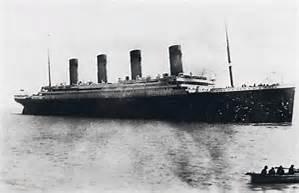 This port also served to transport prisoners to the penal colonies of Australia. Robert Hume, writing in The Irish Examiner of March 10, 2015, explained the circumstances surrounding the first transport:
In March 1791, Henry Browne Hayes, Sherriff of Cork City, was put in charge of arranging the first transportation of Irish convicts to New South Wales. For the trip, he chose the Queen – a small, three-masted square-rigged vessel… For the next five months, prisoners and soldiers alike had to endure rancid food, and the stench of foul water and excrement. Each convict had only 18 inches of space to sleep in… within eight months, only 50 of 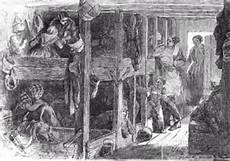 the 122 male convicts were still alive… An enquiry into what had gone wrong unearthed scandal upon scandal. Captain Owen had purchased from Cork merchants the cheapest possible food for the crossing, but charged the Navy as much as he thought he could get away with… In April 1801, exactly 10 years after the Queen had sailed from Cork, the organizer of this monumental cock-up, Sir Henry Browne Hayes, was brought to trial for abducting a wealthy heiress. He was found guilty, but instead of the death penalty, the judge showed “mercy” – by transporting him, appropriately enough, to Botany Bay.
The Holy Ground is a powerful trope. In Exodus 3:5, the episode of the burning bush, God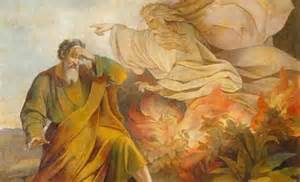 tells Moses to take off his sandals as he is standing on holy ground. In my mind, and in the lyrics of songs I have written, it represents a place of power, of belonging and of solace.
Variously, it has been the Glens of Antrim or Aruba, that small island in the Caribbean, but, for a long time now, almost half my life, it’s been Australia. I think, too, parents seek to “ground” their children in wisdom, sometimes by offering advice prefaced by statements such as, when I was your age.
Older children, often adults, will ask parents for insights such as, what was it like when you were a kid? When my first-born son died in 1989, aged 15, in a motorbike accident,
 I hadn’t had the time to offer too much in the way of sage advice and he didn’t live long enough to seek information about a long-distant past.
The phrase, when I was older than you, tells of all the years he will never experience, all the sights he will never see, all the sounds he will never hear, and alas, all the love he will never give or receive.
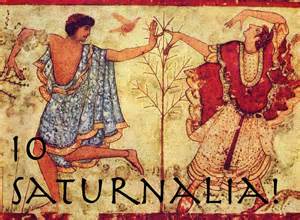
 the words Saturday Night in the title? Too easy! Saturday Night at the Movies by the Drifters; Saturday Night’s Alright (for fighting) by Elton John and Saturday Night Fever by the Bee Gees.
 One of the most common examples of a calque is the English word skyscraper. In Armenian it’s yerk-n-a-ker, or “sky-scratcher”; in German, Wolkenkratzer or “clouds-scraper”; while in Vietnam such a structure is referred to as nha choc troi or “sky-poking building”.
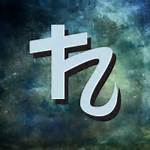 planets which bring bad luck, namely, Saturn, which, of course, leaves Mars, as the lesser malefic.)
 In a manuscript in the British Museum, the Sefer Yetzirah is declared to be esoteric lore not accessible to anyone but the really pious. Which probably explains why I can’t make head nor tale of it. Like most, I revel in the obvious, and what’s really obvious about Saturday night is its relationship to the Roman festival which was held on December 17th – Saturnalia.
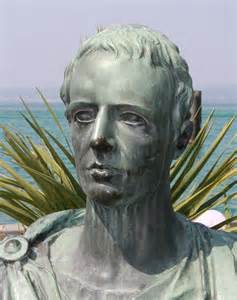 called it “the best of days”.
 Saturday night continues to embody aspects of Saturnalia: the shackles of the week are thrown off and the first day of the weekend culminates in festive darkness where possibilities proliferate. Or not! In any case, the prospect of a lie-in on Sunday before resuming the work-a-day drudgery of employment or school, will assuage, one hopes, the disappointments that are more likely than not to have been the outcome of the lottery of Saturday night.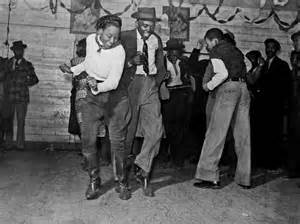
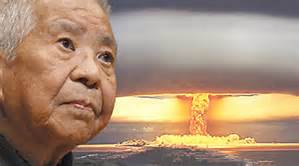
 international reputation; Stephen Fry, writer, TV presenter and quizmaster of the popular show QI and Jacob Beser, radar specialist on the aircraft Enola Gay and Bockscar?
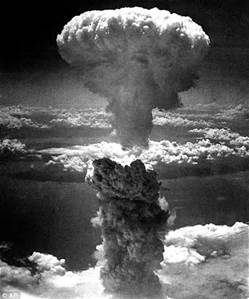 could have claimed early, had he so chosen.
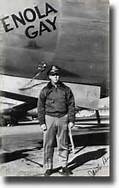 Still, there’s a 2004 English-language documentary with that name, so it must be true. And so, to the third person mentioned in opening- Jacob Beser. He was the person of the trio mentioned who probably had the most profound effect on Tsutoma Yamaguchi.
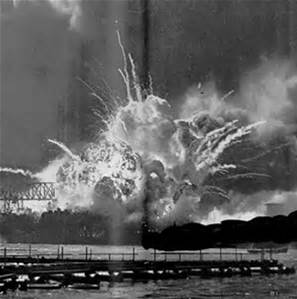 any regret for his part in these historic events: I feel no sorrow or remorse for whatever small role I played… I remember Pearl Harbor and all of the Japanese atrocities…I don’t want to hear any discussion of morality. War, by its very nature, is immoral. Are you any more dead from an atomic bomb than from a conventional bomb?
 However, he did endure the cancer-related deaths of his wife, Hisako, and son, Katsutoshi, as well as the life-long illnesses of both his daughters before succumbing to stomach cancer himself. Gradually, he began to realise that he had a responsibility to future generations and he became engaged in anti-nuclear weapons activities.
 in 2006 he’s finally able to weep, in his 80s, as he recalls watching bloated corpses floating in the city’s rivers and encountering the walking dead of Hiroshima, whose melting flesh hung like ‘giant gloves.’ He resorted to poetry over the years to try to encompass his experience usually tanka, 31-syllable poems.
 Buddhas died,/and never heard what killed them.
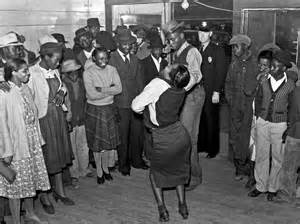 ring./Git a quart o’ licker,/Let’s shake dat thing!/Skee-de-dad! De-dad!/Doo-doo-doo!/Won’t be nothin’ left/When de worms git through/An’ you’s a long time Dead/When you is/Dead, too./So beat dat drum, boy!/Shout dat song:/Shake ’em up an’ shake ’em up/All night long.
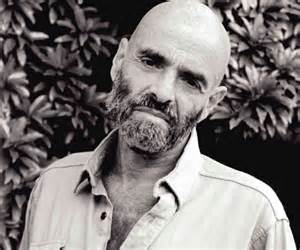 on the matter from the song Still Gonna Die by Shel Silverstein,
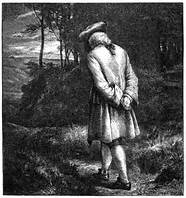 Graveyard, which opens, The curfew tolls the knell of parting day,/The lowing herd wind slowly o’er the lea/The ploughman homeward plods his weary way,/And leaves the world to darkness and to me. There are so many memorable lines in this justly famous poem, but these four lines will serve to illustrate the quality of the whole,
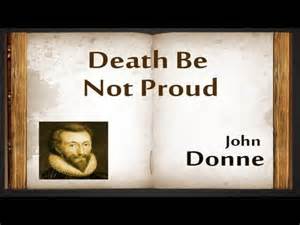 John Donne, in his own inimitable way, defies the grim reaper, DEATH be not proud, though some have called thee/Mighty and dreadfull, for, thou art not so. In the sestet of his sonnet, he scorns the power of death and affirms his own adamantine faith,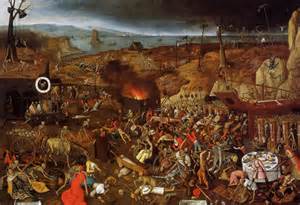
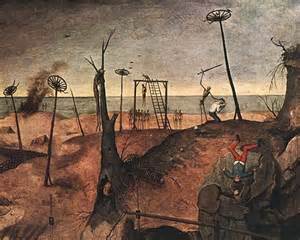 Bodies hang from trees and gallows while carrion birds wheel above. Skeleton armies swarm in the middle-ground, herding the masses into a false sanctuary marked with a cross as a pair of skeletons frame this section- one on a wagon filled with skulls, plays the hurdy-gurdy while the other beats triumphantly on a pair of timpani.
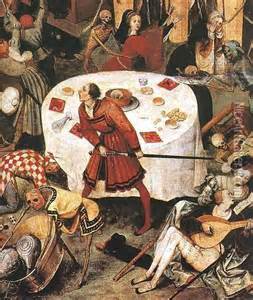 grapples with a young woman in a parody of an amorous embrace as, in the lower right corner of the painting, a pair of young lovers, oblivious, sing from a musical manuscript to the accompaniment of a lute. At last! A sign of hope, you gasp…sorry, see that death’s head reading the music over her shoulder?
 Over the past 27 years I have written nine songs specifically in remembrance of my son who died at age 15 years. They take different forms but are all part of an ongoing engagement on my part with him. If we can’t go to the pub or sit out on the back veranda and shoot the breeze, then, at least, I can let him know how things are going, as in this 2005 song where I bring him up to date on what has been happening within the family group.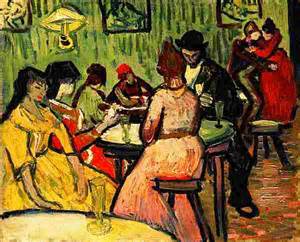
 Brobdingnagian dance. As they made mutual approach at half the speed of light, they circled one another 250 times a second before colliding with explosive effect releasing more energy in a fifth of a second than that of all the stars in the universe.
 forward a billion years and normally sedate scientists are dancing a jig because, after 44 years of trying, their super-computers detected the infinitesimal movement of mirrors in big L-shaped arrays in Washington state and Louisiana. The discovery of gravitational waves that register as middle C in the scale means that we can now listen to the cosmos and may even be able to hear the sounds of the birth of the universe at the point of creation.
 his world-weary Sweeney Among the Nightingales, written in 1918 where his protagonist relaxes in a low bar somewhere in South America, Apeneck Sweeney spreads his knees/ Letting his arms hang down to laugh. One of the ladies of the establishment makes her play, Tries to sit on Sweeney’s knees/Slips and pulls the table cloth/Overturns a coffee cup. An air of diffuse menace pervades the poem as, The waiter brings in oranges/bananas figs and hot-house grapes.
 Prufrock.
 But I was young, arrogant, ignorant and cursed with the idea that I had some talent for writing. Not for me then, (heaven forfend!) merely the role of an attendant lord; and further still in the future, even a dim understanding of the lines,
 patrolled by barracuda, where conger and moray eels lurked, built rafts and launched out, oblivious of dangers, into the Caribbean Sea, accepted dares to leap off roofs and run buck naked along the beach road as people at the Esso Club gaped.
 One of my favourite authors is Raymond Carver. Fear pervades So Much Water So Close to Home, one of the most chilling accounts of death- first, that of a young woman and then trust in a relationship. Paul Kelly, arguably Australia’s best songwriter, penned a song based on this short story. Raymond Carver was a poet as well as a writer of short stories and he wrote about fear in verse, too.
 masses turned to pure energy sending ripples through space-time will somehow shift the mirrors of my soul infinitesimally so that I see reflected someone still recognisably me but somehow altered for the better as I find the words to express more confidence than I presently possess, and fashion the notes to be able to sing a better tune rising from middle C.
 So I’ll close this quote-fest by reference to that fine novel about modern Ireland, Niall Williams’, History of the Rain, The history of Ireland in two words: Ah well… In the Aeneid, Virgil tells it as Sunt lacrimae rerum, which in Robert Fitzgerald’s translation means ‘They weep for how the world goes’, which is more eloquent than Ah well but means the same thing.
  primary and junior secondary years in a small island called Aruba, located just off the coast of Venezuela and close to the vast oil deposits of Lake Maracaibo. We lived in “The Colony”, a walled Caucasian enclave built by the oil company, Standard Oil of New Jersey for its white American and European employees on the south-west tip of the island adjacent to the oil refinery.
 said, ah, Cascabel. He went on to explain that I had seen the elusive Aruban rattlesnake, which I subsequently learned has been placed on the critically endangered list, there being little more than 200 individuals still alive in its singular habitat.
 Some of the jocks and college boys returning for a vacation would visit the bowling alley for a game: not merely 10-pin bowling, though. They would send the bowling ball hurtling down the lane as fast as they could, with maximum possible spin. The result was the pins exploding off their sets and spinning upwards among the machinery.
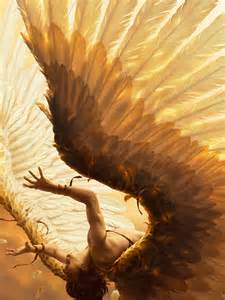 ku ta kere/ ku e no por kai Now, for the English translation, THE FALL It would have been better if you had not become a bird to get the wings and to be able to fly away. As for the person thinking that he cannot fall, falling is very hard.
 consider putting them together on a cassette tape- remember those? Even then they were beginning to get a bit old- but, hey, so was I. All I Did was one of those songs. I decided to weave the songs into a little story to celebrate: Want to hear it?
 From time to time he would turn our way and include me in his circle of conversation. Pliant by nature, I found it little strain to take on a series of bit-parts in his fantasy. Indeed, it was a welcome diversion, as my aged relative was deep in the coils of dementia and was only playing reluctant host to a number of physiological functions: higher mental processes being, alas, absent.
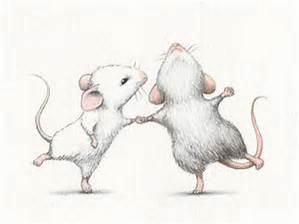
  always drawn the line at hitherto. Gradually, he sank into a tangled fugue, berating politicians, calling people dancing mice and imploring the emperor to return. At this point a couple of staff members appeared and led him off. Upon reaching the door he turned and said in a clear, calm voice, “I’ll see you again, young man, at the Paraclete Mine.” I thought no more of it.
  anniversary I took my wife to a fashionable motel. As we were walking across the car-park a young lout appeared from nowhere and snatched her handbag. I gave unconvincing chase, then gave up. Have you ever noticed the way that things go wrong in series rather than singly?
  sympathetic auditor. He was frightened that he would soon be out of a job- what about his family? What was he to do? Hadn’t he had enough misfortune in life? What happened to the glories of youth with fast cars and parties?
  utterance and we were soon at dinner. The local combo, The Moonglow Quintet, had been delayed and the motel had, for some reason, installed a filler act- a young man from Belfast who fancied himself as a bit of a bard.
 American southwest. He is an uncommonly amusing person (apart from his predilection for coprophagy, which I do not usually share).
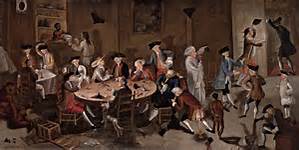 out different versions of who you might be- or at least it was like that at the end of the 1960s in Belfast. I got involved in student politics and for a couple of years I tried on this version of me.
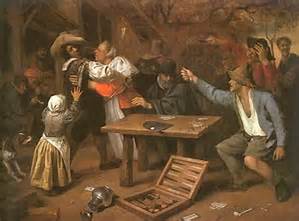 a more tribal alignment within the student version meant that my exit from this world of bubbles was more precipitate than it otherwise would have been- but I would have bailed in any event.
 communist east, the spectre of the mushroom cloud was in the back of every intelligent mind but the core of democratic values remained uncracked. Now, we wonder: in the aftermath of 9/11, the hunt for Bin Laden involving the invasion of Afghanistan had widespread popular support even if later polls have swung the other way. But the sequel, the invasion of Iraq was a bridge too far for popular opinion in Australia and the UK as well as in the US. The world shouted NO! And we know what happened.
 That wittiest of essayists, Gore Vidal, long held that power in the US did not reside in the legislature or with the Presidents, whom he characterised as Banksmen, but with- you guessed it, the Banks. Others cite the Illuminati, the New World Order, etc. as the powers in the background and you could spend a lifetime reading all the texts exposing these deeper truths.
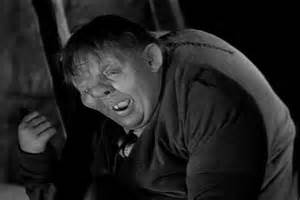 Hunchback of Notre Dame, Everybody’s making love or else expecting rain, explains Bob Dylan in Desolation Row. If the truth is Quasimodo, swinging down from the bell-tower in an, ultimately, vain attempt to save the innocence of the world personified by the beautiful Esmerelda, then, Captain Phoebus must represent the shadowy powers as he watches the execution of the hapless heroine even though he could, had he so chosen, have proved her guiltless of his supposed murder.
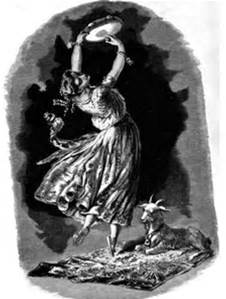 In Victor Hugo’s novel, Quasimodo recovers the body of Esmerelda and pines away clutching his beloved. The synopsis in Wikipedia delivers the denouement, years later, an excavation group exhumes both their skeletons which have become intertwined. When it tries to separate them, Quasimodo’s bones crumble into dust.
 here Wikipedia takes up the story,
 terra/trafitto da un raggio di sole:/ed è subito sera: Everyone stands alone at the heart of the world/pierced by a ray of sunlight,/and suddenly it is evening.
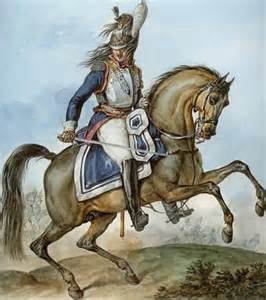 , resplendent in shining breastplate, astride a warhorse decked out in regimental colours charging the enemy line? The empires of Europe with their Dragoons, Lancers and Hussars provided ample material for dreams of glory as young men yearned for their place in the Imperial sun.
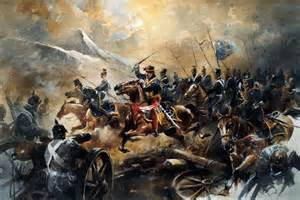 Tennyson has immortalised those Dragoons, Lancers and Hussars that made up the Light Brigade as they charged the Russian cannon at the Battle of Balaclava during the Crimean War on October 25, 1854. In a wax cylinder recording of 1890, you can hear trumpeter Martin Landfried, who saw action in the battle as part of the 17th Lancers, play the charge on the bugle used on the day (and which, incidentally, had also been sounded at the Battle of Waterloo in 1815).
 Fund as, by this time, many of the heroes had fallen on hard times. Not an unusual story. Shakespeare created these sorts of characters in the persons of Nym, Pistol and Bardolf who were friends of Henry V in his youth.
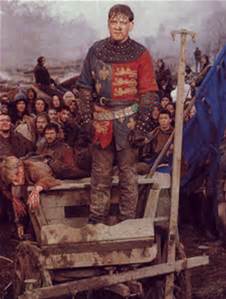 mouth as household words—/Harry the King, Bedford and Exeter,/Warwick and Talbot, Salisbury and Gloucester—/Be in their flowing cups freshly rememb’red./This story shall the good man teach his son;/And Crispin Crispian shall ne’er go by,/From this day to the ending of the world,/But we in it shall be remembered-/We few, we happy few, we band of brothers;/For he to-day that sheds his blood with me/Shall be my brother; be he ne’er so vile,/This day shall gentle his condition;/And gentlemen in England now a-bed/Shall think themselves accurs’d they were not here,/And hold their manhoods cheap whiles any speaks/That fought with us upon Saint Crispin’s day.
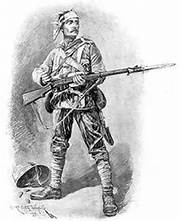 referred to Queen Victoria as the widow of Windsor as a reference to all the men killed in her service. Nevertheless, his depiction of Tommy Atkins as the quintessential British squaddie who is despised in peace time but feted when the war drums begin to beat, steers a course between the romantic square-jawed young grenadier of propaganda posters and the syphilitic scoundrel who enlists to escape imprisonment or worse,
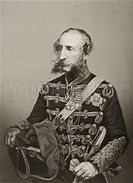 And the band, indeed, plays different tunes for different dancers. Lord Cardigan, who led the charge of the Light Brigade in 1854, survived. He didn’t take time out, though, to succour the wounded heroes of the charge nor did he seek to rally and affirm those who had, somehow, survived unscathed.
 kick-ass detectives. I remember speculating how it would be to be the significant other of a patrol-woman of action. The uniform here adorns the female rather than the male. In the decades since lots of women, on screen and off, have taken up the burden of protecting society from the ne’er do wells who lurk in the shadows.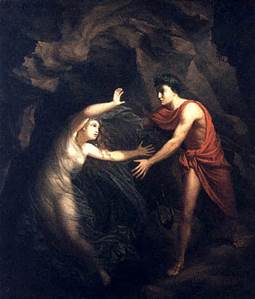
 literally or figuratively- is a lot more pleasant than having to face it, don’t you agree? I have had the pleasure with reference to the former- both literally and figuratively- and have had to endure the pain of the latter, too.
 Lady of the Netherworld to release his wife Eurydice from the grip of death. All is well until, anxious to check that she is following him upwards to life and light and love, he turns and breaks the injunction not to look back, thereby hurtling her back into darkness.
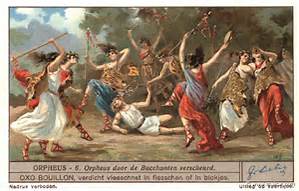 that he had abandoned their god, Dionysus, threw sticks and stones at him to break his bones and end his life.
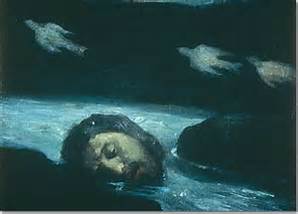 lay hands on him and tear him limb from limb. His head and his lyre, still singing and playing, float away into legend.
 times onwards. Shakespeare’s recognition of the power of music is scattered throughout his plays: Oberon, King of the Fairies, in A Midsummer Night’s Dream recalls to Puck an instance where they,
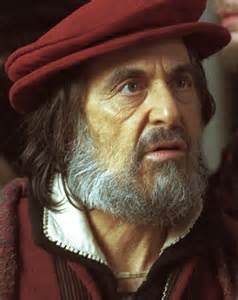 of sweet sounds,/Is fit for treasons, stratagems and spoils;/The motions of his spirit are dull as night/And his affections dark as Erebus:/Let no such man be trusted.
  Powers audaciously has his protagonist, a 70-year-old composer, attempt to manipulate the genome of a human pathogen (the bacterium, Serratia marcescens, which causes hospital-acquired infections) by splicing musical patterns into its living cells.
 Mozart to Messiaen. I was drawn to listen to the music described in this novel. To encounter such sonic revelations as The Quartet for the End of Time, written in a Nazi Concentration Camp or Harry Partch’s Barstow with its strange instrumentation and musical structure made the week I was reading the novel and listening to its music the richest period of my life since the half-a-decade playing with the group in pubs and clubs at the end of the 90s.
 area of the brain where sounds are processed. And here I was thinking that with me it was just the effect of listening to compressed formats. There is a magical fusion that, from time to time, arises between musicians and audience which makes me believe in the Orpheus myth and I can almost resurrect the joy sparked by such encounters when I remember such rare and beautiful times as that related in the song.