
Entry 71: Fantasia: The Emperor of Ice Cream- Wallace Stevens has wowed my world for over forty years. I can remember, sitting in the park at Gwynneville, Wollongong, watching my children playing in the sandpit on a sunny Saturday in 1974, reading this poem and struggling with its meaning.
It’s only two stanzas; see what you can make of it,
Call the roller of big cigars,/The muscular one, and bid him whip/In kitchen cups concupiscent curds./Let the wenches dawdle in such dress/As they are used to wear, and let the boys/Bring flowers in last month’s newspapers./Let be be finale of seem./The only emperor is the emperor of ice-cream.
//Take from the dresser of deal,/Lacking the three glass knobs, 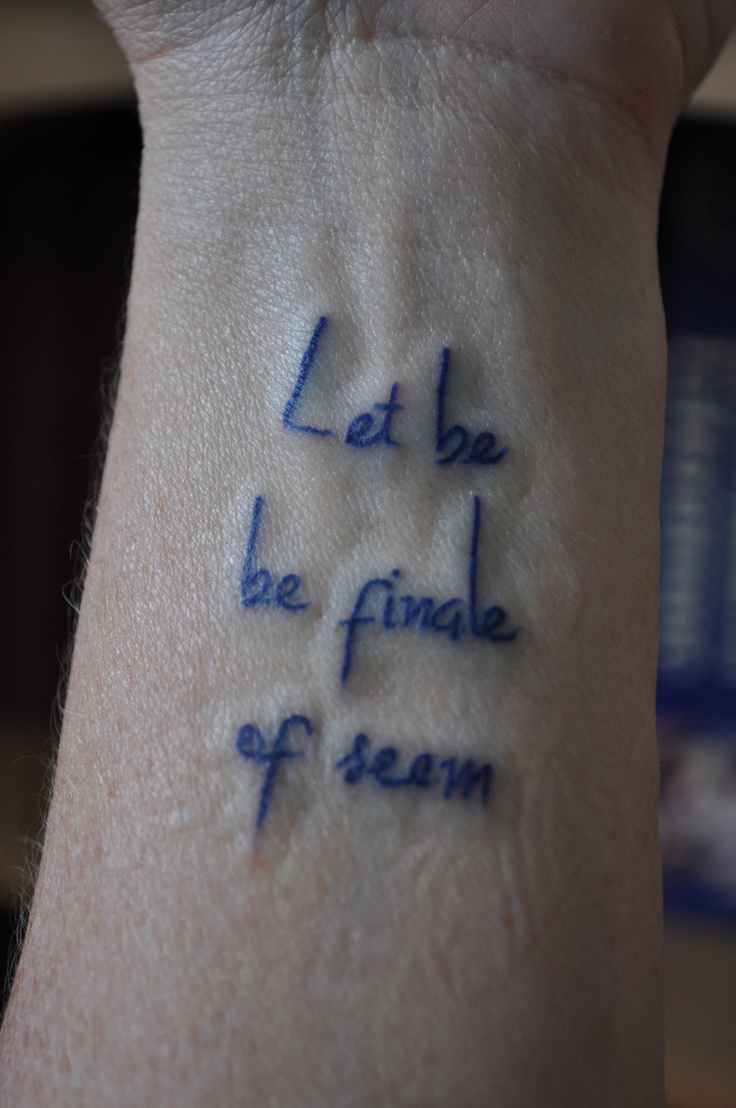 that sheet/On which she embroidered fantails once/And spread it so as to cover her face./If her horny feet protrude, they come/To show how cold she is, and dumb./Let the lamp affix its beam./The only emperor is the emperor of ice-cream.
I know, baffled me too! I get that there are two rooms, one per stanza, the kitchen where ice-cream is being whipped up into concupiscent curds and the bedroom where an old woman lies dead, her face to be covered by the sheet she had embroidered in life which may not cover her calloused feet. But it wasn’t until I read, today, Austin Allen’s account of the poem published on the Poetry Foundation’s website that I finally got all of its allusions and interlocking bits.
The lives of all creatures are fragile and temporary, and all creatures obey a sovereign impulse toward hedonism: feast as much as you can while there’s still time.
And he quotes the celebrated critic Helen Vendler who paraphrases the meaning of the poem thus: The only god of this world is the cold god of persistent life and appetite; and I must look steadily at this repellent but true tableau—the animal life in the kitchen, the corpse in the back bedroom.
I’ve wrestled with quite a few of Steven’s poems in the decades since. But, real understanding notwithstanding, I responded to the various ways in which the poet handles sombre themes with playful language by writing a fantasia using the title of the poem and mashing up in it references to a handful more including Anecdote of the Jar and Sunday Morning.
I use the word fantasia advisedly because it seldom approximates the textbook rules of any of the stricter forms. Also, when I was putting the song together, I was listening to the Ralf Vaughan Williams composition, Fantasia on a theme by Thomas Tallis.
 It tickles me that this work was written and performed at about the same time that Wallace Stevens was putting together his first volume of poetry in the early decades of the twentieth century. Further, Thomas Tallis emerged as the voice of English music in that most magical of centuries, the sixteenth, which is also the time when the term fantasia came into vogue.
Anyway, decades ago, I had a blast putting the song together. In some ways it is the precursor and companion piece to Harlequin’s Poles, the subject of entry 37. Both deal with the allure of totalitarianism. One of the guises of The Emperor of Ice-Cream, of course, is the fascist leader, Benito Mussolini, for whom Wallace Stevens had a brief moment of admiration.
But he was not alone- other poets, too, were enamoured by the snazzy uniforms and dynamism of fascism. Eliot, Pound and Yeats come to mind. George Orwell writing about Yeats in 1943 is scathing,
Yeats, the poet, sees at a glance that Fascism means injustice, and acclaims it for that very reason. But at the same time he fails to see that the new authoritarian civilisation, if it arrives, will not be aristocratic, or what he means by aristocratic. It will not be ruled by noblemen with Van Dyck faces, but by anonymous millionaires, shiny-bottomed bureaucrats and murdering gangsters.
 I wonder how far we are in our security-obsessed society, from the loathsome triad Orwell warned against. But Orwell, nothing, if not fair to those whose world-view is opposed to his goes on to write,
Others who have made the same mistake have afterwards changed their views and one ought not to assume that Yeats, if he had lived longer, would necessarily have followed his friend Pound, even in sympathy.
To be on the wrong side of history- what a bummer!
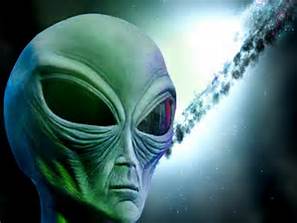
D. M. Thomas, I think, wrote a dystopian poem decades ago, where he has alien super- beings visiting the nuclear wasteland of planet Earth and, using a surviving trace of DNA, resurrect the person from whom it originated. Gaining sentience and, blind at first, the man sings hosannas for the fulfilment of the old Promise. Then, as the scales fall from his eyes, he sees the merciless orbs of the aliens who, having extracted the information they wanted, mow him down with their ray-guns and move on to the next phase of their exploration.
 another move. In the previous six years we had moved from Sydney (a long train journey) and lived at four different addresses. This has been the pattern for the whole of our married life, having lived at three addresses in the first two years of marriage in Northern Ireland followed by a move to Sydney (a long, long, plane journey).
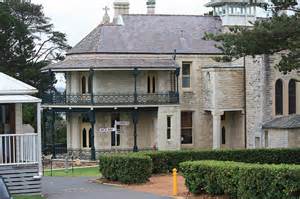 In my mid-forties, drinking beer in Sydney’s outer west in a backyard that was not my own, I contemplated the commute that I would have to make to get to work at St Paul’s College, Manly, which has a glorious position on the hill overlooking the harbour. However, to get there would entail a bus, train and ferry journey each way as well as the trudge along the Esplanade and up and down the hill from Manly Wharf to get to work. The commute, I realised, would be longer than the teaching day!
 something akin to whistling in the dark. And in that first winter back in Sydney, it was dark getting up for work and dark coming home. Home, because we bought our first Aussie home in March ’95 and still live in it.
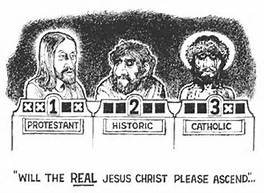 populated with poets, composers, painters, dramatists, novelists, sculptors, and ordinary people. I include cartoonists in this exalted company- they have lightened- and, indeed, enlightened- my existence from the time when I was a kid reading MAD magazine in Aruba to today as I laugh over the jolly japes of First Dog on the Moon.
 ‘sixties (although, it seems a tautology to use counter-culture and cartoonist in the same sentence). A cartoon of his that I have carried in my head and reproduced on blackboards and whiteboards in Australia and Ireland since the seventies is one called Progress.
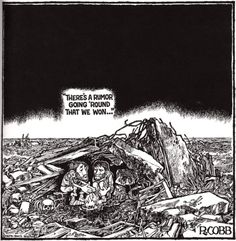 His cartoon has two men cowering under a broken concrete shelter surrounded by rubble and skulls. One man says to the other, There’s a rumour goin’ round that we won. And this brings us to hell. My version of Tartarus is full of my enemies; those who threw rocks at me as a kid, or sold me dud cars, as well as the usual complement of fraudsters, predators, murderers and others of the ilk.

 even believe in the events of September 11, 2001. I mean it. For half a year, almost, I could not totally credit what had taken place. I had read and viewed years before the news of those Mickey Mouse attacks on the World Trade Centre, where some losers were trying to situate cars with explosives next to pillars in the underground carpark in the nineties to bring the towers down. Let’s face it. Those guys with towels around their heads were as laughable as the guys in black pyjamas in what the winners now call the American War and what we persist in calling the Vietnam War.
 How could those murderous buffoons deliver such massive blows to the jaw and gut of the premier power on earth? I admit that I got it wrong; first, in Vietnam, and later in NYC. And believe me, it won’t be the last time I get it wrong. It got me thinking about real paradigm shifts, when the lens through which we view the world is revealed to be flawed; where we need a new set of spectacles to see our way- until, that is, the next revelation shakes the core of our being.
 deal. 202 innocents perished in that awful conflagration. By the end of the year I knew that, indeed, the world had changed and that there would be no going back. But I stand by the imaginative recreation of a possible dystopian future for people like me that I wrote in February 2002. It is as likely to happen as any of the prognostications of the experts I pay a dollar or two to read in the daily newspapers. (Not that the papers will last too much longer, if the pundits have got it right, even accidentally.)
 The song posits a post-apocalyptic world in which small groups of Westerners, clinging to remnants of their culture and past, wander through a desolate landscape, harried by bands of fanatics (the successors of the Taliban and Islamic State, perhaps) who periodically force them to uproot and keep moving. And they have kept moving, across a virtual, frozen plain for a decade and a half while the real world spins out its revelations- some dire, some dream-laden, some disastrous and some desirous.
 of cancer. My first thought, after registering the info and feeling the existential hit that another of my contemporaneous heroes was gone, was that I had been in JB Hi-Fi just an hour previously and had toyed with the idea of buying Black Star, Bowie’s, as it now seems, last musical CD. But, I had decided to stream it instead.
 to make Let’s Dance and throw his considerable celebrity weight behind the cause of Aboriginal rights and recognition reminds me that so much goodness resides beneath the dirt that journalists seek to heap- sometimes justifiably- on those, such as David Bowie, who have attracted the limelight.
 Zealand, all the while, consuming the three main food groups of my diet- beer, wine and spirits. The perspicacious among you will know that I will be hanging out for a fragment of a poem by this stage- if not the thing whole. And, yet, I am without a clue.
 And so my daughter dances to Maroon 5, my wife watches Ricky Gervais sneering at the glitterati at the Golden Globes while my son channels John Belushi or, perhaps, perves on Tina Fey and Amy Poehler. And me? I just tip another glass of Cab Sav and reflect that my Christmas stash has just about run dry. So, too, my poetry search. I’ll end with a part of a prayer: as several poets have noted- prayers are poems and poems prayers:
 that crown yourself. Me? Not one or likely to be one but I can claim kinship to one- if I am to believe my aunt Maggie who was a missionary nun in Africa and who later became the mother superior of a convent in Ireland.
 St Joseph of the Sacred Heart- one Mary MacKillop. She thought that I might be interested in the connection.
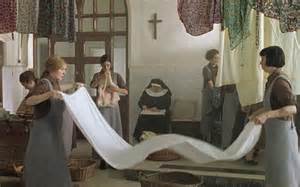 These institutions were run by various orders of nuns, among others, where young women: those pregnant, those dispossessed and those distressed, were put to work in harsh conditions where love was often hidden behind the billowing vapour, clanking rollers and shouted orders in places as far afield as Australia, America, Britain and Ireland.
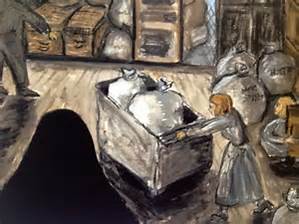 these places is probably as complex and as various as the times, the places and the people involved: but not likely to be, as the most vociferous critics aver, comparable to a Nazi concentration camp, nor were they merely a soothing refuge for unfortunate girls and women as the defenders of the laundries would have it.
 Margaret of the Good Samaritans was able to baptise our younger daughter rather than allow the time-serving priests of the parish we were living in at the time to perform the rite.
 clinking, clacking racket as she ran for her train through the Dublin station attracting the stares of bemused onlookers.
 long run it will be down to these redoubtable women rather than the popes, cardinals, bishops and priests who cling desperately to their outmoded privileges.
 …many of them preserved against her wishes (she had requested that they be destroyed but was overruled by her church). They reveal that for the last nearly half-century of her life she felt no presence of God whatsoever.
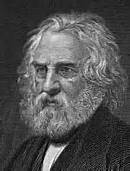 journal, and may have recourse to in future: Henry Wadsworth Longfellow in stanzas two and three of his poem Loss and Gain wrote with clarity and wisdom,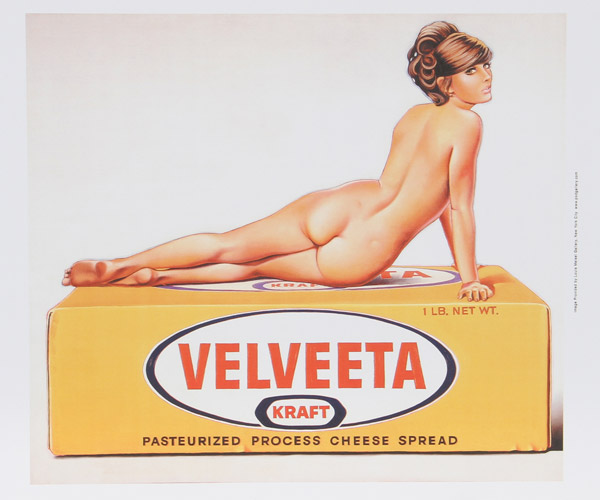
 Believers of one sort or another, on the other hand, postulate one or more states of post-mortem being such as the eastern concept of Nirvana or the five abodes of Thomas Aquinas: heaven, hell, purgatory, limbo of children and limbo of the Patriarchs.
 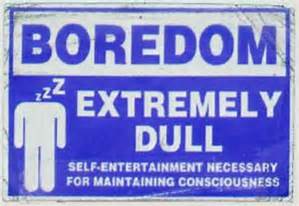 sharp on Saturdays when the drudgery of the work-a-day week is over and the promises of the day telegraphed so alluringly in the days prior begin to wither under the gravity of listlessness and inertia that so often descends on the blank-eyed denizens of the dragging eons that seem to stretch out before them on what should be the best day of the week.
 smart phone or watch and give a curt command to the digital assistant to be instantly diverted by whatever whim is within reach. But when I wrote this song, in 1982, no such diversions were available. Reading books was always- and still, though to a lesser extent, alas-an antidote to the poisonous ennui that I seem to absorb through the pores.
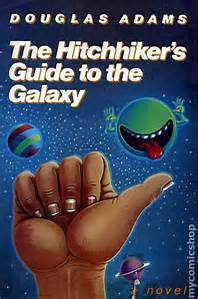 I first read The Hitch-hiker’s Guide to the Galaxy in 1979 and later devoured the BBC Radio Four adaptation when it was broadcast. Then the 1981 TV series eventuated and I looked down with superior disdain upon those who had only just discovered the wonderful creations of Douglas Adams. One of my favourites was Marvin, the Paranoid Android. In him, I found a template for my own angst. Here, he speaks,
 to pretend we never die. In fifty lines, taking little over three minutes to recite, you can listen to the poet explicating our deepest existential fear on YouTube.
 than a bedsheet. I was preparing the ground for…? Who knows? But it seemed a good idea at the time. I sat down and started strumming chords on the guitar, a fairly usual ploy to break the boredom. Searching in the fridge for something to snack on, I saw a block of processed cheese on which rested my younger son’s half-chewed teething rusk.
 about the pop images of Mel Ramos and one, in particular, had stuck in my mind- his image of a nude pin-up poised on a giant block of Velveeta processed cheese, raised on one arm, her head turned over her shoulder towards the viewer, her elaborate, coiffed hairstyle proudly on show. You probably know it- he first drew this in 1965 and reprised it as recently as 2004. An example of pop-art sensibility at its best.
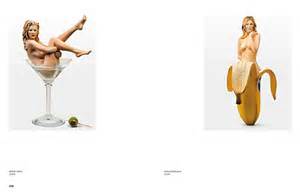 emerging from peeled bananas and lurking behind sauce bottles. I sat down at the table and started writing this song. I finished it just before my wife returned with the kids. And what are you looking so pleased about?, she demanded, as she manoeuvred the pram in through the door.
 cook the perfect leg of lamb on the Weber by consulting the experts online, but I’m not going to do that just yet. Procrastination’s at work, yes, but there’s something else.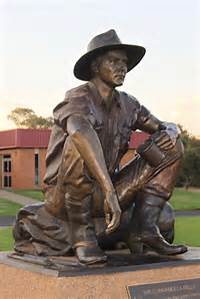

 Community Services, reminded me of the endemic racism she witnessed regularly when matters pertaining to Aboriginal Australians were dealt with. Second, there was a phoned bomb threat and I remarked to my wife as I bundled her into the car with the kids that it would be ironic to be blown up in Wollongong after surviving Belfast.
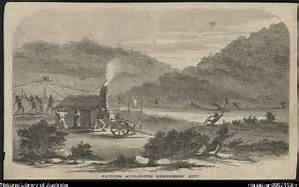 Deaths in Custody basically said, nothing to see here, folks. But, little by little, the truth is getting out. I read Henry Reynolds when I was teaching up near Townsville. He had established the Australian History department at the university there and was documenting the history of the frontier clashes between white settlers and indigenous tribes.
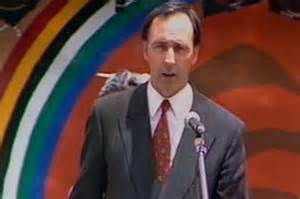 Australian citizenship, which I did, somewhat belatedly, at the beginning of January 1995, with the rest of the family. He optimistically ended, We cannot imagine that the descendants of people whose genius and resilience maintained a culture here through fifty thousand years or more, through cataclysmic changes to the climate and environment, and who then survived two centuries of dispossession and abuse, will be denied their place in the modern Australian nation… I am confident that we will succeed in this decade. Dec 10 1992.
 this week when the Ethics Centre re-broadcast his 2015 IQ2 off-the cuff speech, where, among other things, he said, starting with a reference to the shameful booing of Adam Goodes, aboriginal sportsman and, ironically, Australian of the Year in 2014,
 I’ll finish with lines from one of aboriginal Australia’s greatest poets, Oodgeroo Noonuccal, whom I first knew as Kath Walker when I taught poetry to my Year 8 class as the face of that sad boy lives on in my memory, The best of every race/should here find welcome place;/ The colour of his face/ Is no man’s test of worth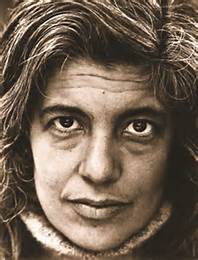
 paper and placed in albums or behind frames or in glossy magazines, not the digital imposters that feature grinning, gesticulating loons having such a hell of a good time all of the time that they can barely maintain continence- or so it seems to me when my daughter shows me the latest trove from her Facebook page.
 an overwhelming, self-absorbed narcissism. My initial dyspeptic comments notwithstanding, I love photographs: LIFE magazine was a feature of our household along with National Geographic when I was growing up and I spent hours with these magazines, imagining the lives and places behind the images.
 as those from the early years of photography featuring the battlegrounds from the American Civil War and other sepia records from the 19th Century.
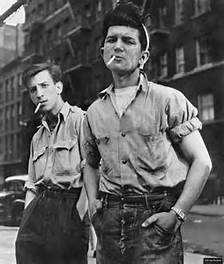 ironworkers, bridge men, musicians, sandhogs, miners, builders of huts and skyscrapers, jungle hunters, landlords, and the landless, the loved and the unloved, the lonely and abandoned, the brutal and the compassionate — one big family hugging close to the ball of Earth for its life and being. If the human face is “the masterpiece of God” it is here, then in a thousand fateful registrations. Faces in crowds, laughing and windblown leaf faces, profiles in an instant of agony, mouths in a dumb-show mockery lacking speech, faces of music in gay song or a twist of pain, a hate ready to kill, or calm and ready-for-death faces. Some of them are worth a long look now and deep contemplation later.
 this is one of the destinations on my bucket list. You’re so tragic, I hear the adrenaline junkies among you sneer- so be it. There are, of course, countless portraits in black and white and colour where a human moment in time is trapped for our perusal and, perhaps, deep contemplation later.
 cover of Steve Reichs’ WTC 9/11, written for the Kronos Quartet on the tenth anniversary of the atrocity.
 the age of instant indignation fuelled and amplified by Twitter and other social media sites, artists have to be very careful about their choices, remain au fait with the technology and be adroit at turning on a dime to avoid the slings and arrows of outrageous bloggers.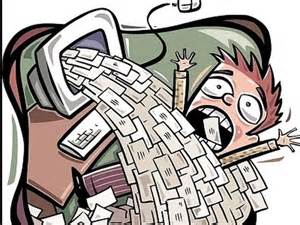
 the cleanliness of my soul and the tranquillity of my conscience, and, as evidence, proudly point out that I had never taken a sleeping pill in my life.
 In 1971 I had read the Alvin Toffler best-selling book and was fascinated by the concepts he presented. Chief among them was the phrase information overload. The concept has also become known as infobesity, data smog and infoxication. Too much information renders the understanding of issues and, consequently, the making of decisions, difficult.
 exceeds its processing capacity. E-mail remains a major source of information overload, as people struggle to keep up with the rate of incoming messages. As well as filtering out unsolicited commercial messages (spam), users also have to contend with the growing use of email attachments in the form of lengthy reports, presentations and media files.
 seemed to me that the introduction of individual laptops to teachers’ desks produced a work-environment not unlike those of Dickensian clerks chained to their desks in serried rows.
 my brain and grew year on year, as micro-managerial strategies replaced previously relaxed and human ways of doing things. And these strategies strangled creativity as teaching became more like painting by numbers than producing the real thing. And I began to sleep less and worry more about…nothing. Generalised anxiety, perhaps. But it irked me. I wasn’t a monster who deserved to lose the peaceful repose of a good night’s sleep: a bit cranky, of course, but no Macbeth!
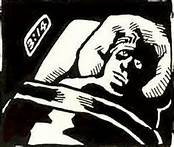 Methought I heard a voice cry “Sleep no more!/ Macbeth does murder sleep,” the innocent sleep,/ Sleep that knits up the ravell’d sleave of care,/ The death of each day’s life, sore labour’s bath,/ Balm of hurt minds, great nature’s second course,/ Chief nourisher in life’s feast. (Macbeth: 2: 2: 32-37)
 frustration we experience when we have so many problems that we can’t see the end to any of them. And we can understand why the Scottish nobleman has such perturbation of spirit- he’d just murdered his kinsman and king who was a guest under the sacred protection of the laws of hospitality. When the knocking at the gates echoes in the courtyard, he starts,
 red. (Macbeth: 2: 2: 55-60)
  three./“We have come to fish for the herring-fish/ That live in this beautiful sea;/ Nets of silver and gold have we,”/ Said Wynken,/Blynken,/And Nod./…All night long their nets they threw/To the stars in the twinkling foam,/Then down from the skies came the wooden shoe, /Bringing the fishermen home:/‘Twas all so pretty a sail, it seemed/As if it could not be;/And some folk thought ‘twas a dream they’d dreamed/ Of sailing that beautiful sea/;But I shall name you the fishermen three:/Wynken,/Blynken,/ And Nod.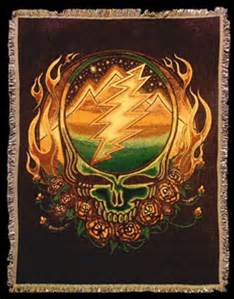
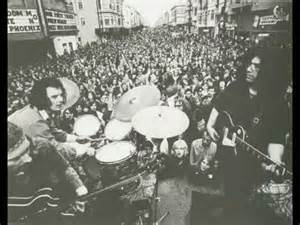 career of The Grateful Dead from the San Francisco event of March 3rd 1968, I remember getting off the bus on Haight Street that Spring day, pushing my way through the crowds to see what all the excitement was about (I didn’t know- did anyone? -that the Dead were parking a flatbed truck across Haight Street to play a free gig!)
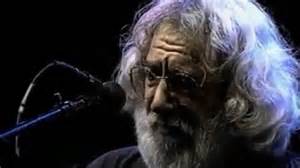 People ask me what my favourite show was, and I always say the next one. But this is actually one of my favourites. The mood before, during, and after the show seemed to be one of unity and healing…The masterpiece for me was “So Many Roads” I remember leaving the show on a high that lasted for days. It would have been nice to see where we could have taken that. In the end, though, how do you rate a miracle.
 inspired many lamentable bumper stickers, but one good one captured how it felt, and feels, to be under their sway: “Who are the Grateful Dead, and why do they keep following me?”
 produced some of the most memorable songs: I’ll mention a trio of greats: Scarlet Begonias, which is usually linked in concert to Fire on the Mountain and which fans usually refer to as Scarlet Fire. Begonias has the memorable lines It seldom turns out the way it does in the song, but my favourites are the final lines, Strangers stopping strangers/ Just to shake their hand, Everybody is playing/ In the Heart of Gold Band/The Heart of Gold Band.
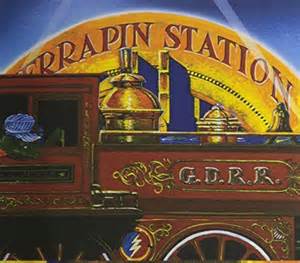 say it’s a sixteen-minute long, sprawling, rococo, musical- and here I’ll use a technical term- mess! The lyrics are derivative, obscure and somewhat pretentious, and yet…yet, I do not skip past it on a playlist and I will often seek it out as I search for sleep on many a night. Go figure.
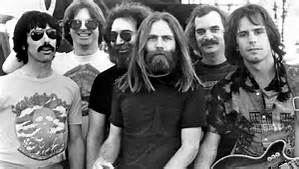 Constanten and Vince Welnick, keyboards. I must mention the other writer associated with the band, John Perry Barlow, who wrote memorable songs with Bob Weir such as Estimated Prophet and Throwing Stones.
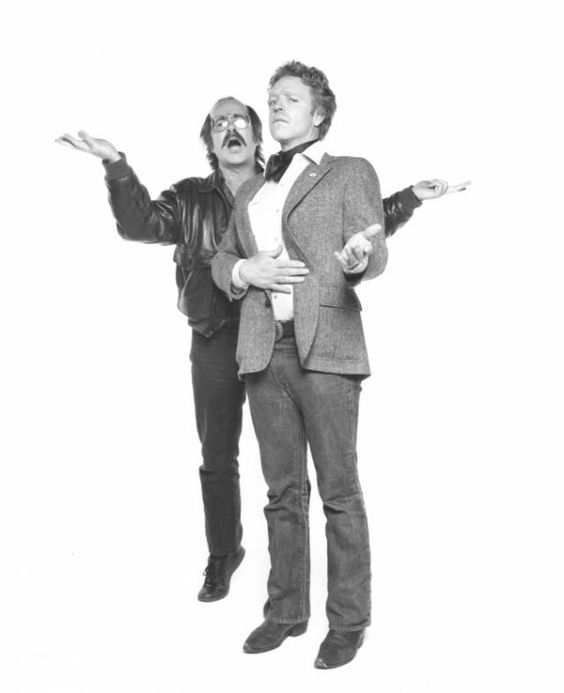 another you wouldn’t say to him. 3 Never assume the motives of others are, to them, less noble than yours are to you. 5 Don’t trouble yourself with matters you truly cannot change. 6 Expect no more of anyone than you can deliver yourself. 7 Tolerate ambiguity. 8 Laugh at yourself frequently. 9 Concern yourself with what is right rather than who is right. 10 Never forget that, no matter how certain, you might be wrong. 12 Remember that your life belongs to others as well. Don’t risk it frivolously. 13 Never lie to anyone for any reason. 14 Learn the needs of those around you and respect them. 15 Avoid the pursuit of happiness. Seek to define your mission and pursue that. 16 Reduce your use of the first personal pronoun. 17 Praise at least as often as you disparage. 18 Admit your errors freely and soon. 19 Become less suspicious of joy. 20 Understand humility. 21 Remember that love forgives everything. 22 Foster dignity. 23 Live memorably. 24 Love yourself.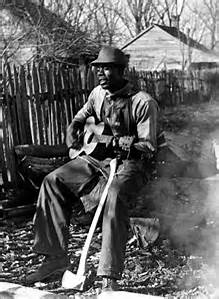
 one of my correspondents speak for itself:
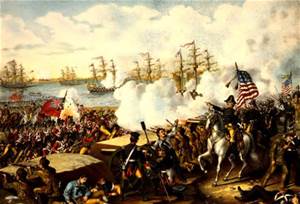 Battle of New Orleans and, as a reward for services rendered, was given a goodly sum of money with which he established a New World version of the old Irish ‘shebeen”.
 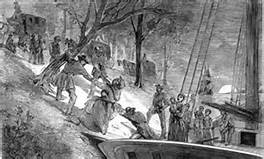 house for the underground railway during the slave years, and a social club for immigrants from various parts of Europe.
  A fracas erupted between Ponsonby (with his henchmen) and a group of Irish navvies- who were fired up by the events of Easter 1916 in Dublin and its aftermath. A blaze broke out and the structure burned to the ground. The glare of the inferno was seen for miles that fateful night. There is a curious epilogue to this incident that has kept the legend green (in more than one sense).
  last owner. Ponsonby had renamed it The Britannia Arms in a vindictive attempt to expunge its origins. Loosie May, a young Southern lass, the spirited heiress of one of the large landowners of the Lake Ponchchantrain area takes up the story in a diary entry dated September 23, 1916: “A most curious sight- a waggon drawn by four mules pulled in in front of the coach-house today. A bedraggled Irishman, half delirious was with a carter I know of vaguely. He asked for assistance to unload what looked to be a large pile of waterlogged planks. I gave orders to have it done. He begged for payment in advance saying he had promised the men ten dollars. I cannot fathom why, but I did! More on this curious transaction tomorrow.” Alas, we cannot know more, for the diary pages from this date on are missing.
 Stories of share-cropping. Love. Nothing new. Odd anecdote about a ritual burning. Mad Irishman of Moore’s acquaintance. Owner of illicit house with drink. Bizarre opening ceremony. Nailed up a plank written in a foreign language at front entrance. Gathered friends (Moore among them) outside at midnight. Another plank placed in oil-drum. Burned to ashes which are buried at crossroads!” Every business, vocation, occupation- what you will- has its myths.
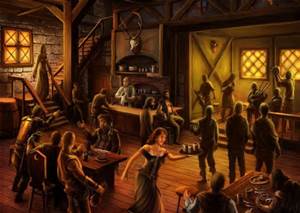 has been emblazoned in cheap glitter or garish neon or a pathetic attempt at a “weathered” sign- obvious fakes! The ambience of such places is such that no one could seriously imagine that they are true offspring of the original. Still, I have been in a few establishments where it would be churlish to believe otherwise than what has been claimed. Maybe you’ve been there too. Such places are welcoming, tolerant, musical and magical.