Entry 21: When It Isn’t Heaven- (Howling-adjective-producing a long, doleful cry or wailing sound. Oxford Dictionaries) Now that I no longer have to join the stream of traffic down the Great Western Highway to access the means to keep the wolf from the door and a roof over our heads, I luxuriate in reading the books, listening to the music and indulging in those sundry, random activities I didn’t have the time or energy for in the “working” phase of my existence.
Leafing through a collection of Banjo Paterson’s verse the other day I came across the lines, Just now there is a howling drought/That pretty near has starved us out. 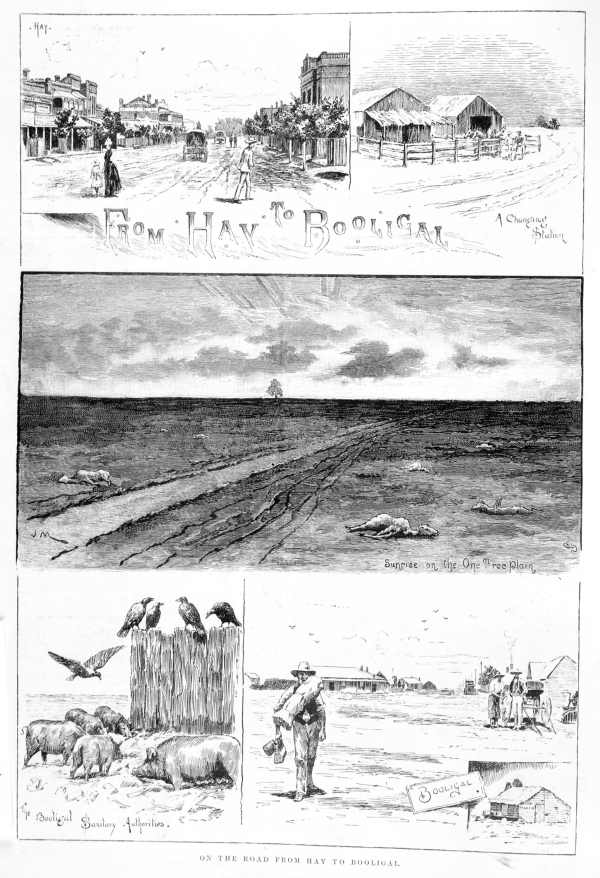 The poem dealt with the hellish conditions in the environs of the western Riverina town of Booligal in the final decades of the 19th Century. A woodcut from The Illustrated Australian News of 1889 shows a barren plain bisected diagonally by a cracked dirt track where the carcasses of animals consumed by the drought lie scattered across this stark tableau. A lone tree on the horizon is etched against the sky where dark clouds mock the arid desolation below.
Paterson treats the subject semi-humorously by having a denizen of the benighted town opine that apart from the isolation, heat, sand, dust, flies, mozzies, snakes and a plague of rabbits…the place ain’t too bad! The speaker concludes by noting that, in the unlikely event of rain, the track would become impassable and they’d be stuck in Booligal. Those listening to him are horrified, ‘We’d have to stop!’ With bated breath/We prayed that both in life and death/Our fate in other lines might fall:/‘Oh, send us to our just reward/‘In Hay or Hell, but, gracious Lord,/‘Deliver us from Booligal!’
For some reason I picture Paul Hogan as the speaker. Australians find humour in the grimmest of situations: the tragic aesthetic does not sit well in the island continent which was earmarked as the dumping ground for the worst elements of British society but which transformed in an astonishingly short time into one of the most desirable residences of the planet Earth. I put down the volume of Paterson’s verse and lifted a dictionary of quotations which opened at a page marked by a decades-old anniversary card from my wife to me.
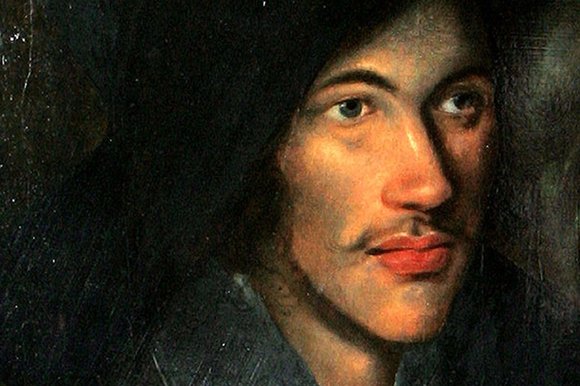
As I was lifting it out, I read the lines: Howling is the noise of hell, singing the voice of heaven, according to John Donne in his guise as a preacher rather than poet. Singing and howling exist on a continuum of sound: one person hears music where another hears a racket. Donne was well acquainted with both concepts, heaven and hell, in his life and work. A saturnine, handsome, young Elizabethan blade with the worlds of adventure, love and preferment in front of him as well as travels as a spy and battle experience with the likes of the Earl of Essex and Sir Walter Raleigh, stares out from a portrait painted around 1595 when he was 24.
Fast forward 37 years to the months after his death and we find an engraving of a sunken-cheeked, grizzled, death’s head in a shroud: something to frighten children with. 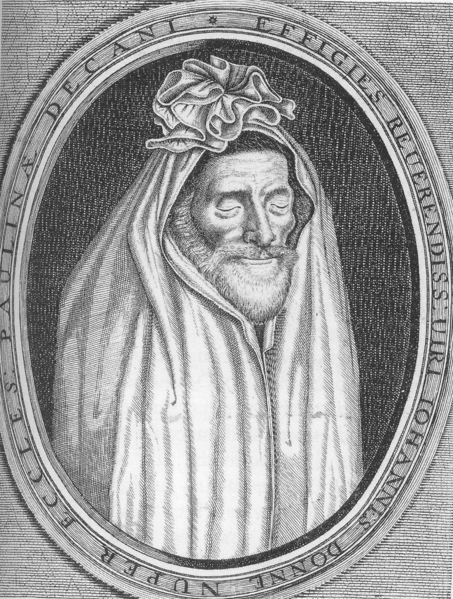 Engraved by Martin Droeshout, better known for the image of Shakespeare that adorns the First Folio, it is based on a portrait that Donne had commissioned and hung on his wall in his final years to remind him of the transience of life.
As I looked from one image to the other I was reminded of Miyazaki’s 2004 anime, Howl’s Moving Castle, where the 18-year-old protagonist, Sophie, is befriended by Howl, a strange, conflicted wizard, who lives in a magical moving castle. She is turned into an aged crone by the Witch of the Wastes. Perilous journeys, transformations and magical encounters within a surrealistic world lead in the end to Sophie and Howl at the bow of the flying castle sharing a tender kiss- oh, my God, shades of the movie, Titanic! And yet we are suckers for the happy ending, particularly one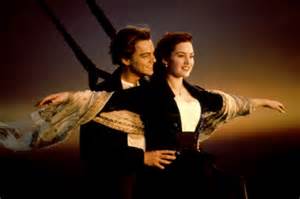 sealed with a loving kiss. Such a pity, isn’t it, that such endings are as rare as a blood-red diamond.
Or are they? Tragic love stories attract the limelight: who would rate R+J if the Capulets and Montagues reconciled in time for the young couple to move into a new apartment in Verona and start putting up pictures while arguing over the décor of the ensuite? So, probably, there are lots of happy endings out there, under the radar, under the doona…
The idea of a prescriptive pair-bonding, though, seems quaint in the 21st Century. The ideal nuclear family of the 20th Century has morphed into a range of relational paradigms and you can take your pick of which one suits you. Me? Born in the middle of the 20th Century and married for 44 years, I still look to the old paradigm and I find a surprisingly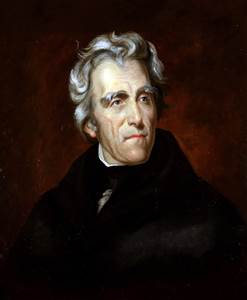 poignant connection with Andrew Jackson, 7th President of the United States, when he said shortly before he died: Heaven will be no heaven to me if I do not meet my wife there.

 Entry 22: Unhallowed Ground- Comparisons are odious. Why? Hugh Mackay, a prominent Australian social commentator, makes the point, in a newspaper article from 2005, that to argue that only Aborigines have a genuine attachment to sacred sites as opposed to the inauthentic attachment of the Anglo-Celts to their footy grounds, war memorials and suburban plots is rubbish. He argues that a sense of place is essential to everyone’s identity. Uluru is
 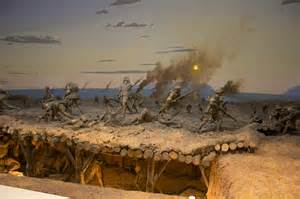 sacred to its custodians and Gallipoli is holy ground for generations of Aussies.
 contemporary of Chaucer, who wrote a little-known but fascinating exploration of animals and their place in creation; in particular, their relationship to humankind.
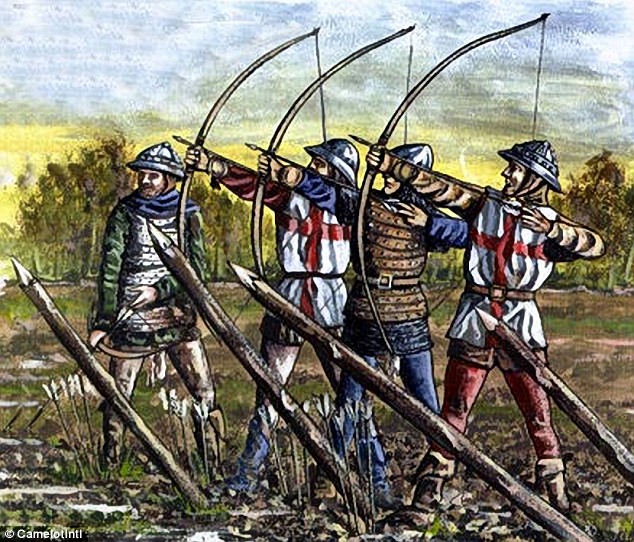 seemingly unending conflict. The Battle of Agincourt proved in bloody detail the effectiveness of the English and Welsh bowmen against the aristocratic, mounted French knights who thought they would have easy game that day.
 keeping to it. But, to conclude, I will shift the animal metaphor to that of a large herbivorous ape which has a fearsome reputation that is not at all in keeping with its gentle nature and which, alas, is approaching extinction and may live on only figuratively for future generations: the 800-pound gorilla in the room is, as always, Shakespeare.
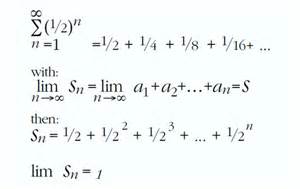
 move to where it is not, because no time elapses for it to move there; it cannot move to where it is, because it is already there. In other words, at every instant of time there is no motion occurring. If everything is motionless at every instant, and time is entirely composed of instants, then motion is impossible.
 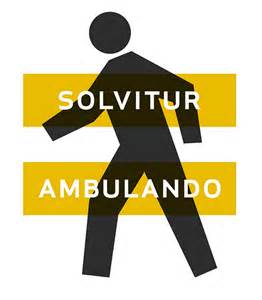 walking. Nonetheless, Bertrand Russell in the 20th Century has called the paradoxes of Zeno “immeasurably subtle and profound”. So why did he leave us such fiendish paradoxes to contemplate? Gazing at the idealised marble statues of the philosophers of antiquity may prompt us to ascribe the love of abstract thought as the motivation.
 stricken young woman, had the constitution of a sickly bird but the heart of a classical hero. Her characters seek for meaning and connection in a hostile world within wonderfully titled works such as Reflections in a Golden Eye, The Ballad of the Sad Café and The Square Root of Wonderful.
 McCullers. Her close friends during these years included Truman Capote and Tennessee Williams.
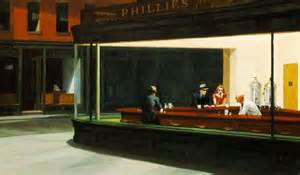 painted one of the great scenes of 20th Century American Art in his picture Nighthawks, set in an all-night diner on a street corner in New York City. I’ll conclude by quoting from the poem where, on the advice of her editor, Carson McCullers found the title for her first novel. The poem, The Lonely Hunter, is by Scottish writer William Sharpe, who, as a member of the Celtic Revival of the 1890s, wrote under the pseudonym, Fiona McCloud.
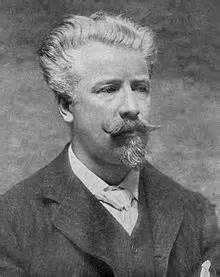 What are all songs for me, now, who no more care to sing?/Deep in the heart of Summer, sweet is life to me still,/But my heart is a lonely hunter that hunts on a lonely hill./Green is that hill and lonely, set far in a shadowy place;/White is the hunter’s quarry, a lost-loved human face:/O hunting heart, shall you find it, with arrow of failing breath,/Led o’er a green hill lonely by the shadowy hound of Death?
 Entry 24: Just For You and Me- The shadowy hound of death in the poem by Fiona McCloud a.k.a. William Sharp is a wonderful construct where the spectre of mortality is not a grim reaper with hapless humankind withering in helpless stands like the grass and flowers of Isaiah and 1 Peter, All flesh is like grass,/and all its glory like the flowers of the field./The grass withers and the flowers/ fall, but, instead, we find a questing hound leading the lonely hunter, pursuing the lost-loved face, over a green hill. And what lies over that green hill?
 men, lost in a hilly wilderness looking for a land where the strife and privation found in Athens are absent. And what do they find? Cloud-cuckoo-land. One of the themes of the play is a revolt against conventional power-structures and this thread comes down through the centuries to us today. In the Middle-Ages we find the Goliardic tradition where the powerful institution of the Roman Church is mocked mercilessly and finds its apotheosis in The Feast of Fools where licentious behaviour scandalised the sober and pointed to the contradictions between the theory and practice of many of the clergy.
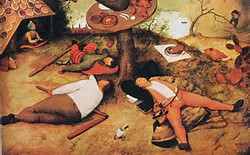 Elder’s painting of The Land of Cockaigne shows us stock contemporary figures such as a peasant, a soldier and a clerk, semi-comatose from the effects of gluttony. Cockaigne, Wikipedia tells me, was an imaginary place of extreme luxury and ease where physical comforts and pleasures are always immediately at hand and where the harshness of medieval peasant life does not exist…a land of contraries, where all the restrictions of society are defied (abbots beaten by their monks), sexual liberty is open (nuns flipped over to show their bottoms), and food is plentiful (skies that rain cheeses).
  children sing in school performances. At about the same time as the song was being popularised in the 1930s we find Shangri-La, a mystical valley utopia in the Kunlun Mountains, which was long believed to be a paradise of Taoism.
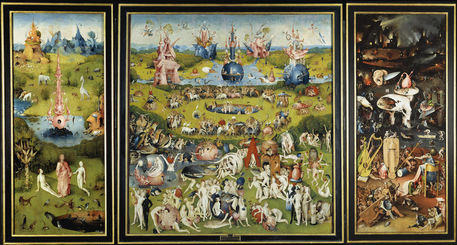 region of Cockaigne where nude men and women cavort among a selection of oversized birds and fruit; finally, in the panel on the right of the triptych, we are in a chamber of hell where the torments of damnation are vividly on show. We pursue our utopias, wherever they lead us. E.E. Cummings wrote a brilliant poem about this in 1944 during the horrors of World War II, pity this busy monster, manunkind, not/…pity poor flesh and trees…but never this fine specimen of hypermagical/ ultraomnipotence/…listen: there’s a hell of a good universe next door; let’s go.
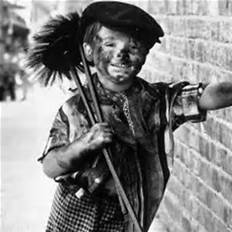


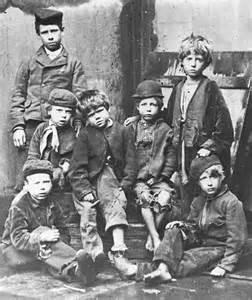
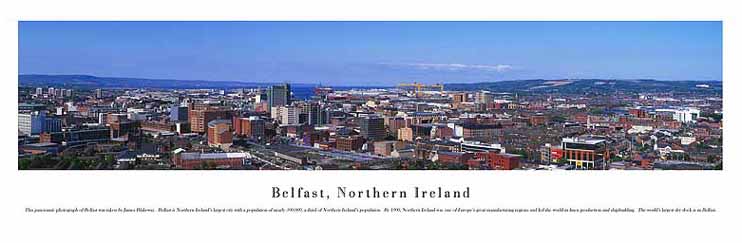 discovered in the city that was my first abode when I left my parents and began my tentative steps as a new husband, a new father and teacher-in-waiting as I dreamt of a new life in Australia:
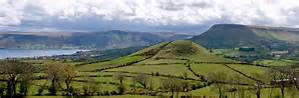 powerful shaping force throughout history and, indeed, pre-history. For 10,000 years people have walked through the glens, many having arrived by sea over the millennia and just as many having left by the same means. My father and grandfather were the latest in a long line of Glensmen who sought a livelihood across the sea stretching back to the Neolithic exporters of porcellanite axe heads found the length and breadth of the British Isles and much further afield.
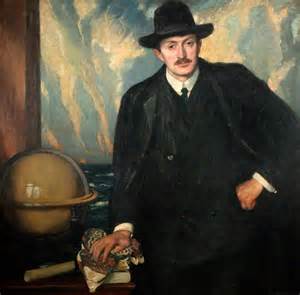 John Masefield has set out in a poem, published in 1902, the allure of the sea-faring life to many a sailor; an allure as powerful as the attractions of the girls from the Belfast brothels of the previous entry.
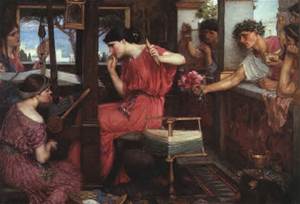 by her modest pose of leaning her cheek on her hand, and by her protectively crossed knees, reflecting her long chastity in Odysseus’s absence.
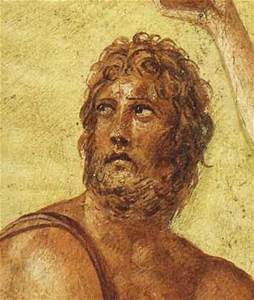 step between a man and the reflection of his own cleverness. Continuing the deflation of the legend, she further assets that Odysseus was a liar and drunkard who had fought a one-eyed bartender then boasted it was a giant, cannibalistic Cyclops he had bested through his guile and strength.
 three Sirens…One of them sang, another played the flute, the third the lyre. They drew sailors, decoyed by song, to shipwreck… According to the truth, he asserts, they were prostitutes who led travellers down to poverty.
  such a thing never happened, it is still conceivable that someone might possibly have escaped from their singing; but from their silence certainly never.
 Some of them may even take part in marking the composition of Ulysses by James Joyce where we find Molly Bloom, who represents Penelope, lying in bed with her husband Leopold Bloom, who is Odysseus. The novel concludes with Molly’s remembrance of Bloom’s marriage proposal. And her reply? …yes I said yes I will Yes.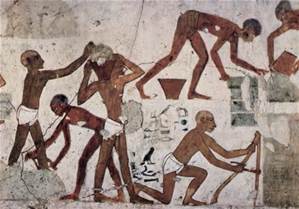
 have an honoured place in the pantheon of occupations in this land that was dismissively labelled a bricklayer’s paradise in the 1960s when so many found a place in the sun and started to build a new life for themselves and their families.
 builders happily eating a meat pie outside in the cabin of their Ute. This image has persisted over the decades, even though their golden age has passed and the new economy has its own young guns slinging code and establishing start-ups which are worth millions within a year.
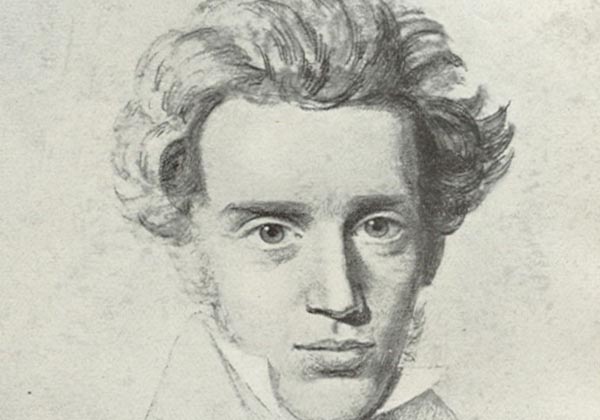 wrote, “the petty bourgeois is spiritless…devoid of imagination… he lives within a certain orbit of trivial experiences as to how things come about, what is possible, what usually happens… this is the way the petty bourgeois has lost himself and God This scornful depiction owes more to the prejudices of the philosophical Dane’s affluent middle-class upbringing than any thoroughgoing analysis.
 and what usually happens. From pre-historic times, the work and innovation of stone-masons, carpenters, tool-makers, and metalworkers have added to the utility and aesthetics of human existence. From classical times, the ingenuity of plumbers, ship-builders, aqueduct engineers and road-makers has ensured the spread of civilisation.
 aftermath of a storm. Then, you, too, would be singing paeans those who would fix the problems.
 a third of the contingent. 82 officers and crew were imprisoned and tortured physically and mentally for 11 months.
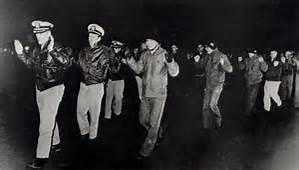 of guilt. The captain gamed his tormentors, using the word paean to do so. Skip Schumacher, interviewed for the BBC program Witness in 2012, recalls with humour and pride their final act of resistance as the men walked to freedom across the “bridge of no return” at
 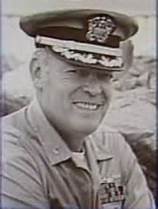 Panmunjom. “Blasted on the loud speakers for all to hear came the booming voice of Commander Bucher wishing to pee on the North Korean navy and most of all pee on Premier Kim ll-sung!”
  our working lives. Paddy is based on a sheet-metal worker from inner Sydney, during the boom times of the mid-70s.
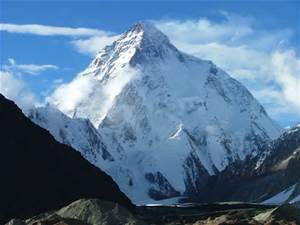
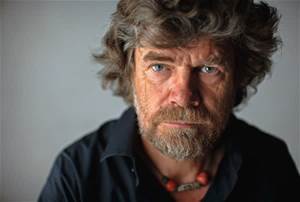 Wikipedia has a great story concerning ace mountaineer, Reinhold Messner, renowned for making the first ascent of Mount Everest without supplemental oxygen and for being the first climber to ascend all fourteen “eight-thousanders: he was given the opportunity by the Chinese government to climb
 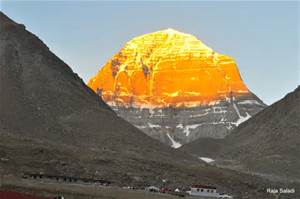 , a mountain sacred to four religions, in the mid-1980s but he declined. In 2001 the Chinese gave permission for a Spanish team to climb the peak, but in the face of international disapproval the Chinese decided to ban all attempts to climb the mountain. Messner, referring to the Spanish plans, said, “If we conquer this mountain, then we conquer something in people’s souls … I would suggest they go and climb something a little harder. Kailash is not so high and not so hard.
 one kind or another; unlike Uluru, also known as Ayer’s Rock, in central Australia where visitors regularly ignore requests that the sacred rock is not climbed as are requests that certain sections are not photographed.
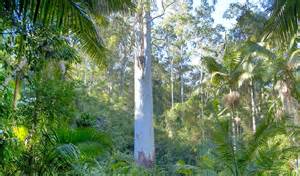 forest.
 Axeman, about his forbears who came here from Scotland to work the timber…my great-great grandfather here with his first sons,/who would grow old, still speaking with his Scots accent, /never having seen those highlands that they sang of. As humans we measure ourselves against just about everything we experience but to compare ourselves to trees is more comprehensible than to set a measure against the mountains of the world, large or small. A. E. Housman, does so in one of his best-known poems,
 woodland ride/Wearing white for Eastertide./Now, of my threescore years and ten,/Twenty will not come again,/And take from seventy springs a score,/It only leaves me fifty more./And since to look at things in bloom/Fifty springs are little room,/About the woodlands I will go/To see the cherry hung with snow.
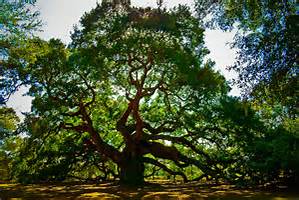 tree:/not interested/in cherry blossoms.
 over-blowing, I wrote the song, Mountains and Trees, there; comparing the scenes of my youth in Northern Ireland to the strange and compelling vistas around me.
 the 100 million plus people on this planet who are categorised as homeless or the 1.6 billion who are inadequately housed according to standards established by the UN?
 attributed to Pliny the Elder. The Germans have a word for it- Heimat. Wikipedia says, People are bound to their heimat by their birth and their childhood, their language, their earliest experiences or acquired affinity. Heimat as a trinity of descendance, community and tradition highly affects a person’s identity. Historically, it found strength as an instrument of self-assurance and orientation in an increasingly alienating world. It was a reaction to the onset of modernity, loss of individuality and intimate community.
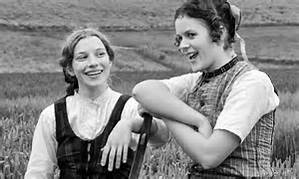 glimpses of wider social and political events. The combined length of the 32 films is 53 hours and 25 minutes, making it one of the longest series of feature-length films in cinema history.
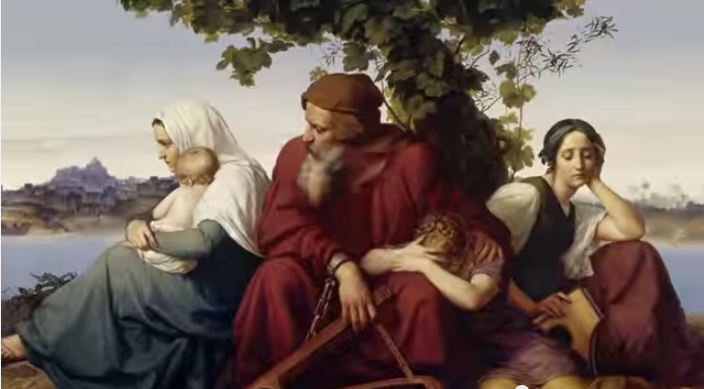 there we sat down, yea, we wept, when we remembered Zion.
 Robert Frost- a wonderful exploration of the concept of home. It touches upon several other themes including family, power, justice, mercy, age, death, friendship, redemption, guilt and belonging. Warren wants to know why Silas didn’t just walk the extra thirteen miles to his well-heeled brother’s place. Mary replies, Worthless though he is,/He won’t be made ashamed to please his brother.
 I’ll sit and see if that small sailing cloud/Will hit or miss the moon.’ /It hit the moon./Then there were three there, making a dim row,/The moon, the little silver cloud, and she.
 thirty years, I was in a place that I could call home without demur. Usually I wouldn’t have registered the thought but, that day, I wandered inside, collected a pen and notebook and, calling for another beer, I wrote this song:
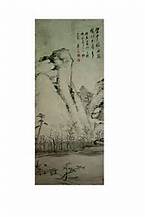 Entry 30: Perfect (as you can be)- Sometime in the middle of the 17th Century, somewhere in China, after the fall of the Ming Dynasty, a former mandarin official, Zha Shibiao, found something else to do with his life. He became one of the Four Masters of Anhui and one of the few capable of attaining the three perfections. This title goes back to the 8th Century when the Emperor Xuanzong, delighted by a painting given him, inscribed
 the words “three perfections” on it.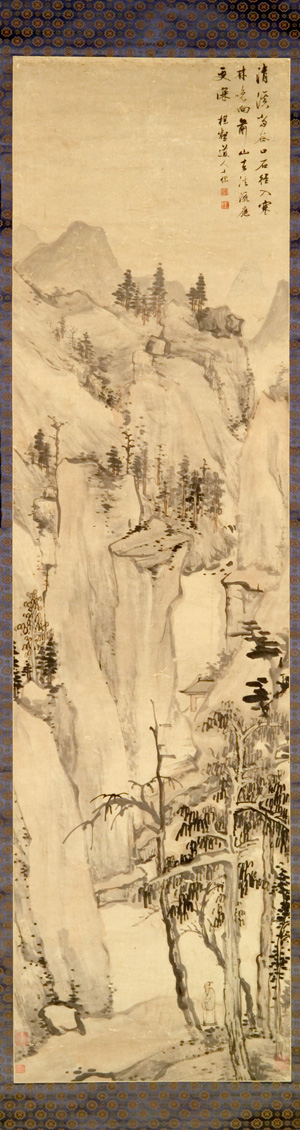
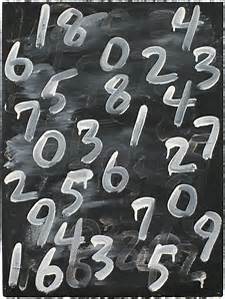 Unable as I am, to ascend even the foothills of that discipline, I content myself with finding nuggets such as, six is the perfect number- Pythagoras and St Augustine agree, though for different reasons. Greek mathematicians regarded as perfect those numbers which equal the sum of their divisors that are smaller than themselves. Such a number is 6, for 1 + 2 + 3 = 6. Similarly, 28, which is 1+2+4+7+14=28. The Bishop of Hippo cited the number of days it took God to create the world as the reason for 6’s perfection.
 Stepford Wives?? Or what about the perfect society? Calvin’s Geneva? Pol Pot’s Cambodia? In yearning for perfection, like so many other things in life, it is wise to remember the admonition to be careful what you wish for. In Australia, to call any achievement or attainment pretty ordinary is, in fact, a comprehensive put-down.
 handicapped children. It struck a chord then and that dissonant stack of notes has sounded again and again over the decades since, striking closer to home. This compelling poem gets it right: I am hurt by my wholeness, the poet says when he spots the disabled child whose freckled face reminds him of nephews and how his limbs remind me of how straight/is my own spine and that I take my fingers/for granted. Love blazes out in the simple line, he has been dressed carefully.