

 Entry 101: Mr Brown– What’s in a name? That which we call a rose/ by any other name would smell as sweet, Romeo famously declaimed. What’s in a name, Romeo? Quite a lot, actually. He was not the sharpest tool in the shed even if he was, arguably, Verona’s most eligible bachelor. Suppose, taking a leaf out of Romeo’s book, you decided that a rose was to be called a stench. A dozen stenches just for you, darling! Does not sound as sweet, and I dare say, the connotative transfer would attenuate somewhat the perfume perceived by the recipient of your well-meaning romantic gesture.
 Consider the flipside of this, where honourable words cloak dishonourable intentions as in Shakespeare’s great tragedy, Othello, where Iago draws the naïve hero down into his devilish trap by pretending to withhold, for noble motive, the name of the person rumoured as having seduced Othello’s wife, saying, Good name in man and woman, dear my lord,/Is the immediate jewel of their souls./Who steals my purse steals trash; ’tis something, nothing; /’Twas mine, ’tis his, and has been slave to thousands;/But he that filches from me my good name/Robs me of that which not enriches him,/And makes me poor indeed.
In The Crucible, Arthur Miller’s play about the Salem witchcraft trials of 1690 as a commentary on the poison of McCarthyism in 1950s America, John Proctor, the play’s flawed protagonist cries, Because it is my name! Because I cannot have another in my life! Because I lie and sign myself to lies! Because I am not worth the dust on the feet of them you have hanged! How may I live without my name? I have given you my soul; leave me my name!
The magistrates, who had hanged a dozen innocent people on the word of hysterical girls, were desperate to get his confession because of his stature in the community and, thinking that they had succeeded, 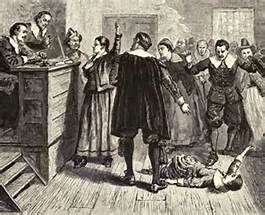 bring him the paper to sign so that they might display it for all to see on the church door. But Proctor, ultimately, refuses to blacken the names of the others by denouncing them as witches and, with them, is led to his death.
Naming rituals have been important in all cultures and at all times. Christians confer names at baptism, and some at Confirmation. Hindus, Jews and Muslims all name their children within days or weeks of birth. Many non-believers, too, have secular naming ceremonies. If you’re into secret names, you may wish to join a Wiccan coven where you will receive your Craft-name to be used only among others of your faith during ceremonies performed away from public gaze.
Other secret names are to be found in a variety of sub-cultures; and let us not forget lovers who would be discomfited if their pet-names of, say, Snugglie-poos and Cuddle-cakes were widely known. Not only people, but place-names are causes of dissension: in the province of my birth- Ulster- it is still possible to witness apoplectic arguments over the proper name of the city on the River Foyle- is it Derry or Londonderry? Or Stroke City as local radio presenter, Gerry Anderson dubbed it, as wry acknowledgement of the clunky but widespread usage Derry/Londonderry as a compromise solution to the conundrum.
 Post-colonial renaming of African and Asian countries and cities has proceeded apace since the mid-twentieth century: are you enjoying a cup of Ceylon tea from Sri Lanka, perhaps as an accompaniment to your tasty Peking duck, a delicacy prepared in Beijing since the imperial era- or do you like something stronger -Bombay Gin, mmm? Even at a parochial level, tempests rage in innumerable tea-cups over the naming or proposed renaming of streets and parks.
And the imbroglio extends to the metaphysical: naming the Deity has been a no-no for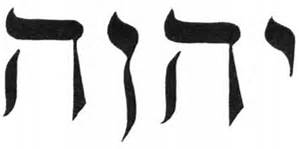 pious Jews from Biblical times who refuse to pronounce the ineffable name of God or G-d, as they prefer to put it. It is rendered as the four consonants YHWH or YHVH (known as the tetragrammaton) which transliterates to Yahweh or Jehovah.
It is also unwise to bandy about the name of the Adversary or Devil: the harmless-seeming idiom, speak of the devil! when someone you  have just been talking about puts in an unexpected appearance derives from an earlier saying, speak of the devil and he doth appear.
Yesterday, I lay awake in the palm of the night./A soft rain stole in, unhelped by any breeze,/And when I saw the silver glaze on the windows,/I started with A, So begins The Names, a poem by Billy Collins and he proceeds through the alphabet: it wasn’t until he reached X that I twigged that this was a special poem: (Let X stand, if it can, for the ones unfound). The last line, so many names, there is barely room on the walls of the heart, underscores the sorrow: a naming of some of those lost on 9/11.
So, what’s in a name, Romeo? Quite a lot, actually.

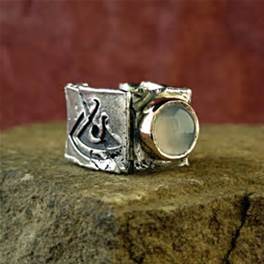 in service to King Caduales of Lydia as a shepherd when he discovered a ring in a cave after an earthquake uncovered its entrance. The ring conferred invisibility on the wearer so he made his way to the palace where, with the aid of the magical ring, he seduced the queen and murdered the king thereby securing both throne and queen.
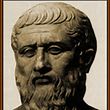 brother of Plato. Glaucon asks whether any man can be so virtuous that he could resist the temptation of being able to perform any act without being known or discovered. Glaucon suggests that morality is only a social construction
 the subject of Wagner’s Ring cycle and Tolkein’s, The Hobbit and The Lord of the Rings. Of course, the rings symbolise absolute power, and, as Lord Acton so famously observed, power corrupts and absolute power corrupts absolutely. With the corruption attendant on power comes injustice. Injustice is much easier to apprehend than justice, just as evil is more tangible to us than goodness; although, paradoxically perhaps, the most satisfactory outcomes in fact and fiction are when good triumphs over evil.
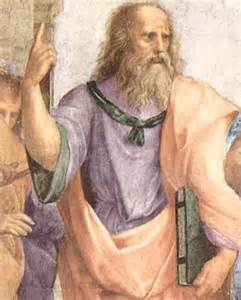 And, to return to Plato’s Republic, where Glaucon gave the cynical and widespread view that the tendency to evil when one can act without impunity is universal- what did Socrates have to say on the matter? He argued that one who used the ring unjustly was slave to his appetites whereas the just man who refused to use the ring was rationally in control of himself and therefore, happy. But away from the rarefied atmosphere of philosophical speculation, I’m pretty sure the framers of the constitution of the US got it right with the separation of powers. The checks and balances of democratic systems of governance are much preferable to any of the alternatives, however efficient they may, supposedly, be.
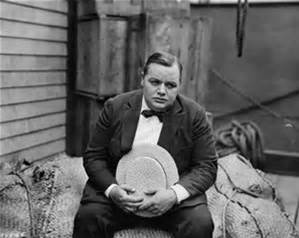 by the fate of the silent-film era comedian, Roscoe “Fatty” Arbuckle, to write an atypically lengthy song. Atypical, also, in that its content was based on a close reading of another text. Usually my inspiration comes from something fleeting or ephemeral: was it George Eliot who could concoct a complicated narrative from just a glimpse through a doorway of a mundane domestic scene? At any rate, not only did I write a six-minute plus song but I gave headings to each of the verses utilising Roman numerals: I THE SETTING, II THE PARTY, III THE TELEGRAM, IV DEATH AND THE DOCTORS, V THE POWER GRAB, VI THE TRIALS, VII THE ACQUITTAL AND REACTION OF THE JACKALS, VIII ROSCOE’S FIGHTBACK AND IRONIES OF THE END.
 What really got to me about the Arbuckle story, was that such an egregious instance of injustice took place in the land of the free where the rule of law and separation of powers were supposed to guarantee the liberty of the citizen. Yes, I was rather naïve and idealistic way back then. Now I just weep as I view, and read about, the manifold injustices of the world even as I am being assured that things are getting better all the time. Oh, go on! Tell me the parable of the starfish- you know, where a man asks a child, who is on a beach throwing back into the sea one starfish even though the beach is covered with thousands, what difference will it make? The child answers that it will make a difference to this one.
 goddess/Is a thing to which we black are wise:/Her bandage hides two festering sores/That once perhaps were eyes. Israeli poet Yehudi Amichai observes, Out of three or four in the room/One is always standing at the window/ Forced to see the injustice amongst the thorns,/The fires on the hills.
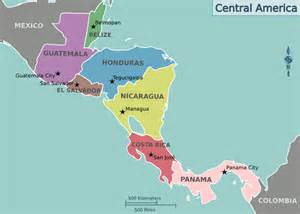 of Central America during the 70s and 80s. Belize was insulated from the conflicts endemic to the region by the British presence and Panama, as a strategic asset of the US, thanks to its canal, also escaped the worst of the killings increasingly creating headlines in international newspapers.
 I belong to a small country, that was not afraid to abolish its army in order to increase its strength. In my homeland you will not find a single tank, a single artillery piece, a single warship or a single military helicopter…. Today we threaten no one, neither our own people nor our neighbours. Such threats are absent not because we lack tanks but because there are few of us who are hungry, illiterate or unemployed.
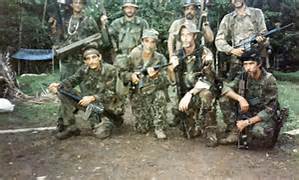 the face to Ronald Reagan, who had attempted to strong-arm the country into re-militarising and joining in the fight with the right-wing Contras, which he continued to fund covertly in the face of congressional blocks in 1985 to further financial assistance, against the legitimate Sandinista government of Nicaragua.
 as a righteous response to ideological threats, I would refer them to Denise Levertov’s poem Misnomer, which refutes this appellation, They speak of the art of war,/ but the arts/ draw their light from the soul’s well,/ and warfare/ dries up the soul and draws its power/ from a dark and burning wasteland.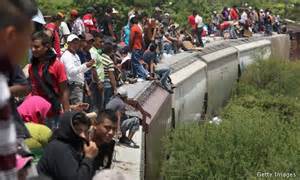
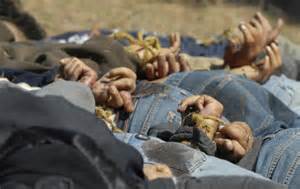 The cameos include heart-wrenching stories of sex slavery and merciless retribution when victims who sought help from officials were handed back to the gangs. And this testament to the bravery of an individual who cannot look away,
 expel 11 million undocumented migrants and then build a wall to keep them out. I can’t believe we’re living in the 21st Century!
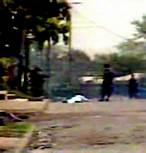 made to lie down on the roadway; then a member of Nicaraguan dictator, Anastasio Somoza’s, National Guard kicked him in the side and shot him in the head killing him instantly.
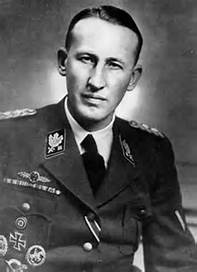 being among the most loathsome exemplars and promoters of the ‘final solution”; that Nazi euphemism for the genocidal mass murder of at least six million Jews between 1933, when Dachau concentration camp opens, and 1945, which is termed the Holocaust, and is one of the darkest events in the history of the world?
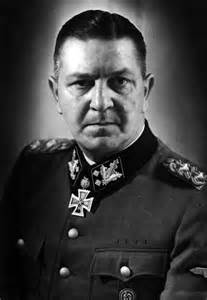 the wake of the first world war, in anti-democratic and anti-socialist agitation and assassination. Much has been written about this group and their activities but I came across a rather unusual approach to the subject matter when I read a review by Paul Robinson, a professor of history at Stanford University, of a book entitled, MALE FANTASIES Volume One: Women, Floods, Bodies, History. By Klaus Theweleit published in West Germany in 1977, which had something to say about the psychopathology of men drawn to the Freikorps.
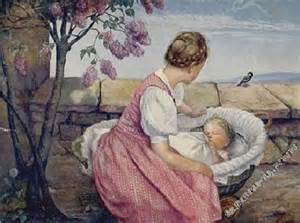 Freikorps soldiers were afraid of women. Indeed, not just afraid, they were deeply hostile to them, and their ultimate goal was to murder them. Women, in their view, came in only two varieties: Red and White. The White woman was the nurse, the mother, the sister. She was distinguished above all else by her sexlessness. The Red woman, on the other hand, was a whore and a Communist. She was a kind of distillation of sexuality, threatening to engulf the male in a whirlpool of bodily
  and emotional ecstasy…the Republic had to be destroyed because it empowered the lascivious Red woman, while it failed to protect the White woman’s sexual purity.
 fictional character. But she was real; murdered in Berlin on 15 January 1919 by members of the Freikorps. With Karl Liebknecht, co-founder with her of the Spartacist League, which was the forerunner of the Communist Party of Germany, Rosa Luxemburg was captured by the Rifle Division of the Cavalry Guards of the Freikorps. Its commander and deputy questioned them under torture and then gave the order to execute them.
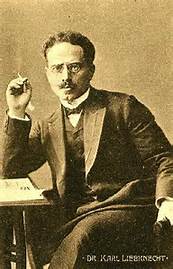 nearby Tiergarten, Liebknecht was shot and his body, without a name, brought to a morgue. While not sharing her revolutionary political beliefs, I like Rosa for having written, Freedom is always the freedom of dissenters.
 was warned not to return to Germany to see her dying mother because of the anti-Semitism of the time. Frye wrote these lines to console the weeping girl who, upon the death of her mother, lamented that she could not stand at the graveside and shed a tear. It was only in the late 1990s that the authorship of the following poem was established,
 place of horror. Tolkein, as a philologist, knew that Mor probably derives from an Indo-European root connoting terror and monstrousness. The Morrigan is the phantom queen of Irish mythology- a war goddess who takes on the appearance of a crow over battlefields.
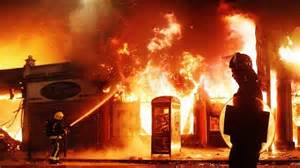 Sectarian strife had been building throughout 1969 in Northern Ireland and in August of that year, it became the burning wasteland beloved of war gods and goddesses as riots swept Belfast and Derry and houses went up in flames displacing those whose misfortune it was to live on sectarian interfaces. Among the more problematical things I have done in my lifetime was agreeing to drive, in late August of 1969, a car full of people I did not know but who were termed as refugees from North Queen Street, Belfast, to County Donegal, where there was an Irish Army camp at a place called Finner.
 and he seemed a regular guy; besides, he told me he would be making the humanitarian journey as well. I drove over country backroads, scared shitless that I would be stopped by the B-Specials, a Protestant militia still in force. After getting lost a couple of times, I left off a woman and two children at the camp but, to my surprise, not all the passengers agreed to accept the hospitality of the Irish Army.
 There were two twenty-something year-old men who decided they were not going to stay in Donegal but would return with me to Belfast. On the way back, the rust-heap, which was the car I had driven for so long, broke down on the M2 on the way back into Belfast. The naïve student, a.k.a.me, ran to the nearest phone-box and asked for help. Now, I didn’t know that the motorway phones were linked to police stations, did I? When I heard a voice declaring, Moira police, how can I help? I dropped the phone and started to gulp like a fish out of water- oh, I was, I was!
 vending machine salesman who told me I was as stupid as a sack of shit. In no time he had tied a rope to our stricken vehicle and towed it to an off-ramp and into the outer suburbs where it was abandoned on a side-street. He later drove me to the city centre and told me he never wanted to see me again.
 At the beginning of the academic year 1969-1970, I rented a bedsit near Carlisle Circus in Belfast and quickly settled into a diet of beer and potato crisps. My cousin, Elizabeth, who was working in the city, had a flat up a flight of stairs from me and, occasionally, would arrange to feed me something more substantial. A journalist with The Belfast Telegraph occupied the flat across the landing from me and books were piled everywhere, overflowing tables, chairs and bookcases. He drank a lot, too, and we often talked about the scuttlebutt swirling around the streets: were black taxis containing British assassination duos real or part of the general paranoia?
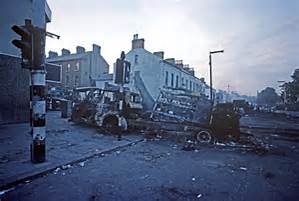 split in two, with a more militant faction gearing up to escalate the conflict? The city that I had been visiting for several years as a teen because it was vibrant, music-filled and exciting became a shadowed place of menace where a once open and inclusive nightlife shrivelled into closed, claustrophobic sectarian venues controlled by paramilitary groups.
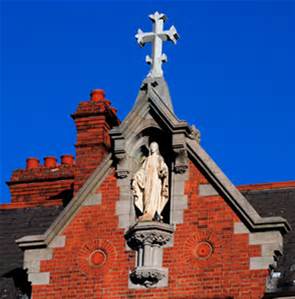 admitted to the Mater Hospital on the Crumlin Road in July of 1970. My reception was frosty, to say the least. I had bulging protuberances on my neck which were assumed to be evidence of mononucleosis by the Nuns of the hospital. When they were told, that, far from being a kissing bandit, I was a victim of sarcoidosis, their demeanour warmed remarkably.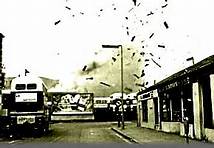
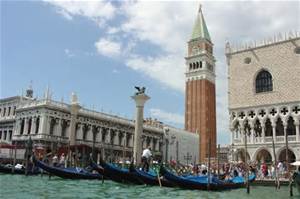 married, travelled overseas on my first independent holiday (our honeymoon in Croatia and Venice) moved into our first home, fathered my first child, got my first degree (I never bothered completing another) and moved to Australia to start my first job. A lot of firsts.
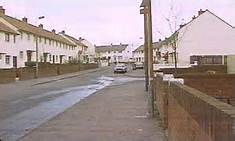 The transience and randomness of life and death swirled around us: I missed, by moments, being blown up in a pub near the city centre, an acquaintance was shot and killed by gunmen unknown. After the honeymoon we found part of a house for rent in West Belfast off the Whiterock Road in Beechview Park which looked across a cinder pitch to the walls of the city cemetery on which was sprayed, in white paint, the graffito, Is there a life before death?
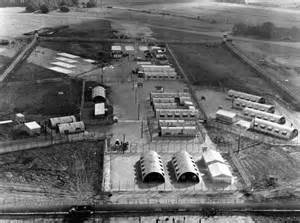 gunfire erupted in the area as British Army Saracens whined through the streets lifting republican suspects for internment. I watched later from our bedroom window as two men placed barrels of petrol on the Whiterock Road, detonating them as a patrol passed shortly afterwards.
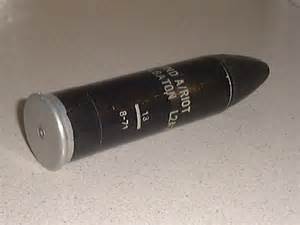 before she could remonstrate a couple of rubber bullets came through the door and ricocheted around the shop, smashing displays and causing panic and anger. Over 55,000 of these were fired before they were phased out with the introduction of plastic bullets in 1975.
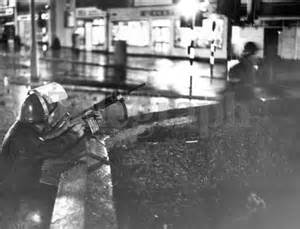 local IRA brigade of British Army patrols, and she, returning to the corner shop the next day, met with a wall of silence as she was motioned silently to the counter to buy her bread and milk and sugar.
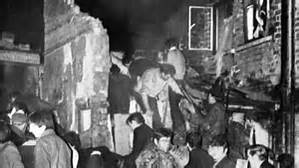 Fifteen civilians, including four women, were killed in McGurk’s Pub in North Queen Street by loyalist bombers whose path before and after was facilitated by members of the shadowy Military Reaction Force of the British Army.
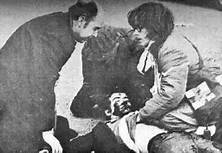 Barracks in Britain which killed seven and exploding a bomb in Lower Donegall Street killing seven, also. As violence spiralled out of control, Edward Heath, British Prime Minister, pulled the pin, prorogued Stormont parliament and introduced direct rule, ending all hopes of democracy in Northern Ireland for over a generation.
 Belfast Central Library 22 bombs went off in the space of an hour and a quarter killing nine outright and seriously injuring 130 more. That summer the UDA in ranked and hooded thousands marched along Royal Avenue through the centre of Belfast as I watched in trepidation. I rang my father in Cushendall and arranged to spend a few days in Cushendall and he came and collected my wife, my three-month old daughter and me from Beechview Park on Saturday, August 26, as gunfire rang out in the distance.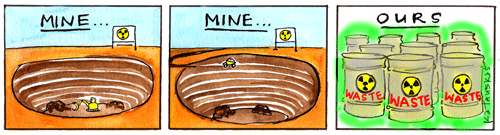
 entitled Progress, the upper panel shows two cavemen brandishing bones at one another. Then, dividing the upper panel from the lower, is the word Progress. The lower panel shows two men in suits; one has a pistol with which he has just shot his rival dead. This song inserts a few more panels outlining the history of war.
 population of the planet). In 1972 Cobb composed a cartoon showing road-kill in the Australian outback; lying at the side of the road, among the litter and detritus of road-users, was an aboriginal tribesman and a kangaroo as a road-train sped off, oblivious into the distance.
 larger hole in the ground with the caption, Mine; finally, a facility filled with radioactive barrels with the caption, Ours. Of course, the picture is not one of total gloom: if you haven’t yet checked out Hans Rosling on TED talks, you’re denying yourself a wake-up call about the real state of the world.
 Over ten years ago, Rosling demonstrated that medical students in Sweden performed worse than chimpanzees at predicting mortality rates and other indicators of progress. Most westerners still have mid-twentieth century notions of us and them about the developed world and the third world: this despite the increasing evidence of Asian tourists at our iconic sites.
 heels of its large neighbour, so it’s probable that we will have a new middle class of one billion plus before too long. Elsewhere in the world, even in sub-Saharan Africa, there is increasing wealth and better health. By the middle of this century, many of the people who just assumed that the largesse was theirs, only, may look longingly off-shore at the greener grass in foreign fields.
 even the poor. Micro-finance schemes liberating women from servitude, pro-active prosecution of predators who have felt safe indulging their pedophilic appetites in poorer countries, and the slow awakening in developed nations among the blue-collar workers that they have been played for saps by their political elites, are all signs of the times that provide a counterweight for the doom and gloom scenarios to which we pay too much attention, perhaps.
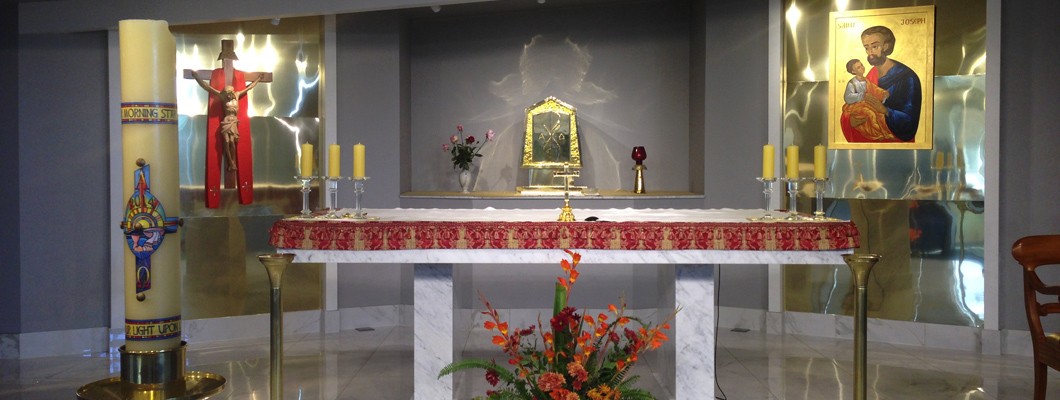 icon at my local church as I write this- which is a tempera and gold leaf on gessoed board measuring 100cm by 70 cm. It depicts St Joseph and his stepson. It stands ignored, for most part, for most of the year, squashed between my printer and my 20.5 inch display monitor. There is something in the pictorial relationship that catches me, though.
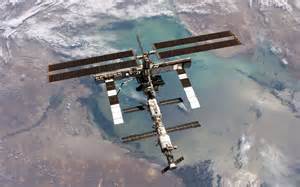 Crucifixion, like so many other methods of mass killing, would be lost in the plethora of statistics the UN so conveniently keeps. So, where is all the good news? Here it is. All around us: In every land, from the circumpolar wastes, to the savannahs, to the rain-forests, to the cities, to the vast plains, to the islands and archipelagos, to the deep-ocean submersibles and to the International Space Station, let us affirm that there is a point to all of our endeavours; that there is an end to the dark travails so many of us endure;, that there is a reason for all us to cheer.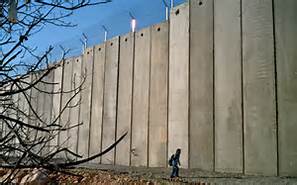
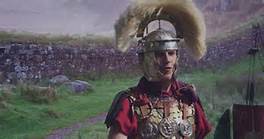 walling out,/And to whom I was like to give offence./Something there is that does not love a wall, that wants it down. Truly spoken, Robert Frost. Another poet, W. H. Auden wrote about Hadrian’s Wall in Roman Wall Blues, where he captures the loneliness and misery of sentinels the world over throughout history as they stand vigil on their particular wall and peer into the mist for signs of the enemy, The rain comes pattering out of the sky,/I’m a Wall soldier, I don’t know why.
 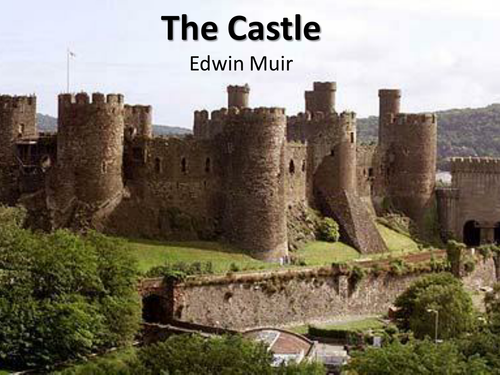 There is something about walls that engender complacency- in Edwin Muir’s poem, The Castle, the besieged look unconcernedly from the turret walls surrounding the fortress at the foe half a mile distant confident in the knowledge of their ample provisions, brave defenders, stout fortifications and allies drawing near. But… There was a little private gate,/A little wicked wicket gate./The wizened warder let them through. And why? Our only enemy was gold,/And we had no arms to fight it with.
 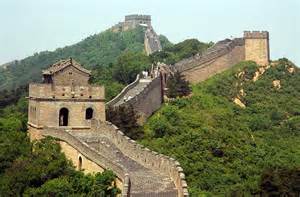 is stupendous to look at but failed miserably in its purpose of keeping out determined invaders, who simply rode around it or had its gates opened by traitors. The Berlin Wall failed and one may surmise (indeed, hope) that similar walls still in place around the world, will ultimately fail, too.
 be impervious to any agency, method or technology. Impenetrable, resisting any level of energy or density of matter, this wall would serve the wildest fantasies of even the most certifiable of megalomaniacs. But it’s out of reach in our material world. The only place such walls can be forged are in the furnaces of the dogmatic mind. Is there anything in this universe more adamantine than the certitude of the religious bigot or political ideologue?
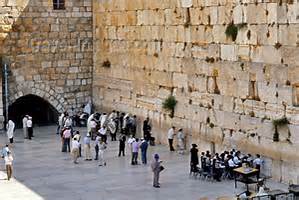 prayers on scraps of paper stuffed into cracks is one that fulfils a deep human need to connect in a tangible way with sacred places. In the city of Leiden, the Netherlands, there is a modern version of the wailing wall, it seems to me. Two artists, Ben Walenkamp and Jan-Willem Bruins, with the assistance of various civic and philanthropic bodies arranged that on various walls throughout the city you will be able read 101 poems by a range of poets, starting in 1992
 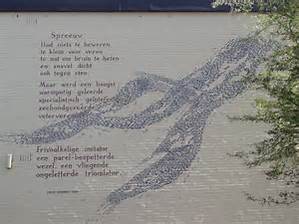 with a poem in Russian by Marina Tssvetaeva
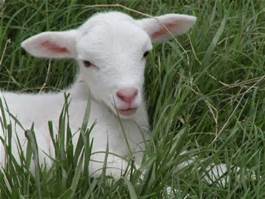 about to happen. He sat down on the broken-off capital of a pillar lying toppled there. A tiny lamb came out to browse in the weeds among the ruins, appearing like an angel of mist, out of nowhere, to turn solitude into something human, dropping like a gentle petal on the solitude of the place. The poet no longer felt alone. Suddenly a herd of swine also came into the area. There were four or five dark animals, half-wild pigs with a savage hunger and hoofs like rocks. Then Federico witnessed a blood-curdling scene: the swine fell on the lamb and, to the great horror of the poet, tore it to pieces and devoured it.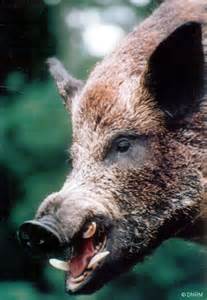
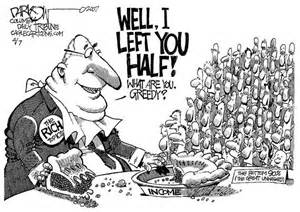
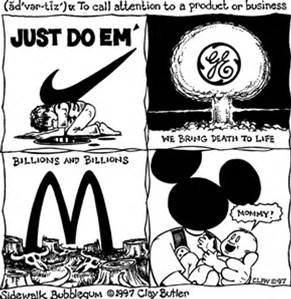 suffering from compassion fatigue: there’s always someone after my charity dollar…Paying off the mortgage is taking all my time and energy; so much so that I can’t enjoy my harbour view…I feel so guilty: I know! I’ll dress in black, like Johnny Cash did, until there is equality and harmony and world peace… Keeping up with the Joneses is such tiring business because just when you get up to where they are, lo and behold, another set of Joneses pops up to spoil your feeling of having arrived.
 is staggering. And even within the top 1%- that cliché for true wealth, there is a divide between the millionaires who are becoming a dime a dozen, so to speak, and the rarefied planet of the jet-setting billionaires.
 but it is clearly amplified in affluent, urban societies. Here are a few: Kitty Genovese, a young woman stabbed, raped and killed brutally over a period of half an hour outside her apartment building in Queens, NYC in 1964, within the hearing of a dozen people, not one of whom lifted a hand to help or even a phone for police assistance, which would have saved her life. In 2011 two-year old Wang Yue was run over twice, by drivers, in the Chinese city of Foshan, neither of whom stopped. At least 18 bystanders walked past without aiding the stricken infant. Only an elderly rubbish scavenger, Chen Xianmei, stopped to help the dying child.
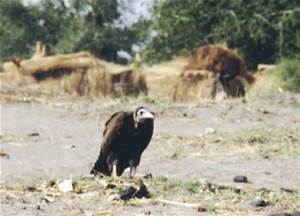 How many of the plutocracy are worth as much, in essence, as this fine woman. But what does inaction do to those who witness human distress without active compassion? And how many of us can say we have always acted honourably when confronted with similar situations? There is a photograph that I often used in the last twenty years of my teaching career to illustrate the importance of context and framing in the making of meaning. It is a photograph taken in 1993 by photo-journalist Kevin Carter of an African scene.
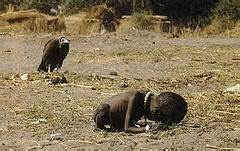 something just out of frame and ask for a response- which was usually fairly tepid. Then, I would reveal the uncropped shot where we see in the foreground a severely emaciated child crawling on the ground. Now, it is clear why the vulture is gazing so intently. The response is always one of shock.
 in Australia, another refugee has self-immolated in protest over the conditions at Nauru, the off-shore detention centre. Both of the major parties are welded to policies that guarantee cruelty to these people will persist as I, and twenty million fellow citizens look on.
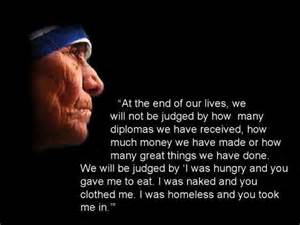 wonder how foreign aid will fare in the budget tonight. In a thought-experiment, I have the cabinet study in detail Matthew 25: 31-45. You know, the one about the sheep and the goats. And I would have them all recite The Confiteor, that old penitential prayer which includes these words, I confess to almighty God, and to you, my brothers and sisters, that I have greatly sinned, in my thoughts and in my words, in what I have done and what I have failed to do, through my fault, through my fault, through my most grievous fault.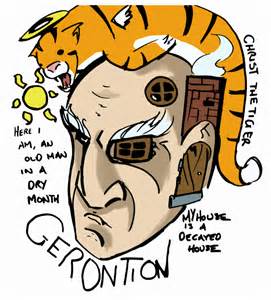
 in our youth, no matter how fast and far we thought we had travelled in the years since, draw us into an orbit of obeisance, or, at least, sincere acknowledgement of influence. As I lurched through the barrier of sixty, I began to think of eschatological matters with a little more attention: I mean, even with the most optimistic and deluded of outlooks, one would have to agree that the past was more packed with incident and longevity than the years ahead.
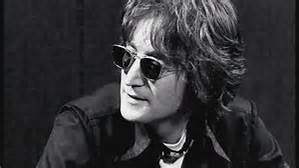 days as a song to perform when their amplifiers broke down or the electricity went off. Lennon said, in his 1980 interview for
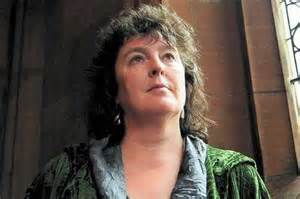 Not so! Carol Ann Duffy, that redoubtable poet (and laureate) wrote, introducing a selection of poems from senior British poets in The Guardian back in 2010, I invited the poets here to write, in any way they chose, about ageing. Our society, I believe, is turning gradually away from its obsession with “yoof” and “slebs”. We are beginning to realise that we face, at the very least, an uncertain future, one in which wisdom and experience – and respect – will need to be accorded a more important role. Nice thought, Carol Ann, if only it were true.
 ageing, means no more roller-skating./That used to be my favourite/ sport, after school, every day:… When I saw that young girl on her blades,/wind in her hair, sun on her face,… racing/her boyfriend along the pavement:/– then I understood ageing.
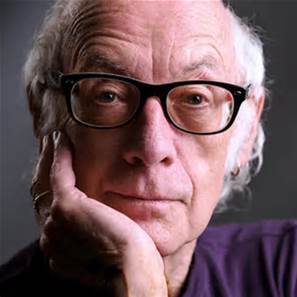 although not before the age of 73 at the earliest! Now, at age 78, he admits, My nights are rarely unruly. My days/of allnight parties are over, well and truly./No mistresses no red sports cars/no shady deals no gangland bars/no drugs no fags no rock’n’roll/Time alone has taken its toll.
 Australian poet, Peter Porter who died in 2010, aged 81, shortly after submitting, Random Ageist Verses, for inclusion in the Guardian article.